


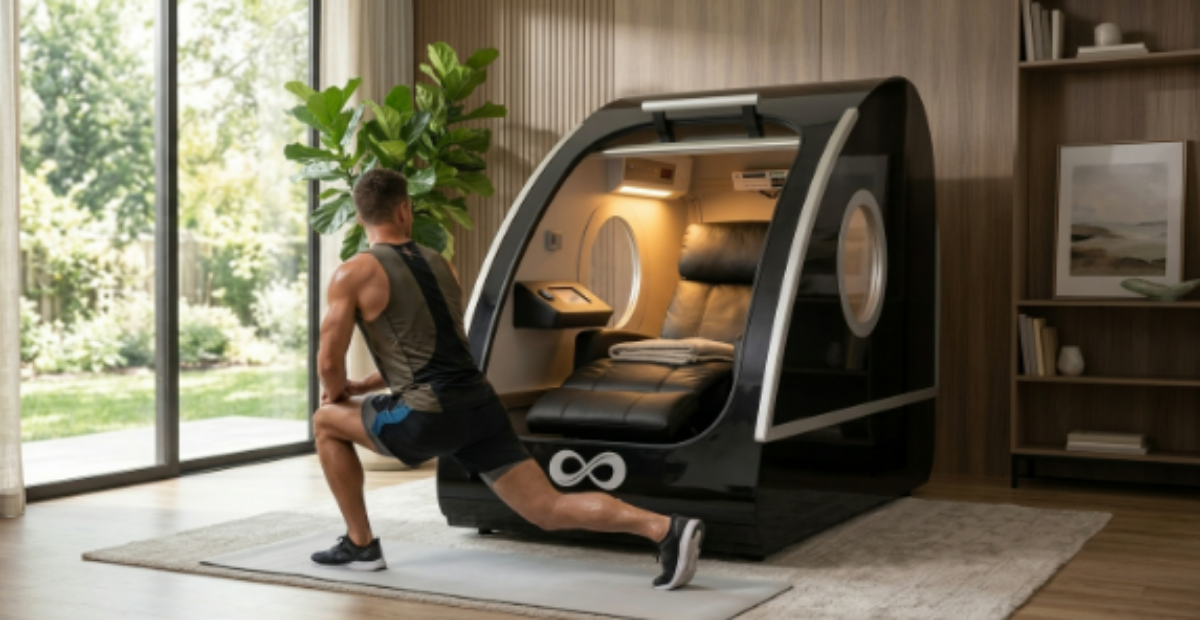
Hyperbaric oxygen therapy (HBOT) benefits athletes primarily by increasing the amount of oxygen dissolved in blood and tissues, which accelerates soft tissue repair, reduces post-exercise lactate buildup, and may shorten recovery time after injury or intense competition. A 2022 randomized controlled trial published in NIH/Sports Medicine Open found significant increases in maximal oxygen consumption (VO2Max) following HBOT in middle-aged athletes compared to a sham group. Current evidence is most consistent for injury recovery and post-match fatigue reduction.
Key Takeaways
-
HBOT delivers 100% oxygen at pressures above normal atmospheric levels, which increases oxygen availability in blood and tissues far beyond what breathing ambient air provides.
-
A 2022 blinded, randomized controlled trial found that HBOT produced significant VO2Max improvements in middle-aged athletes compared to a sham treatment group.
-
A systematic review and meta-analysis found HBOT significantly reduced post-recovery blood lactate levels in athletes, with a notable effect size of -1.71.
-
HBOT is generally more effective as an adjunctive treatment than as a standalone intervention for sports injuries and recovery.
-
Research limitations exist: most studies have small sample sizes, and protocols vary considerably across investigations, making direct comparisons difficult.
-
Active clinical trials are underway, including the HOTHAM trial examining HBOT for hamstring injury recovery, with results expected by 2028.
What Is Hyperbaric Oxygen Therapy and How Does It Work for Athletes?
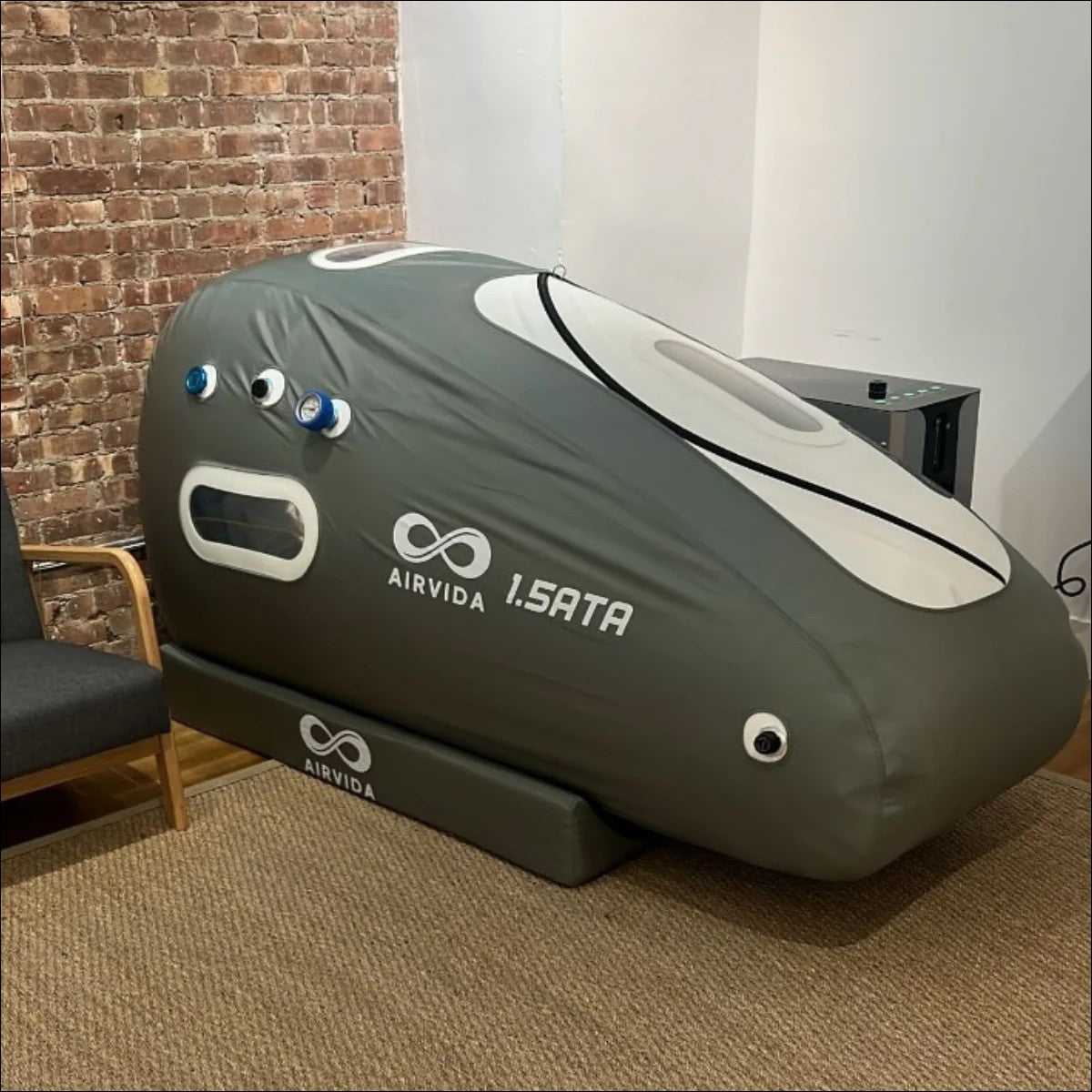
Hyperbaric oxygen therapy is a treatment modality in which you breathe 100% oxygen inside a pressurized chamber set above normal atmospheric pressure, typically measured in atmospheres absolute (ATA). The increased pressure forces a greater concentration of oxygen into your plasma, red blood cells, and surrounding tissues than is achievable at sea level. This mechanism forms the physiological basis for most of the reported athletic benefits.
Under normal conditions, oxygen is primarily carried by hemoglobin. Inside a hyperbaric chamber, oxygen also dissolves directly into plasma, reaching tissues that may have restricted blood flow due to injury or intense exercise-induced swelling. This enhanced oxygen delivery is what researchers believe accelerates cellular repair processes.
The protocol used in most sports-focused research involves sessions of 60 to 120 minutes at pressures between 1.3 and 2.5 ATA. Session frequency and total number of sessions vary across studies, which partly explains the variability in outcomes reported across the literature.
Hyperbaric Collections You May Want to Shop

How Does HBOT Accelerate Athletic Recovery After Injury?
HBOT accelerates athletic recovery by increasing oxygen delivery to injured tissue, which supports cellular metabolism, reduces inflammatory markers, and promotes faster soft tissue repair. A PMC/NIH-published randomized controlled trial using 10 HBOT sessions at 2.5 ATA found that therapy was beneficial in accelerating cell recovery and tissue repair, which are considered helpful for eliminating fatigue and recovering stamina in athletes. These findings apply particularly to soft tissue injuries such as muscle strains, ligament sprains, and tendon damage.
One of the more practically significant findings involves return-to-play timelines. Research cited in NIH/PMC indicates that short courses of HBOT may result in reduced pain and faster return to competition after soft tissue musculoskeletal injury. For professional athletes working within congested competition schedules, even a modest reduction in downtime carries meaningful performance and financial implications.
A study involving seven Olympic athletes found that HBOT sessions of 30 to 40 minutes at 1.3 ATA resulted in faster recovery rates across all participants. While the sample size is too small to draw broad conclusions, the consistency of benefit across all seven athletes is noteworthy. The key point is that injury recovery, particularly for soft tissue injuries, represents the most consistently supported application of HBOT in athletic populations.
Can HBOT Reduce Muscle Fatigue After High-Intensity Exercise?

HBOT reduces post-exercise muscle fatigue by clearing metabolic byproducts, particularly blood lactate, that accumulate during intense exercise and contribute to the sensation of soreness and reduced performance. A systematic review and meta-analysis published on PubMed (covering studies from January 2015 through September 2024) found that HBOT significantly reduced post-recovery blood lactate levels, with an effect size of -1.71 and a 95% confidence interval of -3.10 to -0.32. Subgroup analysis further showed that younger athletes and those with lower body fat mass experienced the most pronounced lactate reductions.
Blood lactate is a well-established marker of muscular fatigue and metabolic stress. Elevated post-exercise lactate is associated with delayed onset muscle soreness, reduced force production, and impaired neuromuscular function in subsequent training sessions. Lowering lactate more quickly could theoretically allow athletes to return to high-intensity training sooner.
A 2025 double-blind randomized controlled trial involving 20 elite youth football players compared 60-minute HBOT sessions against a placebo after a 90-minute football match. Researchers measured biochemical markers including myoglobin, creatine kinase, and lactate dehydrogenase alongside performance metrics including speed and jump tests. This type of rigorous design provides stronger evidence than earlier observational work.
The bottom line is that the lactate-reduction effect has meaningful support from higher-quality studies, though optimal session timing relative to exercise remains an area of ongoing investigation.
Does HBOT Improve Athletic Performance Beyond Recovery?
HBOT may improve certain markers of aerobic performance, with the most compelling evidence coming from a 2022 blinded, randomized placebo-controlled trial published in NIH/Sports Medicine Open. The study enrolled 37 healthy middle-aged athletes aged 40 to 50 and found significant increases in VO2Max (p = 0.010, effect size = 0.989) and oxygen consumption at anaerobic threshold (VO2AT, effect size = 0.837) in the HBOT group compared to the sham group. These are large effect sizes by conventional standards, though the specific population (middle-aged athletes) limits direct generalizability to younger competitive athletes.
VO2Max is the maximum rate at which your body can consume oxygen during exercise and is one of the most widely used indicators of aerobic capacity. An increase in VO2Max is generally associated with improved endurance performance across sports including distance running, cycling, and team sports with sustained high-intensity demands. The mechanism proposed by researchers involves HBOT-induced improvements in mitochondrial respiration, which enhance the efficiency of energy production at the cellular level.
It is important to note that performance enhancement is a separate question from recovery acceleration. Most current evidence is stronger for the recovery application. Research consistently characterizes HBOT as more beneficial as an adjunctive treatment rather than as a standalone performance-enhancement strategy. The key point is that performance benefits are plausible and supported by at least one well-designed trial, but additional large-scale replication is needed before firm conclusions can be drawn.
What Specific Sports Injuries Respond Best to HBOT?
The sports injuries most studied in the context of HBOT include soft tissue injuries such as muscle strains, ligament sprains, hamstring tears, and joint-related inflammation. According to a 2025 review published in the Turkish Journal of Sports Medicine (Volume 60, Issue 2), HBOT has been suggested as both a primary and adjunctive treatment modality for sports injuries, with soft tissue musculoskeletal injuries showing the most consistent positive outcomes. The review also notes that full physiological recovery after a high-intensity match can take up to 72 hours, a timeline that frequently conflicts with congested competition schedules.
Current active clinical research includes the HOTHAM trial (ClinicalTrials.gov NCT06526728), which is specifically examining HBOT for hamstring injury recovery. Recruited through Academisch Medisch Centrum in Amsterdam and estimated for completion in March 2028, this trial represents one of the most rigorously designed investigations to date on this specific injury type. Hamstring injuries are among the most common and debilitating injuries in sprinting and football sports.
For joint-related recovery, preliminary research has also explored hyperbaric therapy for joint replacement rehabilitation. Additionally, conditions like HBOT for plantar fasciitis have attracted clinical interest given the injury's prevalence among endurance athletes and runners.
The bottom line is that soft tissue injuries and post-match recovery represent the applications with the most current evidence, while joint and orthopedic applications remain active areas of research.
Hyperbaric Chambers You May Want to Shop
Explore More


How Does HBOT Compare to Other Athletic Recovery Methods?
The table below summarizes HBOT against commonly used athletic recovery modalities based on current published evidence:
|
Recovery Method |
Primary Mechanism |
Evidence Quality for Athletes |
Session Time |
Notable Limitation |
|
HBOT |
Elevated tissue oxygenation, lactate clearance |
Moderate (RCTs available, small samples) |
60-120 min |
Equipment cost, protocol variability |
|
Cold Water Immersion |
Vasoconstriction, reduced inflammation |
Moderate (well-studied) |
10-15 min |
May blunt training adaptations |
|
Compression Therapy |
Lymphatic drainage, blood flow |
Moderate |
20-30 min |
Less effective for deep tissue injury |
|
Active Recovery |
Metabolic waste clearance |
Moderate |
20-40 min |
Intensity-dependent outcomes |
|
Physical Therapy |
Structural rehabilitation |
High (long-standing evidence base) |
45-60 min |
Requires skilled practitioner |
|
Sleep/Rest |
Systemic hormonal recovery |
High |
7-9 hours |
Not always achievable in competition cycles |
HBOT's distinguishing feature is its ability to address both metabolic fatigue (via lactate clearance) and structural repair (via enhanced oxygen delivery to damaged tissue) within a single intervention. Most other modalities address one mechanism more directly than the other.
The key point is that HBOT is not a replacement for established recovery methods but may offer additive benefit when integrated into a broader recovery protocol, particularly after high-intensity matches or during congested competition periods.
What Do Athletes and Sports Organizations Currently Report About HBOT Use?
Many elite athletes across diverse sports have publicly reported using hyperbaric oxygen therapy as part of their recovery routines, including athletes in tennis, swimming, basketball, and golf. This widespread adoption among high-performance athletes has driven considerable public interest and contributed to growing research investment in the field. It also reflects practitioner-level confidence that the intervention offers practical benefit, even as the formal evidence base continues to develop.
The pattern of adoption among elite athletes follows a common trajectory in sports medicine: practitioners and athletes often adopt interventions based on preliminary evidence and observed outcomes before definitive large-scale trial data becomes available. This does not validate or invalidate the therapy, but it does explain the gap between popular use and current research volume.
For wellness and performance centers integrating HBOT, understanding the hyperbaric chamber for wellness centers considerations is essential for appropriate deployment. Selecting the right equipment, including reviewing hyperbaric chamber size options, affects both session logistics and the populations that can be effectively served. The bottom line is that widespread elite adoption signals practical perceived value, but it should be interpreted alongside the peer-reviewed evidence rather than in place of it.
What Are the Research Limitations and Evidence Gaps in This Area?

The primary limitation of current HBOT research for athletes is that most published studies involve small sample sizes, variable treatment protocols, and inconsistent outcome measures, which makes cross-study comparisons difficult. A review cited in NIH/PMC explicitly noted that results have been limited due to small sample sizes, lack of blinding, and randomization problems across multiple investigations. This does not mean the evidence is weak in an absolute sense, but it does mean conclusions should be proportionate to the evidence quality available.
Standardized protocols do not yet exist across the field. Session pressure (ranging from 1.3 to 2.5 ATA in the literature), session duration (25 to 120 minutes), number of sessions, and timing relative to exercise or injury all vary considerably between studies. This variability makes it difficult to determine which protocol parameters produce the largest benefit for specific athletic applications.
Future research priorities identified in the literature include:
-
Larger randomized, double-blind, placebo-controlled trials
-
Standardized treatment protocols across study sites
-
Long-term follow-up data on performance and injury recurrence
-
Population-specific data (age, sport, injury type, fitness level)
-
Direct comparisons of HBOT against active control recovery interventions
The HOTHAM trial (NCT06526728) and other active registrations on ClinicalTrials.gov represent meaningful steps toward filling these gaps. The key point is that HBOT is a legitimate area of sports medicine research with promising early findings, but the evidence base is still maturing.
Is HBOT Being Explored for Any Non-Injury Athletic Applications?
Beyond injury recovery, HBOT is being investigated for broader wellness and metabolic applications relevant to athletic populations, including mitochondrial function, cardiovascular endurance, and even chronic skin conditions that affect some athletes. Research into mitochondrial respiration improvements, as demonstrated in the 2022 Shamir Medical Center trial, suggests that HBOT may influence fundamental energy production pathways rather than simply accelerating injury repair. This opens the possibility that HBOT could serve as a conditioning adjunct for aging athletes seeking to maintain aerobic capacity.
Some researchers have begun exploring HBOT for conditions adjacent to sport, including skin and tissue repair applications. For example, clinical interest in areas such as hyperbaric chamber for vitiligo illustrates how the tissue oxygenation mechanism extends into dermatological and autoimmune territory. These applications are distinct from athletic performance but share the same core physiological mechanism.
The bottom line is that the therapeutic scope of HBOT may extend well beyond acute injury management, though athletic performance and recovery applications currently have the strongest and most direct evidence base among physically active populations.
What Should Athletes Consider Before Using a Hyperbaric Chamber?
Before beginning HBOT, athletes should consider several practical and clinical factors to ensure the intervention is appropriate for their specific situation. These include the nature and severity of their injury, current training phase, and whether HBOT is being used as a primary or adjunctive modality within an existing recovery plan. Consulting a sports medicine physician is the standard first step.
Key considerations include:
-
Session pressure and duration: Most sports-focused protocols use 1.3 to 2.5 ATA for 60 to 120 minutes per session.
-
Number of sessions: Research protocols typically involve multiple sessions; single-session outcomes are less well-documented.
-
Timing relative to training: Whether sessions are most effective immediately post-exercise or on rest days remains an area of ongoing investigation.
-
Equipment selection: Chamber type and size affect accessibility and comfort, particularly for larger athletes. Reviewing a hyperbaric chamber size guide helps match equipment to user needs.
-
Integration with other recovery methods: HBOT is best supported as part of a multimodal recovery protocol rather than a standalone intervention.
-
Contraindications: Certain medical conditions may make HBOT inappropriate; a supervising physician should evaluate individual medical history before initiating treatment.
The key point is that HBOT is not a universal recovery solution, and its benefit is most clearly established when it is used in contexts closely matched to the conditions studied in available research.
What Is the Bottom Line on Hyperbaric Chamber Benefits for Athletes?

The evidence supporting hyperbaric chamber benefits for athletes is most consistent in three areas: soft tissue injury recovery, post-exercise lactate clearance, and potential aerobic capacity improvements in middle-aged athletes. HBOT is best characterized as an adjunctive intervention that complements, rather than replaces, established recovery and rehabilitation practices. The research base is growing in rigor, with several active clinical trials expected to produce higher-quality data over the next two to three years.
Athletes and practitioners should approach HBOT with calibrated expectations. The existing evidence is promising but not yet definitive across all applications. For injury recovery and post-match fatigue management in particular, the current literature provides a reasonable basis for informed use, provided protocols are supervised by a qualified clinician.
The bottom line: hyperbaric oxygen therapy offers athletes a physiologically coherent and increasingly evidence-supported tool for accelerating recovery and potentially improving aerobic capacity, with soft tissue injury management representing its most consistently validated application.
Frequently Asked Questions
Does LeBron James use a hyperbaric chamber?
LeBron James has publicly reported using a hyperbaric chamber as part of his recovery routine. He is among several high-profile NBA athletes who have incorporated HBOT into their performance and recovery protocols. His reported use reflects a broader trend of elite athletes adopting HBOT based on practical experience and emerging research.
Which athletes use hyperbaric oxygen therapy?
Many elite athletes across tennis, swimming, basketball, and golf have reported using hyperbaric oxygen therapy as part of their recovery programs. Adoption is particularly common in professional sports with congested schedules, where shortening recovery time between competitions is a competitive priority. Individual protocols and session parameters vary widely among users.
Does breathing pure oxygen help athletes?
Breathing pure oxygen at increased atmospheric pressure, as in HBOT, does benefit athletes by increasing dissolved oxygen in blood and tissues, which supports repair and reduces metabolic fatigue markers like blood lactate. Breathing pure oxygen at normal atmospheric pressure (normobaric oxygen) produces a smaller physiological effect. The pressure component in HBOT is essential to achieving the tissue oxygen levels documented in research studies.
Can oxygen help with athletic recovery?
Oxygen delivered under elevated pressure can help with athletic recovery by accelerating cellular repair, reducing inflammatory markers, and clearing blood lactate more quickly after intense exercise. A systematic review and meta-analysis covering studies through September 2024 confirmed significant lactate reduction in athletes receiving HBOT. The benefit is most pronounced for soft tissue injury recovery and post-match fatigue management.
What is the downside of a hyperbaric chamber?
The primary downsides of hyperbaric chambers for athletes include high equipment and session costs, time commitment per session (typically 60 to 120 minutes), limited standardized protocols for athletic applications, and the need for physician supervision to screen for contraindications. Research limitations also mean that optimal pressure, duration, and session frequency have not been definitively established for most athletic use cases. Certain medical conditions may make HBOT inappropriate for some individuals.