


Key Takeaways
-
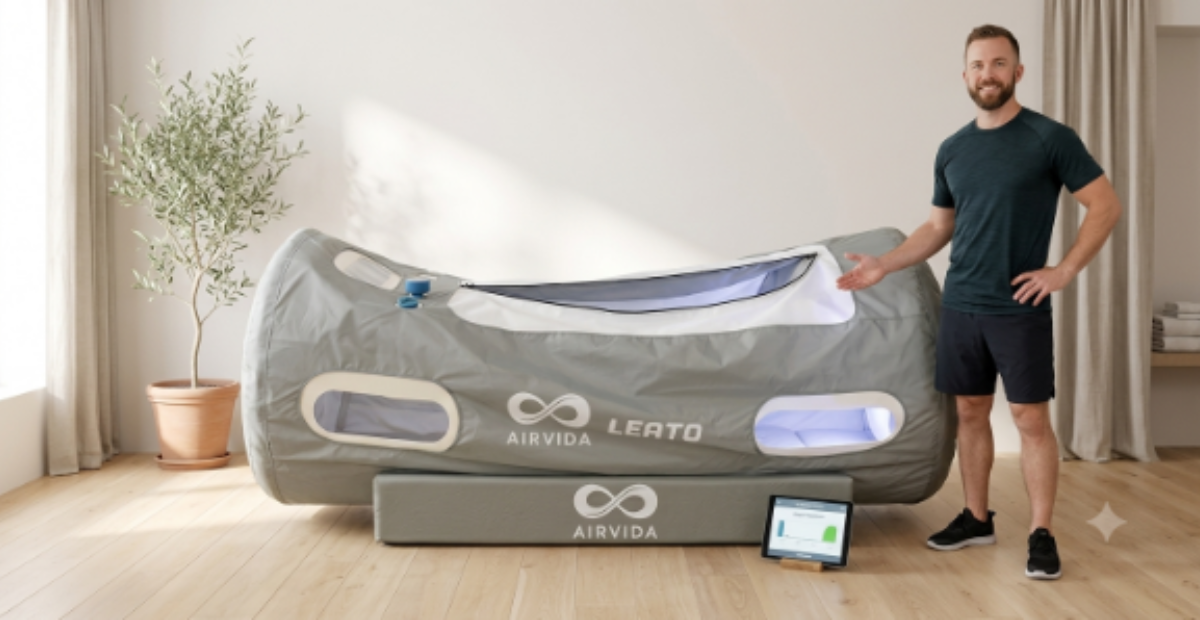
Hyperbaric chambers come in three main sizes: personal/monoplace (fits 1), multiplace (fits 2–6+), and portable soft-shell units for home use.
-
Soft chambers typically measure 25–36 inches in diameter and 84–94 inches in length; hard shell units are larger and heavier.
-
Pressure rating matters as much as size: most home soft chambers max out at 1.3–1.5 ATA; clinical hard shells reach 2.0–3.0 ATA.
-
Room requirements: plan for a minimum 7×10 ft clear space for a home unit, more for a clinical grade.
-
More sessions don't always mean more benefit. Dosage matters, and understanding limits protects you.
What Is a Hyperbaric Chamber Size Guide?
A hyperbaric chamber size guide is a structured framework for matching chamber dimensions, interior diameter, length, pressure rating, and physical footprint to your specific use case, whether that's home wellness, athlete recovery, or a clinical setting treating conditions like Crohn's disease or peripheral artery disease.
Size isn't just about fitting inside comfortably. It determines the maximum pressure the chamber can safely sustain, how long sessions take to pressurize and depressurize, the power requirements, and whether the unit realistically fits in a bedroom, garage, or clinic bay.
Getting the size wrong costs real money, either buying more chambers than you need or buying too few and replacing them within 18 months.
Why Chamber Size Selection Matters Right Now
The home hyperbaric market has expanded rapidly. Units that once required a clinic are now sold directly to consumers, which is genuinely good news for accessibility, but it creates a gap between what buyers expect and what different sizes actually deliver.
A 25-inch diameter soft chamber running at 1.3 ATA is a fundamentally different tool than a 34-inch hard shell running at 2.4 ATA. Conflating them because both are marketed as "hyperbaric chambers" leads to mismatched outcomes and wasted spend. Understanding the dimensional and pressure specs behind each category is the single most important step before any purchase.
Hyperbaric Collections You May Want to Shop

The Three Main Hyperbaric Chamber Categories by Size
1. Portable Soft-Shell Chambers (Home & Wellness Use)
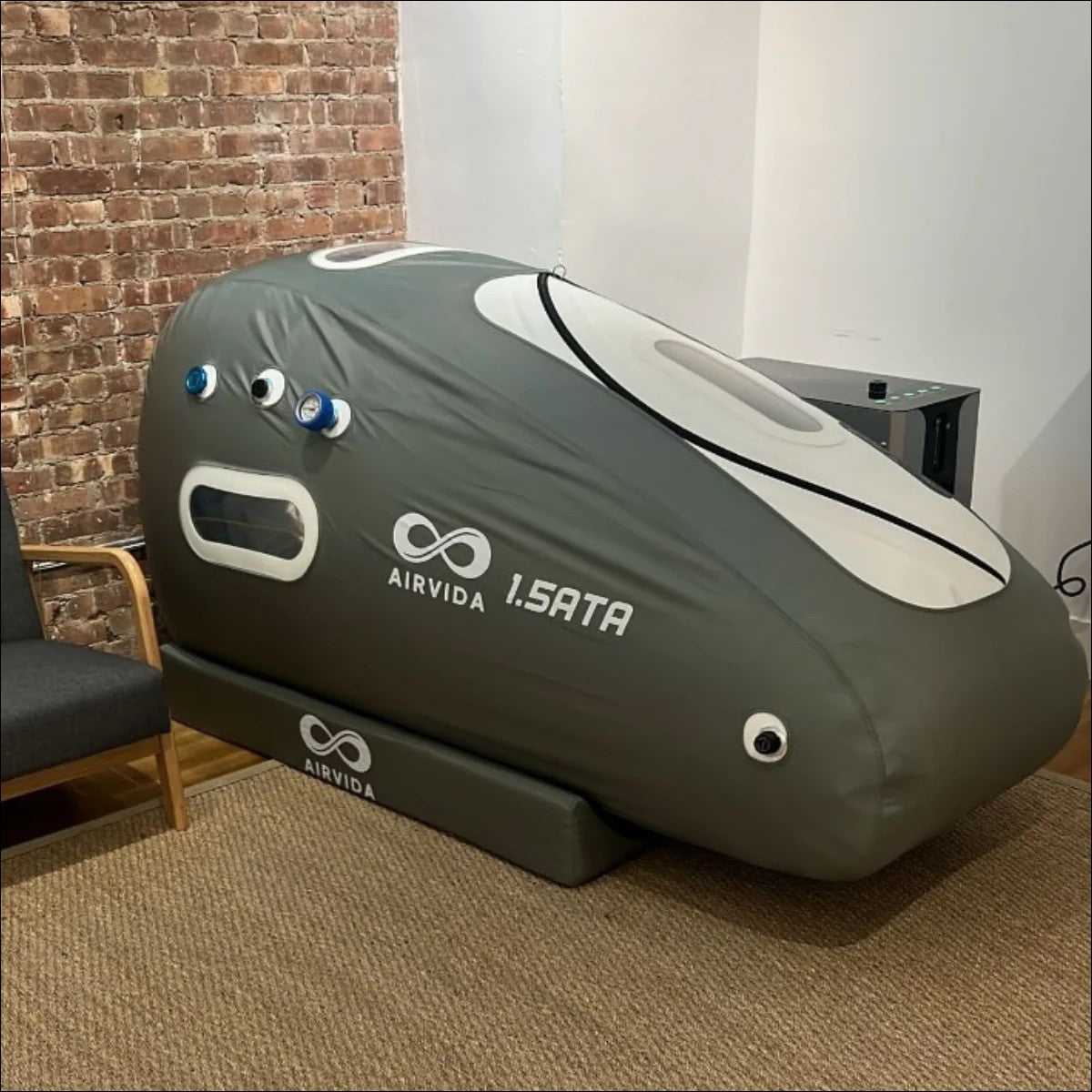
Soft chambers use a flexible, reinforced fabric shell inflated with ambient air or oxygen-enriched air. They're the most accessible entry point and the most common choice for home buyers.
Typical dimensions:
-
Interior diameter: 25–34 inches
-
Interior length: 84–94 inches
-
Weight: 60–120 lbs (deflated)
-
Maximum pressure: 1.3–1.5 ATA
A 25-inch diameter unit is the minimum for a single adult lying flat; anything smaller creates genuine discomfort during a 60-minute session. The 32–34-inch range is the practical sweet spot, with enough room to shift positions, use a tablet, or even have a child accompany a parent.
Room footprint: These chambers need roughly 7×10 feet of clear, level floor space. Add 2–3 feet on the entry side for comfortable ingress and egress, and confirm doorway clearance if the chamber needs to be moved between rooms.
2. Hard-Shell Monoplace Chambers (Clinical & Serious Home Use)
Hard-shell monoplace chambers are rigid acrylic or steel units designed for a single occupant. They're built for higher pressures and more precise oxygen delivery.
Typical dimensions:
-
Interior diameter: 28–36 inches
-
Interior length: 84–106 inches
-
Weight: 300–1,200+ lbs
-
Maximum pressure: 2.0–3.0 ATA
The extra weight and rigidity aren't for aesthetics; it's a structural necessity for maintaining higher ATA ratings safely. A chamber rated for 2.4 ATA needs walls that can withstand the compressive force that represents, which soft fabric simply cannot do.
Room footprint: Plan for a minimum 8×12 ft dedicated space, with 36-inch clearance on all sides for safe operation and maintenance access. Hard shells also require dedicated electrical circuits (typically 20–30 amp), climate control, and in some jurisdictions, a licensed technician for setup.
Browse hard-shell hyperbaric chambers for sale to compare current models across pressure ratings and interior dimensions.
3. Multiplace Chambers (Clinical Group Treatment)
Multiplace chambers are the workhorses of hospital hyperbaric units. They seat 2 to 12+ patients simultaneously, each breathing 100% oxygen through a mask or hood while the chamber pressurizes with air.
Typical dimensions:
-
Interior diameter: 60–120+ inches
-
Interior length: 10–25 feet
-
Weight: Several tons
-
Maximum pressure: 2.0–6.0 ATA
These are not home-purchase products. They require structural reinforcement, specialized plumbing, dedicated medical gas systems, and full clinical infrastructure. If you're comparing them to personal units, you're looking at a different product category entirely.
Pressure Rating vs. Physical Size: What the Numbers Actually Mean

One of the most common points of confusion in chamber selection is conflating physical size with pressure capability. They're related but not the same thing.
ATA (atmospheres absolute) is the unit used to describe chamber pressure. 1.0 ATA is normal atmospheric pressure at sea level. Every 33 feet of descent in water adds roughly 1 ATA.
-
1.3 ATA: The pressure of approximately 10 feet of water depth. Standard for most soft-shell home units.
-
1.5 ATA: Roughly 16 feet equivalent. Some premium soft chambers and entry-level hard shells.
-
2.0 ATA: 33 feet equivalent. The minimum threshold for many clinically studied protocols. Only achievable in hard-shell units.
-
2.4–3.0 ATA: Used in clinical wound care, decompression sickness treatment, and advanced neurological protocols.
How deep is 2.0 ATA? Precisely, 2.0 ATA corresponds to 33 feet of seawater depth, the equivalent of one additional atmosphere of pressure beyond sea level. This is the pressure level where many peer-reviewed HBOT protocols begin, which is why clinical providers frequently distinguish between "mild hyperbaric" (soft chambers at 1.3–1.5 ATA) and "true hyperbaric" treatment (hard shells at 2.0+ ATA).
If your goals involve protocols studied for neurological support, wound healing, or conditions like those covered in our HBOT for nervous system resource, pressure rating is not a detail; it's the central specification.
How Much Space Do You Need for a Hyperbaric Chamber?

Space planning is where purchases most often go sideways. Here's a practical breakdown by unit type:
Soft portable chamber:
-
Minimum floor area: 7 × 10 ft (70 sq ft)
-
Ceiling height: 7 ft minimum (no ceiling fans overhead)
-
Entry clearance: 3 ft on the hatch/zipper end
-
Electrical: Standard 15-amp household outlet (most units)
-
Flooring: Flat, hard surface preferred (avoid thick carpet)
Hard-shell monoplace:
-
Minimum floor area: 8 × 12 ft (96 sq ft), more comfortable at 10 × 14
-
Ceiling height: 8 ft minimum to accommodate the chamber body + overhead clearance
-
Entry clearance: 4 ft on the door end
-
Electrical: Dedicated 20–30 amp circuit
-
Additional: HVAC considerations for the compressor heat output
Practical tip: Measure doorways and hallways before delivery day, not after. A 34-inch diameter chamber does not fit through a standard 32-inch interior doorway. Most vendors will advise on this, but confirm it yourself.
If you're exploring clinic options in specific service areas, hyperbaric oxygen therapy in Durham, NC, and hyperbaric chamber sessions in Wichita, KS, offer access to properly sized clinical-grade equipment without the home footprint.
Hyperbaric Chambers You May Want to Shop
Explore More


Common Mistakes When Choosing Chamber Size
Buying by interior length alone. Most adults fit lengthwise in any standard chamber. What actually determines comfort is the interior diameter. At 25 inches, broader-shouldered adults will feel pinned. At 32+ inches, there's genuine room to relax.
Assuming soft = less effective for all goals. Soft chambers at 1.3–1.5 ATA are genuinely beneficial for wellness, recovery, and certain conditions. The mistake is expecting clinical-protocol outcomes at pressures those protocols weren't tested at. Match the pressure to your specific intent.
Ignoring the compressor footprint. The chamber itself is only half the space calculation. The compressor, often a separate unit the size of a large suitcase, needs its own placement, ventilation, and noise consideration.
Skipping the "how do I get it in?" question. Many buyers measure the room correctly but forget staircases, doorframes, and whether the unit ships assembled or flat-packed.
Equating more sessions with better results. Overuse is a real concern. See the FAQ below on session frequency.
Step-by-Step Framework for Choosing Your Chamber Size

Follow this sequence before committing to a purchase:
-
Define your primary use case. Wellness and recovery at home? Post-surgical support? Management of a specific condition? Your use case determines whether 1.3 ATA or 2.4 ATA matters.
-
Confirm your pressure requirement. If you or your provider has a specific protocol in mind, ask what ATA that protocol was studied at. If the answer is 2.0+ ATA, a soft chamber will not meet that specification.
-
Measure your space twice. Note floor dimensions, ceiling height, doorway widths on the path to the installation room, and available electrical circuits.
-
Choose the interior diameter before the length. Prioritize 32 inches or more for adult comfort during 60–90 minute sessions. Length is rarely the constraint.
-
Account for the full system. Chamber + compressor + oxygen concentrator (if applicable) + storage for the setup period. Get dimensions for all components from the vendor.
-
Confirm the vendor's site support. Delivery, assembly, first-use training, and warranty service vary significantly. Ask whether a technician comes on-site for setup, especially for hard-shell units.
-
Review soft vs. hard shell collections to compare real specs side by side. Soft hyperbaric chambers cover the portable home-use category; hard shells serve higher-pressure clinical needs.
Common Mistakes and Misconceptions
Bigger is always better. A larger chamber costs more to purchase, pressurize, and maintain. If you're a solo user doing wellness sessions at home, a well-built 32-inch soft unit serves you without the overhead of a clinical-grade system.
1.3 ATA is just a watered-down version of real HBOT. Low-pressure sessions have their own documented applications and benefits. They are a different tool, not an inferior one, as long as you don't apply them to protocols that require higher pressure.
Any room will work. Environmental factors, including humidity, temperature, static electricity risk (especially near oxygen), and proximity to heat sources, matter for both safety and equipment longevity.
FAQ
Are there different sizes of hyperbaric chambers?
Yes. Hyperbaric chambers range from compact portable soft-shell units (25–34 inches in diameter, designed for one person at home) to large clinical multiplace chambers that can seat 12 or more patients simultaneously. The three main categories are: soft portable chambers for home use, hard-shell monoplace chambers for single-patient clinical use, and multiplace chambers for hospital and clinical settings. Interior diameter, length, weight, and maximum pressure rating all vary substantially between these categories.
How deep is 2.0 ATA?
2.0 ATA corresponds to 33 feet of seawater depth, exactly one additional atmosphere of pressure beyond sea level. At this pressure, breathing oxygen-enriched air saturates plasma and tissue at concentrations significantly above what's achievable at surface pressure. Most clinically published HBOT protocols for wound healing, neurological support, and specific medical conditions use 2.0 ATA as the minimum effective pressure, which is why this figure appears so frequently in treatment guidelines.
Can you do too much hyperbaric chamber?
Yes. Oxygen toxicity is a real physiological risk at high pressures with prolonged exposure, though it's uncommon at the pressures used in most clinical protocols (1.5–2.4 ATA) when session length is properly controlled. At home, soft-chamber pressures (1.3–1.5 ATA), toxicity risk is very low, but over-reliance without a structured protocol can still lead to diminishing returns and unnecessary expense. Most providers recommend 20–60 session courses with structured breaks rather than indefinite daily use. Always consult a provider familiar with HBOT before establishing a self-directed protocol.
How much space do you need for a hyperbaric chamber?
A soft portable home chamber requires a minimum of 7×10 feet of clear, flat floor space, with standard ceiling height (7 ft minimum) and 3 feet of entry clearance at the hatch end. A hard-shell monoplace unit needs 8×12 feet minimum, a dedicated 20–30 amp electrical circuit, and 8-foot ceiling clearance. Beyond the chamber itself, factor in the compressor unit (often 2×3 feet) and ventilation space around it. Measure doorways and hallways on the installation path before delivery, assembled chambers often do not pass through standard interior doorframes.
Conclusion: Size Your Chamber to Your Actual Goals
The right hyperbaric chamber size isn't the largest one you can fit or the cheapest one available it's the one matched to your pressure requirements, your space constraints, and your intended use frequency. A 32-inch soft chamber at 1.5 ATA is a genuinely useful wellness and recovery tool. A hard-shell clinical unit at 2.4 ATA is a different instrument for different applications. Neither is universally superior; they serve different purposes.
Before you purchase, define your protocol, measure your space, and compare specs against your goals rather than marketing language.
Ready to find the right chamber for your space? Browse soft hyperbaric chambers for home and wellness use, or explore hard-shell options for clinical-grade pressure ratings. If you're looking for in-person treatment while you decide, sessions in Durham, NC and Wichita, KS let you experience the therapy firsthand before committing to a unit.