


A hyperbaric chamber for joint replacement recovery delivers pressurized, oxygen-rich air to accelerate tissue repair, reduce inflammation, and shorten the overall healing timeline. Research shows that patients who incorporate hyperbaric oxygen therapy (HBOT) after orthopedic surgery often experience less post-operative swelling and faster return to mobility compared to those relying on standard rehabilitation alone.
Joint replacement surgery, whether a total knee arthroplasty, hip replacement, or shoulder resurfacing, places enormous physiological demands on the body. Bone is cut, cartilage is removed, tendons and ligaments are stretched, and soft tissue is traumatized across a wide surgical field. Even with skilled surgical technique, the body must now rebuild collagen scaffolding, regenerate blood vessels, fight off potential infection, and reduce acute inflammation, all simultaneously. That is a significant metabolic workload, and standard post-operative care, while effective, does not always give the body every tool it needs to recover as efficiently as possible. This is exactly where HBOT enters the picture.
Why Oxygen Is the Most Underrated Factor in Surgical Recovery
Most people think about physical therapy, ice packs, and pain medication when they picture joint replacement recovery. Oxygen delivery rarely comes up in those early conversations, yet it is arguably the single most critical biological variable in the healing equation.
When surgeons operate on a joint, they inevitably disrupt the local microvascular network, the tiny blood vessels that carry oxygen and nutrients to cells. This disruption creates an area of relative hypoxia, meaning oxygen-starved tissue, around the surgical site. Hypoxic tissue heals more slowly, is more vulnerable to bacterial infection, and produces a weaker, less organized collagen matrix. All of this translates to longer recovery timelines and elevated complication risk.
Hyperbaric oxygen therapy addresses hypoxia directly. Inside a pressurized chamber, atmospheric pressure is raised to between 1.5 and 3.0 atmospheres absolute (ATA). At these pressure levels, oxygen dissolves directly into blood plasma rather than relying solely on hemoglobin for transport. This plasma-dissolved oxygen reaches tissues that compromised capillaries cannot adequately supply. The result is a dramatically elevated oxygen concentration in the peri-surgical area, which:
-
Stimulates fibroblast proliferation (essential for collagen formation)
-
Promotes angiogenesis (new blood vessel growth)
-
Reduces edema by vasoconstriction of leaking capillaries
-
Enhances white blood cell killing capacity, lowering infection risk
-
Modulates inflammatory cytokines to reduce chronic post-surgical inflammation
For a deeper look at how these mechanisms apply specifically to orthopedic procedures, the article on hbot for orthopedic recovery breaks down the physiological pathway in practical terms for patients and caregivers alike.
Hyperbaric Chambers You May Want to Shop
Explore More


What the Clinical Evidence Actually Says
HBOT has been used in wound care medicine for decades, and its application to surgical recovery is backed by a growing body of peer-reviewed literature, though it is important to be precise about what the evidence does and does not show.
Where the evidence is strong:
-
Infected surgical wounds and diabetic foot complications have robust FDA-approved HBOT indications. Many joint replacement patients, particularly those who are diabetic or have compromised immunity, fall into this high-risk category.
-
Osteonecrosis (bone death), which can occur after certain hip procedures, has shown significant response to HBOT in multiple clinical studies, with patients avoiding or delaying prosthetic replacement in documented cases.
-
Post-operative edema reduction is consistently observed across orthopedic HBOT studies, with several trials showing measurable decreases in limb circumference within the first two weeks.
Where the evidence is emerging:
-
Studies specifically on HBOT for primary total knee or hip arthroplasty in otherwise healthy patients are fewer, and sample sizes remain modest. However, results are directionally positive, with reduced pain scores and faster functional milestones noted.
-
The optimal number of sessions, pressure protocols, and timing relative to surgery have not been fully standardized for joint replacement specifically.
Understanding the broader context of how chambers function after procedures is valuable, and the resource on hyperbaric chamber post surgery provides a helpful framework for timing your sessions and setting realistic expectations during the recovery window.
How the Bone Healing Connection Strengthens the Case

One compelling area of research that reinforces the use of a hyperbaric chamber for joint replacement involves how HBOT interacts with bone physiology specifically. Joint replacement surgery involves cutting and reshaping bone, inserting implants, and expecting the surrounding osseous tissue to integrate with foreign materials. That integration process, called osseointegration, is oxygen-dependent at the cellular level.
Osteoblasts, the cells responsible for laying down new bone matrix, require adequate oxygen tension to function efficiently. Oxygen also drives the synthesis of hydroxyapatite, the mineral compound that gives bone its structural strength. When the peri-implant environment is hypoxic, osteoblast activity slows and implant integration can be incomplete, contributing to loosening over time.
The science connecting HBOT to bone repair extends beyond joint replacement, and if you are curious whether these principles apply to fractures and structural bone injuries, the article on do hyperbaric chambers help broken bones examines the overlapping mechanisms in useful detail. The bone healing pathway and the surgical integration pathway share enough biological ground that the evidence from fracture studies meaningfully informs the joint replacement conversation.
Hyperbaric Collections You May Want to Shop

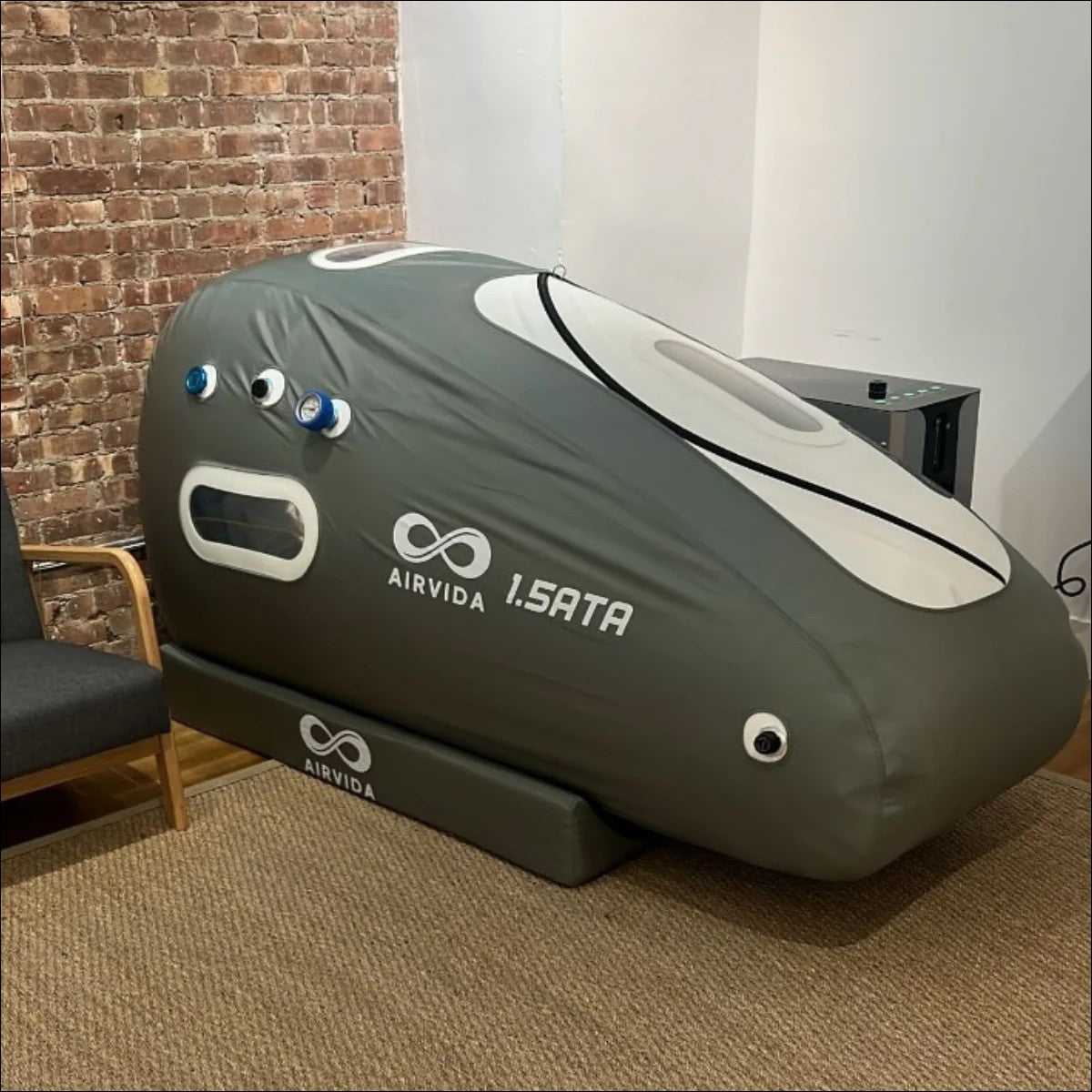
Choosing the Right Chamber for Home or Clinical Use
If you are seriously considering incorporating HBOT into your joint replacement recovery, one of the most important decisions you will make is choosing the right type of chamber. Not all chambers are equal, and the differences matter both for safety and therapeutic effectiveness.
Soft-Shell vs. Hard-Shell Chambers
|
Feature |
Soft-Shell (mHBOT) |
Hard-Shell (HBOT) |
|
Max Pressure |
1.3 ATA |
1.5 to 3.0 ATA |
|
Oxygen Delivery |
Ambient air or mild O2 |
100% medical oxygen |
|
FDA Classification |
Class II (mild) |
Class II or III |
|
Cost Range |
$3,000 to $10,000 |
$15,000 to $60,000+ |
|
Clinical Evidence |
Limited |
Substantial |
|
Home Use |
Common |
Growing |
|
Portability |
High |
Low to moderate |
For orthopedic recovery purposes, hard-shell chambers operating at 1.5 ATA or above are generally preferred by clinicians because they achieve the oxygen dissolution levels that drive the physiological responses described earlier. If you are evaluating options, hard shell hyperbaric chambers for sale provides a range of units designed for home and professional settings with meaningful pressure capacity.
Safety Standards Matter More Than You Think
When purchasing a hyperbaric chamber for personal use, the manufacturing standard the unit was built to is a non-negotiable factor. Chambers built to the ASME PVHO-1 standard (Pressure Vessels for Human Occupancy) have been engineered and tested under rigorous safety protocols established by the American Society of Mechanical Engineers, and browsing asme pvho 1 hyperbaric chambers gives you access to units that meet this critical safety threshold, which is especially important for patients who are recovering from surgery and spending extended time inside the chamber.
Next-Generation Chamber Designs

The HBOT market has evolved considerably in recent years, with newer generation units offering improved ergonomics, better viewing windows, upgraded pressure controls, and enhanced oxygen delivery systems that make extended sessions more comfortable, and if you want to see what modern engineering looks like in this space, the 2 0 chambers collection represents an updated approach to chamber design that prioritizes both clinical performance and user comfort.
What a Typical HBOT Protocol Looks Like After Joint Replacement
If you are working with a physician who has approved HBOT as part of your recovery plan, here is a general sense of what to expect, though your specific protocol will depend on your health status, the type of surgery you had, and how you are progressing.
Common session structure:
-
Pressure: 1.5 to 2.0 ATA for most post-surgical orthopedic applications
-
Duration: 60 to 90 minutes per session
-
Frequency: 5 sessions per week during acute recovery (typically weeks 1 through 4 post-surgery)
-
Total sessions: 20 to 40 sessions is a typical full course
What you will feel:
During pressurization, you will notice ear fullness similar to what you experience during airplane descent. Equalizing pressure by swallowing, yawning, or using the Valsalva maneuver resolves this quickly. The session itself is generally comfortable, and most patients read, listen to audio, or simply rest during the 60-90 minute window.
Who should not use HBOT without physician clearance:
-
Patients with untreated pneumothorax
-
Those on certain chemotherapy agents (bleomycin, doxorubicin)
-
Individuals with active ear infections or perforated eardrums
-
People with severe claustrophobia (though larger hard-shell chambers often resolve this concern)
Things to Know
-
HBOT is not currently covered by Medicare or most private insurance for standard post-surgical orthopedic recovery. The FDA-approved indications that do receive reimbursement are narrower, applying mainly to infected wounds, osteomyelitis, and specific ischemic conditions.
-
Sessions should ideally begin within the first 2 to 5 days post-surgery when the inflammatory window is most therapeutically relevant, though benefits can still be achieved weeks later.
-
Hard-shell chambers require a prescription in the United States for medical use, even when purchased for home use. Always work with a physician to obtain appropriate clearance.
-
The color of bruising around a surgical site often lightens more quickly in patients using HBOT, which reflects accelerated hemoglobin breakdown and lymphatic clearance.
-
Hydration matters significantly during HBOT. Plasma-dissolved oxygen transport works more efficiently in well-hydrated tissue, so drink water consistently before and after each session.
-
If you are a diabetic undergoing joint replacement, the case for HBOT becomes substantially stronger because impaired microvascular function is a known complication of diabetes that HBOT directly counteracts.
Frequently Asked Questions
How soon after joint replacement surgery can I start using a hyperbaric chamber?
Most physicians recommend beginning HBOT within 2 to 5 days post-surgery, provided your wounds are closed and there are no active complications.
Starting early captures the acute inflammatory window when oxygen-driven interventions have the most impact on tissue repair. Always get explicit clearance from your surgeon before your first session, as individual circumstances vary.
How many hyperbaric sessions does it take to see results after orthopedic surgery?
Most patients begin noticing reduced swelling and improved energy levels after 5 to 10 sessions, with more substantial functional improvements typically observed after 20 sessions.
Individual response rates vary based on age, overall health, surgical complexity, and session frequency. Committing to a full protocol of 20 to 40 sessions yields the most consistent outcomes.
Can I use a soft-shell hyperbaric chamber at home for joint replacement recovery?
A soft-shell chamber can provide mild benefits, but the pressure is limited to 1.3 ATA, which is below the threshold typically needed for the stronger anti-inflammatory and angiogenic effects.
For joint replacement recovery specifically, a hard-shell chamber at 1.5 ATA or higher is the preferred choice when budget allows. Soft-shell chambers may be used as a supplementary tool in lower-acuity recovery phases.
Does insurance cover hyperbaric oxygen therapy for knee or hip replacement?
In most cases, standard private insurance and Medicare do not cover HBOT for elective joint replacement recovery because it falls outside the currently approved FDA indications.
However, if your recovery involves a complication such as a post-surgical wound infection or osteomyelitis, coverage becomes more likely. Check with your insurer directly and document your physician's clinical rationale carefully.
Is it safe to use a hyperbaric chamber if I have a titanium joint implant?
Yes, titanium and most modern orthopedic implant materials are completely inert under hyperbaric pressure and are not contraindicated for HBOT.
Titanium does not interact negatively with elevated atmospheric pressure or elevated oxygen concentrations. Your surgeon can confirm the specific material used in your implant if you have any concerns.
The Bottom Line on Hyperbaric Chamber for Joint Replacement
A hyperbaric chamber for joint replacement recovery is not a replacement for physical therapy, proper nutrition, or your surgeon's post-operative protocol. It is a scientifically grounded adjunct therapy that addresses one of the most overlooked variables in surgical healing: oxygen availability at the tissue level. The mechanisms are well understood, the safety profile is strong in clinical settings, and the growing body of orthopedic research points consistently toward measurable benefit, especially for high-risk patients and those seeking to minimize their recovery timeline.
If you are preparing for or recovering from joint replacement surgery, the practical next step is to consult with your orthopedic surgeon or a hyperbaric medicine physician about whether HBOT fits your specific clinical picture. From there, you can evaluate chamber options that match your budget, space, and therapeutic goals, knowing that the science behind this approach is substantive and the technology to access it has never been more accessible.
At Airvida Chambers, we pride ourselves on offering the highest quality of hyperbaric chambers on the market, backed by only working with the most reliable partners in the industry. We ship worldwide.
Explore Airvida Chambers' hyperbaric chamber collection to find the right fit for a joint replacement recovery plan.