


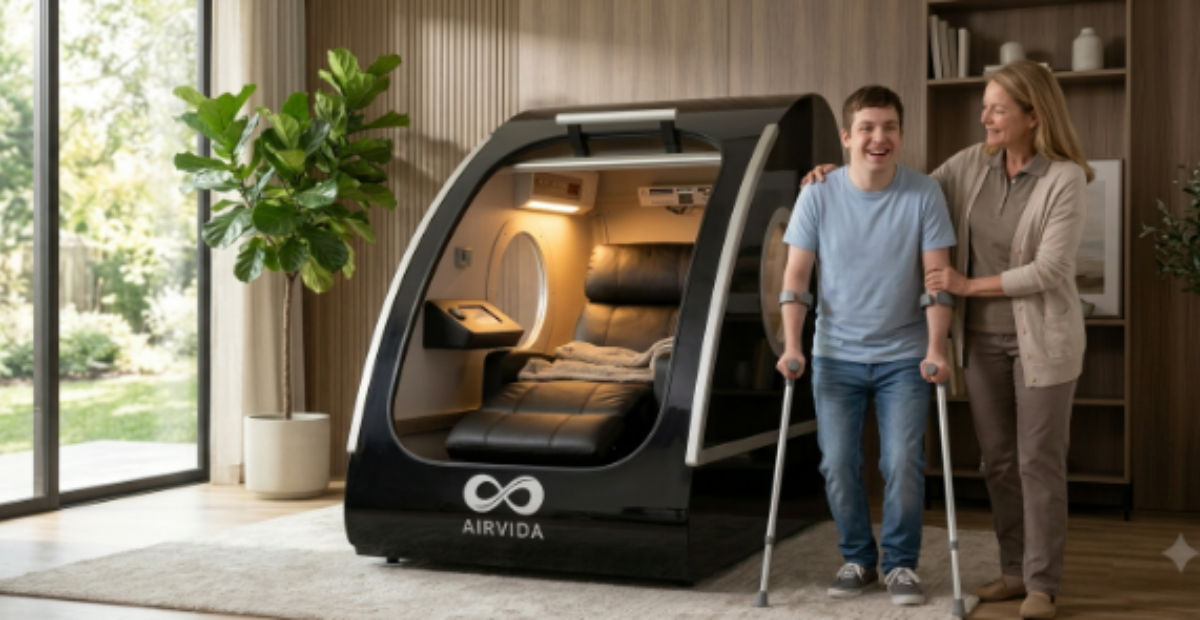
Hyperbaric chamber therapy for cerebral palsy involves breathing high-concentration oxygen inside a pressurized chamber, with the goal of increasing oxygen availability to brain tissue. Current research, including multiple randomized controlled trials and systematic reviews, shows mixed results: most high-quality studies find outcomes in treated children are similar to those in control groups, while a smaller number of trials report improvements in gait and balance when hyperbaric oxygen is combined with physical therapy.
Key Takeaways
-
Hyperbaric oxygen therapy (HBOT) for cerebral palsy has not been proven more effective than pressurized air in most high-quality randomized controlled trials.
-
A 2022 systematic review published in PLOS One identified five RCTs, four with a high level of evidence, and found that most showed similar improvements in motor and cognitive function between the HBOT group and the control group.
-
A 2023 randomized clinical trial found that adding HBOT to physical therapy produced statistically significant improvements in spatiotemporal gait parameters and functional balance compared to physical therapy alone.
-
Middle ear barotrauma is the most commonly reported adverse event in children undergoing HBOT, occurring in up to 50% of participants across trials.
-
Research in this area remains active, and the methodological quality and sample sizes of available studies limit definitive conclusions.
-
If you are considering hyperbaric chamber therapy for a child with cerebral palsy, consulting a qualified physician familiar with the current evidence base is strongly recommended.
What Is Hyperbaric Chamber Therapy and How Is It Used for Cerebral Palsy?
Hyperbaric chamber therapy is a treatment in which a person breathes high-concentration oxygen inside a sealed chamber pressurized to greater than one atmosphere. The increased atmospheric pressure allows oxygen to dissolve more readily into blood plasma, theoretically delivering higher oxygen concentrations to tissues, including the brain. In the context of cerebral palsy, the primary rationale is improving oxygen availability to damaged or dormant brain cells that may retain some capacity for recovery.
Cerebral palsy (CP) is a group of permanent movement and posture disorders caused by non-progressive injury to the developing brain, most often occurring before, during, or shortly after birth. Because CP involves brain tissue that was deprived of adequate oxygen at a critical developmental stage, researchers have investigated whether restoring oxygen supply through hyperbaric treatment could trigger neurological recovery.
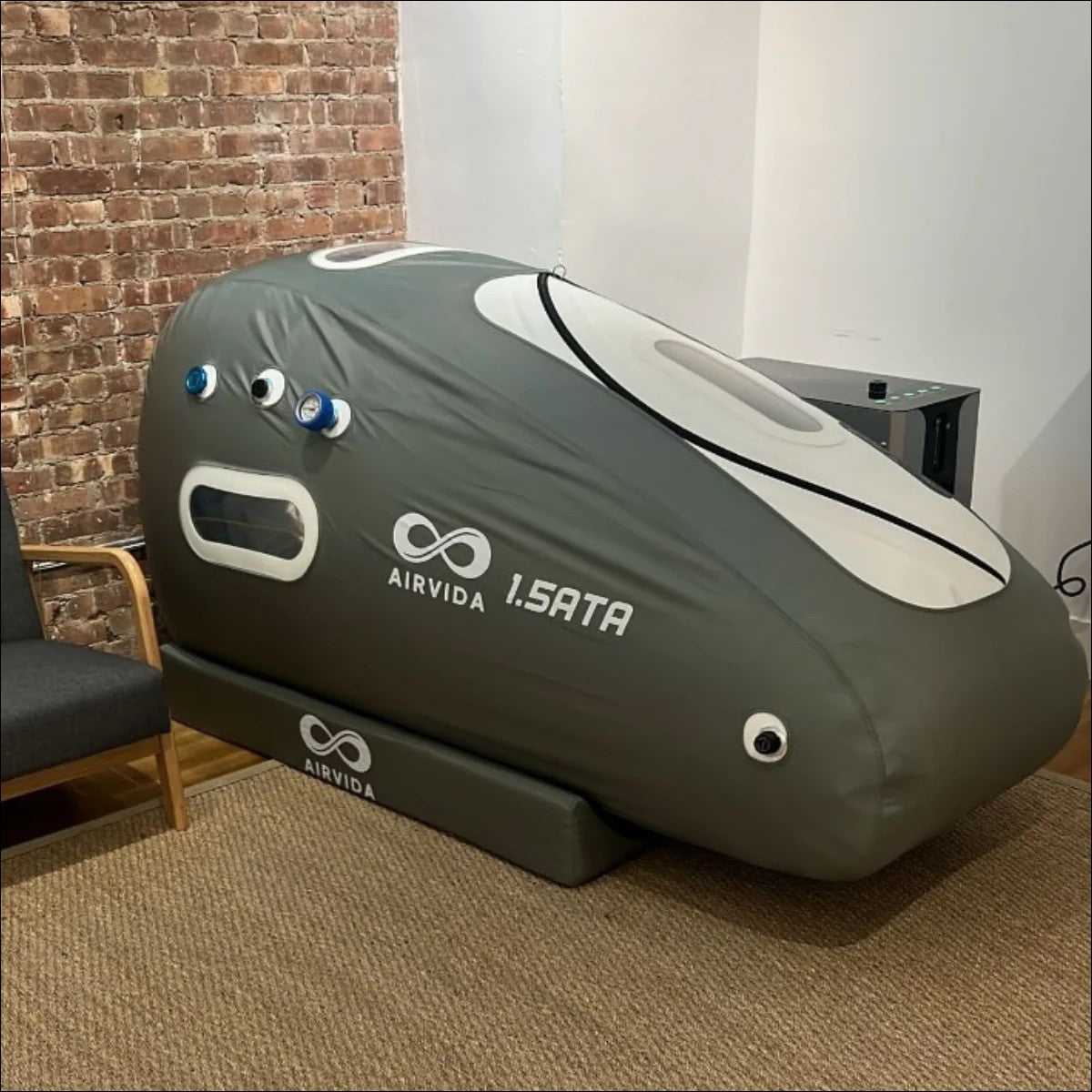
Studies on HBOT for CP typically use 100% oxygen delivered at pressures between 1.5 and 1.75 atmospheres absolute (ATA). Sessions generally last between 60 and 90 minutes and are administered in multiple-week courses, often five sessions per week for several weeks. The treatment has been explored as an adjunct to, rather than a replacement for, standard rehabilitation such as physical therapy, occupational therapy, and speech therapy.
The bottom line is that HBOT for CP is based on a biologically plausible mechanism, but biological plausibility alone does not confirm clinical effectiveness.
What Does the Current Research Say About HBOT and Cerebral Palsy?

The current research on HBOT and cerebral palsy is mixed, with most high-quality evidence showing no significant advantage over control interventions. A 2022 systematic review by Laureau et al., published in PLOS One and indexed in PubMed, identified five randomized controlled trials (RCTs), four of which had a high level of evidence. In all but one of those trials, the HBOT group and the control group showed similar improvements in motor and cognitive outcomes.
A key methodological insight from this body of research is the role of pressurized air as a control. One well-designed trial found that HBOT at 1.75 ATA and pressurized room air at 1.3 ATA produced comparable improvements in motor function of approximately 5-6%. This finding suggests that the physical pressure itself, not the oxygen concentration, may account for observed gains, or that both conditions produce a placebo response.
An earlier evidence report summarized in the NCBI Bookshelf concluded that there was inadequate evidence on both the benefits and harms of HBOT for brain injury, cerebral palsy, and stroke. The CanChild Centre for Childhood Disability Research, affiliated with the University of Toronto, has similarly noted that the small number of high-quality CP studies conducted have concluded against HBOT's effectiveness for CP.
The bottom line is that the majority of high-quality RCTs have not demonstrated that HBOT outperforms control conditions for the core motor and cognitive outcomes associated with cerebral palsy.
Hyperbaric Collections You May Want to Shop

Are There Any Studies That Show Positive Results for HBOT in Cerebral Palsy?
Some studies do report positive outcomes for HBOT in cerebral palsy, particularly when the therapy is combined with active physical rehabilitation. A 2023 randomized clinical trial published in the journal Children (MDPI) studied 39 children with hemiplegic cerebral palsy. The study group received HBOT five times per week for eight weeks alongside physical therapy, while the control group received physical therapy only.
Post-intervention measurements showed statistically significant improvements in spatiotemporal gait parameters and functional balance in the study group compared to the control group (p < 0.05). At a six-month follow-up, both groups showed gains above their pre-intervention baselines, but the HBOT group maintained a statistically significant advantage. The study authors concluded that adding HBOT to physical therapy rehabilitation could be effective for improving these specific outcomes in children with CP.
A study conducted at the Nasser Institute for Research and Treatment in Cairo, Egypt, examined 76 caregiver-child pairs. Children were aged 3 to 12 years with gross motor levels I through III. Before the intervention, 34.2% of children in both groups demonstrated gross motor level I. After an eight-month program combining HBOT with a caregiver video-assisted teaching program, 84.2% of children in the study group demonstrated gross motor level I. The control group did not achieve comparable gains.
The key point is that positive findings exist in the literature, but they come primarily from smaller trials or trials with specific design features, and they should be interpreted alongside the broader systematic review evidence before drawing conclusions.
How Does HBOT Compare to Standard Cerebral Palsy Treatments?
Standard cerebral palsy treatments are physical therapy, occupational therapy, speech-language therapy, and pharmacological management of spasticity, all of which have a more extensive evidence base than HBOT. The table below summarizes how HBOT compares to several common CP interventions across key dimensions.
|
Treatment |
Evidence Level |
Primary Target |
Common Use |
|
Physical therapy |
High |
Motor function, mobility |
Standard of care |
|
Occupational therapy |
High |
Fine motor, daily living skills |
Standard of care |
|
Speech-language therapy |
High |
Communication, feeding |
Standard of care |
|
Botulinum toxin (Botox) |
High |
Spasticity management |
Widely used adjunct |
|
Hyperbaric oxygen therapy |
Mixed/Low-to-Moderate |
Neurological recovery |
Investigational adjunct |
|
Selective dorsal rhizotomy |
Moderate-High (surgical) |
Spasticity reduction |
Specific candidates |
Physical therapy remains the most consistently recommended intervention for cerebral palsy across all subtypes and severity levels. The current evidence positions HBOT as an investigational adjunct rather than a first-line or standalone treatment. If you are exploring HBOT for a child with CP, it is best evaluated as a complement to, not a substitute for, established rehabilitation approaches.
The bottom line is that standard rehabilitation therapies have a substantially stronger and more consistent evidence base than HBOT for cerebral palsy.
What Are the Potential Risks and Adverse Events of HBOT in Children?
HBOT in children with cerebral palsy is associated with a higher rate of adverse events than pressurized air control conditions, though most events are mild in severity. The 2022 PLOS One systematic review found moderate-level evidence that HBOT produces more adverse events than pressurized air. The most commonly reported adverse event is middle ear barotrauma, which occurred in up to 50% of children across trials.
Other reported adverse events in pediatric HBOT research include:
-
Sinus squeeze (sinus barotrauma) from pressure changes
-
Temporary myopia (vision changes), which typically resolves after treatment ends
-
Oxygen toxicity seizures (rare, but documented at higher pressure protocols)
-
Anxiety or claustrophobia, particularly in younger children
-
Fatigue following sessions
The severity of adverse events in most CP trials was classified as mild to moderate. Serious events were uncommon but are not impossible, particularly in children with pre-existing conditions that affect pressure equalization, such as ear infections or certain structural abnormalities.
The key point is that while most reported adverse events in pediatric HBOT trials are mild, the elevated rate compared to control conditions means that risk-benefit assessment by a qualified physician is essential before starting treatment.
Hyperbaric Chambers You May Want to Shop
Explore More


What Does the Research Say About Who May Be Most Suited for HBOT Trials?
Children with hemiplegic cerebral palsy, a subtype affecting one side of the body, have been most frequently studied in HBOT trials, making this group the most represented in available data. The 2023 gait and balance RCT specifically recruited children with hemiplegic CP. Most larger systematic reviews include children across CP subtypes, but study populations and methodologies vary considerably.
Factors that have been considered in trial eligibility include:
-
Age range: Most studies focus on children aged 3 to 12 years
-
Gross motor function classification system (GMFCS) levels I through III, indicating moderate rather than severe motor impairment
-
Absence of active ear infections or upper respiratory conditions at the time of treatment
-
Ability to tolerate the chamber environment for a full session
Children with severe intellectual disability, active pulmonary conditions, or certain cardiovascular abnormalities may face additional eligibility considerations. Because eligibility criteria vary by protocol and facility, a physician evaluation is necessary to determine individual suitability. If you are researching chamber options for family use or clinical access, hyperbaric chamber Des Moines and hyperbaric chamber Sioux Falls are regional access points worth consulting for availability.
The bottom line is that eligibility for HBOT trials or protocols is highly individual and should be assessed on a case-by-case basis by a licensed medical provider.
What Are the Methodological Limitations in Current HBOT and CP Research?
The primary methodological limitations in HBOT and cerebral palsy research are small sample sizes, inconsistent control conditions, and the difficulty of blinding participants to pressure differences. These limitations have been acknowledged across multiple reviews, including the NCBI Bookshelf evidence report and the 2022 PLOS One systematic review. Observational before-after studies, which lack control groups entirely, introduce significant risk of bias and cannot isolate the effect of HBOT from natural developmental progress or concurrent therapies.
A specific challenge is the use of pressurized air as a "placebo" control. Because pressurized air at 1.3 ATA may itself have mild physiological effects, it is not a true inert placebo. This means that some trials may be comparing two active conditions rather than one active treatment against no treatment, complicating interpretation of results.
Ongoing clinical research is attempting to address these gaps. A registered clinical trial, NCT05136716, is listed on ClinicalTrials.gov under the title "Effect of Hyperbaric Oxygen Therapy on Cerebral Palsy," representing continued investigational interest in the field. The evidence base remains an area of ongoing investigation, and conclusions should be expected to evolve as larger, better-controlled trials are completed.
The key point is that the methodological limitations of existing research make it difficult to draw definitive conclusions in either direction, which is why consultation with a specialist familiar with the current literature is critical.
How Can You Access Hyperbaric Chamber Therapy for Cerebral Palsy?

Hyperbaric chamber therapy for cerebral palsy is accessed through specialized medical centers, hyperbaric clinics, or, in some cases, through home-use mild hyperbaric chambers under physician supervision. Access varies significantly by region. If you are located in the southeastern United States, hyperbaric chamber Tallahassee offers a regional point of access. For those in the Northeast, hyperbaric chamber Portland Maine is another option to explore.
For families who travel frequently or prefer flexible access, portable and mild hyperbaric chambers designed for personal use have become more widely available. If mobility or travel frequency is a consideration, reviewing options for a hyperbaric chamber for travelers may help identify a format that fits your lifestyle.
When evaluating any hyperbaric therapy program for a child with cerebral palsy, consider asking the following questions:
-
What pressure protocol is used, and what is the published evidence for that protocol in CP?
-
Is the program delivered by or supervised by a licensed physician?
-
How will progress be measured, and at what intervals?
-
What is the plan if your child experiences ear discomfort or anxiety during a session?
-
How does this program integrate with existing physical therapy or rehabilitation?
The bottom line is that access to HBOT is expanding, but the quality and medical supervision of programs vary, so thorough vetting is essential.
What Is the Bottom Line on Hyperbaric Chamber Therapy for Cerebral Palsy?

The research on hyperbaric chamber therapy for cerebral palsy presents a nuanced picture. Most high-quality randomized controlled trials, including those captured in the 2022 PLOS One systematic review, find that HBOT does not produce significantly better motor or cognitive outcomes than pressurized air control conditions. At the same time, a smaller body of evidence, including a 2023 RCT focused on gait and balance, suggests that HBOT combined with physical therapy may offer measurable benefits for specific outcome measures in children with hemiplegic CP.
The methodological limitations in this field, including small sample sizes, variable control conditions, and blinding challenges, mean that the evidence is not yet sufficient to make a broad, definitive recommendation. If you are considering HBOT for a child with cerebral palsy, the most responsible path is a thorough conversation with a physician who is familiar with the current evidence, followed by a structured, monitored approach that does not displace proven rehabilitation therapies.
The bottom line: hyperbaric chamber therapy for cerebral palsy remains an investigational adjunct with mixed evidence, and it is best pursued under qualified medical supervision alongside established rehabilitation protocols.
Frequently Asked Questions
Who cannot go in a hyperbaric chamber?
People who cannot safely undergo hyperbaric chamber therapy include those with untreated pneumothorax (collapsed lung), certain types of lung disease, uncontrolled high fever, or recent ear or sinus surgery. Individuals with severe claustrophobia, active upper respiratory infections, or specific cardiac conditions may also be contraindicated. A physician evaluation is required before any individual begins HBOT to assess individual risk factors.
Is cerebral palsy caused by lack of oxygen at birth?
Cerebral palsy can be caused by oxygen deprivation during birth, but it is not the only cause. Prenatal brain injury, genetic factors, infections during pregnancy, and traumatic brain injury in early infancy can all lead to cerebral palsy. Hypoxic-ischemic encephalopathy (HIE), which involves oxygen deprivation around the time of birth, is one recognized cause, but many cases of CP have multifactorial or unclear origins.
Can a hyperbaric chamber help with brain injury?
Hyperbaric oxygen therapy has been studied for various types of brain injury, and research shows mixed results depending on the injury type, timing of treatment, and protocol used. Some studies in stroke and traumatic brain injury report neurological improvements, while others show no significant benefit over controls. The evidence remains an area of active investigation, and outcomes vary based on individual circumstances and the quality of the clinical program.
What is the best exercise for cerebral palsy?
Physical therapy guided by a licensed physiotherapist is the most consistently evidence-supported intervention for improving motor function in cerebral palsy. Specific exercise approaches that have evidence include strength training, aquatic therapy, treadmill training, and task-specific practice. The best program for any individual depends on their CP subtype, GMFCS level, age, and functional goals, making personalized professional assessment essential.
Are there any dangers to hyperbaric oxygen therapy?
Yes, hyperbaric oxygen therapy carries documented risks, including middle ear barotrauma, sinus barotrauma, temporary changes in vision, and in rare cases, oxygen toxicity seizures at higher pressures. In pediatric populations studied for cerebral palsy, middle ear barotrauma occurred in up to 50% of children. Most adverse events reported in CP trials were mild to moderate in severity, but the risk rate is higher than with pressurized air control conditions, making medical screening before treatment important.