


Key Takeaways
-
DOMS (delayed onset muscle soreness) peaks 24–72 hours after intense exercise and is driven by micro-tears, inflammation, and localized hypoxia in muscle tissue.
-
Hyperbaric oxygen therapy (HBOT) floods damaged tissue with oxygen at 1.5–3x atmospheric pressure, directly targeting the oxygen-depleted environment that DOMS creates.
-
Studies show HBOT can reduce perceived soreness, lower creatine kinase levels (a muscle damage marker), and restore strength faster compared to passive rest.
-
Most athletes need 60–90 minute sessions at 1.5–2.0 ATA starting within 24 hours of the damaging workout for best results.
-
HBOT is not a magic bullet; hydration, sleep, and nutrition still matter, but it is one of the most physiologically logical recovery tools available for DOMS specifically.
-
Hyperbaric Chambers You May Want to Shop
Explore More


What Is a Hyperbaric Chamber for DOMS?
Delayed onset muscle soreness is the stiffness, tenderness, and performance loss that follows unaccustomed or high-intensity exercise, such as the reason you can barely walk down stairs two days after a hard leg session. It is not caused by lactic acid (which clears within an hour of exercise ending). DOMS stems from eccentric muscle contractions that cause micro-structural damage, triggering an inflammatory cascade and localized tissue hypoxia reduced oxygen availability in the damaged area.
That oxygen shortage is exactly where a hyperbaric chamber intervenes. During HBOT, you breathe near-pure oxygen inside a pressurized chamber at 1.3 to 3.0 atmospheres absolute (ATA). At that pressure, oxygen dissolves directly into plasma, lymph, and cerebrospinal fluid, not just red blood cells. Oxygen-saturated plasma can reach ischemic, inflamed tissue that compromised blood flow would otherwise leave starved.
Put plainly: DOMS creates a hypoxic wound environment in your muscles, and HBOT is a targeted delivery system for the one thing that environment is missing.
Why DOMS Recovery Matters More Than Most Athletes Realize
Training consistency is the single biggest predictor of long-term athletic progress, and DOMS is training's biggest disruptor. A 2019 survey of recreational athletes found that severe DOMS delayed the next planned workout by an average of 3.2 days. Multiply that across a training year, and you are looking at 30–40 missed sessions, the difference between plateauing and progressing.
Beyond missed volume, unresolved DOMS changes movement mechanics. Athletes compensating for soreness develop altered motor patterns that increase injury risk in the sessions that follow. This is why professional sports teams have invested heavily in recovery infrastructure, not pampering, but protecting the asset.
HBOT entered serious athletic recovery programs after military research showed it accelerated wound healing in oxygen-deprived tissue. The tissue physiology is nearly identical. If pressurized oxygen restores function in a hypoxic surgical wound, the logic of applying it to hypoxic exercise-damaged muscle holds up well under scrutiny.
What the Research Says About HBOT and Muscle Recovery

The evidence base for HBOT in DOMS is still growing but consistently points in the same direction.
Creatine Kinase and Inflammation Markers
A frequently cited study published in the Journal of Strength and Conditioning Research had subjects perform a standardized eccentric exercise protocol, then assigned half to HBOT sessions and half to passive rest. The HBOT group showed significantly lower creatine kinase (CK) levels, a primary blood marker of muscle damage, at the 24- and 48-hour marks. Lower CK does not just mean less damage; it correlates with faster return to baseline strength.
Separately, a 2021 controlled trial found that HBOT-treated athletes reported 30–40% lower perceived soreness on validated pain scales compared to controls at 48 hours post-exercise, with grip strength and vertical jump recovering roughly 20% faster.
Oxygen Delivery Mechanism
Under normal atmospheric conditions, hemoglobin carries about 97% of blood oxygen. At 2.0 ATA breathing 100% O2, plasma oxygen content increases by roughly 10–15 times. That dissolved oxygen bypasses congested capillaries in inflamed tissue and reaches the mitochondria in damaged muscle fibers directly. Mitochondria use that oxygen to restore ATP production, the energy currency muscle cells need to repair themselves.
Anti-Inflammatory Effects
HBOT modulates several inflammatory pathways relevant to DOMS. Research shows it can downregulate NF-κB activity (a master regulator of the inflammatory response), reduce neutrophil adhesion to vessel walls, and promote the shift from pro-inflammatory M1 macrophages to repair-oriented M2 macrophages. This is not suppressing inflammation; it is redirecting it toward tissue repair faster than the body does on its own.
HBOT vs. Other Popular DOMS Treatments

Athletes have no shortage of recovery options, and it helps to know where HBOT sits relative to the alternatives.
Cold water immersion (ice baths) reduces acute inflammation through vasoconstriction, but research shows they may blunt long-term training adaptations. If you are using ice baths daily, you could be slowing strength gains. HBOT does not carry that tradeoff; it accelerates repair without suppressing the anabolic response.
Compression therapy improves venous return and reduces edema effectively. It works best in combination with other modalities rather than as a standalone.
NSAIDs (ibuprofen, naproxen) block prostaglandin synthesis to reduce soreness, but also interfere with satellite cell proliferation, the muscle repair mechanism itself. Regular NSAID use around training is increasingly questioned by sports medicine literature.
Saunas and heat therapy increase blood flow and have their own recovery benefits, but the physiological mechanism is quite different from HBOT. For a detailed breakdown of how these two approaches compare, the HBOT vs. sauna guide covers the distinction well, they are not interchangeable, and for DOMS specifically, the oxygen delivery HBOT provides is the more targeted mechanism.
Massage and foam rolling address the mechanical component of soreness but cannot change the oxygen environment in damaged tissue. Useful companions to HBOT, not replacements.
The honest summary: HBOT addresses the underlying physiology of DOMS hypoxia and inflammatory dysregulation more directly than any of the common alternatives.
How to Use a Hyperbaric Chamber for DOMS: Practical Protocol

Getting results from HBOT for DOMS is not complicated, but timing and pressure matter.
Timing Your Sessions
-
Optimal window: Within 12–24 hours of the workout that caused the damage
-
Still beneficial: 24–48 hours post-exercise for active soreness
-
Diminishing returns: Beyond 72 hours, the acute inflammatory phase has largely resolved, and HBOT's impact on DOMS specifically is reduced (though it remains useful for other recovery purposes)
Starting a session while soreness is still building, rather than waiting until peak DOMS hits, is consistently more effective.
Pressure and Duration
-
1.5 ATA: Effective entry point for mild to moderate DOMS; well-tolerated by beginners
-
1.75–2.0 ATA: The sweet spot for most athletic recovery applications; supported by most DOMS-specific research
-
Session length: 60–90 minutes is the standard for muscle recovery protocols
-
Frequency: 1–2 sessions per DOMS episode is typical; some athletes run sessions on consecutive days following very heavy training blocks
Athletes new to HBOT should start at 1.5 ATA for their first session and assess tolerance before moving higher.
Hyperbaric Collections You May Want to Shop

Soft vs. Hard Shell Chambers
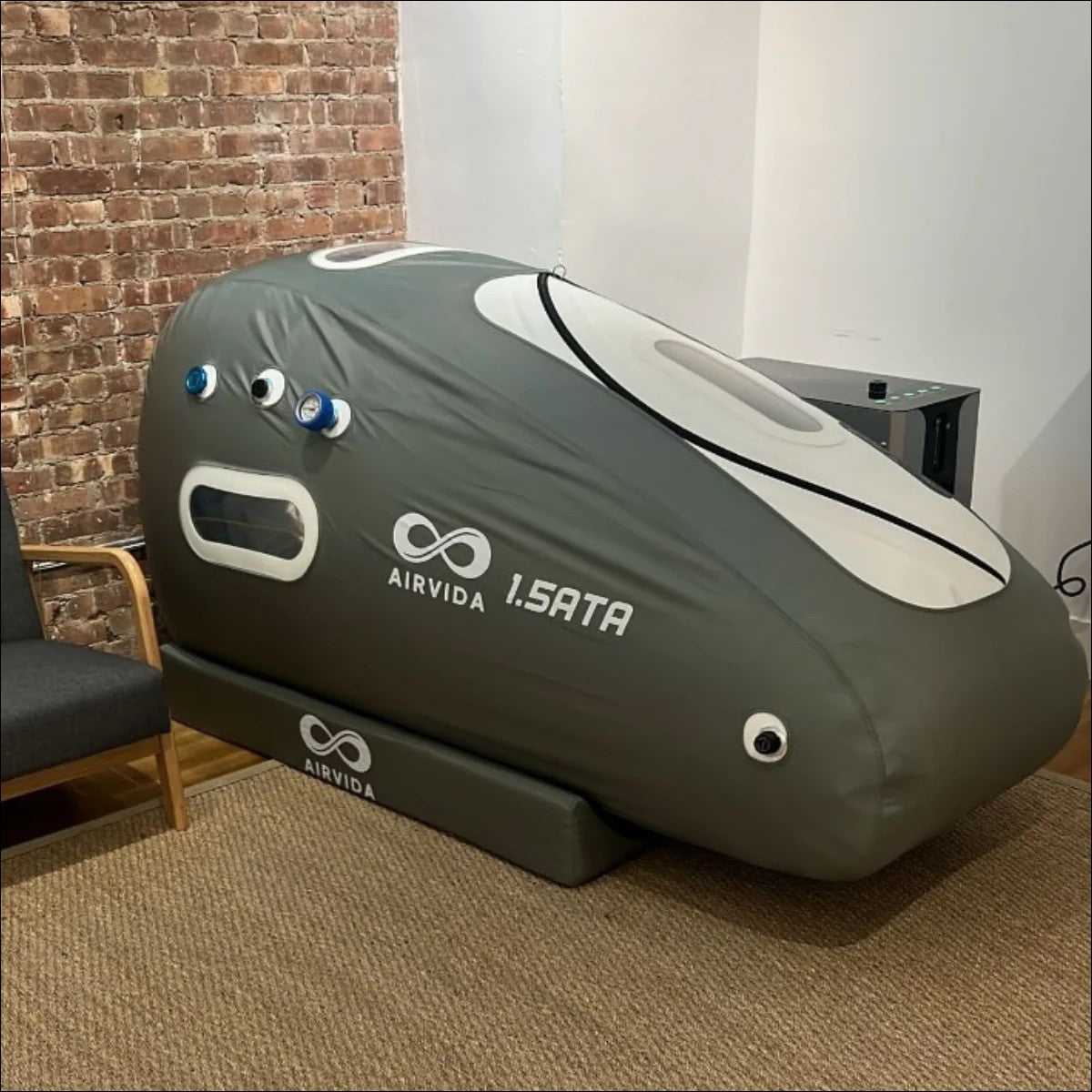
Soft hyperbaric chambers (mHBOT) typically reach 1.3–1.5 ATA and use filtered ambient air rather than 100% medical oxygen. They are more accessible for home use and still provide recovery benefits for mild to moderate DOMS. Browse soft hyperbaric chambers if you are considering a home recovery setup.
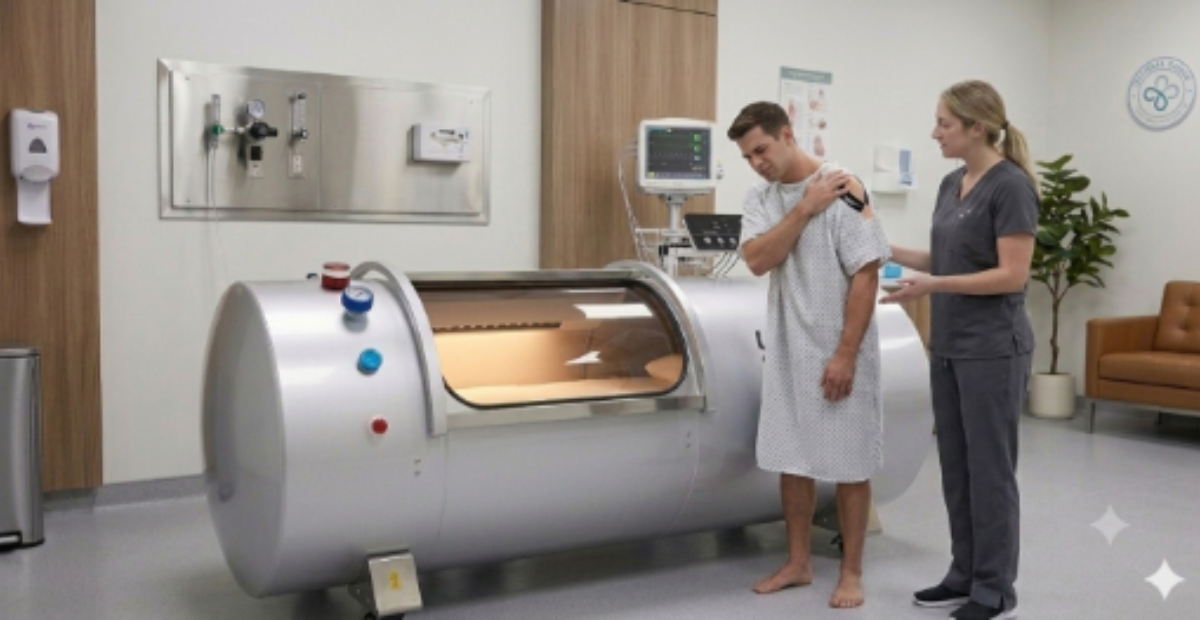
Hard-shell chambers reach higher pressures (up to 3.0 ATA) and deliver pure oxygen, making them better suited for severe DOMS and clinical recovery protocols. Hard-shell hyperbaric chambers are the standard at sports medicine clinics and dedicated HBOT centers.
For recreational athletes dealing with typical training-related DOMS, soft chambers at 1.3–1.5 ATA provide a practical and cost-effective option. Competitive athletes with significant recovery demands and access to clinical facilities will get more from hard-shell sessions at 1.75–2.0 ATA.
Common Mistakes and Misconceptions About HBOT for DOMS

Mistake 1: Waiting until soreness peaks before booking a session. HBOT's greatest value for DOMS is in the early inflammatory phase. Waiting until day two or three of severe soreness to start a session misses the optimal intervention window. Book or plan sessions based on your training calendar, not your pain level.
Mistake 2: Expecting HBOT to replace sleep and nutrition. No single recovery tool overrides the fundamentals. Protein synthesis requires adequate dietary protein (1.6–2.2g per kg of bodyweight for athletes). Sleep is when growth hormone peaks and repair accelerates. HBOT is additive to these, not a substitute.
Mistake 3: Assuming one session fixes everything. One session provides meaningful benefit, but serial sessions following high-volume training blocks produce compounding effects. Athletes who use HBOT consistently across a training cycle report better baseline recovery than those who use it only for acute flare-ups.
Mistake 4: Confusing mild pressure chambers with clinical HBOT. A 1.3 ATA session in an air-filled soft chamber is not the same physiological stimulus as a 2.0 ATA session breathing 100% O2. Both have value, but it is worth being clear-eyed about what you are purchasing and what outcomes to expect from each.
Misconception: HBOT is only for injured or sick people. Historically, hyperbaric therapy was associated with wound care and serious medical conditions. The research application to athletic recovery is newer but well-supported. HBOT's benefits extend well beyond acute injury. Cognitive function, circulation, and metabolic health are all active areas of research, as covered in the HBOT for cognitive function overview.
FAQs: Hyperbaric Chamber for DOMS
Is hyperbaric good for muscle recovery?
Yes, and the mechanism is well-established. HBOT increases plasma oxygen concentrations to levels not achievable through normal breathing, delivering oxygen to hypoxic, inflamed muscle tissue directly. Research shows it reduces creatine kinase levels (a damage marker), lowers perceived soreness scores, and accelerates strength recovery compared to passive rest. The benefit is strongest when sessions begin within 24 hours of the damaging exercise and at pressures of 1.5 ATA or above.
How do you heal extreme DOMS?
For severe DOMS, a multi-modal approach works best: prioritize protein intake (at least 30–40g per meal), stay hydrated, move lightly rather than rest completely (active recovery increases blood flow without further damage), and use targeted treatments like HBOT or compression. HBOT is particularly valuable for extreme cases because it addresses the oxygen deficit in damaged tissue, which passive rest alone cannot correct efficiently. Some athletes also incorporate massage 48+ hours post-exercise once acute tenderness has reduced.
When should you not use a hyperbaric chamber?
Contraindications for HBOT include untreated pneumothorax (collapsed lung), certain ear or sinus conditions that prevent pressure equalization, uncontrolled high fever, and some types of chemotherapy. People with claustrophobia may need to start with shorter sessions or in open-design chambers. HBOT is also not recommended immediately following alcohol consumption or with certain medications. Always disclose your full health history before your first session. For specific conditions such as vascular or neurological issues, the hyperbaric chamber for peripheral artery disease resource covers additional clinical considerations.
Can a hyperbaric chamber help with pain?
Yes. HBOT reduces pain through several overlapping mechanisms: it decreases tissue edema (swelling that creates mechanical pressure on nerves), modulates inflammatory mediators that sensitize pain receptors, and promotes faster tissue repair. For DOMS specifically, the reduction in perceived soreness at 48 hours is well-documented. HBOT has also shown benefit for neuropathic pain, wound-associated pain, and chronic inflammatory pain, making it a broadly applicable tool rather than one narrowly targeted at exercise soreness.
Conclusion: Is a Hyperbaric Chamber Worth It for DOMS?
For athletes who train hard enough to experience meaningful DOMS regularly, HBOT is one of the most physiologically sound recovery investments available. It is not a luxury add-on; it directly addresses the hypoxic, inflammatory environment that makes DOMS take days to resolve.
The practical calculus is straightforward: if DOMS regularly disrupts your training schedule, costs you performance in subsequent sessions, or limits your ability to hit weekly volume targets, the cost of HBOT sessions compares favorably to the training time you are losing.
Whether you are exploring a local HBOT center or considering a home unit, the format matters less than consistency. Starting sessions within 24 hours of hard training, targeting 1.5–2.0 ATA, and committing to the practice across a training cycle will produce noticeably better recovery than any single application.
If you're in the Des Moines area, explore hyperbaric chamber options in Des Moines to find sessions near you. Athletes in Texas can find hyperbaric chamber services in Corpus Christi for professional recovery support close to home.