


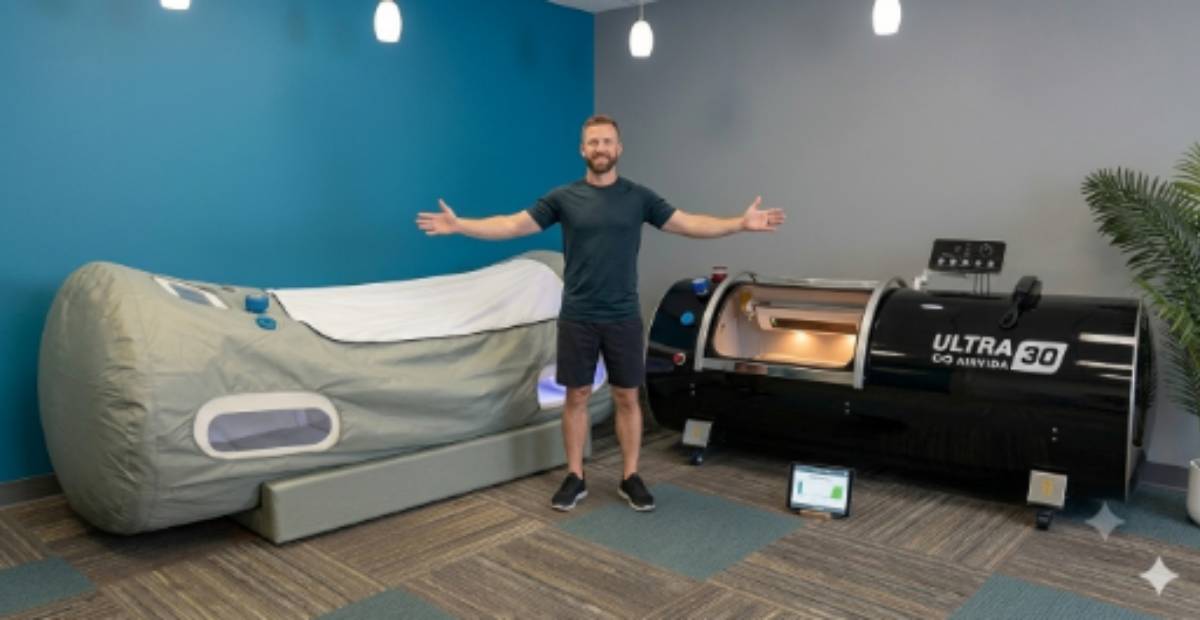
What size hyperbaric chamber do I need comes down to three measurements you can settle in ten minutes: the tallest user's height, the width of the room where it will live, and whether one person or two will ever be inside at once. Most solo home users are comfortable in a chamber with a 26- to 32-inch interior diameter; taller users (6'2"+) or anyone who feels boxed in should size up to 36–42 inches, and clinics running back-to-back clients lean toward larger sit-up or two-person units. Get those three numbers right, and the rest of the decision falls into place.
Below is exactly how to translate your body, your space, and your goals into the correct size plus the sizing mistakes that lead to buyer's remorse.
Key Takeaways
-
Diameter matters more than length. Interior width controls how claustrophobic the chamber feels; 26–32 inches suits most solo users, 36–42 inches suits larger or space-sensitive users.
-
Match length to the tallest user, not the average. Add roughly 6–10 inches to standing height for a comfortable lie-down fit.
-
Single vs. multiplace is a use-case call. One person at home rarely needs a two-person unit; clinics and couples often do.
-
Soft-shell chambers run lower pressure (≈1.3–1.5 ATA); hard-shell run higher (up to 2.0+ ATA) and that choice affects both size and footprint.
-
Measure your room, doorways, and ceiling before you buy the chamber has to get in the room and inflate with clearance around it.
What "The Right Size" Actually Means
A hyperbaric chamber's size is described by two core dimensions: interior diameter (the width of the usable space when inflated or sealed) and interior length (head-to-toe room). A third practical number, the exterior footprint, tells you whether it fits your space.
For lie-down chambers, the most common home format, diameter is what people notice first. A 26-inch chamber is snug and efficient; a 40-inch chamber feels like a small tent. Neither is "better"; they serve different comfort tolerances and budgets.
Sit-up and vertical chambers trade floor length for height, which changes the math entirely. Those are worth understanding before you assume a lie-down model is your only option, and I'll cover them below.
Hyperbaric Collections You May Want to Shop

Why Sizing Matters More Than Buyers Expect
Sizing gets treated as an afterthought, and it's the single most common source of return requests I see. Two things drive that.
First, claustrophobia is real, and it's dimensional. A user who tolerates a 34-inch chamber may panic in a 26-inch one, especially during the first few sessions before they acclimate. You cannot fix a too-tight chamber after purchase.
Second, rooms lie. A chamber that looks compact in a product photo needs inflation clearance, zipper access, and room for a concentrator, hoses, and an attendant to reach the person inside. A unit that technically fits the floor plan can still be miserable to actually use.
Right now, the market is flooded with imported soft-shell units at aggressive price points, and many list only diameter or only length, never both, never the footprint. That's precisely why matching size to your body and your room upfront protects you.
Hyperbaric Chamber Sizes, Explained by User

The fastest way to land on a size is to identify which user profile you're buying for.
The single home user (most buyers)
If one adult of average height will use the chamber, a 26- to 32-inch interior diameter lie-down model is the sweet spot. It inflates fast, uses less floor space, and pressurizes efficiently. Add roughly 6–10 inches to the user's standing height to confirm the interior length is comfortable rather than exact.
Taller users or anyone space-sensitive
For users 6'2" and above, or anyone who dislikes tight spaces, step up to a 36–42-inch diameter. The extra width dramatically reduces the boxed-in feeling and makes it easier to shift position, read, or use a phone during a session. The trade-offs are a larger footprint and a longer inflation time.
Couples, families, and shared households.
If two people want to share a session or you simply want room to bring a child or pet inside, a two-person (multiplace-style) soft chamber with a 50–60+ inch diameter is the move. These are substantially larger and heavier, so the room requirement jumps accordingly.
Clinical and multi-client operators
Clinics running sessions all day have different priorities: durability, faster turnover, and often a sit-up hard-shell configuration that lets clients enter and exit easily. This is where sizing intersects with your business model rather than just your body. If you're outfitting a treatment practice, our range of hyperbaric chambers for physical therapy is built around that higher-throughput, professional-use scenario, and this deeper walkthrough of the best hyperbaric chamber for a physical therapy clinic covers the size-vs-turnover math in detail.
Soft-Shell vs. Hard-Shell: How It Changes Size and Pressure

Size and chamber type are linked, so you can't decide one without the other.
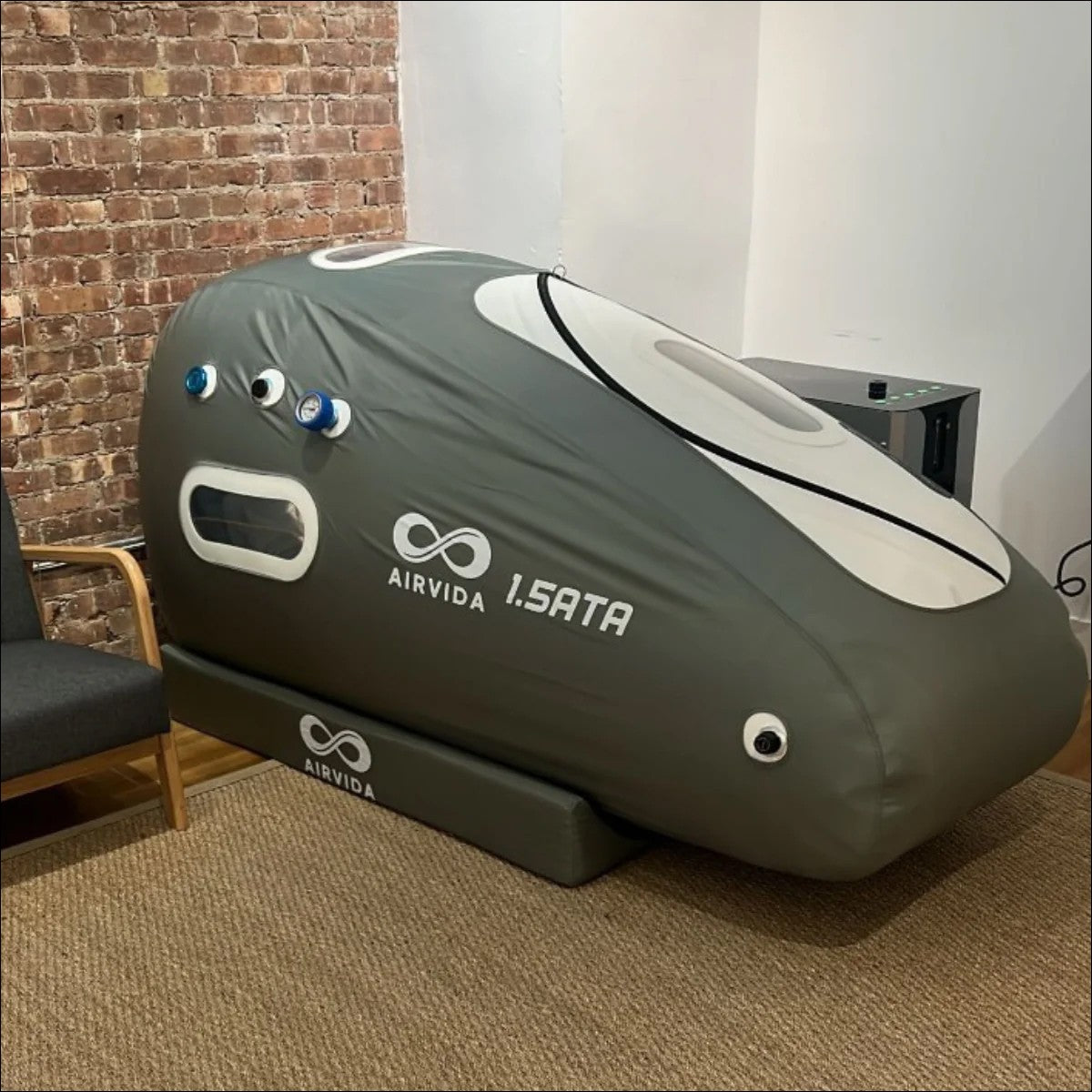
Soft-shell chambers are inflatable, lightweight, and portable. They typically operate at mild pressures of about 1.3 to 1.5 ATA (atmospheres absolute), which is why this category is often called mild hyperbaric oxygen therapy (mHBOT). Their sizing skews toward the compact-to-wide lie-down range, and they're the standard choice for home use.
Hard-shell chambers are rigid, can reach higher pressures (up to 2.0+ ATA), and often come in sit-up or larger-capacity configurations. They demand more space, more ceiling clearance for upright models, and a sturdier floor.
Here's how the practical dimensions typically compare:
|
Chamber Type |
Common Interior Diameter |
Typical Pressure |
Best Footprint For |
|
Compact soft-shell (lie-down) |
26–32 in |
~1.3–1.5 ATA |
Solo home users, small rooms |
|
Wide soft-shell (lie-down) |
36–42 in |
~1.3–1.5 ATA |
Taller / space-sensitive users |
|
Two-person soft-shell |
50–60+ in |
~1.3–1.5 ATA |
Couples, families, shared use |
|
Sit-up hard-shell |
Varies (upright) |
up to 2.0+ ATA |
Clinics, mobility-limited users |
The takeaway: if you know you want higher pressure or an easy sit-up entry, you're already pointed toward a larger footprint and should plan your room around it.
Hyperbaric Chambers You May Want to Shop
Explore More


Matching the Chamber to Your Space
Body fit is only half the equation. The chamber has to live somewhere.
-
Floor footprint: Measure the full inflated dimensions, not the folded box. Leave 12–18 inches of clearance on the zipper side for entry and exit.
-
Ceiling height: Lie-down chambers need modest headroom, but sit-up hard-shell units can require 7+ feet of ceiling clearance.
-
Doorways and hallways: Confirm the deflated/disassembled unit can physically reach the room. Basements and upstairs bedrooms are the usual choke points.
-
Power and equipment room: Leave space for the air compressor and, if used, an oxygen concentrator plus hoses; these sit outside the chamber and generate some noise and heat.
-
Flooring: A level surface matters for even inflation and comfort. Thick carpet can interfere with some models.
For practice owners, the space conversation is also a client-flow conversation where the chamber sits determines how efficiently you can turn sessions. Chiropractic offices in particular tend to have specific room constraints, which is why the sizing guidance in our hyperbaric chambers for chiropractors collection is tuned to treatment-room realities rather than living rooms.
Common Sizing Mistakes and Misconceptions
After helping people size chambers, the same avoidable errors come up again and again.
-
Buying for the average height instead of the tallest user. If a 6'4" spouse will ever use it, size for them, not for the person doing the shopping.
-
Ignoring diameter entirely. Length gets all the attention, but width is what determines comfort and claustrophobia tolerance.
-
Assuming bigger is always better. Larger chambers take longer to pressurize, cost more to run, and can feel wasteful for a single small user. Right-sized beats oversized.
-
Forgetting the equipment footprint. The compressor and concentrator need their own space and ventilation.
-
Confusing pressure with size. A wider chamber is not automatically a higher-pressure chamber. ATA rating and diameter are independent specs.
-
Skipping the room measurement. More returns trace back to "it didn't fit the room" than to "it didn't fit me."
A Step-by-Step Framework for Choosing Your Size

Work through these in order, and you'll arrive at a confident answer.
-
Record the tallest user's standing height and add 6–10 inches. That's your minimum comfortable interior length.
-
Rate claustrophobia tolerance honestly on a 1–10 scale. A 7+ pushes you towarda 36–42-inch diameter.
-
Decide single vs. shared use. Any real chance of two occupants moves you to a two-person unit.
-
Choose soft vs. hard shell based on the pressure you want (mild ≈1.3–1.5 ATA vs. higher ≈2.0+ ATA) and whether you need sit-up entry.
-
Measure the room floor footprint plus clearance, ceiling height, and the path to get the unit inside.
-
Confirm equipment placement for the compressor and concentrator.
-
Cross-check against your goal. Home wellness, athletic recovery, and clinical throughput each nudge the answer differently.
If your intended use is a wellness or aesthetics business rather than home recovery, room comfort and client experience carry more weight than raw compactness; the sizing logic in our breakdown of the best hyperbaric chamber for a med spa reflects that.
FAQ
Is HBOT once a week enough?
It depends on your goal. Many clinical protocols use frequent sessions, often five days a week over a series of appointments, because benefits are typically tied to cumulative, consistent exposure. For general wellness or maintenance after an initial series, some users go less often, including roughly once a week. Once weekly is unlikely to match the results of an intensive protocol, so align frequency with your objective and a qualified provider's guidance rather than assuming one schedule fits all.
Can a normal person go in a hyperbaric chamber?
Generally, yes. Healthy adults commonly use mild hyperbaric chambers for wellness and recovery. That said, there are contraindications for certain lung conditions, recent ear or sinus issues, specific illnesses, and others, so anyone with a medical condition should clear it with a physician first. A chamber isn't inherently off-limits to a typical healthy person, but a quick medical check before starting is the responsible step.
Are hyperbaric chambers 100% oxygen?
Not always, and this is widely misunderstood. Clinical hard-shell chambers can be pressurized with near-100% medical-grade oxygen. Soft-shell mild chambers, common for home use, are typically pressurized with compressed ambient air, with supplemental oxygen delivered via a concentrator and mask so the environment inside is oxygen-enriched but not pure oxygen. Always check the specific model and setup rather than assuming "hyperbaric" means "100% oxygen."
Can you sleep 8 hours in a hyperbaric chamber?
Standard sessions run roughly 60 to 120 minutes, not eight hours. Sleeping overnight in a chamber is not a typical or manufacturer-recommended protocol for most home units, and extended sessions raise practical and safety considerations. If you're curious about longer exposures, that's a conversation for the manufacturer and a medical professional; don't improvise extended or overnight use on your own.
Conclusion + Next Step
What size hyperbaric chamber you need is ultimately a match between three things: the tallest user's body, the room it will live in, and whether you're buying for yourself, a household, or a busy practice. Nail the diameter for comfort, the length for fit, and the footprint for your space, and you'll avoid the two most common regrets: a chamber that feels too tight, or one that won't fit the room.
If you're ready to match those numbers to a specific model, browse chambers by use case and dimension, compare soft-shell versus hard-shell footprints side by side, and reach out with your height and room measurements so we can confirm the right fit before you buy. The correct size is the one you'll actually want to climb into, session after session.