


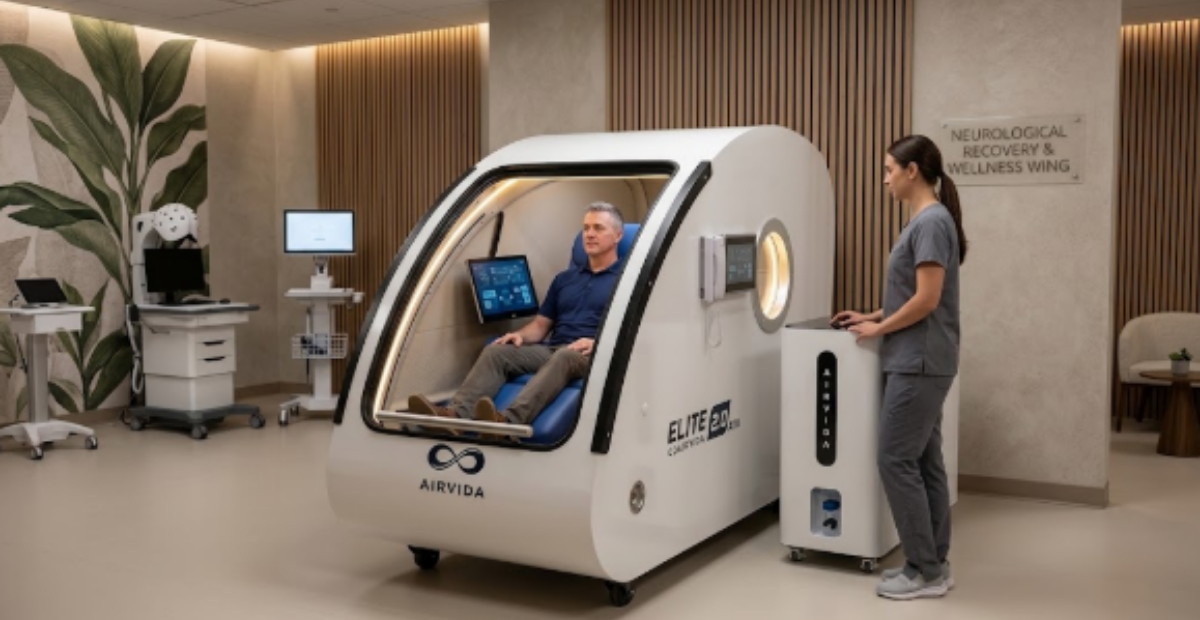
Hyperbaric chamber therapy for PTSD is a biologically based treatment in which you breathe pure oxygen inside a pressurized chamber to trigger neurological repair and reduce PTSD symptoms. In a 2024 randomized controlled trial, 68% of participants who received hyperbaric oxygen therapy (HBOT) showed at least a 30% reduction in PTSD symptoms, compared to only 4% of the control group, and 39% achieved complete remission. Research now indicates PTSD involves measurable changes in brain microstructure and function, making HBOT a physiologically grounded intervention rather than strictly a psychiatric one.
Key Takeaways
-
Hyperbaric oxygen therapy for PTSD produced at least a 30% symptom reduction in 68% of participants in a 2024 randomized controlled trial, with 39% achieving full remission.
-
HBOT triggers the hyperoxic-hypoxic paradox, a cellular mechanism in which repeated high-oxygen exposures followed by a return to normal oxygen levels activate regenerative biological processes in the brain.
-
A 2025 post hoc analysis found a threshold effect: participants who achieved at least 35% symptom reduction during HBOT were likely to sustain that improvement over time.
-
A 2024 systematic review covering seven randomized trials confirmed statistically significant PTSD symptom improvements across a wide range of treatment pressures and oxygen doses.
-
Veterans with treatment-resistant PTSD who received 60 sessions of HBOT at 2 atmospheres showed reduced flashbacks, irritability, and hypervigilance, with supporting fMRI evidence of improved brain connectivity.
-
HBOT remains an emerging option, and individuals considering it should consult a qualified clinician to determine whether it is appropriate for their situation.
What Is Hyperbaric Chamber Therapy for PTSD?
Hyperbaric chamber therapy is a medical intervention in which you breathe 100% oxygen inside a sealed chamber pressurized above normal atmospheric levels, stimulating biological processes that support brain repair. In the context of PTSD, the mechanism being studied is called the hyperoxic-hypoxic paradox: repeated exposure to elevated oxygen levels, followed by a return to normal oxygen, is perceived at the cellular level as hypoxia, which elevates hypoxia-inducible factor (HIF). HIF activation promotes regenerative processes including neurogenesis, angiogenesis, and reduced neuroinflammation.
PTSD has historically been classified as a psychiatric condition, but imaging research now reveals measurable changes in brain microstructure and function. A 2024 PMC systematic review concluded that imaging findings and HBOT effects indicate PTSD can no longer be considered strictly a psychiatric disease. This neurobiological framing positions HBOT as a treatment targeting the physical substrate of PTSD symptoms, not just the psychological expression.
Standard HBOT for PTSD in clinical trials has used pure oxygen delivered at 2 atmospheres of pressure for 90-minute to 2-hour sessions. The bottom line is that HBOT for PTSD works by stimulating brain-level biological repair through controlled oxygen-pressure cycles, distinguishing it mechanistically from medication and psychotherapy.
Hyperbaric Collections You May Want to Shop

What Does the Clinical Research Say About HBOT and PTSD?
The clinical evidence for HBOT in PTSD has grown substantially since 2020, with the strongest findings coming from multiple randomized trials. A 2024 systematic review published in Frontiers in Neurology via PMC included eight studies totaling 393 participants, all of which scored as good-to-highest quality on the PEDro scale. Across nearly all treatment groups, HBOT produced statistically significant, clinically meaningful improvement in PTSD symptoms compared to true control groups.
In the most recent and largest randomized controlled trial (Doenyas-Barak et al., 2024), 98 male Israeli Defense Forces veterans with combat-associated PTSD who had not responded to psychotherapy or psychiatric medication received 60 two-hour HBOT sessions at 2 atmospheres of pure oxygen. The 68% response rate and 39% full remission rate in the HBOT group contrasted sharply with the 4% response rate in the control group. Brain imaging confirmed these clinical gains, with fMRI scans showing improved connectivity in PTSD-affected regions.
A 2025 post hoc analysis published in Brain and Behavior identified a threshold effect: achieving at least 35% symptom reduction during HBOT predicts sustained long-term improvement. The key point is that multiple peer-reviewed, high-quality randomized trials now consistently show HBOT produces statistically and clinically significant PTSD symptom reduction, particularly in treatment-resistant populations.
Who Is Most Likely to Benefit From HBOT for PTSD?
The evidence base for HBOT in PTSD is strongest in specific populations, particularly those who have not responded to conventional treatments. Research to date has focused on:
-
Combat veterans with treatment-resistant PTSD who did not respond to psychotherapy or psychiatric medication
-
Military personnel with co-occurring traumatic brain injury (TBI) and PTSD
-
Individuals with neurobiological evidence of brain microstructural changes associated with trauma
The 2024 systematic review noted that all included studies had fewer than 75 subjects per study, and that the highest HBOT doses were associated with a temporary, reversible worsening of emotional symptoms in 30-39% of subjects. This side-effect profile underscores the importance of medically supervised delivery. Suicidal ideation and reliance on psychoactive medications also decreased in some veteran cohorts studied, a finding that requires further investigation in larger samples.
The bottom line is that the most robust evidence currently applies to treatment-resistant combat veterans, though research in broader PTSD populations is an area of ongoing investigation.
How Does HBOT Affect the Brain in PTSD?

HBOT affects the brain in PTSD by inducing measurable changes in microstructure, connectivity, and neurochemical signaling that correlate with symptom improvement. The core mechanism is the hyperoxic-hypoxic paradox, in which oscillating high-oxygen and normal-oxygen states activate HIF and downstream regenerative cascades. These cascades promote the growth of new blood vessels (angiogenesis), support the formation of new neural connections (neuroplasticity), and reduce the chronic neuroinflammation associated with trauma.
fMRI and diffusion tensor imaging in HBOT-treated veterans have shown improved white matter integrity and functional connectivity in brain regions central to PTSD, including the amygdala, hippocampus, and prefrontal cortex. These imaging changes directly corresponded with clinical symptom reductions in flashbacks, hypervigilance, and emotional dysregulation. The correlation between brain imaging improvement and symptom improvement is one of the most compelling aspects of recent HBOT-PTSD research.
A 2022 PLOS One randomized controlled trial specifically documented that HBOT improved both brain microstructure and functionality in veterans with treatment-resistant PTSD, providing biological confirmation of the clinical gains. The key point is that HBOT does not merely suppress PTSD symptoms but appears to address underlying neurobiological changes in the brain.
What Does a Typical HBOT Protocol for PTSD Look

A typical HBOT protocol for PTSD used in clinical research consists of a structured series of pressurized oxygen sessions delivered over several weeks. The protocol most studied in PTSD trials includes:
Standard Research Protocol:
-
Session count: 40 to 60 sessions total
-
Session duration: 90 minutes to 2 hours of oxygen breathing per session
-
Pressure level: 1.5 to 2.0 atmospheres absolute (ATA) of pressure
-
Oxygen concentration: 100% pure oxygen
-
Session frequency: Typically 5 sessions per week
-
Total treatment duration: Approximately 8 to 12 weeks
-
Monitoring: Sessions conducted under medical supervision with symptom tracking
The 2024 systematic review noted that improvements were observed across a range of pressure and oxygen dose combinations, though the optimal protocol remains an area of ongoing investigation. Higher-dose protocols (toward 2.0 ATA) showed the strongest symptom reductions but also carried a higher rate of temporary emotional symptom worsening. Your clinician can help determine the appropriate pressure and session count based on symptom severity and medical history.
If you are considering ongoing or repeated access to HBOT sessions, understanding your options for leasing or owning a chamber may be relevant to your long-term planning. The bottom line is that current research protocols run 40-60 sessions at 1.5-2.0 ATA, with the specific parameters requiring individualized clinical guidance.
Hyperbaric Chambers You May Want to Shop
Explore More


How Does HBOT Compare to Other PTSD Treatment Approaches?
HBOT for PTSD is a biologically targeted intervention that differs mechanistically from the established first-line psychotherapy and pharmacotherapy treatments. Understanding where it sits relative to other options helps you have an informed conversation with your clinician.
|
Treatment Type |
Primary Mechanism |
Evidence Level for PTSD |
Typical Duration |
|
Cognitive Processing Therapy (CPT) |
Restructures trauma-related thoughts |
Strong, first-line |
12 sessions |
|
Prolonged Exposure (PE) Therapy |
Reduces avoidance through gradual trauma processing |
Strong, first-line |
8-15 sessions |
|
EMDR Therapy |
Reprocesses traumatic memory through bilateral stimulation |
Strong, first-line |
8-12 sessions |
|
SSRI/SNRI Medication |
Modulates serotonin/norepinephrine signaling |
Strong, first-line |
Ongoing |
|
HBOT |
Triggers neuroplasticity via hyperoxic-hypoxic paradox |
Emerging, multiple RCTs |
40-60 sessions |
|
Prazosin (for nightmares) |
Alpha-1 adrenergic blocking |
Moderate |
Ongoing |
HBOT is most frequently studied as an intervention for individuals who have not responded to first-line treatments, not as a replacement for established therapies. The 2023 VA/Department of Defense Clinical Practice Guideline for PTSD acknowledged that available studies suggest a benefit for HBOT on PTSD outcomes, while noting that the absence of adequate control conditions in some studies limits confidence in certain findings.
If cost and access are considerations, comparing HBOT membership versus clinic options can help you evaluate the most practical route. The bottom line is that HBOT fills a distinct neurobiological niche compared to psychotherapy and medication, and is most commonly used as an adjunctive or rescue option rather than a primary standalone treatment.
What Is the Legislative and Access Landscape for HBOT and PTSD?
Legislative efforts at the federal level reflect growing interest in HBOT access for veterans with PTSD. Senator Kevin Cramer and Representative Andy Biggs introduced the TBI and PTSD Treatment Act, directing the Department of Veterans Affairs to provide HBOT to veterans with traumatic brain injury and PTSD. Separately, Senator Tommy Tuberville introduced the HBOT Access Act of 2021, aimed at making HBOT available to veterans with TBI or PTSD who have exhausted other evidence-based treatment options.
These legislative efforts signal increasing institutional recognition of HBOT's potential role in veteran PTSD care. The ongoing research base, combined with legislative momentum, suggests that access pathways may expand as more randomized controlled trial data becomes available.
For individuals currently exploring access, knowing the best time to purchase a hyperbaric chamber or locating a facility near you may be practical starting points. You can find hyperbaric chambers in locations including Fremont, CA, Berkeley, CA, Cupertino, CA, and Buffalo, NY. The key point is that federal legislative action and growing institutional interest reflect a trajectory toward broader HBOT access for PTSD, particularly in veteran populations.
Is Hyperbaric Chamber Therapy Right for You?

Deciding whether HBOT is appropriate for your PTSD involves a clinical evaluation of your diagnosis, treatment history, and overall health status. HBOT is currently most supported by evidence for individuals with treatment-resistant PTSD who have not responded to first-line psychotherapy or medication. It is delivered in clinical or medical settings under professional supervision, and session counts in the research protocols range from 40 to 60 treatments.
You should discuss HBOT with a licensed clinician familiar with both PTSD and hyperbaric medicine before beginning any treatment. If you have co-occurring conditions, including traumatic brain injury, anxiety disorders, or cardiovascular conditions, those will factor into whether HBOT is safe and appropriate for your situation. The research is promising, but it is also early-stage relative to decades of evidence supporting psychotherapy and pharmacotherapy.
The bottom line is that HBOT for PTSD shows genuine clinical promise supported by multiple randomized trials, and a consultation with a qualified clinician is the appropriate first step to determine whether it fits your individual profile.
Conclusion: Is Hyperbaric Oxygen Therapy a Viable Option for PTSD?
Hyperbaric chamber therapy for PTSD has moved from theoretical interest to a body of clinical evidence that includes multiple high-quality randomized controlled trials. The 2024 systematic review, the 68% response rate in the most recent major RCT, the 2025 threshold effect analysis, and the neuroimaging data collectively make a scientifically coherent case that HBOT targets real neurobiological changes associated with PTSD. It is not a replacement for established treatments, but it is increasingly recognized as a meaningful option for treatment-resistant cases.
The field continues to evolve, with optimal dosing, patient selection criteria, and long-term outcomes remaining active areas of investigation. If you or someone you know has not responded to conventional PTSD treatments, discussing HBOT with a clinician who specializes in hyperbaric medicine and trauma is a reasonable next step.
The bottom line: hyperbaric chamber therapy for PTSD is a biologically grounded, clinically studied intervention showing statistically significant symptom reduction in multiple randomized trials, most strongly supported for treatment-resistant cases under qualified medical supervision.
Frequently Asked Questions
What is the miracle of hyperbaric oxygen therapy?
There is no single "miracle" attributed to hyperbaric oxygen therapy, but its most remarkable documented effect is triggering neuroplasticity and brain repair through the hyperoxic-hypoxic paradox, a cellular mechanism that activates regenerative processes normally associated with healing after injury. In PTSD research, this translates to measurable improvements in brain connectivity and significant symptom reduction in individuals who had not responded to standard treatments.
What does HBOT do to the brain?
HBOT increases oxygen delivery to brain tissue and triggers the hyperoxic-hypoxic paradox, which activates hypoxia-inducible factor (HIF) and promotes neuroplasticity, angiogenesis, and reduced neuroinflammation. In PTSD-specific research, fMRI and diffusion tensor imaging have shown improved white matter integrity and functional connectivity in trauma-affected brain regions including the amygdala, hippocampus, and prefrontal cortex. These biological changes correlate directly with clinical symptom improvement in treated individuals.
What are the treatment options for PTSD?
The primary evidence-based treatment options for PTSD include trauma-focused psychotherapies such as Cognitive Processing Therapy, Prolonged Exposure, and EMDR, along with pharmacotherapy using SSRIs or SNRIs. Adjunctive and emerging options include prazosin for trauma-related nightmares and hyperbaric oxygen therapy, the latter currently most supported for treatment-resistant cases. A licensed mental health clinician or psychiatrist can evaluate which combination of options is most appropriate for your specific symptoms and history.
How to treat PTSD at home?
You cannot fully treat PTSD at home, but evidence-based self-management strategies can support your formal treatment plan. These include structured sleep hygiene, regular physical exercise, mindfulness-based stress reduction practices, and maintaining social connection. Home strategies are intended to complement, not replace, professional psychotherapy or medical treatment, and any significant PTSD symptoms warrant evaluation by a licensed clinician.
What are the treatment guidelines for PTSD?
The VA and Department of Defense Clinical Practice Guidelines for PTSD, most recently updated in 2023, recommend trauma-focused psychotherapies, specifically Cognitive Processing Therapy, Prolonged Exposure, and EMDR, as first-line treatments, with SSRIs and SNRIs as first-line pharmacological options. The 2023 guidelines acknowledged emerging evidence for HBOT as a potential adjunctive option but noted that confidence in results is limited in some studies by the absence of adequate control conditions. Individuals seeking current guideline-based care should work with a licensed PTSD specialist.