


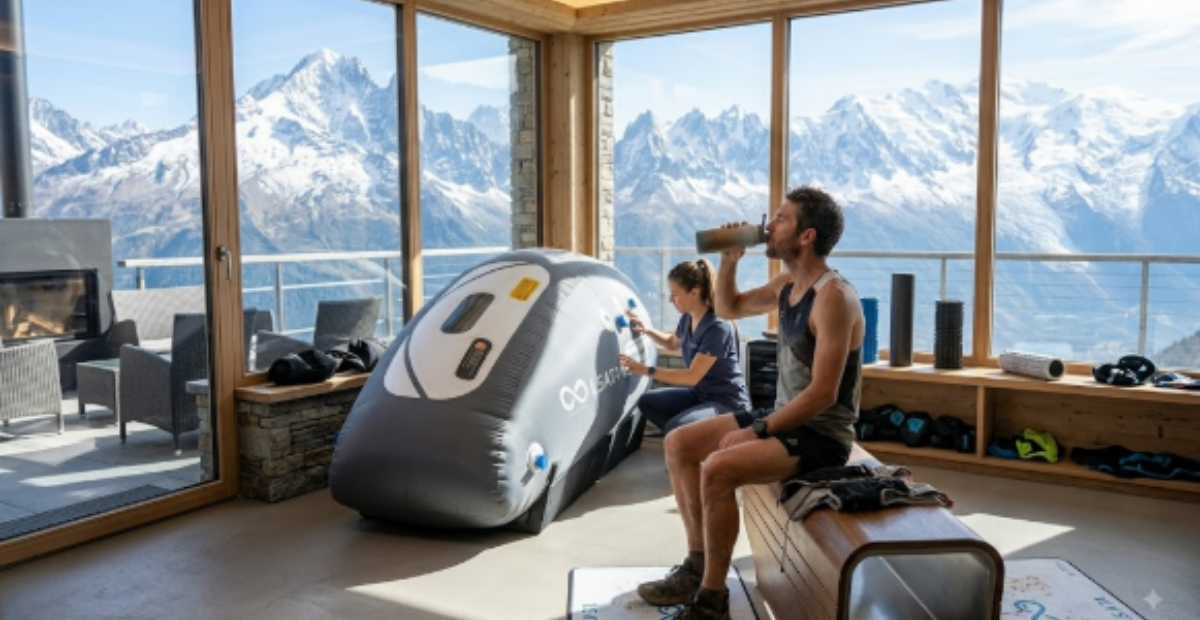
A hyperbaric chamber for altitude training works by delivering pressurized, oxygen-rich air to the body, helping athletes prepare for or recover from the physiological demands of high-altitude environments. While altitude causes a drop in available oxygen, hyperbaric oxygen therapy (HBOT) increases the amount of dissolved oxygen in your blood and tissues, which can support recovery, reduce fatigue, and help your body adapt more efficiently. These effects make HBOT a practical tool for athletes training at or preparing for elevation.
Key Takeaways
-
Hyperbaric oxygen therapy increases dissolved oxygen in the blood, which can counteract the low-oxygen conditions associated with high-altitude environments.
-
Athletes use HBOT to accelerate recovery, reduce muscle soreness, and support tissue repair after intense training sessions at elevation.
-
Training your body for high altitude involves physiological adaptations including increased red blood cell production and improved oxygen delivery to muscles.
-
HBOT sessions typically last 60 to 90 minutes, though session length depends on the protocol and individual health status.
-
Professional athletes across multiple sports, including cycling, running, and contact sports, have incorporated HBOT into their training and recovery programs.
-
Hyperbaric chambers are available in clinical and personal formats, making them accessible to both elite and recreational athletes.
What Is a Hyperbaric Chamber and How Does It Work for Altitude Training?
A hyperbaric chamber is a pressurized enclosure that delivers 100% oxygen or high-concentration oxygen at atmospheric pressures greater than sea level, allowing the body to absorb significantly more oxygen than normal breathing allows. At standard atmospheric pressure, oxygen is carried primarily by red blood cells. Inside a hyperbaric chamber, oxygen dissolves directly into the plasma, cerebrospinal fluid, and tissues, reaching areas that red blood cells may not access efficiently.
When you train at altitude, your body faces reduced oxygen availability because air pressure drops at elevation. This means each breath contains fewer oxygen molecules relative to sea level, stressing your cardiovascular and muscular systems. HBOT can be used before altitude exposure to pre-load tissues with oxygen, or after altitude training to accelerate the repair of oxygen-stressed muscles.
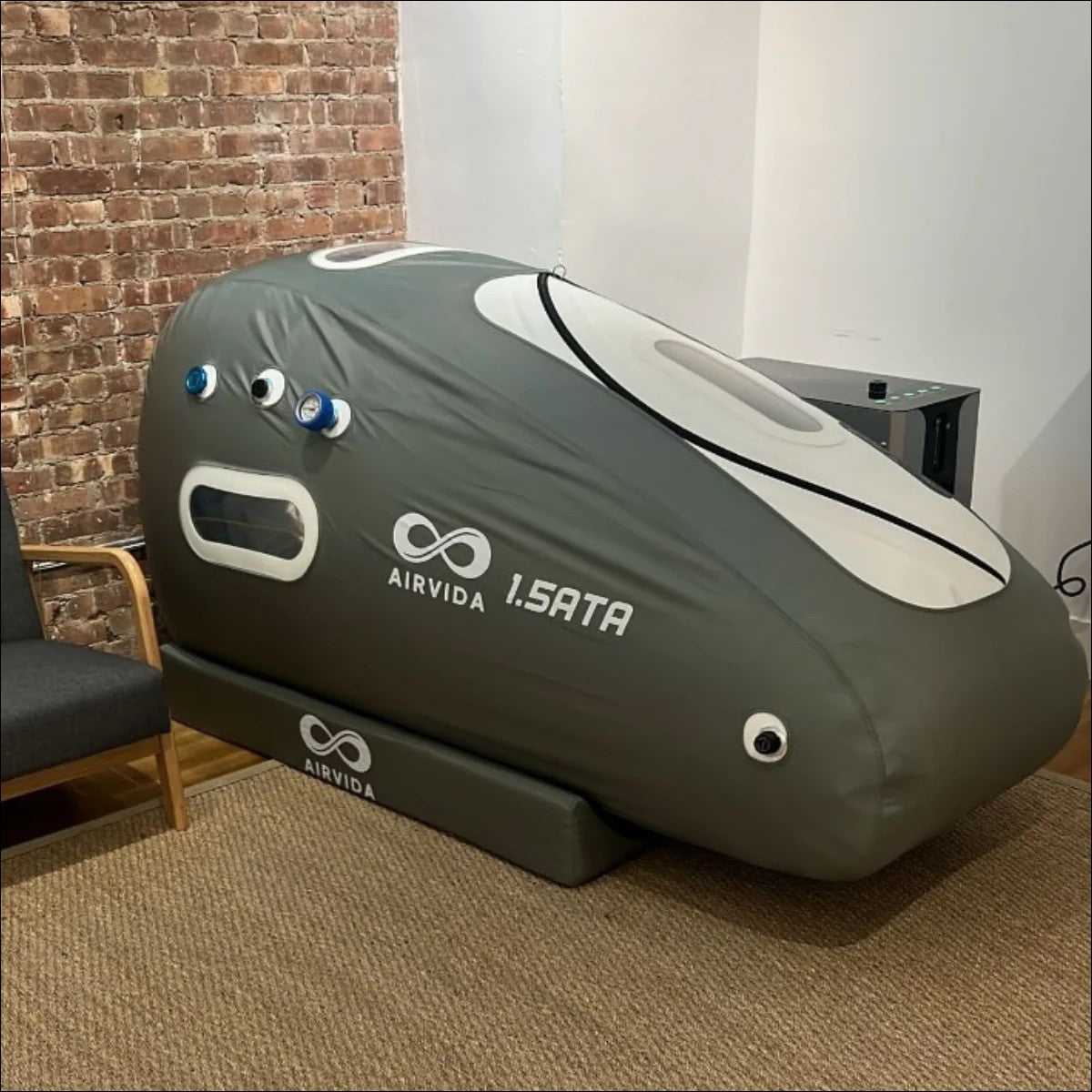
The pressure inside a hyperbaric chamber is measured in atmospheres absolute (ATA). Most therapeutic protocols operate between 1.5 and 3.0 ATA, with the appropriate level determined by the purpose of the session and your health profile. The key point is that hyperbaric chambers give your body a concentrated oxygen environment that directly addresses the oxygen deficit created by altitude training.
Hyperbaric Collections You May Want to Shop

How Does High Altitude Affect Athletic Performance?
High altitude affects athletic performance by reducing the partial pressure of oxygen in the air, which forces your cardiovascular system to work harder to deliver adequate oxygen to working muscles. At elevations above approximately 8,000 feet, most athletes notice measurable decreases in aerobic capacity, endurance, and power output. The body responds over days and weeks with a series of adaptations designed to compensate for the reduced oxygen supply.
Short-term effects of altitude exposure include:
-
Increased breathing rate and heart rate
-
Faster onset of fatigue during exercise
-
Decreased VO2 max (maximum oxygen uptake)
-
Headache, dizziness, and disrupted sleep
-
Reduced recovery speed between training efforts
Over longer exposure, the body begins producing more erythropoietin (EPO), a hormone that stimulates red blood cell production. More red blood cells means greater oxygen-carrying capacity, which is the primary adaptation athletes seek from altitude training camps.
The challenge is that training quality often suffers during the early weeks at altitude before these adaptations take hold. Many athletes use supplemental oxygen strategies, including HBOT, to maintain training intensity while the body acclimatizes. The bottom line is that altitude creates a temporary performance deficit that targeted recovery and oxygen support strategies can help manage.
Can You Train Your Body for High Altitude?
Yes, you can train your body for high altitude through a combination of gradual acclimatization, structured altitude exposure protocols, and recovery support strategies. The human body is highly adaptable to hypoxic environments, but the process takes time and requires a systematic approach.
Common strategies for altitude preparation include:
-
Gradual ascent: Ascending in stages allows your body to partially acclimatize before reaching your target elevation.
-
Live high, train low (LHTL): Athletes live at altitude to stimulate red blood cell adaptations but descend to lower elevations to maintain training quality.
-
Intermittent hypoxic training (IHT): Short periods of breathing low-oxygen air are alternated with normal air to stimulate adaptation without full altitude exposure.
-
Supplemental oxygen during recovery: Breathing enriched oxygen between training sets or after sessions helps clear metabolic byproducts faster.
-
Hyperbaric oxygen therapy: HBOT sessions before, during, or after altitude exposure support tissue oxygenation and accelerate recovery.
Your body's capacity to adapt to altitude is influenced by your baseline aerobic fitness, genetics, and the duration of exposure. Some athletes acclimatize more quickly than others, and those with higher baseline fitness often tolerate altitude stress better initially. The key point is that altitude adaptation is trainable, and HBOT is one of the most evidence-informed tools for supporting that process.
Why Do Athletes Use a Hyperbaric Chamber for Altitude Training?

Athletes use a hyperbaric chamber for altitude training primarily to accelerate recovery, protect training quality, and reduce the performance losses that typically accompany high-altitude exposure. When oxygen delivery to muscles is compromised, training intensity must drop, which can reduce the overall effectiveness of an altitude training block. HBOT provides a way to restore oxygen availability rapidly between sessions.
Specific reasons athletes incorporate HBOT into altitude training programs include:
-
Faster muscle recovery: Elevated oxygen in tissues speeds the clearance of lactic acid and other metabolic byproducts.
-
Reduced inflammation: HBOT has been studied for its role in modulating the inflammatory response associated with intense exercise.
-
Improved sleep quality: Some athletes report better sleep during altitude camps when using HBOT, as oxygen saturation during sleep can drop significantly at elevation.
-
Support for soft tissue repair: Oxygen is essential for collagen synthesis, and HBOT may support repair of tendons, ligaments, and muscle fibers stressed during training.
-
Mental clarity and focus: Cognitive function can decline at altitude due to reduced cerebral oxygenation; HBOT may help restore mental acuity between hard training days.
Athletes training for mountain racing, high-altitude expeditions, or competition in cities like Denver, Albuquerque, or Mexico City also use HBOT to pre-condition their physiology before arrival. The bottom line is that HBOT complements altitude training by addressing the oxygen deficit at the tissue level rather than at the atmospheric level.
Hyperbaric Chambers You May Want to Shop
Explore More


What Does the Research Say About HBOT and Athletic Recovery?
Research on HBOT and athletic recovery is an active and growing area, with studies examining its effects on muscle damage, inflammation, and performance markers. While the evidence base is still developing, several published investigations have reported favorable outcomes for exercise-related applications.
Key findings from the existing research landscape include:
-
Studies have examined HBOT's role in reducing delayed-onset muscle soreness (DOMS) after eccentric exercise protocols.
-
Research has investigated HBOT's effect on blood oxygen saturation levels during and after altitude exposure.
-
Investigations into HBOT and concussion recovery in contact sports athletes have produced interest in its broader applications for brain oxygenation.
It is important to note that research on HBOT and altitude training specifically remains an area of ongoing investigation. Individual responses vary, and most published protocols involve supervised clinical settings. The key point is that while emerging evidence is promising, athletes should consult a qualified physician before beginning any HBOT protocol.
How to Compare Hyperbaric Chamber Options for Altitude Training: A Practical Checklist
Choosing the right hyperbaric chamber for altitude training support requires evaluating several technical and logistical factors. The table below outlines the key comparison points between common chamber types.
|
Feature |
Monoplace Chamber |
Multiplace Chamber |
Portable/Mild HBOT Chamber |
|
Pressure range |
1.5 to 3.0 ATA |
1.5 to 3.0 ATA |
1.3 to 1.5 ATA |
|
Oxygen concentration |
100% |
100% (via mask) |
Ambient or mild enrichment |
|
Typical session length |
60 to 90 min |
60 to 90 min |
60 to 90 min |
|
Space required |
Dedicated room |
Large clinical space |
Home or facility compatible |
|
Best use case |
Clinical recovery |
Group or clinical use |
Frequent individual use |
|
Accessibility |
Clinical facility |
Clinical facility |
Home or training facility |
Protocol checklist for athletes using HBOT during altitude training:
-
Obtain medical clearance from a physician familiar with both HBOT and altitude physiology
-
Establish baseline blood oxygen saturation measurements before beginning altitude exposure
-
Schedule HBOT sessions within 2 to 4 hours after the most demanding training sessions
-
Maintain consistent session frequency rather than sporadic use for best results
-
Monitor sleep quality and resting heart rate as indicators of adaptation progress
-
Communicate any ear discomfort or unusual symptoms to your supervising clinician immediately
The bottom line is that matching the chamber type and protocol to your specific training schedule and goals significantly influences the outcomes you can expect.
Which Athletes Use HBOT and What Sports Benefit Most?

HBOT has been adopted across a wide range of sports, with particular uptake in endurance sports, contact sports, and high-altitude disciplines. The therapy appeals to athletes whose performance depends heavily on oxygen delivery, recovery speed, and tissue integrity.
Sports and athlete categories where HBOT use has been reported include:
-
Endurance athletes: Marathoners, cyclists, and triathletes use HBOT to accelerate recovery between hard training blocks.
-
Contact sport athletes: Football players, mixed martial arts competitors, and rugby players use HBOT for its potential role in recovery from physical impact.
-
Mountaineers and altitude athletes: Climbers preparing for high-altitude expeditions use HBOT to pre-acclimatize and recover after summit attempts.
-
Team sport athletes: Soccer and basketball players at the professional level have used HBOT as part of structured injury management programs.
-
Track and field competitors: Sprinters and field athletes use HBOT to support recovery from high-volume training loads.
Notable professional athletes across the NBA, NFL, and professional cycling have publicly discussed using HBOT as part of their training and recovery routines. The key point is that HBOT is not exclusive to elite athletes; recreational athletes preparing for high-altitude events can also benefit from structured access to this therapy.
Where Can You Access a Hyperbaric Chamber for Altitude Training in California?
If you are training in or around the San Francisco Bay Area or Northern California, several AirVida Chambers locations offer hyperbaric oxygen therapy for athletes and individuals seeking altitude training support. Athletes in the Bay Area can explore sessions at the Palo Alto hyperbaric chamber location or access services at the Walnut Creek hyperbaric chamber center. Those closer to the East Bay may find the Oakland hyperbaric chamber facility a convenient option, while athletes in the South Bay can visit the Santa Clara hyperbaric chamber location.
For athletes who want more frequent access, AirVida also offers a lease-to-own hyperbaric chamber program that makes personal chamber ownership more financially accessible. This is particularly practical for athletes who train year-round and want to integrate HBOT consistently into their altitude preparation and recovery protocols. Speak with a qualified clinician at any of these locations to determine the protocol best suited to your training schedule and goals.
How Long Can a Person Stay in a Hyperbaric Chamber During an Altitude Training Protocol?
Session length in a hyperbaric chamber typically ranges from 60 to 90 minutes per session for most athletic and recovery-focused protocols. The duration is determined by the purpose of the session, the pressure level used, and the individual's health status and tolerance. A clinician should establish the appropriate length and frequency for your specific needs.
For athletes using HBOT in the context of altitude training, common protocol structures include:
-
Pre-altitude sessions: One to two sessions in the days before departing for a high-altitude training camp to pre-load tissues with oxygen.
-
During altitude exposure: Sessions of 60 to 90 minutes after the hardest training days to offset the accumulated oxygen deficit.
-
Post-altitude recovery: A series of sessions upon returning from altitude to help the body consolidate adaptations and clear residual fatigue.
Exceeding recommended session lengths or pressures without medical supervision carries risks and should be avoided. The key point is that more time in the chamber is not always better; the right dose is the one prescribed by a qualified clinician based on your individual profile.
Conclusion: Is a Hyperbaric Chamber Worth It for Altitude Training?
A hyperbaric chamber is a credible, clinically supported tool for athletes who want to maximize the benefits of altitude training while managing the recovery demands that high-altitude exposure creates. By increasing dissolved oxygen in blood and tissues, HBOT addresses the core physiological challenge of altitude: inadequate oxygen delivery when your body needs it most.
Whether you are preparing for a high-altitude race, building a training camp at elevation, or competing in a city above sea level, integrating HBOT into your preparation and recovery plan gives your body a measurable advantage in oxygen availability and tissue repair. Work with a physician who understands both hyperbaric medicine and athletic physiology to design a protocol that fits your training calendar.
The bottom line: a hyperbaric chamber for altitude training supports athletic performance by increasing tissue oxygen delivery, accelerating recovery, and helping the body adapt more efficiently to the physiological demands of high-altitude environments.
Frequently Asked Questions
Does a hyperbaric chamber help with altitude?
Yes, a hyperbaric chamber helps with altitude by flooding blood plasma and tissues with dissolved oxygen, directly countering the low-oxygen conditions caused by reduced atmospheric pressure at elevation. Athletes use HBOT before, during, and after altitude exposure to maintain tissue oxygenation, reduce fatigue, and speed recovery between training sessions.
Can you train your body for high altitude?
Yes, you can train your body for high altitude through gradual acclimatization, structured hypoxic exposure, and recovery support strategies including supplemental oxygen and HBOT. The body adapts by increasing red blood cell production and improving oxygen utilization, though the timeline varies by individual fitness level and genetics.
Why do athletes use a hyperbaric chamber?
Athletes use a hyperbaric chamber to accelerate muscle recovery, reduce inflammation, support soft tissue repair, and maintain cognitive function during intense training blocks, including those at altitude. HBOT delivers oxygen at levels unachievable through normal breathing, giving the body resources to repair faster and perform more consistently across a heavy training schedule.
Which athletes use HBOT?
Athletes across endurance sports, contact sports, team sports, and high-altitude disciplines use HBOT, including professional cyclists, marathon runners, NFL and NBA players, MMA competitors, and mountaineers. Both elite and recreational athletes have incorporated HBOT into training and recovery programs, particularly when preparing for or recovering from altitude exposure.
How long can a person stay in a hyperbaric chamber?
A person typically stays in a hyperbaric chamber for 60 to 90 minutes per session, with the exact duration determined by a supervising clinician based on the treatment purpose, pressure level, and individual health profile. Athletes using HBOT for altitude training support generally follow structured protocols with consistent session lengths rather than single extended exposures.