


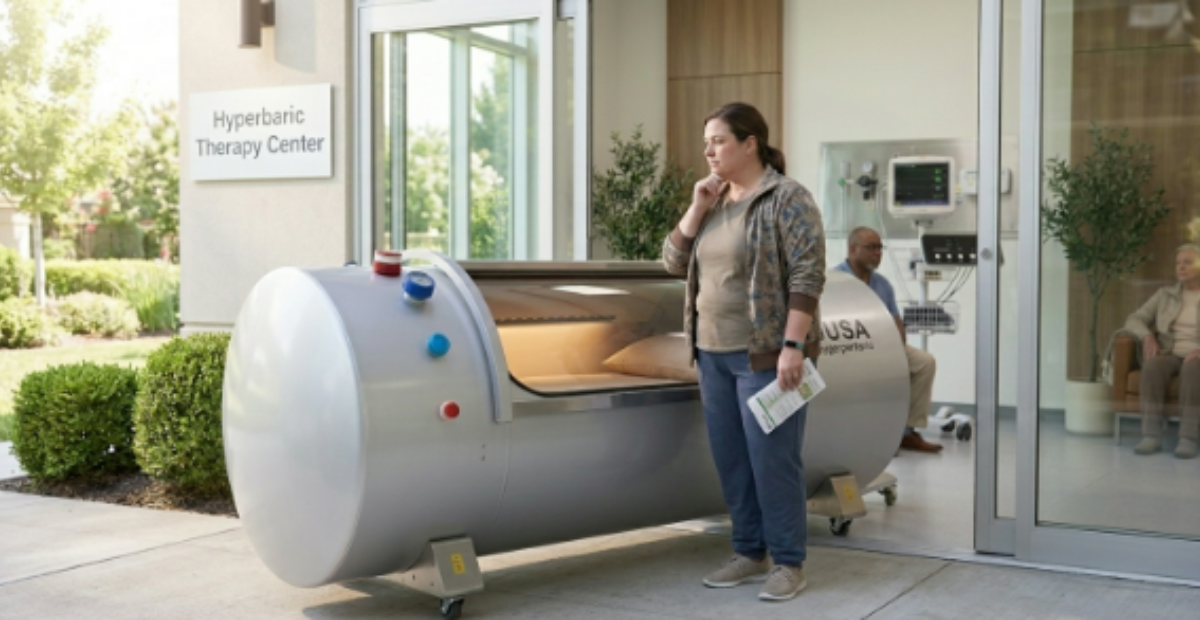
Hyperbaric oxygen therapy (HBOT) shows early promise as a metabolic support tool, but it is not a proven weight loss treatment. Research indicates HBOT may improve insulin sensitivity, support mitochondrial function, and help regulate blood lipids, particularly when used alongside diet and exercise. However, no major regulatory or medical body currently recognizes HBOT as a treatment for obesity or weight loss, and large-scale human clinical trials are still needed.
Key Takeaways
-
HBOT is investigational for weight loss: Current evidence does not support hyperbaric oxygen therapy as a standalone weight loss treatment, and it should be considered an adjunctive tool only.
-
Insulin sensitivity improvements are the strongest documented metabolic effect: A 2022 randomized placebo-controlled trial found that HBOT decreased fasting blood glucose by approximately 19% and improved whole-body insulin sensitivity by roughly one-third in men with type 2 diabetes.
-
Animal studies show measurable effects on body weight and blood lipids: A 2022 peer-reviewed study found that appropriate HBOT sessions promoted weight loss and hyperlipidemia recovery in rats, though excess daily exposure caused liver damage.
-
HBOT works best as an adjunct: Clinical researchers consistently note that HBOT is most relevant when combined with conventional approaches such as structured diet and physical activity.
-
Human trials remain limited: A 2025 systematic review published in PMC concluded that high-quality clinical trials are still required to confirm the effectiveness, durability, and safety profile of HBOT for metabolic disorders.
-
Mechanism research is advancing: Proposed pathways include activation of AMPK signaling, GLUT4 translocation in skeletal muscle, improved mitochondrial capacity, and thermogenesis stimulation in brown adipose tissue.
What Is Hyperbaric Oxygen Therapy and How Does It Work?
Hyperbaric oxygen therapy (HBOT) is a medical intervention in which a person breathes pure or high-concentration oxygen inside a pressurized chamber, typically at pressures greater than standard atmospheric levels. The increased pressure allows oxygen to dissolve more completely into the bloodstream, reaching tissues at concentrations not achievable through normal breathing. This enhanced oxygen delivery is the basis for both the therapy's established clinical uses and its emerging investigational applications.
Inside the chamber, your blood plasma, tissues, and organs absorb significantly more oxygen than usual. This oxygen saturation triggers a cascade of physiological responses, including reduced inflammation, accelerated cellular repair, and improved mitochondrial function. These downstream effects are precisely why researchers have begun studying HBOT in the context of metabolic health and weight-related conditions.
It is important to distinguish between established clinical uses of HBOT and its emerging investigational roles. The two categories carry very different levels of supporting evidence, and understanding that distinction protects you from overstated claims.
The bottom line is: HBOT is a clinically established therapy for specific conditions, and its role in metabolic health, including any connection to weight loss, is still under active scientific investigation.
What Does Research Say About HBOT and Metabolism?

The metabolic effects of HBOT are an active and growing area of scientific research, with several peer-reviewed studies identifying meaningful changes in how the body processes glucose, lipids, and energy. A 2025 systematic review published in PMC by the National Institutes of Health concluded that HBOT appears to be a promising adjunctive approach in the management of obesity through multidirectional improvement in metabolic functions. The same review noted that preclinical studies demonstrate HBOT enhances insulin sensitivity, reduces adipose tissue inflammation, and modulates lipid metabolism.
However, the review's authors were explicit: high-quality clinical trials are still required to confirm the effectiveness, durability of outcomes, and safety profile across diverse patient populations. That qualification matters. Promising preclinical and early clinical data are not the same as confirmed clinical efficacy.
A separate 2025 systematic review published in Frontiers in Medicine and indexed on PMC (PMC12661850) analyzed 17 eligible studies and concluded that HBOT seems to improve glycemic levels and insulin sensitivity, presenting a potential treatment approach for insulin resistance. The same review cautioned that translation into clinical practice remains contingent on robust, yet unavailable, randomized clinical trials.
The bottom line is: the metabolic research signal is real and growing, but the evidence base is not yet sufficient to position HBOT as a weight management protocol on its own.
How Does HBOT Affect Insulin Sensitivity and Blood Sugar?
Insulin sensitivity is the measure of how effectively your cells respond to insulin to absorb glucose from the bloodstream, and it is one of the key drivers of both metabolic health and weight regulation. A 2022 randomized, double-blind, placebo-controlled crossover trial published in PMC (NCT04219215) examined 12 male individuals with type 2 diabetes who underwent two-hour HBOT sessions at 100% oxygen at 240 kPa. The results were notable: HBOT decreased fasting blood glucose by 19% and increased whole-body, hepatic, and white adipose tissue (WAT) insulin sensitivity by approximately one-third.
The same study found that hepatic ATP concentrations doubled upon HBOT, mitochondrial respiratory control doubled in skeletal muscle, and tripled in white adipose tissue. The researchers concluded that these improvements likely result from decreased endoplasmic reticulum stress and increased mitochondrial capacity. This is the strongest human clinical evidence currently available linking HBOT to metabolic improvement.
Importantly, research also suggests that even a single HBOT session is enough to significantly increase peripheral insulin sensitivity, with effects persisting for at least 30 minutes after exiting the chamber, and this effect is not exclusive to people with diabetes. That finding is clinically relevant for anyone whose metabolic dysregulation contributes to weight-related health challenges.
The bottom line is: HBOT's most documented and reproducible metabolic effect in humans is improved insulin sensitivity, not direct fat loss.
Hyperbaric Collections You May Want to Shop

What Did Animal Studies Find About HBOT and Weight Loss?
Animal research on HBOT and weight has produced some of the most direct data available on body weight and lipid changes, though results must be interpreted with caution before extrapolating to humans. A 2022 peer-reviewed study published in Biochemical and Biophysical Research Communications (ScienceDirect) divided 180 Sprague-Dawley rats into six groups receiving either 0, 3, or 6 hours per day of HBOT. The findings showed that appropriate HBOT can promote weight loss and hyperlipidemia recovery in these animals.
The study also identified a critical safety boundary: 6 hours per day of HBOT caused noticeable liver damage in the rats, while 3 hours per day was found to be adequate for protecting the liver in both normal and hyperlipidemic animals. This dose-dependent toxicity finding is an important reminder that more HBOT is not automatically better, even in preclinical models.
Animal data also identified specific biochemical mechanisms: proposed pathways include activation of Akt/AMPK signaling and GLUT4 translocation in skeletal muscle, which results in improved glucose uptake and oxidation, as well as stimulation of thermogenesis in brown adipose tissue. These mechanisms are biologically plausible pathways through which HBOT could theoretically support weight management in humans, but direct confirmation in well-powered human trials is still lacking.
The bottom line is: animal studies show measurable weight and lipid effects from HBOT, but human evidence remains insufficient to draw equivalent conclusions.
What Are the Proposed Mechanisms Linking HBOT to Weight Management?
The mechanisms through which HBOT may influence body weight and metabolic function are multiple and interconnected, based on available preclinical and early clinical data. Understanding these pathways helps clarify why researchers consider HBOT a biologically plausible adjunct for metabolic health, even while emphasizing its investigational status.
The currently proposed and research-supported mechanisms include:
-
AMPK pathway activation: AMPK (AMP-activated protein kinase) is a master regulator of cellular energy balance; HBOT appears to activate this pathway, encouraging the body to increase glucose uptake and fatty acid oxidation.
-
GLUT4 translocation: Improved translocation of GLUT4 glucose transporters to skeletal muscle cell surfaces enhances glucose clearance from the bloodstream, reducing blood sugar and supporting insulin function.
-
Mitochondrial enhancement: HBOT has been shown to increase mitochondrial respiratory capacity in both skeletal muscle and adipose tissue, which supports more efficient cellular energy production.
-
Reduced endoplasmic reticulum (ER) stress: Lower ER stress is associated with improved insulin signaling, reduced inflammation, and healthier adipose tissue function.
-
Brown adipose tissue (BAT) thermogenesis: Stimulation of thermogenesis in brown fat may increase resting caloric expenditure, though this has been studied primarily in animal models.
-
Anti-inflammatory effects: Reduced systemic and adipose tissue inflammation may support metabolic flexibility and healthier hormonal signaling.
The bottom line is: multiple plausible biological mechanisms connect HBOT to metabolic health, but each pathway requires confirmation through well-designed human trials before clinical weight management protocols can be established.
How Does HBOT Compare to Other Metabolic Health Interventions?

|
Intervention |
Primary Metabolic Effect |
Human Evidence Level |
Role |
|
Caloric restriction |
Reduces energy intake, lowers body fat |
Very strong (multiple large RCTs) |
Primary |
|
Structured exercise |
Increases insulin sensitivity, burns calories |
Very strong (multiple large RCTs) |
Primary |
|
HBOT |
Improves insulin sensitivity, may reduce inflammation |
Early/limited (small trials, animal data) |
Adjunctive only |
|
GLP-1 receptor agonists |
Reduces appetite, promotes weight loss |
Strong (large RCTs) |
Primary or adjunctive |
|
Intermittent fasting |
Improves metabolic markers, may reduce fat mass |
Moderate (growing RCT base) |
Adjunctive or primary |
This comparison makes clear that HBOT sits in the adjunctive category alongside other supportive tools, not as a replacement for the foundational strategies of diet and physical activity. You should not expect HBOT to produce the metabolic changes that caloric balance and exercise produce independently.
The bottom line is: HBOT is best framed as a potential support layer for metabolic health, not a competing alternative to established interventions.
Hyperbaric Chambers You May Want to Shop
Explore More


What Should You Know Before Trying HBOT for Metabolic Support?
Before considering HBOT as part of a metabolic health or weight management plan, there are several practical and clinical considerations you should discuss with a qualified healthcare provider. HBOT is not a casual wellness service; it involves pressurized environments and concentrated oxygen, which carry their own risk profile.
Key points to review with your provider before starting:
-
Medical evaluation: Certain conditions, including untreated pneumothorax, some ear or sinus conditions, and specific medication regimens, require evaluation before HBOT is appropriate for you.
-
Setting expectations: HBOT's current role in weight management is investigational; you should approach it as a potential adjunct to, not a replacement for, diet and exercise.
-
Session frequency: Research protocols vary; your provider should guide session frequency and duration based on your specific health goals and current evidence.
-
Duration of benefit: The persistence of metabolic effects from HBOT between sessions is an area of ongoing investigation, and maintenance protocols have not been standardized.
-
Monitoring: If you have diabetes or metabolic syndrome, blood glucose and lipid monitoring before and after sessions provides useful data on your individual response.
-
Qualified providers: Seek HBOT from licensed clinical providers with appropriate equipment; chamber quality and pressure protocols vary significantly across providers.
If you are exploring local options, hyperbaric chambers in Bristol, CT, hyperbaric chambers in Manchester, CT, hyperbaric chambers in Middletown, CT, and hyperbaric chambers in Westport, CT are among the options available in Connecticut for those looking to work with a local provider. Some individuals also explore HBOT in the context of broader wellness goals; research into hyperbaric oxygen therapy for fertility is one adjacent investigational area where oxygen-driven cellular support is being studied.
The bottom line is: HBOT requires medical clearance, realistic expectations, and professional guidance to be used responsibly as part of a metabolic health strategy.
Is the Evidence Strong Enough to Justify HBOT for Weight Loss in 2026?

The honest answer in 2026 is: not yet, as a standalone treatment, but the scientific rationale continues to strengthen as an adjunctive tool. The weight of current peer-reviewed evidence supports a cautious optimism about HBOT's role in metabolic health, particularly around insulin sensitivity and lipid regulation. What the evidence does not yet support is using HBOT as a primary or independent weight loss intervention.
The 2025 PMC systematic review on HBOT and metabolic disorders is the most comprehensive and current summary available, and its conclusion is appropriately measured: HBOT is promising as an adjunctive approach, but confirmation from high-quality clinical trials is still needed. That is the scientific consensus as of mid-2026, and it is the standard you should apply when evaluating any claims you encounter about HBOT and weight loss.
If you are managing obesity, insulin resistance, type 2 diabetes, or metabolic syndrome, HBOT may be worth discussing with your physician as part of a broader, comprehensive care plan. It is not a shortcut, and it is not a substitute for the lifestyle interventions that have the strongest evidence base.
The bottom line: HBOT shows biologically plausible and early clinical promise as a metabolic support tool, but it is not a proven weight loss treatment, and it should always be used as an adjunct to, not a replacement for, evidence-based diet and exercise strategies.
Frequently Asked Questions
Can you lose weight in a hyperbaric chamber?
Direct, measurable weight loss from a single or short series of hyperbaric oxygen therapy sessions has not been confirmed in human clinical trials. HBOT may support metabolic processes linked to weight regulation, such as improved insulin sensitivity and reduced inflammation, but it is not a weight loss treatment on its own. Diet and exercise remain the foundational strategies.
What is the Japanese trick for weight loss?
"The Japanese trick for weight loss" is a colloquial term that has circulated online and typically refers to various breathing techniques or cultural practices, not a single medically defined protocol. It is not a recognized clinical intervention. No peer-reviewed evidence links this phrase to hyperbaric oxygen therapy or to a validated, standardized medical treatment.
How many times a week should you do HBOT?
Session frequency for HBOT varies by clinical indication and individual health status, and no universal standard has been established for metabolic or weight management use. Research protocols have used sessions ranging from multiple times per week to daily over several weeks. Your provider should determine frequency based on your specific goals, health profile, and the current evidence for your intended use.
What is the miracle of hyperbaric oxygen therapy?
No single "miracle" effect defines hyperbaric oxygen therapy; its documented benefits span multiple physiological systems depending on the condition being treated. Research highlights meaningful effects including improved insulin sensitivity, accelerated tissue repair, reduced inflammation, and enhanced mitochondrial function. These are clinically significant findings, but they apply in specific contexts and should not be overstated as universal cures.
Does HBOT make you look younger?
Some research suggests HBOT may support cellular repair processes, reduce oxidative stress, and improve skin tissue oxygenation, which are mechanisms that could theoretically influence skin appearance. However, anti-aging claims related to HBOT remain an area of ongoing investigation without strong, large-scale human clinical trial confirmation. You should approach cosmetic or anti-aging claims about HBOT with the same measured skepticism applied to its weight loss applications.