


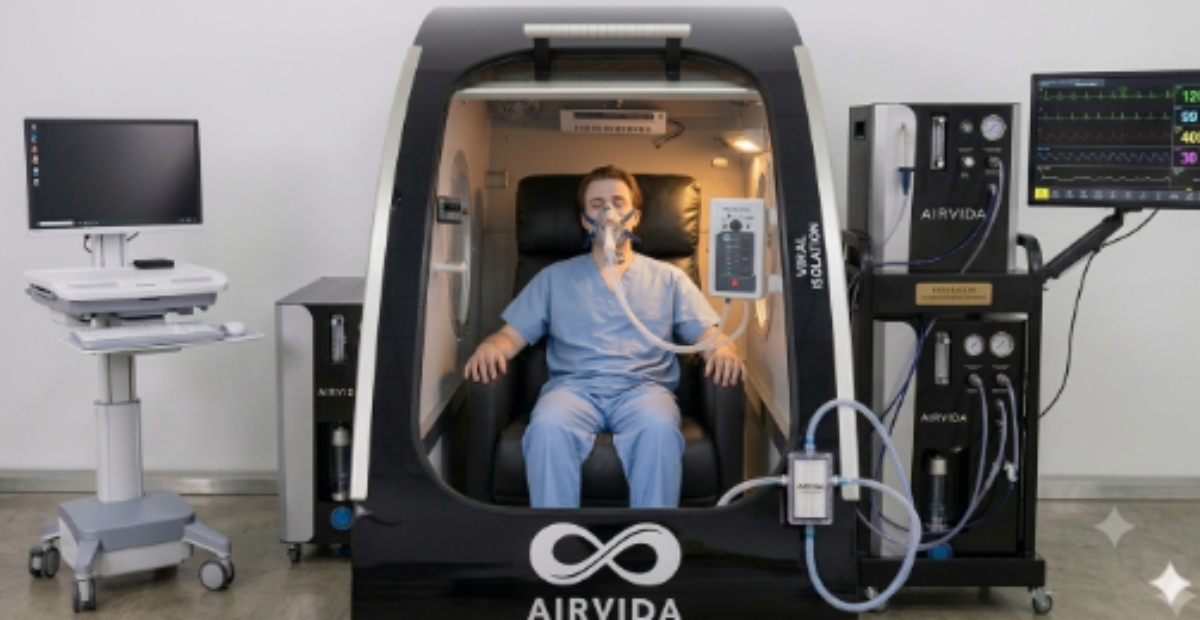
Key Takeaways
-
Hyperbaric chamber noise level typically runs 60–75 decibels during compression, roughly the volume of a running dishwasher or a loud conversation.
-
Most of the noise comes from the compressor and airflow, not the chamber itself, and it drops significantly once pressure stabilizes.
-
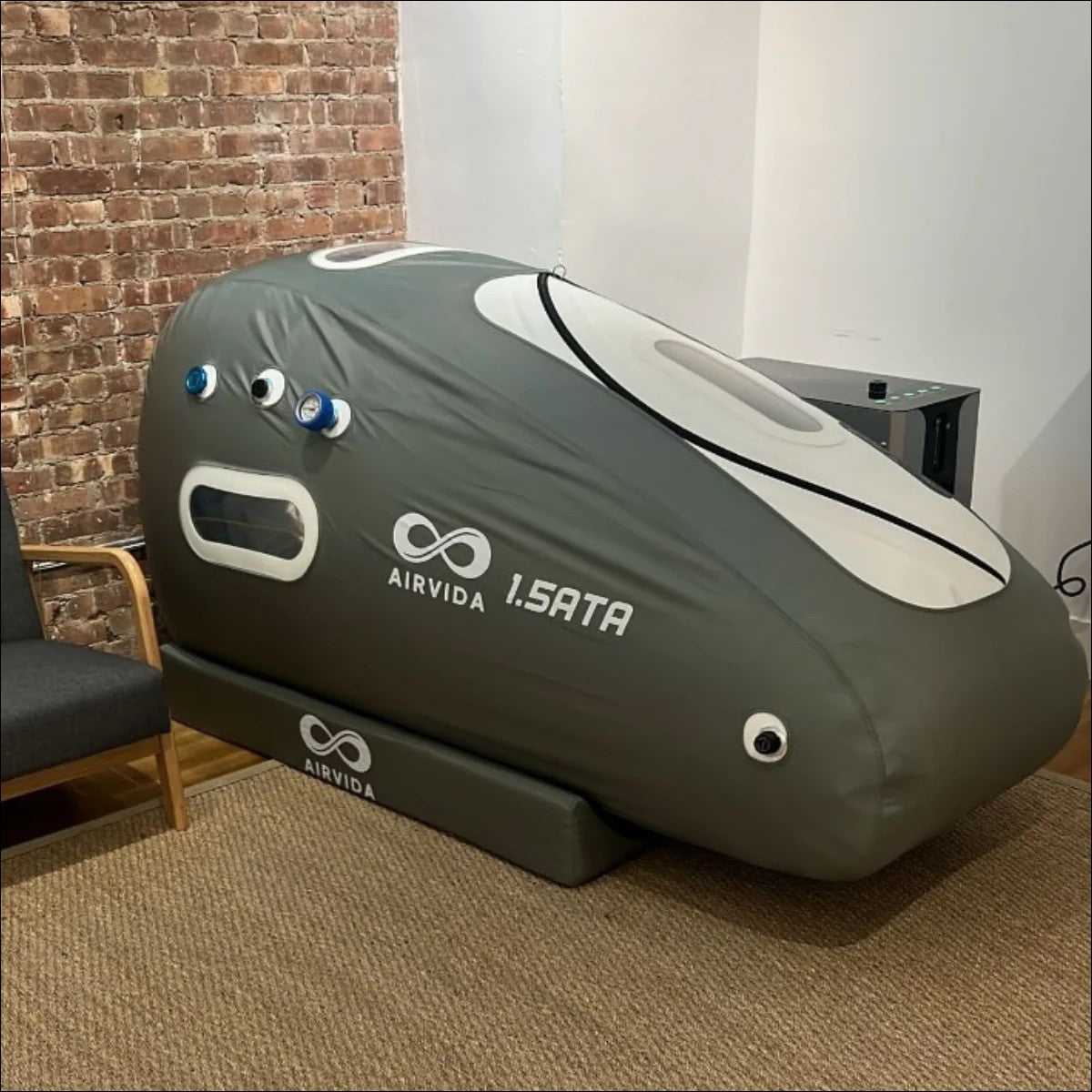
Soft-sided chambers are usually quieter at rest but louder during the fill cycle than hard-shell chambers, which hold pressure more steadily.
-
Earplugs, white noise, or approved music can cut perceived noise without interfering with treatment.
-
Chronic loud rattling, whistling, or grinding sounds are not normal and should be reported to your provider immediately.
Hyperbaric Collections You May Want to Shop

What Is Hyperbaric Chamber Noise Level?
Hyperbaric chamber noise level refers to the decibel range a person experiences inside a chamber during compression, the treatment "dwell" phase, and decompression. It's not a fixed number; it shifts throughout a session because the sound sources change at each stage.
During compression, oxygen or air is actively forced into the chamber, and that's when noise peaks, usually in the 65–75 dB range. Once the chamber reaches target pressure and holds steady, ambient noise typically settles to 50–60 dB, closer to a quiet office or a running fan. Decompression brings a second, shorter noise spike as pressure releases.
For context, a whisper sits around 30 dB, normal conversation around 60 dB, and a vacuum cleaner around 75 dB. Most chamber sessions never exceed that vacuum-cleaner ceiling, which is why the noise, while noticeable, rarely reaches a level considered harmful to hearing over a single 60–90-minute session.
Why Noise Level Matters Right Now
More people are using hyperbaric oxygen therapy (HBOT) for recovery, wound healing, and wellness than ever before, and a growing share of that use happens in soft hyperbaric chambers at home rather than in a clinical setting. That shift means first-time users are walking into sessions without a technician nearby to explain what's normal.
Noise is consistently the top question new users ask before their first session, right alongside claustrophobia concerns. Home users in particular tend to research this after their first session has already happened, once the compressor kicked on louder than expected and left them wondering if something was wrong. Knowing the expected dB range in advance prevents that unnecessary anxiety mid-session and helps users distinguish a normal compressor hum from something that actually needs attention.
There's also a practical scheduling angle. Anyone doing HBOT in a shared home, an apartment, or a room next to a sleeping child needs a realistic sense of how far that sound travels, and at what time of day it's tolerable.
What Causes the Noise Inside a Chamber

The Compressor
The compressor is the loudest single component in almost every setup. It's the motor pushing air or oxygen into the chamber, and it runs hardest during the first several minutes of compression. In hard-shell hyperbaric chambers, the compressor is often housed in a separate cabinet, which muffles the sound somewhat compared to units where the compressor sits directly beside the chamber.
Compressor age matters more than most buyers expect. A well-maintained unit that's a year or two old typically runs several decibels quieter than the same model after five years of heavy use, simply because internal components wear and fans work harder to compensate. If a chamber sounds louder than its published spec, maintenance history is usually the first thing to check.
Airflow and Valves
Once inside target pressure, a steady hiss or low hum often continues. That's airflow moving through vents and pressure-relief valves to maintain oxygen concentration and prevent CO2 buildup. This sound is quieter than compression noise but constant, which is why some users find the "hold" phase more meditative than the initial ramp-up, while others find a continuous hiss harder to tune out than a louder but shorter burst of compressor noise.
Chamber Material and Shape
Soft-sided chambers, built from flexible, air-permeable fabric, transmit ambient sound differently than rigid acrylic or steel hard-shell chambers. Hard shells tend to insulate external room noise better but can produce more resonance from internal airflow because sound reflects off the rigid walls rather than being partially absorbed by fabric.
This is why some users report a hard-shell chamber "feels" louder even at a lower measured decibel level. Resonance changes perceived loudness independent of the actual reading, which is worth knowing before assuming a higher-spec unit is automatically the noisier one.
Facility Environment
In multi-chamber clinics, several units running simultaneously compound perceived noise. A single home chamber in a quiet bedroom will almost always feel quieter in practice than the same unit running in a busy clinic, even if the decibel reading is identical. Room size, flooring, and nearby hard surfaces all affect how noise bounces around a space.
Hyperbaric Chambers You May Want to Shop
Explore More


Comparing Noise Across Chamber Types
|
Chamber Type |
Compression Noise |
Steady-State Noise |
Typical Source |
|
Soft-sided (portable) |
65–75 dB |
50–60 dB |
External air compressor |
|
Hard-shell (monoplace) |
60–70 dB |
45–55 dB |
Cabinet-housed compressor |
|
Multiplace/clinical |
65–75 dB |
55–65 dB |
Central compressor system |
These ranges reflect typical reported experiences across common consumer and clinical units rather than a single manufacturer spec, since noise varies by model, maintenance condition, and room acoustics.
To put those numbers in everyday terms:
-
50–60 dB, similar to a quiet refrigerator hum or light rainfall
-
60–70 dB, similar to normal conversation or a dishwasher on a standard cycle
-
70–75 dB, similar to a vacuum cleaner or a busy restaurant
None of these ranges approach the 85 dB threshold where hearing damage becomes a concern with prolonged daily exposure, which is one reason chamber noise is generally treated as a comfort issue rather than a safety issue.
Common Mistakes and Misconceptions

Assuming louder always means something is wrong. A strong compressor hum during compression is expected and does not indicate a malfunction. What's not expected is a new grinding, whistling, or rattling sound that wasn't present in earlier sessions, or a sound that changes pitch suddenly mid-session.
Skipping hearing protection out of habit. Many first-time users tough out the noise instead of simply using earplugs or noise-canceling headphones, both of which are safe to use inside most chambers and make a noticeable difference. This is especially common among people who assume protective gear is only for clinical settings, when it's just as useful at home.
Confusing pressure-related ear discomfort with noise sensitivity. Some users blame "the noise" for discomfort that's actually ear pressure from compression. If you're also managing ear popping or fullness, this guide on hyperbaric chamber ear pressure walks through the equalization techniques that solve the actual issue, since no amount of noise management will fix a pressure-equalization problem.
Booking a home chamber without checking the manufacturer's decibel rating. Not all consumer soft chambers publish this, but reputable sellers will provide it on request or in product documentation. Skipping this step is one of the most common reasons buyers are surprised on delivery day.
Assuming all sessions sound the same. Compression noise, steady-state noise, and decompression noise are three distinct phases with different volumes and characteristics. Expecting one flat noise level throughout a session sets up unnecessary surprise partway through.
Step-by-Step: Managing Noise During a Session

-
Check the published dB rating before buying or booking. Ask the provider or manufacturer directly if it isn't listed, and ask specifically for compression-phase and steady-state numbers rather than a single average.
-
Bring in-ear protection. Foam earplugs reduce perceived compressor noise by a meaningful margin without blocking staff communication in clinical settings.
-
Time your entry. Ask the operator to walk you through the first compression cycle verbally so the initial sound spike doesn't catch you off guard.
-
Use approved audio. Many chambers allow phones or MP3 players inside; confirm with your provider, then queue music or a podcast before compression starts so you're not fumbling with a device once the noise begins.
-
Breathe through the peak. The loudest noise window is typically the first three to five minutes; steady breathing through it helps most users acclimate quickly.
-
Adjust your environment for home sessions. Soft furnishings, rugs, and curtains absorb sound and reduce how far compressor noise travels to other rooms, which matters if you're running sessions while others in the house are sleeping or working.
-
Flag anything unusual immediately. Grinding, sudden silence from the compressor, or a burning smell are reasons to alert staff or stop a home session right away.
If noise anxiety overlaps with a fear of enclosed spaces, it's worth addressing both together. Our breakdown of hyperbaric chamber claustrophobia covers coping strategies that pair well with the steps above, since the two concerns often reinforce each other for first-time users.
Who Should Pay Closest Attention to Noise Level
Noise sensitivity matters most for a few specific groups. Patients using HBOT for spinal cord injury recovery often complete longer, more frequent sessions, so comfort during extended dwell time becomes a bigger factor than for a single occasional session. See our guide on HBOT for spinal cord injury for typical protocol lengths and what a realistic treatment schedule looks like.
Parents booking sessions for children, anyone with misophonia or auditory processing sensitivities, and shift workers trying to nap during treatment should all ask providers for the specific dB range of the exact model they'll be using, not just a general chamber-type average. For children especially, a brief walkthrough of the compression sound beforehand tends to prevent far more distress than explaining it mid-session.
People recovering from ear surgery or with existing tinnitus should also mention this to their provider ahead of time, since the combination of pressure changes and background noise can feel more pronounced for these groups even when the actual decibel level is unremarkable.
Choosing a Quieter Setup by Location

If you're comparing local providers, ask each facility directly about compressor age and maintenance schedule, since older or poorly serviced units run noticeably louder than well-maintained ones regardless of model. Ask, too, whether chambers are spaced far enough apart that one unit's compressor doesn't bleed into the session next to it.
Facilities offering hyperbaric chamber sessions in Cape Coral and hyperbaric chamber sessions in Tacoma can walk you through their specific equipment and noise levels before you book, which is the most reliable way to know what to expect rather than relying on general averages. A quick phone call asking "what does compression actually sound like in your units?" tends to reveal more than any spec sheet.
FAQ
Are hyperbaric chambers noisy?
Yes, to a degree, most chambers produce 60–75 decibels during compression, comparable to a vacuum cleaner or a loud conversation, then quiet down to 45–60 decibels once pressure stabilizes. The sound is a normal byproduct of the compressor and airflow system, not a sign of malfunction.
Can you listen to music in a hyperbaric chamber?
In most soft and hard-shell chambers, yes, phones, MP3 players, or approved audio devices are commonly allowed once the provider confirms compatibility with their specific unit. Music or a podcast is one of the most effective ways to reduce how loud the compressor feels during a session.
Why does Justin Bieber sleep in a hyperbaric chamber?
Public reporting indicates Bieber has used a hyperbaric chamber for recovery and wellness purposes, a practice several athletes and public figures have also mentioned publicly. There are no verified details about his personal routine or medical reasoning beyond that, so this is best treated as a public wellness trend rather than a documented health protocol.
Can you sleep 8 hours in a hyperbaric chamber?
Extended overnight sessions are possible in some home and clinical setups, but 8-hour sessions are far longer than standard HBOT protocols, which typically run 60–120 minutes. Anyone considering extended or overnight use should get explicit guidance from their provider or physician rather than assuming longer automatically means better results.
Conclusion
Hyperbaric chamber noise level is predictable once you know what's driving it: the compressor peaks during compression, airflow hums through the hold phase, and everything quiets down from there. Most of what feels alarming on a first session is completely normal, and a few small adjustments earplugs, approved audio, knowing the timing ake the experience far more comfortable.
If you're ready to try a session or want to compare chambers with published noise specifications, explore soft hyperbaric chambers or hard-shell hyperbaric chambers for sale to find the right fit for your comfort level and treatment goals.