


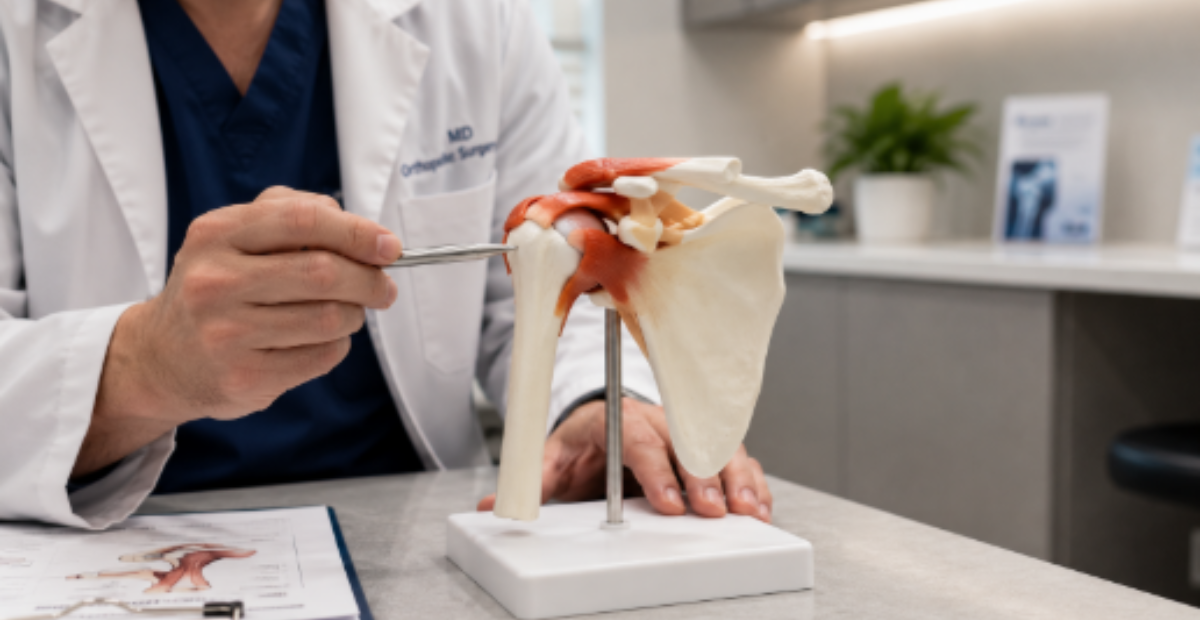
Hyperbaric oxygen therapy (HBOT) may help reduce inflammation and accelerate tissue repair in frozen shoulder by flooding the joint with high-concentration oxygen under increased pressure. While it is not a standalone cure, HBOT for frozen shoulder shows real promise as a supportive treatment that can shorten recovery timelines and reduce pain levels.
Key Takeaways
-
Frozen shoulder involves progressive fibrosis and inflammation in the glenohumeral joint capsule, which HBOT directly targets.
-
Hyperbaric oxygen therapy increases dissolved oxygen in blood plasma by up to 10 to 15 times normal levels, reaching poorly vascularized tissue around the shoulder.
-
HBOT works best as part of a broader protocol that includes physical therapy, anti-inflammatory nutrition, and structured movement.
-
Sessions typically run 60 to 90 minutes at 1.3 to 2.4 ATA pressure, with most protocols calling for 20 to 40 sessions.
-
At-home soft-shell chambers are a more accessible option for many patients, though clinical chambers offer higher pressure options.
-
Early intervention during the "freezing" phase may produce the best results compared to starting treatment in the frozen or thawing stage.
What Actually Happens Inside a Frozen Shoulder
Frozen shoulder, clinically called adhesive capsulitis, is a condition where the connective tissue surrounding the glenohumeral joint becomes inflamed, thickened, and scarred. The result is a progressive loss of range of motion that can last anywhere from one to three years without proper treatment. It affects roughly 2 to 5 percent of the U.S. population, with higher rates seen in people with diabetes and those between the ages of 40 and 60.
The condition moves through three recognized stages. The freezing stage brings intense pain and gradual stiffness. The frozen stage stabilizes the pain but locks in significant mobility loss. The thawing stage is when the body slowly reabsorbs scar tissue and motion returns. Most conventional treatments, including corticosteroid injections, physical therapy, and hydrodilatation, aim to manage pain and maintain what range of motion is left rather than actively accelerating repair.
The core biological problem is oxygen deficiency in hypoxic, poorly vascularized scar tissue. When fibrotic tissue builds up around the joint capsule, blood flow is restricted. Without adequate oxygen delivery, the body cannot properly regulate collagen remodeling, reduce local inflammation, or support the fibroblast activity needed for repair. This is precisely where HBOT enters the conversation.
The Biological Case for Using HBOT on Shoulder Tissue
Hyperbaric oxygen therapy involves breathing 100 percent pure oxygen inside a pressurized chamber at levels ranging from 1.3 to 3.0 ATA (atmospheres absolute). At those pressures, oxygen dissolves directly into blood plasma rather than relying solely on hemoglobin transport. This allows oxygen to penetrate tissues that normal circulation struggles to reach, including the thickened, fibrotic capsule tissue characteristic of adhesive capsulitis.
Here is what that elevated oxygen delivery does at the cellular level:
-
Reduces pro-inflammatory cytokines: HBOT has been shown to downregulate TNF-alpha and IL-1 beta, two cytokines heavily involved in the chronic inflammatory cycle that sustains frozen shoulder.
-
Stimulates collagen synthesis: Oxygen-dependent hydroxylation is a required step in collagen formation. More oxygen means better, more organized collagen remodeling in the joint capsule.
-
Promotes angiogenesis: HBOT triggers new blood vessel growth through vascular endothelial growth factor (VEGF) upregulation, improving long-term perfusion to the damaged area.
-
Reduces fibroblast hyperactivity: Excessive fibroblast activity is what creates the scar tissue capsule in the first place. HBOT helps normalize fibroblast signaling in hypoxic tissue.
-
Modulates oxidative stress: Rather than worsening inflammation, controlled hyperoxia has been shown to reduce net oxidative damage in chronic soft tissue injuries.
If you want to understand how this mechanism applies across a wider range of joint injuries, the detailed breakdown of hbot for orthopedic recovery covers the broader physiological picture across different musculoskeletal conditions.
The shoulder joint is a particularly good candidate for HBOT because its capsule and surrounding ligaments are already relatively low in blood supply compared to muscle tissue, and hyperbaric oxygen therapy for ligament damage explains the tissue-level mechanics in detail.
What the Research and Clinical Evidence Shows
Published research on HBOT for frozen shoulder specifically is still limited, but several lines of evidence support its use. A 2018 study in the Journal of Physical Therapy Science examined HBOT as an adjunct treatment for shoulder pain and inflammation, finding that patients who received HBOT alongside conventional physical therapy reported significantly greater pain reduction and faster functional improvement than the physical therapy-only group.
Animal model research on adhesive capsulitis has consistently shown that hypoxia worsens capsular fibrosis and that restoring oxygen levels reduces collagen overproduction. A 2020 review in Connective Tissue Research linked hypoxia-inducible factor 1-alpha (HIF-1a) directly to the fibrosis mechanism in adhesive capsulitis, suggesting oxygen-based interventions could interrupt the disease process at a molecular level.
From a clinical standpoint, HBOT has a well-established track record in hyperbaric chamber therapy for sports injuries involving soft tissue repair and recovery. Athletes recovering from rotator cuff procedures, shoulder labrum repairs, and similar surgeries have reported faster return-to-activity timelines with HBOT support. The application to frozen shoulder follows logically from that evidence base.
It is also worth noting that frozen shoulder frequently co-occurs with conditions like Type 2 diabetes, where microvascular dysfunction already impairs tissue oxygenation. For diabetic patients especially, the additional oxygen delivery from HBOT may address an underlying deficiency that conventional treatment never touches.
HBOT vs. Standard Frozen Shoulder Treatments

Understanding how HBOT compares to other options helps you decide whether it belongs in your recovery plan.
|
Treatment |
Primary Mechanism |
Typical Cost (USD) |
Active Repair? |
Pain Relief Speed |
|
Corticosteroid Injection |
Anti-inflammatory |
$200-$500/injection |
No |
Fast (days) |
|
Physical Therapy |
Mobility restoration |
$100-$300/session |
Partial |
Slow (weeks) |
|
Hydrodilatation |
Capsule stretching |
$500-$1,500 |
No |
Moderate |
|
Shoulder Manipulation (MUA) |
Forced adhesion release |
$2,000-$5,000 |
No |
Immediate |
|
HBOT |
Oxygenation and tissue repair |
$150-$400/session |
Yes |
Moderate |
|
At-Home HBOT (Soft Chamber) |
Lower-pressure oxygenation |
$4,000-$15,000 (unit) |
Partial |
Moderate |
HBOT does not replace physical therapy or, in severe cases, procedural intervention. However, it is the only option in this list that targets the underlying hypoxic and inflammatory environment rather than managing symptoms or mechanically breaking up adhesions. For patients who want to support active tissue repair alongside their existing treatment plan, that distinction matters.
Practical Protocol: Sessions, Pressure, and Timing
If you are considering HBOT as part of your frozen shoulder recovery, here is what a realistic protocol looks like:
Pressure levels: Clinical sessions typically run at 2.0 to 2.4 ATA for soft tissue injuries. At-home soft-shell chambers operate between 1.3 and 1.5 ATA, which is lower but still clinically meaningful for inflammation reduction and mild fibrosis support.
Session duration: Standard sessions run 60 to 90 minutes of breathing 100 percent oxygen.
Session frequency: Most protocols for musculoskeletal conditions call for 5 sessions per week during the active phase, followed by 3 per week for maintenance.
Total sessions: For frozen shoulder, a reasonable starting target is 20 to 40 sessions, with reassessment at the 20-session mark based on pain scores and range of motion measurements.
Timing: Beginning HBOT during the freezing stage, when inflammation is most active, may produce better outcomes than starting in the frozen stage when fibrosis has already matured.
Many patients exploring at-home options start with soft hyperbaric chambers, which offer a convenient way to build consistent session volume without repeated clinic visits. For those who want a specific pressure target that bridges home use and clinical efficacy, the explore our 1 5 ata hyperbaric chamber collection offers hardware designed to hit that mid-range therapeutic level.
Things to Know

-
Frozen shoulder and arthritis are different conditions, but they share inflammatory mechanisms, and will hyperbaric chamber help arthritis gives useful context for distinguishing these applications.
-
Insurance coverage for HBOT is limited. The FDA and most U.S. insurance providers, including Medicare, only cover HBOT for a specific list of 14 approved indications. Frozen shoulder is not on that list, meaning most patients pay out-of-pocket.
-
Contraindications exist. Untreated pneumothorax, certain chemotherapy drugs, and severe claustrophobia can make HBOT unsuitable. Always disclose your full medical history to a qualified provider before starting.
-
Results are not immediate. Unlike a corticosteroid injection that may reduce pain within 48 hours, HBOT works over a course of sessions. Patients who expect quick relief from a single session will likely be disappointed.
-
Bilateral frozen shoulder is rare but real. Roughly 17 percent of people with adhesive capsulitis develop it in both shoulders, often sequentially. HBOT's systemic anti-inflammatory effect may offer some protective benefit for the second shoulder.
-
Diabetic patients may need more sessions. Microvascular disease impairs oxygen delivery, so people with diabetes may require a longer protocol to see comparable results to non-diabetic patients.
Ready to Add HBOT to Your Recovery Plan?

If you are currently managing frozen shoulder and want to give your body the best possible environment for tissue repair, your most practical next step is to schedule a consultation with a hyperbaric medicine specialist. Bring your imaging, your physical therapy notes, and a clear timeline of your symptoms so the provider can recommend a pressure level and session count appropriate for your stage of adhesive capsulitis. If clinical access is limited in your area, a portable hyperbaric chamber can provide convenient at-home therapy options.
Frequently Asked Questions
How many HBOT sessions are typically needed for frozen shoulder?
Most protocols suggest 20 to 40 sessions, with an initial assessment at the 20-session mark.
The exact number depends on your stage of adhesive capsulitis, your baseline health, and whether HBOT is being combined with physical therapy. Patients in the earlier freezing stage often respond faster than those with mature, longstanding fibrosis.
Can I use an at-home hyperbaric chamber for frozen shoulder instead of going to a clinic?
Yes, at-home soft chambers at 1.3 to 1.5 ATA can offer meaningful benefits, though they operate at lower pressures than clinical-grade chambers.
For moderate cases where the primary goal is reducing inflammation and supporting tissue oxygenation, the lower pressure range is often sufficient. Severe or long-standing cases may benefit more from the higher pressures available in clinical settings.
Is HBOT covered by insurance for frozen shoulder in the United States?
No, HBOT for frozen shoulder is not covered by Medicare or most private insurers in the U.S. because it is not on the FDA's approved indications list.
Patients typically pay out-of-pocket, either per session at a clinic or through the upfront investment of an at-home chamber unit. Some flexible spending accounts (FSAs) and health savings accounts (HSAs) may allow HBOT expenses depending on your plan's terms.
Does HBOT replace physical therapy for frozen shoulder?
No, HBOT works best as a complement to physical therapy, not a replacement.
Physical therapy addresses mobility, muscle activation, and biomechanics. HBOT addresses the tissue environment at the cellular level. Combining both approaches gives you the best chance of shortening your overall recovery timeline.
Are there any risks or side effects of HBOT specific to frozen shoulder patients?
HBOT is generally well-tolerated, with the most common side effect being mild ear pressure or sinus discomfort during pressurization.
More serious complications like oxygen toxicity or barotrauma are rare when sessions are properly supervised. Patients with diabetes, who make up a disproportionate share of frozen shoulder cases, should have their blood glucose monitored before and after sessions since HBOT can affect insulin sensitivity.
The Bottom Line on HBOT for Frozen Shoulder
HBOT for frozen shoulder addresses something most conventional treatments ignore: the hypoxic, fibrosis-prone environment inside an inflamed joint capsule. By delivering concentrated oxygen to tissues that are starved for it, HBOT creates better conditions for collagen remodeling, inflammation resolution, and real tissue repair rather than just symptom management.
This therapy works best when it is part of a structured plan that includes physical therapy, appropriate nutrition, and regular movement. Whether you pursue clinical sessions or invest in an at-home chamber, the key is consistency. Start by speaking with a hyperbaric medicine specialist or an orthopedic physician familiar with adjunctive therapies, then build a protocol with clear milestones so you can track your shoulder's progress with measurable outcomes.
At Airvida Chambers, we pride ourselves on offering the highest quality of hyperbaric chambers on the market, backed by only working with the most reliable partners in the industry. We ship worldwide, making trusted hyperbaric chamber solutions more accessible for clinics, wellness centers, and home users looking for dependable support in their recovery journey.