


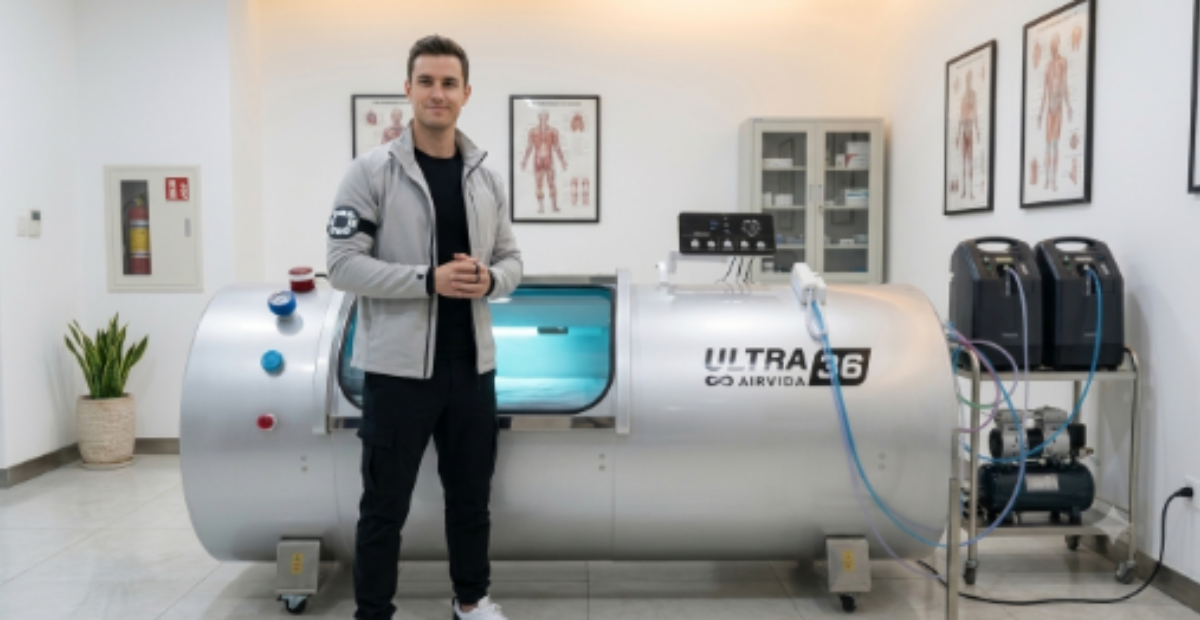
The best hyperbaric chamber for biohackers is a hard-shell unit rated to at least 1.5 ATA with a high-flow oxygen concentrator or tank feed, not the entry-level soft chambers marketed heavily on social media. Biohackers chasing measurable gains in recovery, cognition, and cellular oxygenation need pressure and oxygen purity that soft-sided bags simply cannot deliver. Everything else, brand, color, and portability, is secondary to those two numbers.
I've spent close to a decade helping people, from ultra-endurance athletes to executives running full longevity stacks, pick chambers that match what they're actually trying to accomplish. The gap between what's marketed and what works is wide, and biohackers get burned by it constantly.
Key Takeaways
-
Pressure matters more than price. Look for 1.3–2.0 ATA hard-shell chambers over soft chambers capped at 1.3 ATA with ambient air.
-
Oxygen concentration is the real lever. A chamber feeding 90%+ oxygen through a mask beats one recirculating room air at higher pressure.
-
Hard-shell chambers cost more upfront ($6,000–$20,000+) but deliver clinical-grade sessions; soft chambers ($4,000–$8,000) suit mild recovery use only.
-
Protocol consistency beats chamber specs. Three 60-minute sessions weekly outperform sporadic use in a "better" chamber.
-
Home ownership only pays off past roughly 100–150 sessions compared to clinic-based mHBOT.
What Is a "Best Hyperbaric Chamber for Biohackers," Exactly?
A biohacker-grade hyperbaric chamber is a mild hyperbaric oxygen therapy (mHBOT) device capable of pressurizing a sealed environment above normal atmospheric pressure while delivering supplemental oxygen, typically through a mask or hood rather than filling the whole chamber with pure O2. This distinction matters because pure-oxygen chambers above 1.4 ATA require medical-grade, fire-rated construction and are regulated far more tightly than the consumer units biohackers actually buy.
For someone optimizing sleep, recovery, mitochondrial function, or cognitive performance, "best" doesn't mean the highest pressure available. It means the chamber that lets you hit a consistent, tolerable pressure with clean oxygen delivery, several times a week, without a $40,000 clinical setup in your garage.
Why This Search Is Heating Up Right Now
Hyperbaric chambers went from a niche recovery tool for divers and wound-care patients to a fixture in longevity circles almost overnight, driven largely by high-profile users publicizing their personal stacks. That visibility created real demand, but it also created a flood of underpowered soft chambers marketed with clinical-sounding claims they can't back up. Biohackers searching for "the best" chamber are usually trying to cut through that noise before spending five figures.
Hyperbaric Collections You May Want to Shop

Hard-Shell vs. Soft-Shell: The Decision That Actually Drives Results
This is the single biggest fork in the road, and most buyers get it backwards.
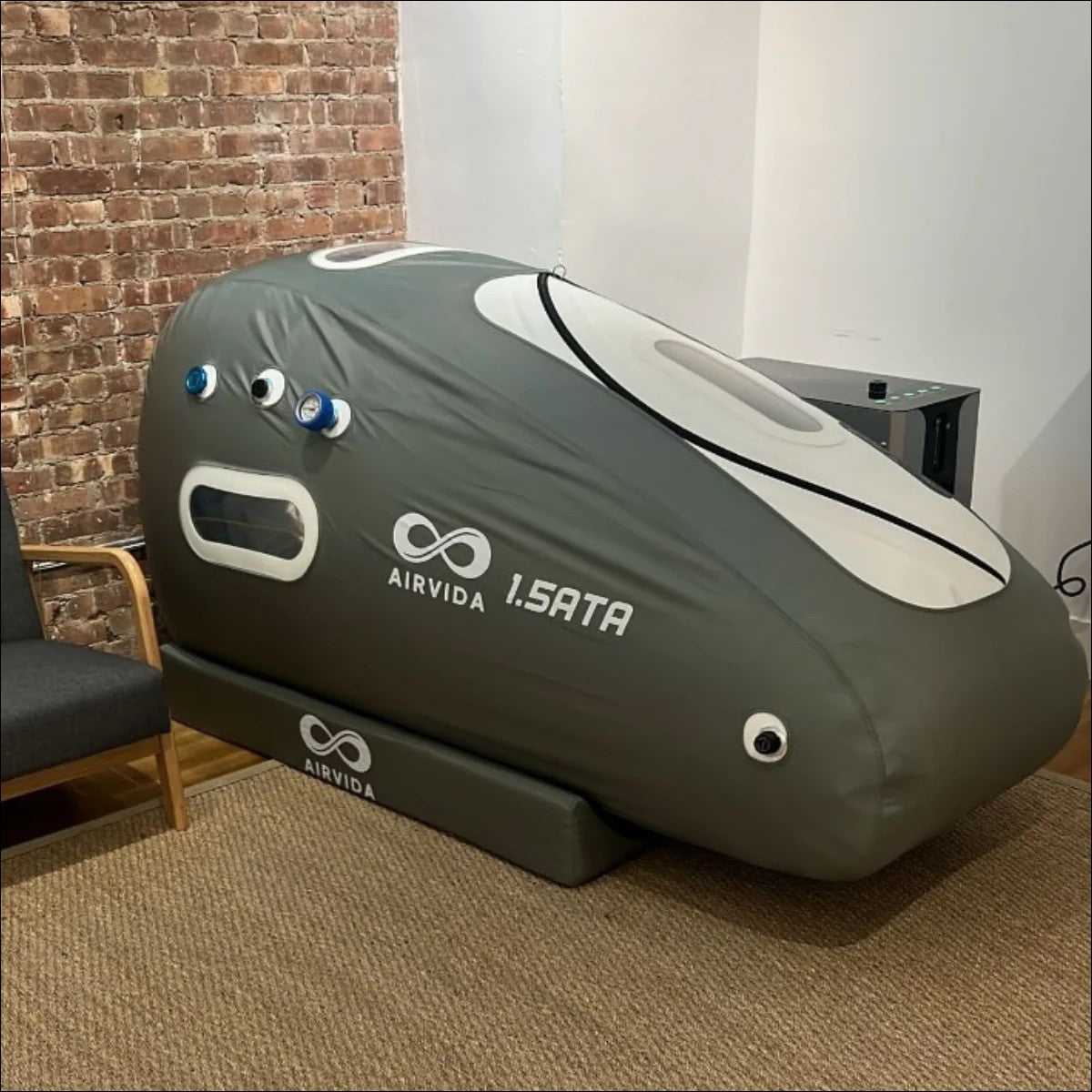
Soft-sided (inflatable) chambers operate up to about 1.3 ATA using ambient air compressed by a pump, sometimes paired with an oxygen concentrator delivering supplemental O2 through a nasal cannula. They're quieter, cheaper, and easier to install in an apartment, which is why they dominate influencer marketing.
Hard-shell chambers are rigid, typically steel or acrylic, rated from 1.5 up to 3.0 ATA, and pair naturally with medical-grade oxygen concentrators or tanks feeding a mask system. They pressurize faster, hold pressure more reliably, and give biohackers the dose range that shows up in the actual research on cognitive function, wound healing, and recovery.
Quick Comparison
|
Factor |
Soft-Shell (mHBOT) |
Hard-Shell |
|
Max pressure |
~1.3 ATA |
1.5–3.0 ATA |
|
Oxygen delivery |
Concentrator via cannula (often <30% O2 in the air itself) |
Mask/hood systems, 90%+ O2 at the mask |
|
Typical cost |
$4,000–$8,000 |
$6,000–$20,000+ |
|
Session noise |
Low (soft pump hum) |
Moderate (compressor cycling) |
|
Best for |
Light recovery, sleep support, beginners |
Serious recovery protocols, cognitive/longevity stacks |
If your goal is genuinely biohacking tracking HRV, cognitive tests, or recovery markers against a protocol, a hard-shell unit is worth the extra cost. If you just want general wellness support without tracking outcomes, a soft chamber is a reasonable entry point.
The Specs That Actually Separate a Good Chamber From a Marketing Claim

Every listing says "hyperbaric chamber." Very few tell you what you actually need to know.
-
Pressure rating (ATA): The single most important spec. 1.3 ATA and 2.0 ATA are physiologically different experiences; don't compare them as if they're interchangeable.
-
Oxygen delivery method: Whole-chamber oxygen fill vs. mask/hood delivery changes both safety requirements and effective dose at the tissue level.
-
Compressor/pump rating: Determines how fast the chamber reaches target pressure and how it performs on back-to-back sessions.
-
Certification: UL/CE certification and, for U.S. buyers, whether the unit has any FDA clearance pathway (most consumer mHBOT chambers are cleared for altitude sickness only; be skeptical of broader medical claims).
-
Interior volume and headroom: A chamber you can't sit up comfortably in gets used less often, which quietly tanks your protocol adherence more than any spec sheet number.
Biohackers researching related interventions for specific conditions often find the physiology overlaps more than expected. Our breakdown of HBOT for erectile dysfunction covers the same oxygen-and-vascular mechanisms that show up in recovery and performance protocols.
Use Cases Biohackers Are Actually Chasing

Most biohackers buying a chamber aren't treating a diagnosed condition; they're optimizing a system that already works. The most common goals I see:
-
Recovery and inflammation management after training blocks or competition
-
Cognitive sharpness and focus, often stacked with nootropics or fasting protocols
-
Sleep quality, using evening sessions to down-regulate before bed
-
Skin and visible aging markers, since oxygen-driven collagen synthesis is one of the more measurable outcomes home users track
-
Vision and eye health are an emerging area of interest. See our piece on hyperbaric chamber for macular degeneration for how oxygen delivery affects retinal tissue specifically.
None of these require pushing pressure to clinical wound-care levels (2.4+ ATA). Most serious home biohacking protocols run in the 1.5–2.0 ATA range, three to five sessions a week, for 45–90 minutes.
Cost, ROI, and Where to Actually Set One Up

A hard-shell chamber suited for real biohacking use runs $6,000 to $20,000+, depending on pressure rating, brand, and oxygen system. Add an oxygen concentrator ($1,500–$4,000) if it's not bundled, plus modest electricity costs for the compressor.
Run the math against clinic-based mHBOT, which typically costs $100–$300 per session. At three sessions a week, home ownership breaks even somewhere between 100 and 150 sessions, roughly 8 to 12 months of consistent use. If you're not confident you'll use it that consistently, clinic sessions or a wellness-center membership are the more rational starting point.
Space planning matters more than people expect. Hard-shell chambers need a dedicated 20-amp circuit, ceiling clearance, and a room that isn't a converted closet. Cramped installs are the number-one reason home chambers end up unused within a year. If you're weighing local access versus a home unit, it's worth checking what's already available near you, like the hyperbaric options through hyperbaric chamber providers in Cape Coral or hyperbaric chamber services in Manchester, CT, before committing five figures to a home setup.
Common Mistakes and Misconceptions

Mistake #1: Assuming higher pressure is always better. More ATA isn't automatically more effective, and pushing pressure without medical supervision increases the risk of ear barotrauma and oxygen toxicity symptoms without proportional benefit.
Mistake #2: Buying a soft chamber expecting hard-shell results. Marketing language blurs this constantly. A 1.3 ATA ambient-air chamber and a 2.0 ATA mask-delivered oxygen chamber are not comparable products.
Mistake #3: Ignoring maintenance costs. Compressor filters, oxygen concentrator sieve beds, and chamber seals all wear out. Budget for it, or the chamber degrades quietly until a session feels "off."
Mistake #4: No baseline tracking. Biohackers who don't track HRV, sleep scores, or cognitive benchmarks before starting can't actually tell if the chamber is working; they're just guessing based on how a session made them feel that day.
Mistake #5: Treating anecdote as protocol. A public figure's routine isn't a clinical protocol; it's one person's N=1 experiment, often under supervision you don't have visibility into.
Hyperbaric Chambers You May Want to Shop
Explore More


A Step-by-Step Framework for Choosing Your Chamber
-
Define your primary goal. Recovery, cognition, sleep, and skin/aging each suggest slightly different pressure and session-length targets; write yours down before shopping.
-
Set a realistic session-frequency commitment. Be honest about whether you'll actually use it 3+ times a week; this determines whether home ownership even makes sense.
-
Shortlist hard-shell chambers rated 1.5–2.0 ATA with mask-based oxygen delivery, unless your goal is purely light recovery/sleep support.
-
Confirm certification and warranty terms directly with the manufacturer; don't rely on marketplace listings alone.
-
Plan the room-dedicated circuit, ceiling height, and ventilation before you order, not after delivery day.
-
Run a 90-day baseline-and-tracking protocol once installed: same time of day, same pressure, tracked against a metric that matters to you (HRV, sleep score, cognitive test).
-
Reassess at 90 days and adjust frequency or pressure based on actual data, not how a session felt.
FAQ: Best Hyperbaric Chamber for Biohackers
Does HBOT help with bipolar? There's early, limited research exploring hyperbaric oxygen's effect on mood regulation and neuroinflammation, but there is no established clinical protocol for bipolar disorder specifically, and HBOT is not a substitute for psychiatric treatment. Anyone considering it alongside a mental health condition should loop in their treating physician first, since pressure and oxygen exposure can interact with medications and underlying health factors.
What hyperbaric chamber does Brian Johnson use? Brian Johnson (known publicly for his "Don't Die" longevity project) has discussed using a hard-shell hyperbaric chamber as one piece of a broader, heavily monitored longevity stack that includes extensive lab testing. His specific setup is part of a personal, medically supervised protocol rather than a standardized consumer product recommendation, so it's not something to replicate without similar oversight.
Why does Justin Bieber sleep in a hyperbaric chamber? Bieber has publicly mentioned using a hyperbaric chamber to support recovery and overall wellness, a use case consistent with how many performers and athletes use mHBOT for sleep quality and physical recovery between demanding schedules. Public figures using a chamber for general wellness isn't the same as a clinical indication; it reflects personal preference, not a proven treatment for a specific condition.
Can HBOT make you look younger? Some research suggests hyperbaric oxygen sessions can support collagen production and reduce visible signs of oxidative stress on skin, which is why anti-aging is a commonly cited biohacking use case. That said, effects are generally modest, dependent on session consistency, and better understood as a skin-health support tool than a dramatic anti-aging solution.
How many sessions before biohackers see results? Most people tracking measurable outcomes sleep quality, recovery time, focus tart noticing changes around 15–20 sessions in a consistent protocol (roughly 4–6 weeks at 3–4 sessions weekly). Individual response varies significantly based on pressure, baseline health, and what specifically is being tracked.
Bottom Line
The best hyperbaric chamber for biohackers isn't the one with the flashiest marketing or the highest pressure rating ; 's the hard-shell unit matched to your actual goal, backed by real oxygen delivery, that you'll realistically use several times a week. Get the pressure and oxygen delivery right, track your baseline, and give the protocol 90 days before judging results.
If you're weighing home ownership against professional access, compare what's available through local providers like hyperbaric chamber options in Cape Coral or hyperbaric chamber services in Manchester, CT, before you commit to a home unit; it's often the fastest way to test a protocol before spending five figures on equipment.