


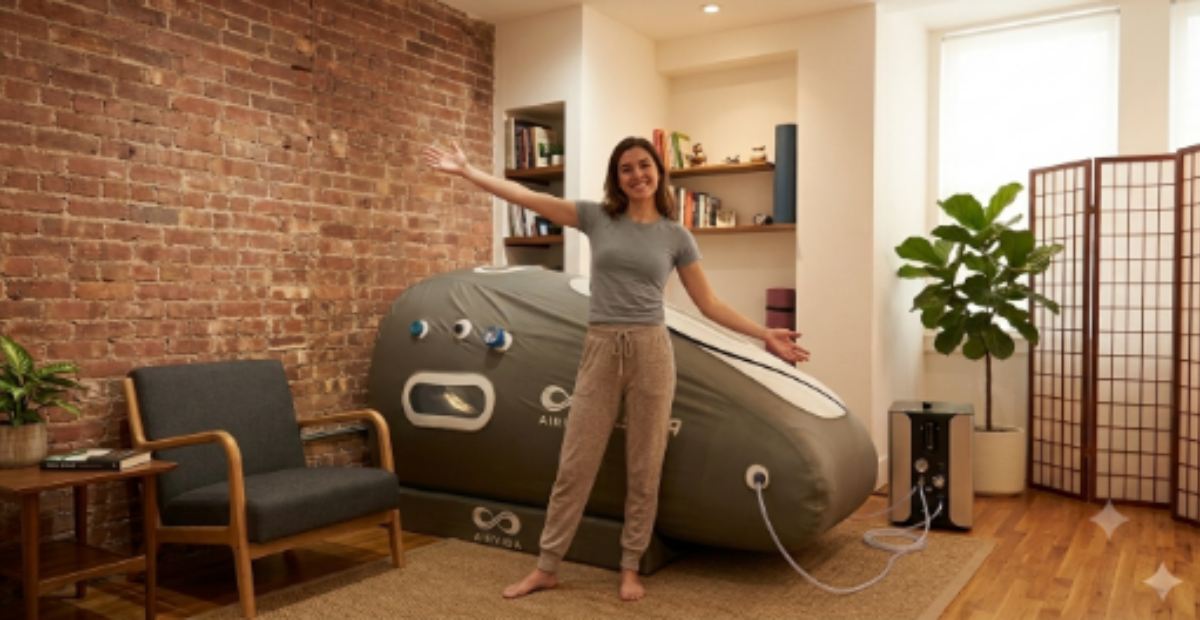
The best hyperbaric chamber for small apartments is a single-person soft-shell chamber rated for 1.3 ATA, since it needs as little as 4 by 7 feet of clear floor space, runs on a standard household outlet, and folds down for storage between sessions. If your apartment can fit a loveseat, it can almost certainly fit one of these units. The harder question isn't whether it fits; it's which model actually delivers a therapeutic dose of oxygen without turning your living room into an equipment closet.
I've spent the last several years helping clients set up home HBOT chambers in everything from studio apartments to shared brownstone floors, and the same three constraints come up every time: floor space, ceiling height, and electrical capacity. Get those right, and a hyperbaric chamber for small apartments works beautifully. Get them wrong,g and you'll spend more time rearranging furniture than breathing oxygen.
Key Takeaways
-
Soft-shell chambers (1.3 ATA) are the best fit for an apartment: compact footprint, no dedicated electrical line, and no professional installation required.
-
Hard-shell chambers deliver higher pressure and more clinical-grade results but need 6+ feet of ceiling clearance and reinforced flooring, which rules out most apartments.
-
Footprint matters more than square footage. A 4x7 ft clear zone plus 2 feet of access clearance is the real minimum, not your apartment's total size.
-
Oxygen concentrators used with soft chambers are quiet enough for shared walls, unlike medical-grade oxygen tanks that require ventilation planning.
-
Storage and portability should factor into your decision if you're renting or plan to move; collapsible soft chambers pack down to roughly the size of a large duffel bag.
What Is a Hyperbaric Chamber for Small Apartments?
A hyperbaric chamber for small apartments is any home HBOT unit, almost always a soft-shell, mild hyperbaric oxygen therapy (mHBOT) chamber sized and engineered to operate safely within the space, power, and structural limits of a typical rental or condo unit. These chambers pressurize to around 1.3 ATA, roughly the pressure at 10 feet underwater, which is enough to meaningfully increase blood oxygen saturation without the plumbing, venting, or structural reinforcement that hard-shell clinical chambers require.
The category exists because demand for home HBOT has grown faster than most people's living spaces have. Manufacturers responded with narrower cylinders, lower zipper profiles, and single-outlet power setups specifically so the equipment could live in a bedroom corner instead of a converted garage.
Why This Matters Right Now
Home hyperbaric therapy has moved from a niche biohacking purchase to a mainstream recovery and wellness tool, and apartment dwellers make up a growing share of that market. Soft-shell chamber sales in urban rental markets have climbed noticeably over the past two years, driven largely by people managing chronic conditions, post-surgical recovery, or athletic recovery who don't have a house with a spare room to dedicate to equipment.
At the same time, not every chamber marketed as "compact" actually is. Some listings advertise a small packed dimension but skip the clearance space needed to safely enter, zip, and exit the chamber, a detail that only becomes obvious after delivery. Knowing the real numbers before you buy saves you from a return shipment and a very annoyed landlord.
Hyperbaric Collections You May Want to Shop

Soft-Shell vs. Hard-Shell: Which Actually Fits an Apartment
This is the decision that determines everything else, so it's worth settling first.
Soft-Shell Chambers (1.3 ATA)
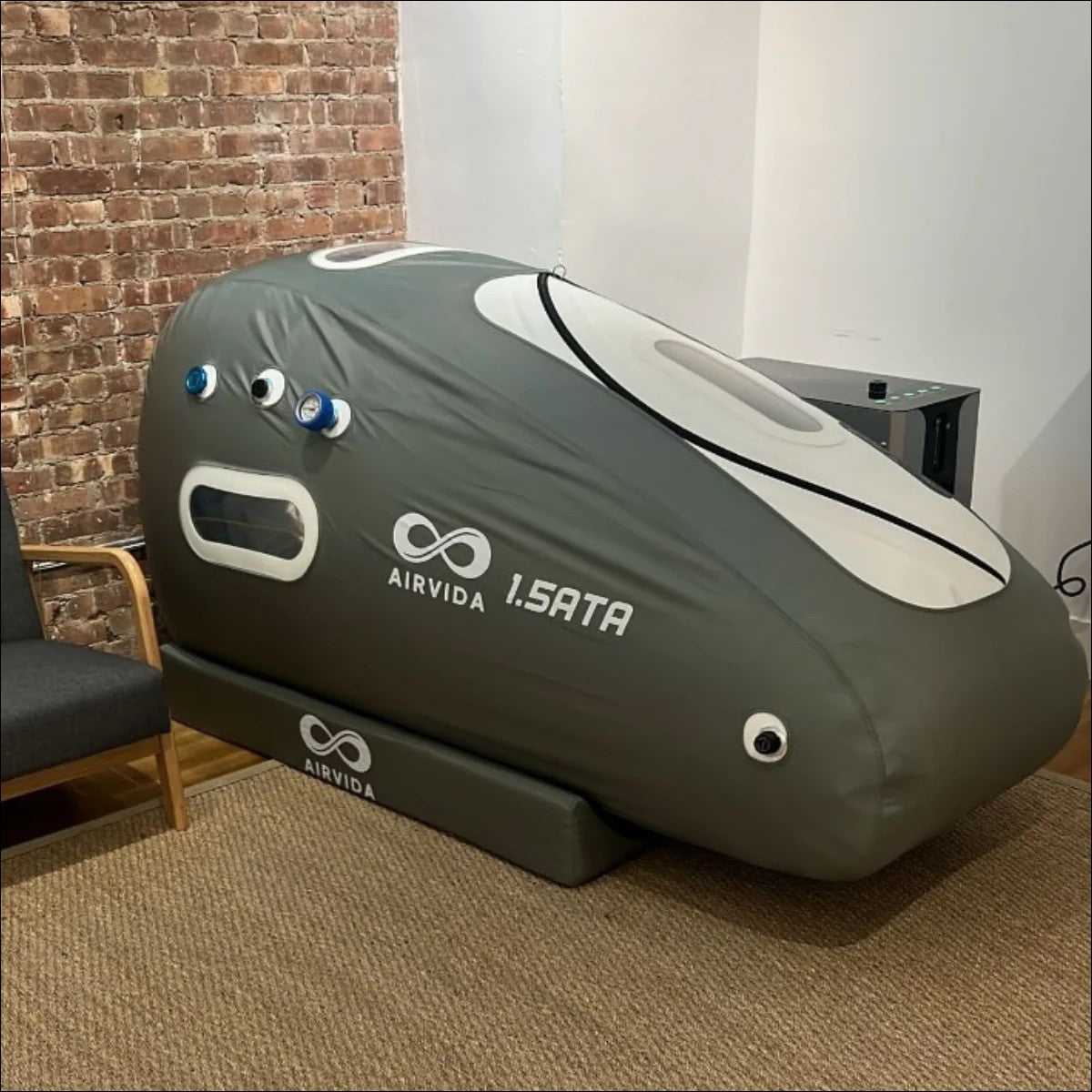
Soft-shell chambers are inflatable, single-person units made of reinforced fabric with a clear viewing panel and a zippered entry. They're the category most people mean when they search for a hyperbaric chamber for small apartments, and for good reason:
-
Footprint of roughly 34–42 inches in diameter and 7–8 feet in length when inflated
-
No dedicated 240V circuit; most run on a standard 110V household outlet
-
Deflate and fold for storage in a closet when not in use
-
Weight typically under 100 lbs, making apartment stairs and elevators manageable
Hard-Shell Chambers (1.5–3.0 ATA)
Hard-shell chambers are rigid steel or acrylic cylinders capable of higher pressures and, in clinical settings, mixed-gas delivery. They're genuinely better medicine for serious conditions, but they're a poor match for apartment living:
-
Require 6.5–7 feet of ceiling clearance plus a reinforced or level concrete-adjacent floor
-
Often need a dedicated electrical circuit and sometimes professional installation
-
Weigh several hundred to over a thousand pounds; most apartment floors and freight elevators aren't rated for that without an engineering sign-off
-
Cannot be broken down or moved without disassembly by a technician
If you're weighing which tier of chamber is right for a specific condition rather than a specific living space, it's worth reading how pressure levels affect outcomes for issues like radiation injury recovery. Our guide on HBOT for radiation necrosis breaks down why higher-pressure protocols matter for certain diagnoses, even though most apartment users will start at 1.3 ATA.
Real Footprint Requirements: What You Actually Need to Measure

Don't measure your room. Measure the specific zone the chamber will occupy, including the space you need to get in and out of it.
-
Clear floor length: 7–8 feet for most single-person soft chambers, plus 18–24 inches at the entry end for the zipper and your body to maneuver.
-
Width: 3.5–4 feet at the widest inflated point, though I recommend budgeting closer to 5 feet so the chamber isn't touching furniture or walls.
-
Ceiling height: 4–4.5 feet is usually sufficient since soft chambers sit low, but always check the specific model's inflated height.
-
Concentrator placement: Your oxygen concentrator sits outside the chamber and needs roughly 2 square feet of ventilated space nearby, not tucked into a closet, since these units generate heat and need airflow.
-
Outlet access: Confirm the outlet is within cord length (usually 6–10 feet) and not shared with a high-draw appliance on the same circuit.
A studio or one-bedroom apartment with an open floor plan almost always has room for this. The tighter challenge is usually a bedroom that already holds a bed, dresser, and desk; in that case, a corner of a living room or a cleared-out home office nook tends to work better than trying to wedge the chamber alongside existing furniture.
Power, Noise, and Neighbor Considerations
Apartment living adds two constraints that a standalone house doesn't: shared walls and shared electrical panels.
Power draw. Most home soft-shell setups pair the chamber with an external air compressor and, optionally, an oxygen concentrator. Combined, these typically draw 3–8 amps, well within a standard household circuit, but worth confirming if your unit is on an older electrical panel shared with a kitchen or laundry circuit.
Noise. Air compressors run continuously during a session and produce a steady hum in the 40–60 decibel range, comparable to a running dishwasher. This is rarely loud enough to violate lease noise clauses, but if you share a wall with a bedroom, running sessions during daytime hours is the more considerate choice.
Concentrator vs. tank oxygen. Medical-grade oxygen tanks require secure storage, proper ventilation, and often building or fire-code disclosure in multi-unit housing. Oxygen concentrators pull ambient air and concentrate it on demand, which sidesteps most of that regulatory friction and is why nearly every apartment-based home HBOT setup uses a concentrator rather than tanked oxygen.
Common Mistakes People Make When Buying for a Small Space

Most apartment buyers run into the same handful of avoidable problems.
-
Measuring the box, not the inflated unit. Packed dimensions are always smaller than the operating footprint. Always check the manufacturer's "in-use" measurements, not shipping dimensions.
-
Ignoring the entry clearance. People account for the chamber's length but forget they need to bend, sit, and swing their legs in through the zipper opening, which requires extra space at one end.
-
Placing the compressor too close to a wall or under furniture. Compressors need airflow to avoid overheating; tucking one into a cabinet shortens its lifespan and can trip a breaker under sustained load.
-
Skipping the lease check. Some rental agreements restrict "medical equipment" installations or require landlord notice for anything drawing continuous power. A five-minute lease review avoids an awkward conversation later.
-
Buying pressure capacity you can't use safely. A 1.5 ATA hard-shell unit sounds like an upgrade, but if your apartment can't provide the ceiling clearance or structural support, you've bought equipment you can't actually operate.
Step-by-Step: Setting Up a Hyperbaric Chamber in a Small Apartment
-
Measure your clear zone first, before shopping. Note the longest unobstructed floor run, the ceiling height above it, and the nearest outlet.
-
Choose a soft-shell 1.3 ATA model sized to that zone, allowing at least 6 extra inches of buffer on every side.
-
Confirm your circuit can handle the combined compressor and concentrator draw. Check the amp rating on both units and compare against your outlet's circuit rating.
-
Position the concentrator in open air, at least a few inches from any wall, never inside an enclosed cabinet.
-
Run a test inflation before your first session to confirm the chamber fully expands without contacting walls, furniture, or doorways.
-
Establish a fold-down storage routine if the space needs to double as a living area between sessions; most soft chambers deflate and roll into a bag in under 10 minutes.
-
Log your sessions and any symptoms, especially if you're using the chamber to support a diagnosed condition, so you and any treating physician can track response over time.
If you'd rather skip the home-setup logistics entirely, many people in apartment-dense metro areas opt for local sessions instead. Facilities like the hyperbaric chamber center in Des Moines and the hyperbaric chamber providers in Durham, NC, offer supervised sessions on hard-shell equipment without requiring any of the space or power planning a home unit involves.
Hyperbaric Chambers You May Want to Shop
Explore More


Who Benefits Most From a Compact Home Chamber
Apartment-friendly soft-shell chambers are commonly used for general wellness, recovery, and support alongside standard medical care for a range of circumstances from post-workout recovery to chronic circulatory conditions. For example, people managing poor peripheral circulation sometimes ask whether a home unit can help; our breakdown of HBOT for Raynaud's syndrome covers what the pressure and oxygen exposure can realistically support and where it fits alongside other treatment.
That said, a soft-shell home chamber is not a substitute for clinical hard-shell HBOT when a condition specifically calls for higher pressure or physician-supervised protocols. Talk to your doctor about which tier is appropriate before buying, especially if you're managing a diagnosed medical condition rather than using the chamber for general recovery and wellness.
Renting vs. Buying for Apartment Dwellers

For anyone unsure whether ownership makes sense in a small space, the math is similar to weighing any recurring equipment purchase.
|
Factor |
Renting Sessions |
Buying a Home Chamber |
|
Upfront cost |
$0 (pay per session, $50–$150 typical) |
$3,500–$8,000 for quality soft-shell units |
|
Space required |
None |
4x7 ft clear zone minimum |
|
Convenience |
Requires travel and scheduling |
Available any time at home |
|
Breakeven |
N/A |
Roughly 30–50 sessions vs. local rates |
|
Best for |
Occasional users, renters uncertain about long-term use |
Frequent users committed to a regular protocol |

FAQs About Hyperbaric Chambers for Small Apartments
Does HBOT help with bipolar disorder?
Research on hyperbaric oxygen therapy and bipolar disorder is still early and limited, mostly consisting of small studies and case reports rather than large controlled trials. Some researchers are exploring HBOT's anti-inflammatory and neuroprotective effects as a potential adjunct for mood disorders, but it is not an established or standard treatment for bipolar disorder. Anyone considering it for this purpose should treat it as experimental and discuss it directly with a psychiatrist rather than replacing prescribed treatment.
How much space do you need for a hyperbaric chamber?
For a soft-shell 1.3 ATA chamber, plan on a clear floor zone of about 7–8 feet long and 4–5 feet wide, plus roughly 4–4.5 feet of ceiling height. Add another 18–24 inches at the entry point for getting in and out comfortably, and a couple of open square feet nearby for the compressor and concentrator. Hard-shell chambers need significantly more, typically 6.5+ feet of ceiling clearance and reinforced flooring,g which is why they're rarely practical in apartments.
Can HBOT help with long COVID?
Some clinical studies have shown HBOT may help improve certain long COVID symptoms, including fatigue and cognitive complaints, by supporting tissue oxygenation and reducing inflammation, though results vary and research is still developing. It's being used as a supportive therapy alongside standard medical care in some clinics rather than as a standalone cure. Anyone pursuing this should coordinate with a physician managing their long COVID care to track progress and confirm it's appropriate for their specific symptoms.
Are at-home hyperbaric chambers effective?
Home soft-shell chambers operating at 1.3 ATA can meaningfully increase blood oxygen saturation and are used for general wellness, recovery, and support for various conditions, though they deliver lower pressure than clinical hard-shell chambers. They're effective for their intended purpose: mild, consistent oxygen therapy in a convenient setting, but they're not a direct substitute for higher-pressure clinical treatment when a condition specifically requires it. Effectiveness also depends heavily on consistent use and proper setup, which is why space and power planning matter as much as the chamber itself.
The Bottom Line
A soft-shell 1.3 ATA chamber is, for nearly every apartment situation, the best hyperbaric chamber for small apartments, not because it's a lesser option, but because it's engineered for exactly this use case. Measure your real footprint before you shop, confirm your electrical setup can handle the compressor and concentrator, and check your lease for any equipment clauses. Get those three things right, and a compact chamber fits into apartment life without disrupting it.
If you're weighing a home unit against supervised sessions, our team can walk you through both options based on your space, budget, and health goals. Reach out, and we'll help you find the setup that actually fits your apartment and your routine.