


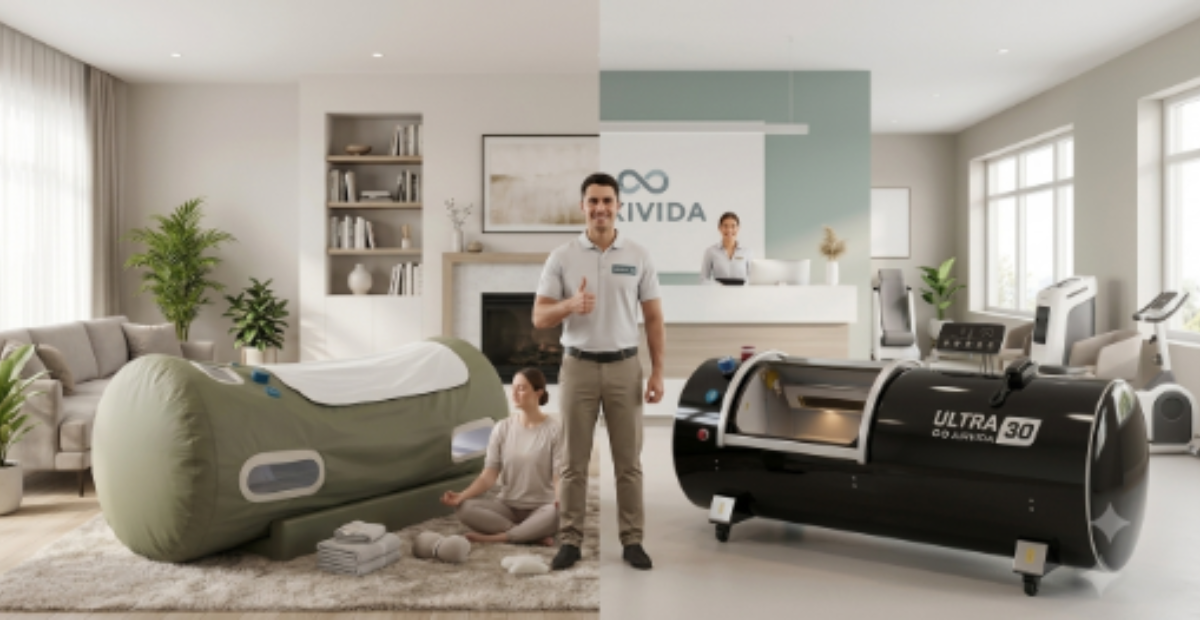
If you're trying to get Airvida hyperbaric chamber models compared side by side, the short version is this: the lineup splits into two families: soft-shell chambers that run at lower pressure and suit home wellness and recovery, and hard-shell chambers that reach higher pressures for people who want a more clinical-grade experience. The right model comes down to the pressure you actually need, the space you have, your budget, and who's using it.
Key Takeaways
-
Soft-shell Airvida chambers operate around 1.3 ATA and are the easiest, most affordable entry point for home use, recovery, and general wellness.
-
Hard-shell Airvida chambers reach higher pressures (typically up to ~2.0 ATA for home units), which is what higher-intensity biohackers and serious recovery users tend to want.
-
Pressure (ATA), interior size, and setup footprint are the three specs that matter most, not marketing labels.
-
Match the model to the user, not the hype: postpartum recovery, athletic recovery, and biohacking each point to different tiers.
-
HBOT is FDA-cleared for a specific list of conditions; most home/wellness uses are off-label. Confirm your chamber is FDA-registered and talk to a clinician before starting.
What Does "Airvida Hyperbaric Chamber Models Compared" Actually Mean?

When people search Airvida hyperbaric chamber models compared, they're almost never asking about red-and-blue-glasses gimmicks or clinical medical devices. They're a shopper usually buying for a home, trying to figure out which chamber in the range fits their body, their budget, and their goal.
A hyperbaric chamber is a sealed enclosure that raises the air pressure around you above normal sea-level pressure. That increased pressure lets your blood and tissues dissolve more oxygen than they normally could. The core comparison across any brand's lineup, Airvida included, comes down to a handful of hardware differences.
Here's the honest framework to compare any two chambers:
-
Shell type: soft (inflatable, flexible walls) vs. hard (rigid).
-
Maximum pressure measured in ATA (atmospheres absolute). Higher isn't automatically "better"; it's a different use case.
-
Interior dimensions: sit-up vs. lie-down, single vs. two-person.
-
Compressor and oxygen setup: how the unit pressurizes and how oxygen is added.
-
Footprint, weight, and power: whether it fits your room and your outlet.
Note on Airvida-specific specs: Insert Airvida's current model names and verified numbers below from the official spec sheets. Placeholders are marked in brackets so nothing gets published as a guess.
Why This Comparison Matters Right Now
The home hyperbaric market has exploded, and with it a wave of near-identical-looking chambers at wildly different prices. A buyer can now spend anywhere from a few thousand dollars to well over twenty thousand, and the outside of two chambers can look nearly the same while the pressure rating, build quality, and safety certification are worlds apart.
That's the real reason to compare models carefully: the price gap usually reflects pressure capability and build, not brand markup. Getting the tier wrong is expensive in both directions: overbuying a hard-shell unit you'll only ever run at low pressure, or underbuying a soft-shell chamber when your goal genuinely calls for more.
There's also a safety and legitimacy layer. Because most home use is marketed for wellness rather than an FDA-cleared medical indication, buyers need to do their own due diligence on registration and specs. (More on that below, and if you want the deep version, see Airvida's guide on whether your hyperbaric chamber is FDA registered.)
Hyperbaric Collections You May Want to Shop

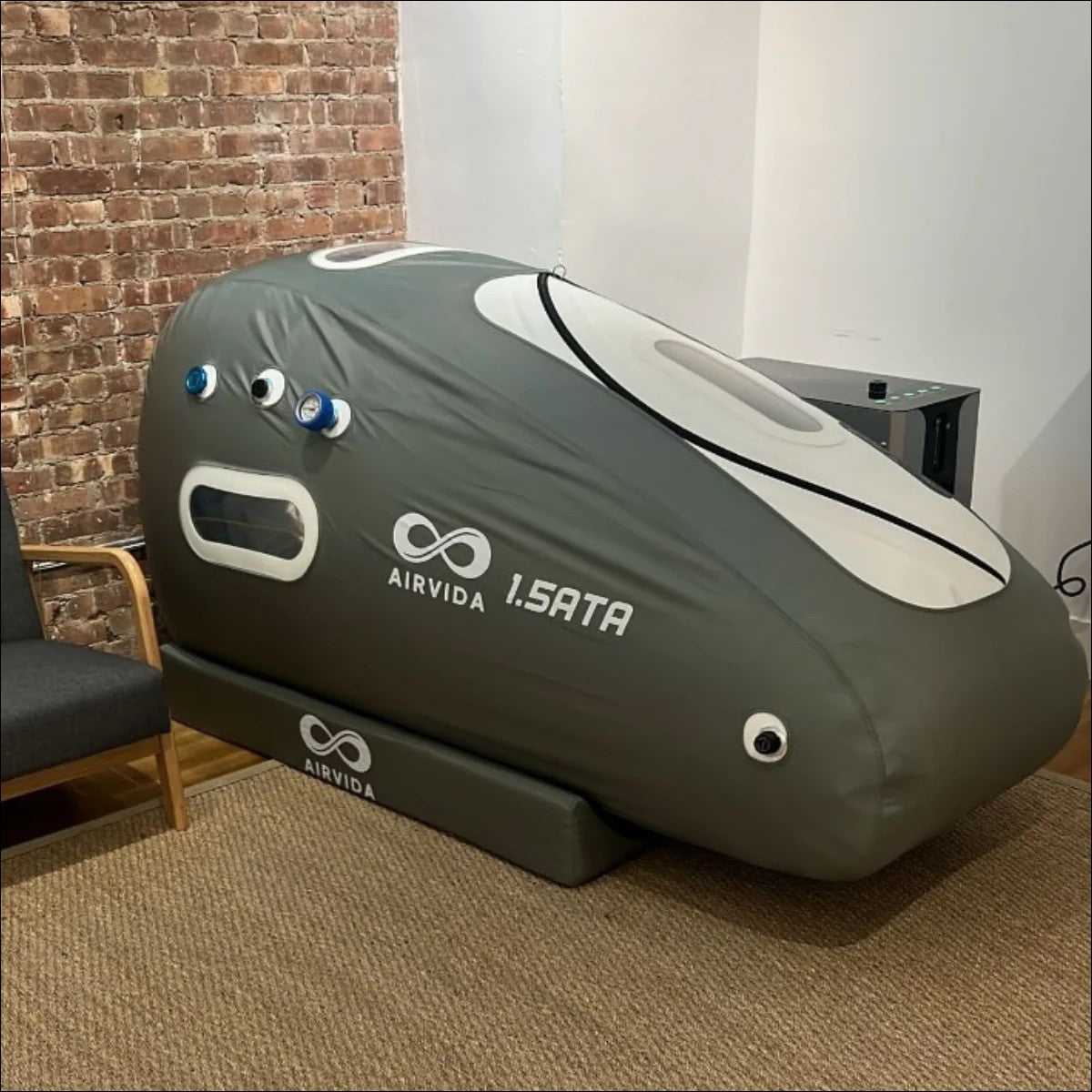
The Airvida Lineup at a Glance
Airvida's range organizes cleanly into two shell categories, each serving a different buyer. Use this as your comparison scaffold and fill in the verified model details.
|
Tier |
Shell Type |
Typical Max Pressure |
Best For |
Footprint |
|
Entry / Wellness |
Soft-shell |
~1.3 ATA |
Home wellness, general recovery, first-time buyers |
Compact, lie-down |
|
Performance |
Hard-shell |
up to ~1.5–2.0 ATA |
Athletes, higher-intensity users |
Larger, rigid |
|
Premium / Multi-person |
Hard-shell |
up to ~2.0 ATA |
Couples, serious biohackers, shared households |
Largest footprint |
Soft-Shell Airvida Chambers
Soft-shell chambers are the default starting point for most home buyers. They're lighter, easier to install, and considerably more affordable. As a category, soft-sided units typically operate around 1.3 ATA, which is the pressure most home wellness protocols are built around.
They shine for people who want a low-friction, low-commitment entry into home HBOT someone recovering at home, a general-wellness user, or a household testing whether daily sessions fit their routine before spending more.
Hard-Shell Airvida Chambers
Hard-shell chambers use a rigid enclosure that can hold higher pressure, which is the whole reason to step up. As a category, home hard-shell units reach meaningfully higher ATA than soft models, and that's the deciding factor for users chasing a more intensive protocol.
They cost more, weigh more, and need more room, but for the buyer whose goal genuinely calls for higher pressure, no amount of soft-shell convenience substitutes for the pressure ceiling. This is the tier most experienced biohackers gravitate toward when a 1.3-ATA soft unit no longer matches their goals.
How to Choose the Right Airvida Model

Skip the temptation to sort by price first. Sort by who's using it and why; the spec follows from that.
-
General home wellness / first chamber: Start soft-shell. It's the lowest-risk way to build a daily habit, and 1.3 ATA covers the majority of home-wellness use.
-
Athletic and training recovery: Consider stepping up to hard-shell if your goal is higher-pressure sessions around heavy training loads. Many active buyers still start soft and upgrade later.
-
Postpartum recovery: Comfort, easy entry/exit, and a gentle pressure profile matter more than a high ceiling here. Airvida's collection of hyperbaric chambers for postpartum recovery is worth reviewing for models fitted to that use.
-
Serious biohacking: Hard-shell, higher ATA, and often a larger interior for longer, more frequent sessions.
-
Two-person households: A premium multi-person hard-shell unit changes the math, since two people sharing one chamber lowers the effective per-user cost.
If you're shopping locally and want to see options in your area, Airvida lists regional availability such as hyperbaric chamber options in Livermore.
What the Numbers Actually Mean: Pressure, ATA, and Size

ATA (atmospheres absolute) is the single most important spec, and it's the one most misunderstood. Normal sea-level pressure is 1.0 ATA. A soft-shell chamber at 1.3 ATA is running at 1.3 times normal pressure; a hard-shell unit at 2.0 ATA is at double.
Here's what buyers get wrong: more pressure is not universally "more benefit." Higher pressure suits specific goals and comes with more equipment, more cost, and more to manage. The right number is the one that matches your use case, not the biggest number on the page.
Two other specs quietly decide satisfaction:
-
Interior size: a lie-down chamber you can actually stretch out in changes how long you'll tolerate a session. Measure your space and your body.
-
Compressor noise and power draw: a home unit that trips your circuit or drowns out conversation gets used less. Ask for decibel and amperage figures before buying.
One practical comfort note that first-timers rarely anticipate: ear pressure. As the chamber pressurizes, your ears need to equalize the same way they do on a plane. It's normal and manageable with simple techniques, but it surprises people. Worth reading up on before your first session.
Common Mistakes and Misconceptions

-
"Soft and hard chambers do the same thing." They don't. The pressure ceiling is the entire difference, and it's the reason to pick one over the other.
-
"Higher ATA is always better." No. It's a different tool for a different goal, with more cost and complexity attached.
-
"If it's for sale, it's FDA-approved for my use." Being sold ≠ being FDA-cleared for your specific goal. Most home/wellness use is off-label. Confirm the unit is FDA-registered and that you understand the difference between registered and cleared for a condition.
-
"I'll just get the biggest one to be safe." Overbuying is a real cost error. A hard-shell premium unit you run at low pressure was wasted money and floor space.
-
"Specs are specs, brand doesn't matter." Build quality, zipper/seam integrity on soft units, valve reliability, and support all vary. Two chambers with identical ATA ratings are not identical products.
-
Hyperbaric Chambers You May Want to Shop
Explore More


A Step-by-Step Framework for Picking Your Airvida Model
-
Define the goal in one sentence. "Daily home wellness," "postpartum recovery," "higher-pressure biohacking." This alone eliminates half the lineup.
-
Set your pressure target. Goal points to soft-shell (~1.3 ATA) or hard-shell (higher). Don't reverse-engineer from price.
-
Measure your space twice. Room footprint, ceiling clearance, doorway width for delivery, and the outlet/circuit you'll actually use.
-
Match interior size to the user's body and session length. Longer sessions demand a chamber you can relax in.
-
Verify registration and documentation. Confirm FDA registration and ask for the spec sheet in writing.
-
Budget for the full picture. Chamber price plus power, any oxygen setup, and space, not just the sticker.
-
Talk to a clinician first. Especially if you have ear, sinus, lung, or cardiovascular conditions, or you're pregnant or postpartum.
FAQ
Who makes the best hyperbaric chambers?
There's no single "best" hyperbaric chamber brand; the best one is the model that matches your pressure goal, space, and budget. Soft-shell chambers (~1.3 ATA) win for affordable home wellness and easy setup, while hard-shell units win when you genuinely need higher pressure. Judge any brand on verified ATA rating, build quality, FDA registration, interior size, and support, not marketing claims. Compare like-for-like specs across brands rather than trusting a "best" label.
Which hyperbaric chamber does Bryan Johnson use?
Bryan Johnson has publicly discussed using hyperbaric oxygen therapy as part of his longevity protocol, but the exact make and model he uses isn't something I can confirm from a reliable public source. Biohackers at his level generally favor hard-shell, higher-pressure chambers over entry-level soft units, which fits the intensity of that kind of protocol. If a specific brand claim matters for your content, verify it against a primary source (his own posts or an on-record interview) before publishing; don't rely on secondhand marketing.
Why are doctors against hyperbaric oxygen therapy?
Most doctors are not against hyperbaric oxygen therapy; HBOT is FDA-cleared and clinically standard for specific conditions like decompression sickness, certain non-healing wounds, and carbon monoxide poisoning. The skepticism you hear is aimed at off-label wellness claims, using HBOT for conditions where the evidence is limited or still emerging. Physicians also flag real safety considerations, including ear and sinus barotrauma, oxygen toxicity, and fire risk. The takeaway isn't "avoid HBOT," it's "match your expectations to the evidence and use it safely."
Does Tom Brady use HBOT?
I can't confirm from a reliable source that Tom Brady specifically uses hyperbaric oxygen therapy, so treat any such claim as unverified. What's well documented is that many professional and endurance athletes use HBOT as a recovery tool, and recovery is a heavily emphasized part of elite training culture generally. If you want to reference a specific athlete, cite a primary source rather than repeating a widely circulated but unconfirmed claim.
The Bottom Line
Getting the Airvida hyperbaric chamber models compared correctly is really one decision made twice: pick your shell type, then confirm the pressure and size fit the person using it. Soft-shell for accessible, everyday home wellness and recovery; hard-shell when your goal genuinely calls for higher pressure. Verify FDA registration, measure your space, budget for the full setup, and check with a clinician before your first session.
Ready to compare the actual models? Review Airvida's soft-shell and hard-shell collections, match a unit to your goal using the framework above, and reach out with your space dimensions and use case for a straight-talk recommendation no upsell to a tier you don't need.