


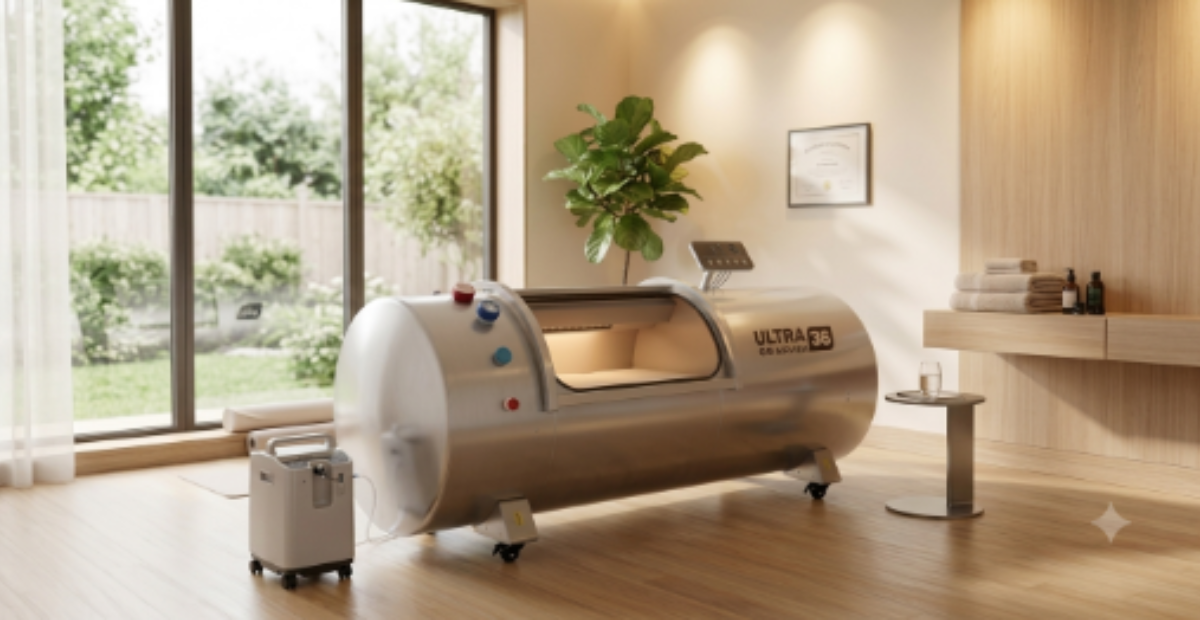
If you own or are about to buy a soft-shell hyperbaric chamber, you almost always need an oxygen concentrator to get the actual benefit of HBOT. Without one, you're pressurizing ordinary room air, which is roughly 21% oxygen. The pressure alone helps a little, but the concentrator is what turns your chamber into an oxygen therapy device instead of an expensive pressure tent.
I've set up dozens of home chambers, and the concentrator question causes more confusion and more buyer's remorse than anything else in the process. Let's settle it clearly.
Key Takeaways
-
Yes, in almost every case you need a concentrator for HBOT at home, because a soft chamber only compresses ambient air (~21% oxygen).
-
An oxygen concentrator filters room air to deliver 90–95% oxygen, which is what makes the therapy therapeutic.
-
The real driver of benefit is oxygen partial pressure plus high-concentration oxygen, not pressure alone.
-
Home chambers are never fed 100% oxygen for safety reasons; you breathe concentrator oxygen through a mask while under pressure.
-
Budget $1,500–$4,000+ for a quality concentrator (or a pair), separate from the chamber itself.
What Does "Needing a Concentrator for HBOT" Actually Mean?

HBOT (hyperbaric oxygen therapy) works on a simple principle: put your body under increased atmospheric pressure while you breathe elevated levels of oxygen, and far more oxygen dissolves into your blood plasma than normal breathing allows.
That definition contains two ingredients, and this is the crux of the whole concentrator debate. You need pressure, and you need oxygen. The chamber supplies the pressure. The concentrator supplies the oxygen.
An oxygen concentrator is a device that pulls in room air, strips out the nitrogen using a molecular sieve, and outputs a stream of 90–95% pure oxygen, usually at a flow rate measured in liters per minute (LPM). Inside a pressurized chamber, you breathe that concentrated oxygen through a mask or hood.
So when people ask "do you need a concentrator for HBOT," they're really asking whether the chamber does the job on its own. For genuine oxygen therapy, it does not.
Why This Matters Right Now
The home HBOT market has exploded, and a lot of chambers are now sold as standalone products with the concentrator listed as an "optional accessory." That framing is where people get misled.
A soft-shell chamber running at 1.3 ATA (atmospheres absolute) on room air raises your oxygen intake only modestly. Add a concentrator delivering 90%+ oxygen at that same pressure, and the amount of dissolved oxygen in your blood jumps dramatically. The difference is not subtle; it's the difference between mild pressure exposure and actual mild hyperbaric oxygen therapy (mHBOT).
If you're comparing chambers or building a home setup, knowing this up front saves you from spending thousands and then discovering the therapy underperforms because a critical piece is missing.
How Pressure and Oxygen Work Together

Here's the mechanism in plain terms, because understanding it makes the concentrator decision obvious.
At normal sea-level conditions, your red blood cells carry most of your oxygen and are already about 97% saturated. You can't force much more oxygen onto them by simply breathing harder.
HBOT gets around that ceiling by dissolving oxygen directly into your blood plasma, the fluid part of your blood where saturation isn't the limit. Two factors control how much dissolves:
-
The pressure you're under (the chamber's job).
-
The concentration of oxygen you're breathing (the concentrator's job).
Multiply those two together, and you get oxygen partial pressure, which is the number that actually matters for the therapy.
-
Chamber only, room air at 1.3 ATA: ~21% oxygen × 1.3 pressure = a small bump.
-
Chamber + concentrator at 1.3 ATA: ~90%+ oxygen × 1.3 pressure = a large, meaningful increase.
Running the chamber without a concentrator is like buying a high-performance engine and never putting in fuel. The hardware is there; the input that makes it work is not.
Hyperbaric Collections You May Want to Shop

Soft-Shell vs. Hard-Shell: Does the Chamber Type Change the Answer?
The concentrator conversation shifts a little depending on which chamber you own.
Soft-Shell (Mild) Chambers
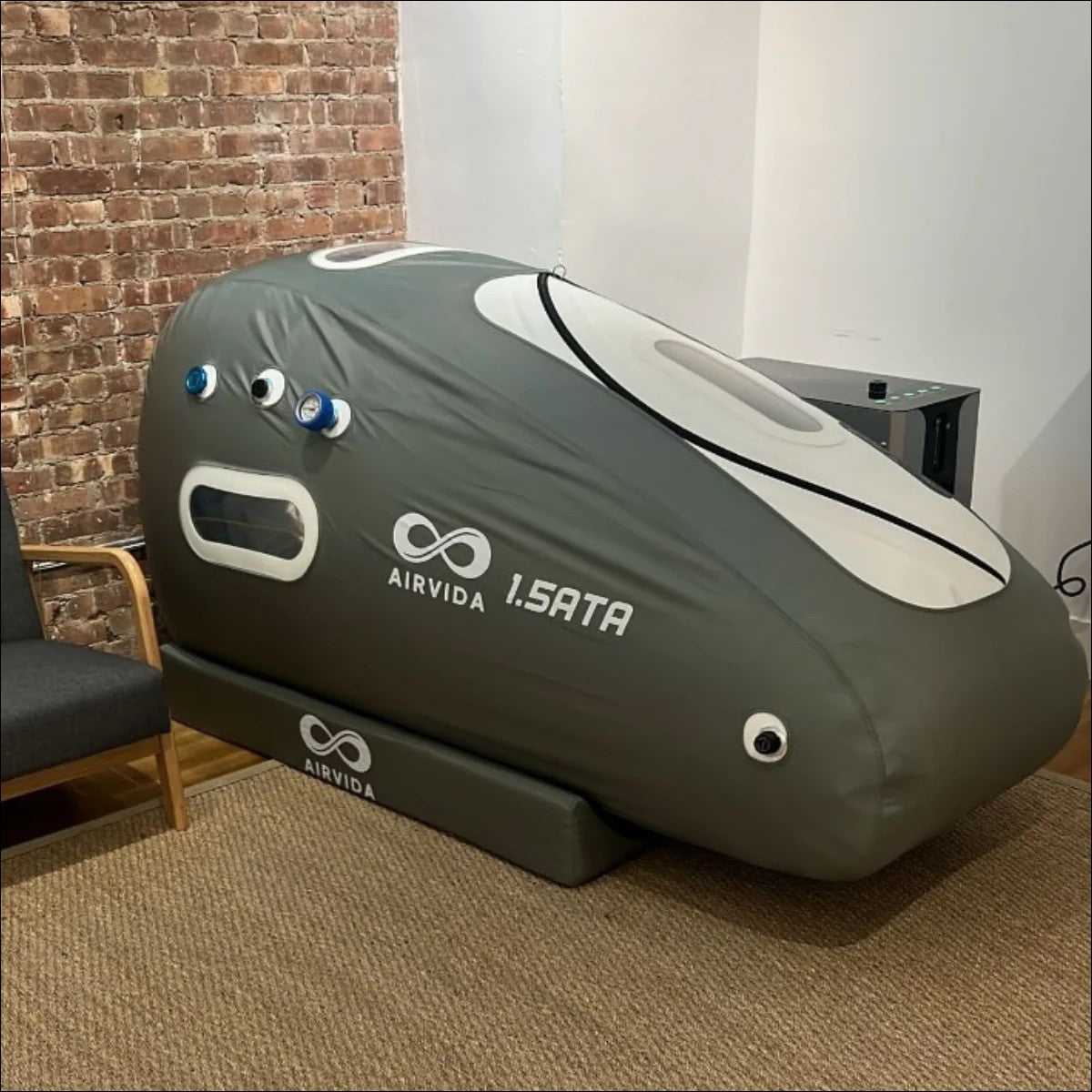
These are the inflatable-style chambers most common for home use, typically rated to 1.3–1.5 ATA. They are engineered to compress ambient air, not to be filled with pure oxygen. A concentrator is essentially mandatory to make the therapy worthwhile, and you breathe the concentrated oxygen through a mask while inside. If you're weighing options in this category, our range of soft-shell hyperbaric chambers is a practical starting point for understanding how the concentrator pairs with each model.
Hard-Shell Chambers
Rigid chambers can reach higher pressures, often 2.0 ATA and above, which increases the therapeutic effect. But higher pressure does not remove the need for oxygen enrichment. Most home hard-shell setups still rely on a concentrator (frequently a higher-output or dual-concentrator arrangement) feeding a mask or hood. If you're comparing rigid options, our hard-shell hyperbaric chambers page lays out the pressure ratings and what oxygen supply each one expects.
The takeaway: chamber type changes how much oxygen and pressure you can achieve, but it rarely eliminates the concentrator.
What About 100% Oxygen and Fire Safety?
Clinical hospital HBOT often uses near-100% oxygen at 2.0–3.0 ATA inside sealed medical-grade chambers with strict fire controls. People sometimes assume they need the same at home. They don't, and they shouldn't attempt it.
Home concentrators output 90–95% oxygen, not 100%, and that's intentional. Flooding a personal chamber with pure oxygen creates a serious fire and combustion risk; high-concentration oxygen makes almost anything flammable ignite faster and burn hotter. That's why home users breathe concentrator oxygen through a mask rather than filling the entire chamber with it.
So if your goal is a safe, sustainable home routine, a concentrator paired with a mask is the standard, and it's more than adequate for mHBOT.
Hyperbaric Chambers You May Want to Shop
Explore More


Choosing the Right Concentrator: A Practical Framework
Once you accept that you need one, the next question is which one. Here's the framework I use with clients.
-
Match flow rate to your chamber and mask. Most home setups want a concentrator delivering at least 5 LPM, and many users prefer 10 LPM for a fuller, more consistent oxygen supply. Higher pressure chambers and hood systems generally call for more flow.
-
Confirm oxygen purity holds at flow. Cheap units advertise 90%+ but drop to 30–40% when run at their maximum rate. Ask for the oxygen concentration at the top of the flow range, not just at idle.
-
Consider running two units. Serious users often pair two 10 LPM concentrators to sustain high purity at higher demand. Budget accordingly.
-
Check duty cycle. Home HBOT sessions run 60–90 minutes. Your concentrator must be rated for continuous operation, not intermittent home-medical use.
-
Plan for noise and placement. Concentrators run for the whole session and generate steady mechanical sound; where you put the unit matters for comfort. Our guide on hyperbaric chamber noise level covers what to expect and how to manage it.
-
Factor in maintenance. Filters and sieve beds need periodic service to keep purity high. Build that into your ownership cost.
Expect to spend roughly $1,500–$4,000+ on the concentrator side of a quality home setup, separate from the chamber; more if you run a dual-unit configuration.
Common Mistakes and Misconceptions

These are the errors I see most often, and each one costs people money or results.
-
"The chamber alone is enough." It isn't. Pressurized room air delivers a fraction of the oxygen benefit. This is the single most common and expensive misconception.
-
"More pressure means I can skip the concentrator." No. Pressure and oxygen concentration are multipliers of each other; skipping one guts the therapy.
-
"Any oxygen concentrator will do." Portable travel concentrators built for supplemental medical use often can't sustain the flow or purity HBOT needs. Match the device to the application.
-
"I should fill the chamber with pure oxygen." Dangerous. That's a fire risk, and home chambers aren't rated for it. Use a mask.
-
"Higher LPM always helps." Only if purity holds at that flow. A 10 LPM unit that drops to 40% oxygen is worse than a solid 5 LPM unit at 93%.
-
"I have to use it daily, or it won't work." Frequency depends on your goals; there's no universal rule. Our article on whether you need to use your hyperbaric chamber every day breaks down how to think about session cadence.
Step-by-Step: Setting Up HBOT With a Concentrator at Home

Here's the sequence I walk new owners through.
-
Position the chamber on a level surface with clearance around it and easy entry and exit.
-
Place the concentrator nearby, ideally where its hose reaches the mask port without strain and where its noise won't dominate the room.
-
Connect and power up the concentrator first. Let it run a minute or two to reach stable oxygen purity before you get in.
-
Attach your mask or hood and confirm airflow before pressurizing.
-
Enter, seal, and pressurize the chamber slowly, equalizing your ears as pressure rises (chew, swallow, or use the Valsalva maneuver).
-
Breathe the concentrated oxygen through the mask for your planned session length once at target pressure.
-
Depressurize gradually at the end, then shut down the concentrator.
-
Maintain both units on schedule: chamber zippers and seals, concentrator filters and sieve beds.
A quick, important note: HBOT even the mild home version is not right for everyone, and off-label wellness uses are not the same as its established medical indications. Talk to a qualified clinician before starting, especially if you have any lung, ear, or cardiovascular conditions.
FAQs
Who is not a candidate for hyperbaric oxygen therapy?
People with untreated pneumothorax (collapsed lung) are the primary absolute contraindication, and HBOT is used with caution or avoided in those with certain lung diseases, recent ear or sinus surgery, uncontrolled seizures, or specific chemotherapy exposure. Pregnancy, some cardiac conditions, and claustrophobia also warrant a clinician's review first. Anyone with a chronic condition should get medical clearance before starting, because individual risk varies and only a qualified provider can assess it.
What is the use of a concentrator?
An oxygen concentrator filters ambient air to deliver 90–95% oxygen, which is the concentrated oxygen you breathe during HBOT to actually raise the oxygen dissolved in your blood. Without it, a chamber only pressurizes normal room air at about 21% oxygen. The concentrator is the component that turns pressure exposure into genuine oxygen therapy, which is why it's considered essential for home setups.
What is the downside of hyperbaric oxygen therapy?
The most common downsides are ear and sinus pressure discomfort (barotrauma), temporary changes in vision, sinus congestion, and fatigue after sessions; rarer risks include oxygen toxicity and, in improperly managed environments, fire hazard from concentrated oxygen. Most mild effects are manageable with slow pressurization and proper ear-equalizing technique. Cost, session time, and the need for correct equipment are practical drawbacks worth weighing too.
Is HBOT 100% oxygen?
Clinical hospital HBOT typically uses near-100% oxygen, but home mild-HBOT does not; concentrators deliver about 90–95%, and chambers are never flooded with pure oxygen because of fire risk. Home users breathe that concentrated oxygen through a mask while under pressure, which is safe and effective for mild hyperbaric oxygen therapy. Achieving true 100% oxygen safely requires medical-grade equipment and controls.
Conclusion
So, do you need a concentrator for HBOT? For nearly every home user, yes, the concentrator is not an optional add-on; it's the piece that supplies the oxygen the therapy depends on. A chamber provides pressure; a concentrator provides the 90–95% oxygen that, combined with that pressure, drives the real benefit. Skip it, and you've bought a pressure tent, not an oxygen therapy system.
If you're building a home setup, choose the chamber and the concentrator together, match the flow rate and purity to your chamber's pressure rating, and get medical clearance before your first session. Browse our soft-shell and hard-shell chamber collections to see how each model pairs with the right oxygen supply and reach out if you'd like help spec'ing a complete, safe system.