



If you're weighing renting vs buying a hyperbaric chamber, the short answer is this: renting makes sense if you need fewer than roughly 60–80 sessions total, while buying starts paying for itself somewhere between 6 and 18 months of regular use, depending on the chamber type. Below that threshold, you're paying a premium for flexibility. Above it, ownership wins on pure math, but it also hands you the maintenance, storage, and safety responsibilities that a rental company used to carry.
I've spent over a decade managing hyperbaric equipment for clinics and home-use patients, and the rent-versus-buy question comes up in nearly every consultation. There's no universal right answer, but there is a clear framework for getting it right for your situation.
Renting vs Buying a Hyperbaric Chamber
-
Renting a mild hyperbaric chamber typically runs $500–$1,500/month; buying one costs $10,000–$25,000 outright.
-
Hard-shell chambers used for higher-pressure protocols cost $15,000–$60,000+ to buy, or $1,500–$3,500/month to rent.
-
Break-even for most home users lands between 8 and 15 months of consistent use.
-
Ownership adds real costs beyond the sticker price: maintenance, oxygen concentrators, certification, and space.
-
Short-term recovery needs (post-surgery, an injury, a defined treatment course) almost always favor renting.
Hyperbaric Collections You May Want to Shop

What Does "Renting vs Buying a Hyperbaric Chamber" Actually Mean?
Hyperbaric oxygen therapy (HBOT) involves breathing oxygen at pressures higher than normal atmospheric pressure inside a sealed chamber. People access this either through a clinic visit, a rented chamber delivered to their home, or a chamber they purchase outright for long-term personal use.
Renting means a company delivers, sets up, and often maintains a chamber at your home or facility for a monthly fee, with no long-term commitment required. Buying means you own the equipment permanently, which includes the chamber itself plus the compressor or oxygen concentrator that feeds it, and you assume responsibility for its upkeep.
The choice isn't just financial. It also changes who is accountable for safety checks, who handles repairs, and how much space you're committing at home or in a clinic.
Why This Decision Matters Right Now

Home hyperbaric use has grown sharply as more people pursue HBOT for conditions beyond the traditional wound-care and decompression-sickness indications it was originally approved for. Athletes, people managing chronic inflammation, and patients recovering from surgery are increasingly choosing at-home protocols over repeated clinic visits.
That shift has pushed both rental fleets and secondary markets for used chambers to expand fast, which means pricing has gotten more competitive on both sides. It also means the decision carries more financial weight than it did five years ago, since a bad purchase now sits on a much larger secondary market of options you could have chosen instead.
Regional demand plays into this too. In markets where providers like the ones behind hyperbaric chamber options in Sioux Falls see steady interest from both clinics and home users, rental fleets tend to be newer and pricing more competitive, simply because turnover keeps equipment current.
Renting a Hyperbaric Chamber: What It Actually Costs
Rental pricing depends heavily on chamber type, contract length, and whether delivery and setup are included.
-
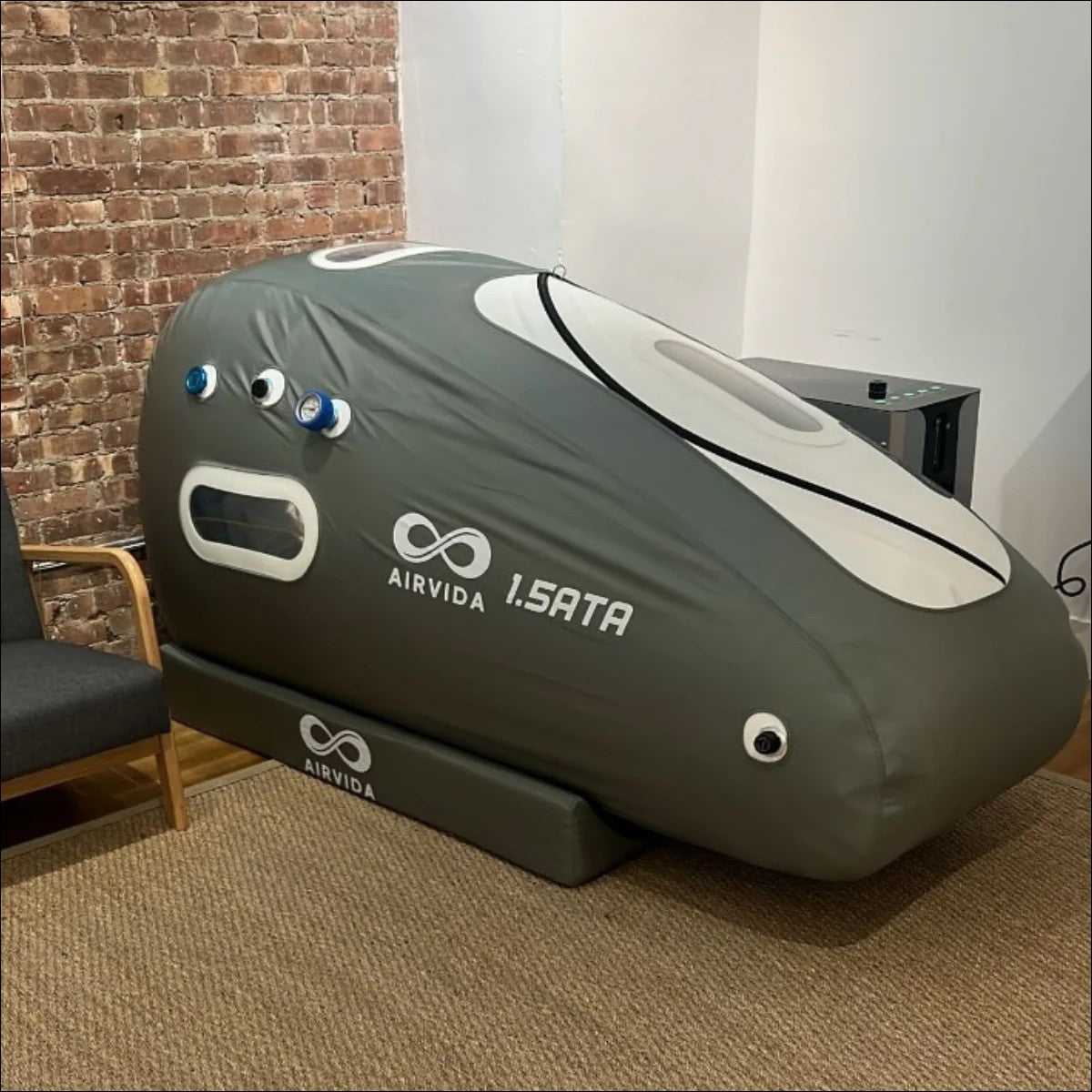
Mild hyperbaric chambers (soft-sided, up to 1.3–1.5 ATA): $500–$1,200 per month, often with a 3-month minimum
-
Hard-shell chambers (higher pressure, clinical-grade): $1,500–$3,500 per month, usually requiring a technician for delivery and calibration
-
Short-term/weekly rentals: $200–$500 per week, common for post-surgical recovery windows
Most reputable rental companies include delivery, initial setup, and a maintenance line in the monthly fee. That's the real value of renting: you're not troubleshooting a compressor failure at 9 p.m. the night before an important session.
When Renting Makes the Most Sense
-
You have a defined treatment window, such as a 20–40 session protocol prescribed after surgery or for peripheral artery disease support
-
You're testing whether HBOT fits your routine before committing capital
-
You don't have consistent space for permanent equipment
-
You want a company handling servicing and oxygen supply logistics
-
You're supporting a recovery protocol like the one described in this guide on HBOT for spinal cord injury, where session counts are often set by a treating physician rather than being open-ended
Hyperbaric Chambers You May Want to Shop
Explore More


Buying a Hyperbaric Chamber: The Real Cost Breakdown
Purchase prices vary enormously by chamber class, and the sticker price is never the full story.
|
Chamber Type |
Purchase Price |
Monthly Ongoing Costs |
|
Mild soft-shell (1.3 ATA) |
$10,000 – $18,000 |
$50 – $150 (oxygen concentrator, filters) |
|
Mid-tier soft-shell (1.5 ATA) |
$16,000 – $25,000 |
$75 – $200 |
|
Hard-shell clinical chamber |
$15,000 – $60,000+ |
$200 – $600 (maintenance, certification, staffing) |
Ongoing costs that people underestimate include annual certification and safety inspections, replacement seals and zippers on soft chambers, oxygen concentrator maintenance, and insurance if the chamber is used commercially. Storage matters too. A hard-shell unit needs a dedicated, ventilated space, which is a real constraint in a home setting.
When Buying Makes the Most Sense

-
You're using the chamber multiple times a week for an ongoing condition, such as managing symptoms of Raynaud's syndrome, where consistency matters more than a fixed session count.
-
You've already rented for a trial period and know the routine fits your life.
-
You run a wellness practice, gym, or clinic where multiple clients will use the chamber.
-
You have the physical space and are comfortable managing basic maintenance
The Break-Even Math, Worked Out
Here's the calculation I walk clients through directly.
-
Take your expected monthly rental cost. Say $900/month for a mid-tier soft-shell chamber.
-
Take the purchase price. Say $18,000, plus $100/month in ongoing costs.
-
Divide the purchase price by (rental cost minus ongoing ownership cost). $18,000 ÷ ($900 - $100) = 22.5 months.
-
Compare that to your realistic usage horizon. If you expect to use the chamber for 2+ years, buying wins. If your need is closer to 6–12 months, renting is cheaper overall.
This is the same logic that applies whether you're weighing HBOT for a defined recovery period or an open-ended condition. A patient using a chamber to support recovery after gas gangrene treatment, for example, typically has a finite protocol window, which usually tips the math toward renting. Someone managing a chronic, ongoing condition with no defined endpoint is the more common buyer.
Common Mistakes People Make With This Decision
-
Buying too early. Purchasing before confirming the protocol actually fits your schedule and tolerance often leads to an unused chamber within six months.
-
Ignoring ongoing costs when comparing options. A $12,000 chamber with $200/month in upkeep can cost more over two years than a $16,000 chamber with $75/month in upkeep.
-
Skipping certification checks. Some used chambers on the resale market lack current safety certification, which creates real risk and can void manufacturer support.
-
Assuming rental always means lower quality. Reputable rental fleets use the same clinical-grade equipment sold new; the chamber itself isn't inferior, only the ownership terms differ.
-
Not accounting for space and noise. Compressors and concentrators run loud enough to matter in a bedroom setting, something people rarely test before buying.
Step-by-Step: How to Choose Between Renting and Buying

-
Define your treatment horizon. Ask your provider for an expected session count or duration, not just "as needed."
-
Get quotes for both paths. Request a monthly rental quote and a purchase quote with financing terms from the same or comparable vendors, such as the hyperbaric chamber providers in Wichita, who typically list both rental and purchase pricing side by side.
-
Run the break-even calculation above using your actual numbers, not averages.
-
Factor in space, noise, and who will manage maintenance.
-
Start with a rental if you're unsure. A 60–90-day rental period gives you real usage data before committing capital.
-
Reassess after your trial period and make the purchase decision with actual routine data instead of a guess.
FAQ: Renting vs Buying a Hyperbaric Chamber
Are hyperbaric chambers worth the money?
For people using HBOT consistently for a supported condition or recovery protocol, the investment is generally worth it when weighed against the cost of repeated clinic visits over time. For occasional or exploratory use, a rental period is the lower-risk way to find out before spending on ownership.
Why does Justin Bieber sleep in a hyperbaric chamber?
Justin Bieber has publicly discussed using a hyperbaric chamber as part of his wellness and recovery routine, citing it for general recovery and well-being rather than a specific medical diagnosis. His use reflects a broader trend of high-profile athletes and public figures adopting home HBOT for recovery support, though individual results and reasons for use vary and aren't a substitute for medical guidance.
How much does it cost to hire a hyperbaric chamber?
Hiring, or renting, a hyperbaric chamber typically costs $500–$1,200 per month for a mild soft-shell unit and $1,500–$3,500 per month for a hard-shell clinical chamber, with short-term weekly rentals running $200–$500. Pricing depends on chamber pressure rating, contract length, and whether delivery and maintenance are included.
What is the downside of hyperbaric oxygen therapy?
The main downsides include the time commitment of regular sessions, potential ear or sinus pressure discomfort during pressurization, the cost of consistent use over time, and rare risks such as oxygen toxicity or barotrauma if protocols aren't followed correctly. Working with a knowledgeable provider and following recommended pressure and duration guidelines minimizes most of these risks.
Conclusion: Making the Renting vs Buying Call With Confidence

Renting vs buying a hyperbaric chamber ultimately comes down to how long and how often you'll realistically use it. Renting protects you from committing capital to a routine you haven't tested yet, while buying rewards people with a clear, ongoing need and the space to manage the equipment properly. Run the break-even math with your actual numbers, not a generic estimate, and let your treatment horizon, not just the price tag, make the final call.
If you're still deciding, start with a rental period, track your sessions honestly, and revisit the purchase decision with real data in hand. Ready to compare options in your area? Reach out to a local hyperbaric provider to get current rental and purchase quotes side by side before you commit.