


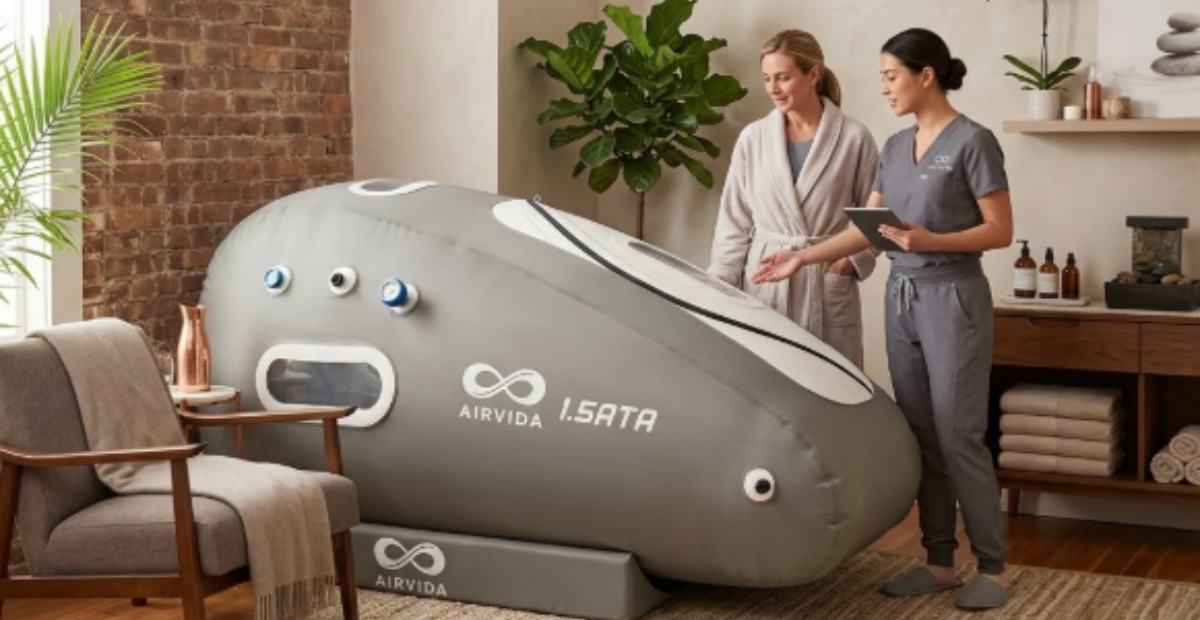
A hyperbaric chamber for spa use is a pressurized enclosure that delivers increased atmospheric pressure, typically between 1.2 and 1.5 ATA, as a wellness service outside of a clinical or hospital setting. Spa hyperbaric chambers differ from medical-grade units primarily in operating pressure: medical HBOT runs at 2.0 to 3.0 ATA, which is the range supported by peer-reviewed research. If you are considering a spa session, understanding this pressure gap is the single most important factor in evaluating the potential benefits
Key Takeaways
-
Spa hyperbaric chambers operate at 1.2 to 1.5 ATA, which is significantly below the 2.0 to 3.0 ATA range used in peer-reviewed clinical studies.
-
Medical-grade hyperbaric oxygen therapy (HBOT) has documented clinical applications for conditions such as diabetic foot ulcers, carbon monoxide poisoning, and decompression sickness.
-
The evidence base for spa-level HBOT is limited, and no large-scale randomized controlled trials have confirmed efficacy at pressures used in wellness settings.
-
Oxygen toxicity is a documented risk at high pressures, but it is rarely a concern at the low pressures typical of spa chambers.
-
The cost of hyperbaric sessions varies widely, ranging from single-session spa fees to the purchase price of personal units.
-
Unregulated spa settings may lack certified staff, which increases both safety and efficacy concerns compared to accredited clinical facilities.
What Is a Hyperbaric Chamber for Spa Use, Exactly?
A spa hyperbaric chamber is a pressurized enclosure marketed as a wellness or recovery tool, operating at mild pressure increases above standard atmospheric conditions. Most spa units run at approximately 1.2 to 1.3 ATA, which means the air pressure inside is only 20 to 30 percent above normal. To put that in perspective, a comparable change in pressure occurs when you travel from a high-altitude city like Denver or Salt Lake City down to sea level.
Inside a spa chamber, you breathe either ambient air or supplemental oxygen delivered through a mask or cannula. The experience is generally low-stimulation: you lie inside the chamber, rest, read, or use a device for 60 to 90 minutes. Session formats vary by provider, and some facilities integrate chambers into broader recovery programs that include cryotherapy, infrared saunas, or IV wellness services.
The bottom line is that a spa hyperbaric chamber is a low-pressure enclosure designed for wellness use, and it operates at fundamentally different parameters than a hospital-based HBOT unit.
How Does a Spa Hyperbaric Chamber Differ From Medical HBOT?

Medical hyperbaric oxygen therapy (HBOT) is a clinical treatment in which you breathe high-concentration oxygen inside a pressurized chamber at 2.0 to 3.0 ATA. Peer-reviewed research consistently identifies this pressure range as the threshold needed to achieve clinically meaningful physiological changes, including increased plasma oxygen saturation and tissue oxygenation. Spa chambers at 1.2 to 1.3 ATA do not reach this threshold.
The difference is not only in pressure but also in staffing, oversight, and oxygen concentration. Medical facilities use certified hyperbaric technicians and physicians trained in undersea and hyperbaric medicine. Spa settings, by contrast, may employ wellness staff without specialized hyperbaric training, which raises both safety and efficacy concerns.
Here is a direct comparison of the two settings:
|
Feature |
Spa Hyperbaric Chamber |
Medical HBOT |
|
Operating Pressure |
1.2 to 1.5 ATA |
2.0 to 3.0 ATA |
|
Oxygen Concentration |
Ambient air or mild supplement |
High-concentration oxygen |
|
Session Duration |
60 to 90 minutes |
90 to 120 minutes (clinical protocol) |
|
Staff Qualification |
Wellness staff (varies by facility) |
Certified hyperbaric clinicians |
|
Oversight |
No standardized regulation |
Institutional and medical oversight |
|
Research Support |
Limited, emerging |
Peer-reviewed, established for specific conditions |
|
Primary Use |
Recovery, wellness, performance |
Wound healing, decompression injury, CO poisoning |
The bottom line is that the pressure gap between spa and medical chambers is not a minor technical detail; it is the central factor that determines whether you are receiving a clinically supported therapy or a wellness experience.
Hyperbaric Collections You May Want to Shop

What Does the Research Say About Spa-Level Hyperbaric Pressure?
The research base for spa-level hyperbaric pressure, specifically the 1.2 to 1.5 ATA range, is thin compared to the body of evidence for medical-grade HBOT. Most published clinical trials demonstrating benefit for wound healing, pain syndromes, or tissue recovery used pressures of 2.0 ATA or higher. A specialist at Intermountain Healthcare has publicly noted that clinical trials demonstrating efficacy for low-pressure spa chambers essentially do not exist.
Some emerging research does suggest potential for HBOT in aesthetic and wellness contexts. A 2024 review published in the Journal of Cosmetic Dermatology examined the use of HBOT across preventive, medical, and surgical aesthetic scenarios and found promising signals. However, the same review concluded that randomized clinical trials with longer follow-up periods and better patient selection are needed before reliable conclusions can be drawn.
For conditions like chronic neuropathic pain, a peer-reviewed narrative review available through the National Institutes of Health found robust evidence for HBOT in specific syndromes, including complex regional pain syndrome. Those findings, however, were based on medical-pressure protocols, not spa-level sessions.
The bottom line is that the research supporting wellness claims for spa hyperbaric chambers remains limited, and existing positive findings largely derive from studies conducted at higher, clinical-grade pressures.
What Are the Potential Wellness Benefits People Seek From Spa HBOT?

People use spa hyperbaric chambers for a range of wellness and recovery goals, even though the research evidence at low pressures is still developing. The most common reasons people seek spa HBOT sessions include:
-
Muscle and exercise recovery: Reduced soreness and faster tissue repair after intense training
-
Cognitive performance: Reported improvements in focus and mental clarity after sessions
-
Skin rejuvenation: Interest in collagen support and improved complexion, driven by aesthetic HBOT research
-
General energy and vitality: A sense of restored energy following sessions, often attributed to increased oxygenation
-
Sleep quality: Some users report improved sleep patterns, though controlled evidence is limited
-
Stress reduction: The quiet, contained environment of a chamber promotes relaxation independent of any pressure effect
It is worth noting that some of these reported benefits may derive from the rest and relaxation component of a session rather than a direct physiological effect of mild pressurization. The experience itself, lying still in a quiet enclosure for 60 to 90 minutes, has an inherent restorative quality.
The bottom line is that the wellness applications people pursue through spa HBOT are plausible in concept, but the evidence directly attributing benefit to low-pressure hyperbaric exposure specifically is not yet well-established.
Is a Hyperbaric Chamber for Spa Use Safe?
Spa hyperbaric chambers operating at 1.2 to 1.5 ATA carry a low risk profile when used appropriately, but safety is not unconditional. The most significant risks associated with hyperbaric therapy, including oxygen toxicity, barotrauma, and fire hazard, are primarily concerns at the higher pressures used in clinical settings. That said, certain individuals should not use any pressurized chamber regardless of pressure level.
Safety concerns specific to spa settings include:
-
Lack of certified staff: Spa personnel may not be trained to identify contraindications or manage adverse events
-
Inadequate screening: Without a medical intake process, users with ear, sinus, or pulmonary conditions may be cleared inappropriately
-
Equipment variability: Spa chambers range widely in build quality and pressure accuracy
-
Fire risk: Any environment with elevated oxygen concentration carries an elevated ignition risk; users should remove flammable materials before entering
A 2024 multicenter study published through the National Institutes of Health found that the incidence of side effects in hyperbaric settings varies by pressure level, supporting the need for tailored protocols at different pressure ranges. At low spa-range pressures, the most commonly reported issues are ear discomfort from pressure equalization and mild claustrophobia.
The bottom line is that spa hyperbaric chambers are generally considered low-risk for healthy adults, but the absence of standardized oversight means that individual screening and provider quality matter significantly.
Hyperbaric Chambers You May Want to Shop
Explore More


Where Can You Access a Hyperbaric Chamber for Spa and Wellness Use?
Access to spa hyperbaric chambers has grown considerably as wellness facilities integrate them into recovery and longevity programming. You can typically find these chambers at:
-
Dedicated hyperbaric wellness centers
-
High-end fitness and athletic recovery facilities
-
Integrative wellness spas
-
Medically supervised wellness clinics
If you are in Connecticut, Airvida Chambers offers hyperbaric chamber access in several locations, including Greenwich, Norwalk, Bristol, and Manchester. If you are weighing the ongoing cost of sessions against gym or wellness memberships, this comparison of hyperbaric chamber use versus gym memberships may help you evaluate the value proposition for your specific wellness goals.
When evaluating any provider, ask about staff training, equipment specifications, intake screening protocols, and how they handle adverse events during sessions.
The bottom line is that access to spa hyperbaric chambers is expanding, but provider quality and oversight vary, making due diligence before your first session worthwhile.
How Do You Know If a Spa Hyperbaric Session Is Right for You?

A spa hyperbaric session may be worth exploring if you are a generally healthy adult looking to support recovery, relaxation, or performance, and you approach it as a wellness complement rather than a medical treatment. It is not a replacement for physician-supervised care for any diagnosed condition. Before your first session, a few practical steps can help you make an informed decision:
-
Consult your physician if you have any history of ear or sinus conditions, lung disease, cardiovascular issues, or take medications that may interact with pressure changes.
-
Research the facility by asking about chamber pressure specifications, staff certifications, and screening procedures.
-
Start with a single session to gauge your personal response before committing to a package or ongoing program.
-
Set realistic expectations by recognizing that spa-level pressure produces a different physiological environment than clinical HBOT.
-
Disclose all health conditions to the facility before your session, even if they do not ask directly.
-
Remove all flammable items including lotions, perfumes, and synthetic fabrics before entering the chamber.
The bottom line is that a thoughtful, informed approach to spa hyperbaric therapy begins with understanding what the chamber can and cannot do at the pressure it operates.
What Should You Expect During and After a Spa Hyperbaric Session?
A typical spa hyperbaric session lasts between 60 and 90 minutes, during which you lie inside the chamber as pressure gradually increases. During pressurization, you will likely feel a sensation of fullness or mild pressure in your ears, similar to descending in an airplane. Equalizing ear pressure by swallowing, yawning, or performing a gentle Valsalva maneuver resolves this quickly for most people.
During the session, you can rest, listen to audio, read, or use a device depending on the chamber design. Some facilities have integrated virtual reality options to make the time more engaging. After the session, users commonly report feeling relaxed, mentally clear, or physically rested, though individual responses vary considerably.
A small percentage of users experience temporary fatigue, mild headache, or ear discomfort following their first session. These effects typically resolve within a few hours. If you experience significant pain, vision changes, or chest discomfort at any point, you should alert staff immediately and seek medical evaluation.
The bottom line is that most healthy adults tolerate spa hyperbaric sessions well, with ear pressure equalization being the most common challenge and transient fatigue the most common post-session experience.
What Is a Spa HBOT Session Worth Compared to Other Wellness Options?
The value of a spa hyperbaric session depends heavily on your specific goals, the quality of the facility, and how it fits into your broader wellness approach. When compared to other recovery modalities like cryotherapy, infrared sauna, or IV vitamin therapy, hyperbaric chambers occupy a similar market position: premium-priced, experiential, and supported by varying levels of scientific evidence.
For people who use wellness services regularly, the cumulative cost of individual sessions can become a significant consideration. Many facilities offer membership models or session packages that reduce per-session cost for frequent users. Understanding the per-session economics relative to your actual usage frequency is an important part of evaluating whether spa HBOT fits your budget and lifestyle.
The bottom line is that spa hyperbaric therapy is a premium wellness service, and its value is most defensible when you understand both its realistic potential at low pressures and its limitations relative to medical-grade treatment.
Conclusion: Is a Hyperbaric Chamber for Spa Use a Smart Wellness Investment?
A hyperbaric chamber for spa use occupies a clear and specific niche: it is a low-pressure wellness tool that offers a distinct physiological environment compared to everyday conditions, delivered in a relaxed, non-clinical setting. The gap between spa-level pressure and clinically studied HBOT pressure is real and meaningful, and approaching spa sessions with accurate expectations is the foundation of a worthwhile experience. Emerging research in aesthetic medicine and recovery science is building a case for mild-pressure HBOT, but the evidence is still developing and does not yet match the robustness of clinical HBOT literature.
If you value recovery support, relaxation, and are curious about emerging wellness modalities, spa HBOT may be a reasonable addition to a broader wellness routine. If you have a diagnosed medical condition, physician-supervised care at a certified hyperbaric facility is the appropriate pathway.
The bottom line: a spa hyperbaric chamber operates at lower pressures than medical HBOT, serves a wellness rather than clinical purpose, and is best approached as an informed complement to, not a replacement for, evidence-based medical care.
Frequently Asked Questions
When should you not use a hyperbaric chamber?
You should not use a hyperbaric chamber if you have untreated pneumothorax, active ear or sinus infections, certain lung diseases, or a history of specific cardiac conditions. Pregnancy, recent ear surgery, and some medications also warrant medical clearance before use. Always consult a physician before your first session if you have any chronic or acute health condition.
How expensive is a hyperbaric chamber?
A single spa hyperbaric session typically costs between $100 and $300 at wellness facilities, depending on location and session length. Personal home-use soft chambers range from approximately $3,000 to $20,000 or more depending on specifications. Medical-grade hard-shell chambers used in clinical settings cost significantly more and require certified installation and oversight.
What is the downside of a hyperbaric chamber?
The primary downside of spa hyperbaric chambers is that they operate at pressures too low to replicate the effects documented in clinical HBOT research, which means the evidence base for wellness claims is limited. Additional downsides include cost, the potential for inadequate screening in unregulated spa settings, ear discomfort during pressurization, and mild claustrophobia in some users. Without standardized oversight, the quality and safety of spa hyperbaric experiences vary considerably by provider.
Can you get oxygen toxicity from a hyperbaric chamber?
Oxygen toxicity from a hyperbaric chamber is a documented risk, but it is primarily a concern at the high pressures used in clinical medical settings, typically 2.0 ATA and above, combined with high-concentration oxygen delivery. At the low pressures typical of spa chambers, 1.2 to 1.5 ATA, oxygen toxicity is rarely a meaningful risk for healthy adults in standard session durations. A 2024 multicenter study found that side effect incidence, including toxicity concerns, varies directly with operating pressure.
Do you breathe 100% oxygen in a hyperbaric chamber?
In a spa hyperbaric chamber, you typically breathe either ambient air or a supplemental oxygen concentration delivered through a mask or cannula, which is not the same as 100% oxygen. Medical-grade HBOT involves breathing high-concentration oxygen under physician supervision at pressures of 2.0 to 3.0 ATA. The oxygen concentration in spa settings varies by facility and chamber type, and is generally lower than what is used in clinical protocols.