


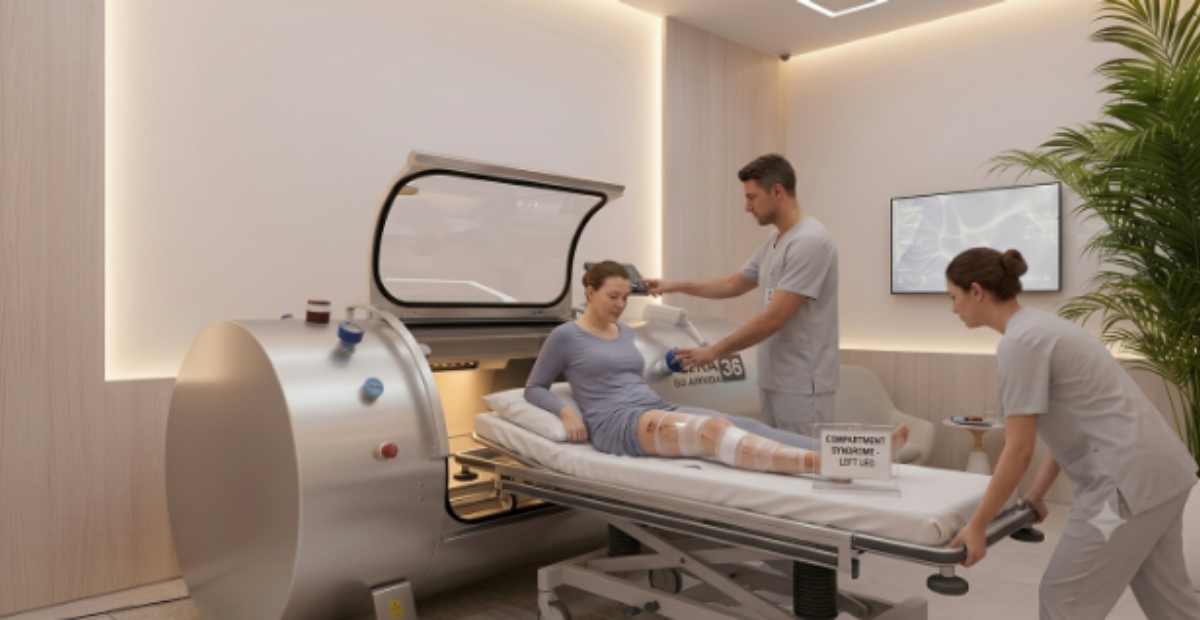
A hyperbaric chamber for compartment syndrome may help improve oxygen delivery to damaged tissues when blood flow becomes restricted. Hyperbaric oxygen therapy is often used as an adjunct treatment to support healing, reduce tissue injury, and improve outcomes in selected compartment syndrome cases.
Compartment syndrome is considered a medical emergency, and prompt treatment is critical. Understanding how hyperbaric oxygen therapy fits into a treatment plan can help patients and caregivers make informed decisions about recovery.
Understanding Compartment Syndrome

Compartment syndrome occurs when pressure builds inside a closed muscle compartment. As pressure rises, blood vessels can become compressed, reducing blood flow and oxygen delivery to muscles, nerves, and surrounding tissues.
Without treatment, this lack of oxygen can lead to permanent tissue damage and loss of function.
The condition may occur after:
✅ Severe fractures
✅ Crush injuries
✅ Sports injuries
✅ Burns
✅ Surgical complications
✅ Tight casts or bandages
There are two primary forms:
|
Type |
Description |
|
Acute Compartment Syndrome |
Medical emergency that requires immediate treatment |
|
Chronic Compartment Syndrome |
Usually exercise-induced and improves with rest |
Acute compartment syndrome is the form most commonly associated with emergency intervention and hyperbaric oxygen therapy. In severe cases, timely treatment can reduce tissue damage and improve patient outcomes. Facilities offering hyperbaric oxygen in Bessemer, AL, highlight its role as a supportive option in critical care.
Hyperbaric Collections You May Want to Shop


Why Oxygen Matters in Compartment Syndrome
When pressure rises within a compartment, oxygen‑rich blood struggles to reach affected tissues. This restriction can lead to severe pain, nerve impairment, and progressive cellular injury if left untreated. Prompt medical evaluation is essential, as delayed intervention increases the risk of permanent damage, functional loss, and long‑term complications.
This can trigger a cycle of:
-
Reduced circulation
-
Tissue swelling
-
Increased pressure
-
Oxygen deprivation
-
Cell damage
The longer tissues remain deprived of oxygen, the greater the risk of irreversible injury.
Hyperbaric oxygen therapy helps address this issue by delivering significantly higher levels of oxygen to tissues through increased atmospheric pressure.
How Hyperbaric Oxygen Therapy Works
Hyperbaric oxygen therapy (HBOT) involves breathing 100% oxygen inside a pressurized chamber. Under pressure, oxygen dissolves more efficiently into blood plasma, allowing it to travel to areas where circulation may be compromised.
Benefits associated with HBOT include:
✅ Increased tissue oxygenation
✅ Reduced swelling and edema
✅ Support for wound healing
✅ Enhanced tissue viability
✅ Improved recovery of oxygen-starved tissues
This is why many physicians consider a hyperbaric chamber for compartment syndrome as a valuable adjunctive treatment in specific situations. By enhancing oxygen delivery to compromised tissues, HBOT may help reduce ischemic injury, support cellular repair, and complement surgical interventions, offering patients improved recovery prospects and functional outcomes.
How a Hyperbaric Chamber for Compartment Syndrome May Help

Hyperbaric oxygen therapy is not a replacement for surgical treatment when compartment syndrome is acute. Instead, it is often used alongside standard medical care.
Supporting Oxygen Delivery
One of the main goals of HBOT is delivering oxygen to tissues even when circulation is compromised.
The increased oxygen concentration can penetrate tissues beyond what normal blood flow can achieve.
Reducing Tissue Swelling
Swelling contributes significantly to compartment pressure.
Hyperbaric oxygen has been shown to support vasoconstriction while maintaining oxygen delivery, which may help reduce edema and improve tissue conditions.
Preserving At-Risk Tissue
Early intervention can help support tissue survival before irreversible damage occurs.
By improving oxygen availability, HBOT may assist in maintaining tissue viability during recovery.
Enhancing Post-Surgical Recovery
Following fasciotomy, patients may experience extensive tissue healing requirements.
HBOT may support:
-
Soft tissue recovery
-
Wound healing
-
Reduced secondary injury
-
Improved oxygenation during rehabilitation
For individuals exploring local treatment options, you can learn more about hyperbaric oxygen services through Hyperbaric Oxygen Therapy Huntsville, AL.
Standard Treatment Options for Compartment Syndrome
The primary treatment depends on whether the condition is acute or chronic.
Acute Compartment Syndrome
Acute compartment syndrome requires immediate medical intervention.
Common treatments include:
|
Treatment |
Purpose |
|
Fasciotomy |
Relieves pressure by opening the affected compartment |
|
Removal of restrictive dressings |
Reduces external compression |
|
Fluid management |
Supports circulation |
|
Hyperbaric Oxygen Therapy |
Adjunctive support for tissue oxygenation |
Prompt surgical decompression remains the gold standard treatment.
Chronic Compartment Syndrome
For chronic cases, treatment may include:
✅ Activity modification
✅ Physical therapy
✅ Anti-inflammatory strategies
✅ Biomechanical corrections
✅ Surgical intervention when necessary
Hyperbaric Chambers You May Want to Shop
Explore More


Who May Benefit From HBOT After Compartment Syndrome?
Hyperbaric oxygen therapy is generally considered when there is concern about compromised tissue viability or delayed healing.
Potential candidates may include individuals with:
-
Severe traumatic injuries
-
Crush injuries
-
Delayed wound healing
-
Extensive tissue swelling
-
Post-surgical tissue recovery needs
-
Risk of tissue necrosis
Treatment plans should always be determined by qualified healthcare professionals. Each patient’s unique medical history, condition, and response to therapy must be carefully considered before proceeding. For those exploring advanced options, questions such as does HBOT affect diabetes or blood sugar? Highlight the importance of individualized guidance.
What Research Suggests About Hyperbaric Oxygen Therapy

Medical research has explored HBOT's role in conditions involving ischemia and oxygen deprivation. Findings suggest that increased oxygen delivery may help preserve tissue integrity, reduce inflammation, and support cellular recovery. While further studies are needed, its potential as an adjunctive therapy continues to attract interest in critical care and rehabilitation.
Studies suggest hyperbaric oxygen therapy may:
✅ Increase oxygen availability in compromised tissues
✅ Reduce edema formation
✅ Improve tissue survival
✅ Support wound healing processes
Because compartment syndrome can lead to significant tissue ischemia, these effects make HBOT an area of continued clinical interest. While outcomes vary depending on injury severity and treatment timing, many specialists consider HBOT a useful adjunctive therapy when integrated into comprehensive care.
Additional Conditions Commonly Treated With HBOT
Hyperbaric oxygen therapy is used for a range of approved and investigational applications.
Patients interested in broader HBOT benefits may also find these resources helpful: HBOT for PTSD.
These articles explore how oxygen therapy is being evaluated across different health conditions.
Safety Considerations
Although hyperbaric oxygen therapy is generally well tolerated, it is not suitable for every patient. Individual health conditions, contraindications, and treatment goals must be carefully assessed before proceeding. Physicians evaluate risks such as ear or sinus issues, lung disease, or medication interactions to ensure HBOT is applied safely and effectively.
Factors that may affect eligibility include:
-
Untreated pneumothorax
-
Certain lung conditions
-
Specific chemotherapy medications
-
Severe respiratory illness
-
Some ear or sinus disorders
A full medical assessment should always be completed before treatment begins. This process ensures that underlying conditions, risk factors, and patient goals are carefully reviewed. Comprehensive evaluation helps healthcare providers tailor therapy appropriately, safeguard patient safety, and align treatment strategies with evidence‑based standards for optimal recovery and long‑term outcomes.
Final Thoughts on Hyperbaric Chamber for Compartment Syndrome

A hyperbaric chamber for compartment syndrome can play an important supporting role in recovery by helping oxygen reach tissues affected by restricted circulation. While emergency surgical treatment remains the cornerstone of acute compartment syndrome management, hyperbaric oxygen therapy may complement standard care by supporting tissue viability, reducing swelling, and enhancing healing.
For patients recovering from traumatic injuries or surgical intervention, a hyperbaric chamber for compartment syndrome may provide additional therapeutic benefits when incorporated into a physician-directed treatment plan. Early diagnosis, rapid treatment, and appropriate supportive therapies remain essential for achieving the best possible outcomes.
Frequently Asked Questions
What are the treatment options for compartment syndrome?
The primary treatment for compartment syndrome depends on whether the condition is acute or chronic. Acute compartment syndrome typically requires emergency fasciotomy surgery to relieve pressure and restore blood flow. Additional treatments may include removing restrictive bandages, fluid management, pain control, and hyperbaric oxygen therapy as a supportive measure. Chronic compartment syndrome often responds to activity modification, physical therapy, and lifestyle adjustments before surgery is considered.
When should you not use a hyperbaric chamber?
Hyperbaric oxygen therapy should not be used when certain medical conditions create safety concerns. One of the most important contraindications is an untreated pneumothorax, which can become dangerous under pressure. Other situations may require careful evaluation, including certain lung diseases, severe respiratory infections, specific chemotherapy treatments, and ear or sinus disorders. A healthcare provider should always assess whether HBOT is appropriate before treatment begins.
What are the 13 indications that are approved for hyperbaric oxygen therapy?
Approved hyperbaric oxygen therapy indications generally include conditions involving oxygen deprivation, difficult wound healing, or specific medical emergencies. These commonly include decompression sickness, air or gas embolism, carbon monoxide poisoning, crush injuries, compartment syndrome, necrotizing soft tissue infections, radiation tissue damage, diabetic wounds, severe anemia, thermal burns, compromised skin grafts and flaps, intracranial abscesses, and certain chronic bone infections. Regulatory approvals may vary slightly by region and medical authority.
What conditions require a hyperbaric chamber?
Hyperbaric chambers are typically used for conditions where increased oxygen delivery can support healing or improve survival of damaged tissue. Common examples include decompression sickness, carbon monoxide poisoning, diabetic foot ulcers, radiation injuries, severe infections, crush injuries, compartment syndrome, compromised grafts, and certain non-healing wounds. Physicians may also evaluate HBOT as part of broader treatment plans when tissue oxygenation is a significant concern.