


Hyperbaric oxygen therapy (HBOT) can improve cognitive function in older adults and individuals with brain-related conditions by delivering high-concentration oxygen under increased atmospheric pressure, which enhances cerebral blood flow and supports neurological repair. A randomized controlled trial published in a peer-reviewed journal found significant improvements in global cognitive function, attention (effect size 0.745), and information processing speed (effect size 0.788) in healthy adults over 64 following HBOT. Research into its use for Alzheimer's disease, vascular dementia, and traumatic brain injury is actively expanding, with results showing measurable clinical benefit across multiple cognitive domains.
Key Takeaways
-
Hyperbaric oxygen therapy significantly improved global cognitive function in a randomized controlled trial of 63 healthy adults over age 64, with the strongest gains in attention and processing speed.
-
HBOT works by combining hyperoxia and increased atmospheric pressure, which raises tissue oxygenation and promotes measurable increases in cerebral blood flow.
-
A 2024 meta-analysis of 11 randomized controlled trials (847 participants) found HBOT improved Alzheimer's-related cognitive scores, daily living activities, and inflammatory biomarkers without adverse events.
-
For traumatic brain injury, HBOT produced the most pronounced improvements in memory and attention, based on a systematic review and meta-analysis published on PubMed Central.
-
Hyperbaric therapy for vascular dementia has been studied across 25 randomized clinical trials involving nearly 2,000 patients, supporting its use as an adjunctive treatment.
-
HBOT is not appropriate for everyone, and certain medical conditions and circumstances require careful screening before treatment begins.
What Is Hyperbaric Oxygen Therapy and How Does It Work for the Brain?
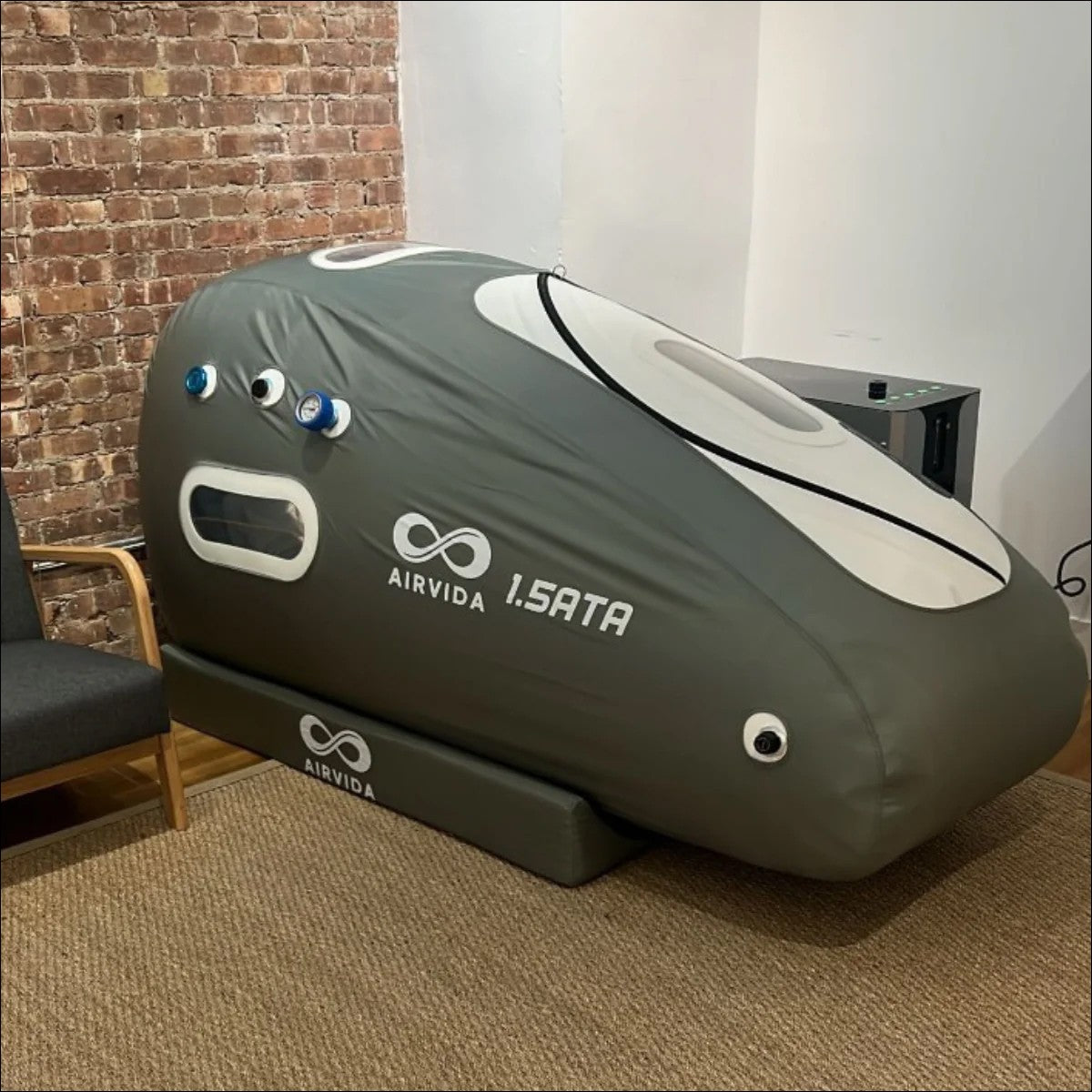
Hyperbaric oxygen therapy (HBOT) is a medical treatment in which a person breathes oxygen-enriched air (up to 100% oxygen) inside a pressurized chamber at levels above normal atmospheric pressure. The combined effect of hyperoxia and elevated pressure significantly increases the amount of oxygen dissolved in the bloodstream and delivered to brain tissue. This surge in oxygenation is what drives its neurological effects.
When the brain receives more oxygen, two key processes occur: tissue that has been starved of oxygen begins to recover, and the vascular system responds with measurable changes in regional cerebral blood flow. Research published in a peer-reviewed journal identified significant blood flow increases in areas including the right superior medial frontal gyrus, right middle frontal gyrus, and right superior parietal gyrus following HBOT. These regions are directly associated with attention, working memory, and executive function.
The pressure component of HBOT also plays a distinct role. Hyperbaric pressure helps oxygen reach tissues that normal atmospheric delivery cannot access, particularly in areas where small blood vessels have been damaged or compromised. This mechanism explains why HBOT is studied across a range of neurological conditions, from age-related cognitive decline to traumatic brain injury.
The bottom line is that HBOT improves brain oxygenation through a dual mechanism: increasing the concentration of dissolved oxygen in the blood and enhancing cerebral blood flow to regions critical for cognition.
What Does the Clinical Evidence Say About HBOT and Cognitive Decline?

The clinical evidence for HBOT and cognitive decline is drawn from randomized controlled trials, systematic reviews, and meta-analyses, with results consistently pointing to cognitive benefit across several populations. The strongest evidence comes from structured trials using standardized cognitive assessments and neuroimaging.
A randomized controlled trial studying 63 healthy adults over age 64 found a statistically significant group-by-time interaction in global cognitive function (p=0.0017) after participants completed two-hour HBOT sessions, five days per week, for three months. Attention improved with a net effect size of 0.745 and information processing speed with a net effect size of 0.788. These are clinically meaningful results, not marginal shifts.
A 2024 systematic review and meta-analysis published in Frontiers in Aging Neuroscience analyzed 11 randomized controlled trials involving 847 participants with Alzheimer's disease. Results showed significant improvements in MMSE scores (MD = 3.08, p < 0.00001), ADAS-Cog scores (MD = -4.53, p < 0.00001), and activities of daily living (MD = 10.12, p = 0.0005). No adverse events were reported across these trials.
Research on vascular dementia is equally robust. A meta-analysis of hyperbaric oxygen for vascular dementia reviewed 25 randomized clinical trials involving 1,954 patients, positioning HBOT as a viable adjunctive therapy for this condition. The bottom line is that the current body of clinical evidence supports HBOT as a meaningful option for improving cognitive outcomes in multiple populations.
Hyperbaric Chambers You May Want to Shop
Explore More


How Does HBOT Compare Across Different Causes of Cognitive Decline?
Cognitive decline is not a single condition, and HBOT's effectiveness varies depending on the underlying cause, with the strongest evidence currently concentrated in aging-related decline, Alzheimer's disease, vascular dementia, and traumatic brain injury (TBI).
|
Condition |
Level of Evidence |
Key Cognitive Outcomes Reported |
|
Age-related cognitive decline |
Randomized controlled trial |
Attention, processing speed, global cognition |
|
Alzheimer's disease |
Meta-analysis (11 RCTs, 847 participants) |
MMSE, ADAS-Cog, daily living activities |
|
Vascular dementia |
Meta-analysis (25 RCTs, 1,954 patients) |
General cognition, adjunctive benefit |
|
Traumatic brain injury |
Systematic review and meta-analysis |
Memory (MD 10.13), attention (MD 7.99), executive function (MD 7.16) |
|
Post-COVID cognitive symptoms |
Randomized placebo-controlled trial |
Cognitive symptoms associated with long COVID |
|
Pediatric TBI |
Retrospective case series (2025) |
Statistically significant patient responses |
For traumatic brain injury specifically, a systematic review on HBOT for neurocognitive deficits published on PubMed Central found the most pronounced improvements in memory (MD 10.13, p < 0.00001) and attention (MD 7.99, p < 0.00001), alongside gains in general cognition and executive function. A separate 2025 study also reported statistically and clinically significant improvements in children with severe TBI.
The bottom line is that HBOT's cognitive benefits are not limited to one diagnosis. The evidence spans aging, neurodegenerative disease, vascular damage, and brain injury, though the quality and volume of supporting research differs across these areas.
What Biological Mechanisms Drive HBOT's Effect on Cognition?
The biological mechanisms behind HBOT's cognitive effects involve oxygen-driven changes at the cellular, vascular, and inflammatory levels, each contributing to improved neurological function. Understanding these pathways explains why researchers are studying HBOT across such a broad range of cognitive conditions.
The first mechanism is cerebral blood flow regulation. HBOT promotes measurable increases in blood flow to frontal and parietal brain regions associated with higher-order cognition. Studies using neuroimaging confirm that HBOT does not simply flood the brain with oxygen but triggers active cerebrovascular responses.
The second mechanism involves neuroinflammation reduction. The 2024 Alzheimer's meta-analysis found that HBOT significantly reduced inflammatory biomarkers, including IL-1-beta (SMD = -1.00, p < 0.0001) and malondialdehyde (MDA) levels (SMD = -2.83, p = 0.02), while increasing the antioxidant enzyme superoxide dismutase (SOD) (SMD = 2.12, p < 0.0001). Chronic neuroinflammation is a major driver of cognitive decline, and reducing it has direct functional consequences.
The third mechanism relates to amyloid clearance in Alzheimer's disease. Research suggests that HBOT may delay the onset and progression of Alzheimer's disease by promoting the degradation and clearance of amyloid-beta proteins in the cortex and hippocampus. This is a significant finding because amyloid accumulation is a defining feature of Alzheimer's pathology. The bottom line is that HBOT acts through several simultaneous biological pathways, which is one reason its cognitive benefits appear across multiple conditions.
Hyperbaric Collections You May Want to Shop

What Does a Typical HBOT Protocol for Cognitive Decline Look Like?
A standard HBOT protocol for cognitive purposes involves repeated sessions in a pressurized chamber, with the specific number of sessions, pressure level, and session duration varying by clinical context and the condition being treated. Consistency and session volume appear to matter significantly.
The most frequently cited protocol in aging and cognition research includes:
-
Session duration: Two hours per session inside the pressurized chamber
-
Frequency: Five sessions per week
-
Total course length: Approximately 60 sessions over 90 days (three months)
-
Oxygen concentration: Up to 100% oxygen delivered via mask or hood
-
Pressure level: Above normal atmospheric pressure (specific levels vary by protocol and facility)
-
Assessment timing: Cognitive testing conducted before, during, and after the treatment course
Research cited from Tel Aviv University reported that participants who completed 60 HBOT sessions over 90 days experienced increased cerebral blood flow in the range of 16 to 23 percent, a 16.5 percent average improvement in memory, and significant gains in attention and information processing speed.
Post-treatment follow-up is also important. A clinical trial on HBOT for post-TBI cognition registered on ClinicalTrials.gov is specifically studying long-lasting cognitive effects, suggesting researchers recognize that benefits may persist well beyond the treatment window. The bottom line is that a full 60-session course appears to be the protocol most associated with meaningful cognitive outcomes in published research.
Can HBOT Be Combined With Other Wellness Approaches for Brain Health?

HBOT is frequently studied and used alongside other evidence-informed wellness approaches, and the combination may offer complementary benefits for cognitive health by addressing different aspects of brain function simultaneously. While research on specific HBOT combinations is still developing, several pairings are common in clinical and wellness settings.
Light-based therapies represent one area of active interest. Facilities that provide red light therapy for wellness centers often integrate photobiomodulation alongside HBOT as part of broader brain health protocols. Similarly, fitness-oriented providers have explored pairing HBOT with red light therapy for gym settings, targeting both physical recovery and cognitive performance. Spa environments also incorporate red light therapy for spa settings as a complementary modality for clients focused on whole-body wellness.
For performance-focused individuals, HBOT has documented applications beyond cognitive decline. A detailed review of hyperbaric chamber for athletic performance covers how elevated oxygen delivery supports recovery and mental sharpness in active populations. Salon and aesthetic wellness spaces have also begun incorporating red light therapy for salons as part of holistic recovery and health programs.
The bottom line is that HBOT pairs naturally with other non-invasive modalities, and multi-modal approaches are increasingly common in wellness settings, though specific combination protocols should be developed under professional guidance.
Who Should Not Go in a Hyperbaric Chamber?
Hyperbaric oxygen therapy is contraindicated for certain individuals, and a thorough medical screening is essential before beginning any HBOT course. Not everyone is a suitable candidate, and specific conditions increase the risk of adverse effects from pressurization.
Common contraindications and precautions include:
-
Untreated pneumothorax: A collapsed lung creates a serious risk of further expansion under pressure
-
Active upper respiratory infections: Congestion can prevent pressure equalization in the ears and sinuses, causing pain or injury
-
Certain pulmonary conditions: Structural lung abnormalities may increase risk during pressurization
-
Uncontrolled high fever: Elevated body temperature combined with high oxygen concentration may increase seizure risk
-
Claustrophobia: Enclosed chamber environments can trigger significant anxiety in individuals with this condition
-
Some implanted medical devices: Certain devices may not be rated for use under hyperbaric pressure
-
Pregnancy: Use during pregnancy requires careful clinical evaluation and is not routinely recommended
-
Recent ear surgery or ear trauma: Pressure changes can cause injury if the ear has not fully healed
Additionally, medications that lower the seizure threshold may warrant special review before HBOT. Individual screening by a qualified healthcare provider is the appropriate first step for anyone considering this therapy.
The bottom line is that while HBOT has a strong safety profile in published trials, it is not universally appropriate, and individual medical evaluation is required before starting treatment.
Is HBOT Worth Considering for Cognitive Health?

Hyperbaric oxygen therapy has moved well beyond preliminary investigation. Multiple randomized controlled trials, systematic reviews, and meta-analyses now support its use as a tool for improving cognitive function across aging, Alzheimer's disease, vascular dementia, and traumatic brain injury. The biological mechanisms, including increased cerebral blood flow, reduced neuroinflammation, and improved tissue oxygenation, are well-characterized and consistent with the clinical outcomes observed.
For individuals and wellness providers exploring evidence-based approaches to cognitive health, HBOT represents one of the more rigorously studied non-pharmacological options currently available. Combining it with complementary modalities, following an appropriate protocol, and working with qualified professionals will maximize the likelihood of meaningful benefit.
The bottom line: A hyperbaric chamber can support cognitive health by delivering high-concentration oxygen under pressure to improve cerebral blood flow, reduce neuroinflammation, and enhance performance across multiple cognitive domains, based on consistent evidence from clinical trials.
Frequently Asked Questions
Can a hyperbaric chamber help with brain damage?
Yes, a hyperbaric chamber can help with certain types of brain damage by increasing oxygen delivery to injured brain tissue and supporting neurological recovery. A systematic review and meta-analysis published on PubMed Central found that HBOT produced significant improvements in memory, attention, and executive function in individuals with traumatic brain injury. A 2025 study also reported meaningful responses in children with severe TBI.
What treatments are available for cognitive decline?
Treatments available for cognitive decline include pharmacological approaches, lifestyle modifications (exercise, diet, sleep optimization), cognitive training, and emerging therapies such as hyperbaric oxygen therapy. HBOT has been studied in randomized controlled trials for aging-related decline, Alzheimer's disease, and vascular dementia. A 2024 meta-analysis found HBOT significantly improved standardized Alzheimer's cognitive scores across 11 trials.
Who should not go in a hyperbaric chamber?
People who should not go in a hyperbaric chamber include those with untreated pneumothorax, active respiratory infections, severe claustrophobia, uncontrolled high fever, certain pulmonary conditions, and some implanted medical devices. Pregnant individuals and those on medications that lower the seizure threshold also require careful medical evaluation before HBOT. Individual screening by a qualified healthcare provider is always necessary before beginning treatment.
Can HBOT help with brain fog?
HBOT may help with brain fog by improving cerebral blood flow and reducing neuroinflammation, both of which are associated with cognitive sluggishness and reduced processing speed. A randomized placebo-controlled trial studied HBOT's effect on cognitive symptoms in long COVID patients, a condition frequently associated with brain fog. Research on healthy older adults also showed significant improvements in information processing speed following HBOT.
How to restore oxygen to the brain?
Restoring oxygen to the brain can be approached through multiple strategies, including regular aerobic exercise, optimized breathing practices, treatment of underlying cardiovascular conditions, and hyperbaric oxygen therapy. HBOT is one of the most direct methods, delivering up to 100% oxygen under pressure to substantially raise the amount of dissolved oxygen reaching brain tissue. Clinical trials show this approach produces measurable increases in cerebral blood flow of 16 to 23 percent in some study populations.