


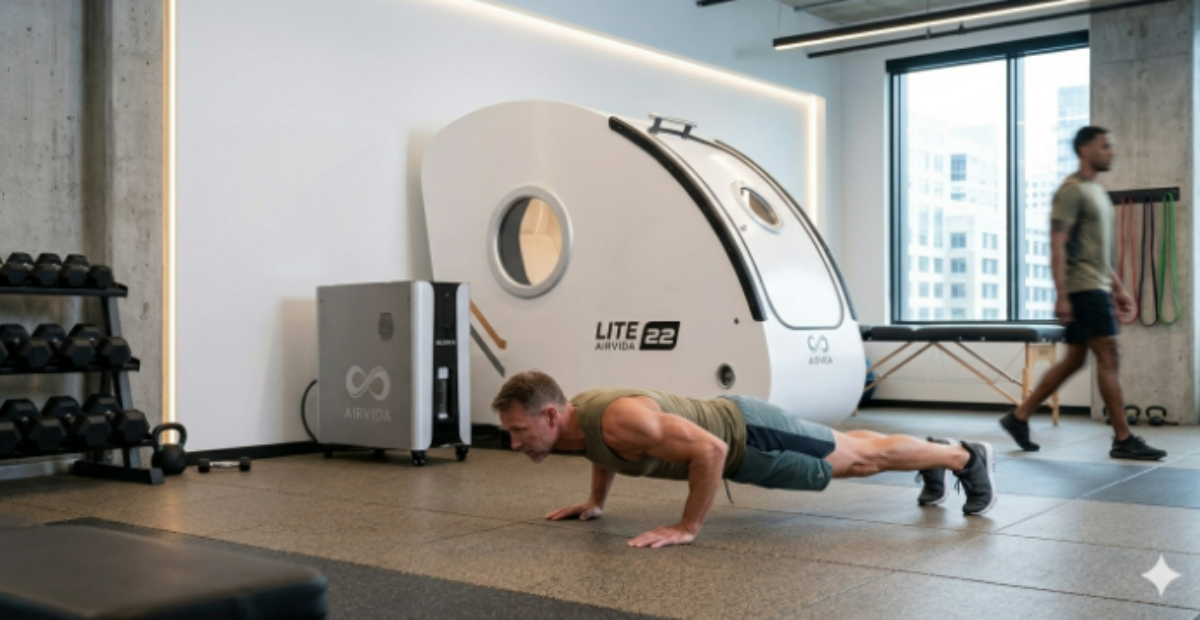
A hyperbaric chamber for athletic performance delivers pressurized, high-concentration oxygen to accelerate muscle recovery, reduce soreness, and support tissue repair after intense training or competition. A 2025 meta-analysis published in PubMed, covering 10 randomized controlled trials and 299 subjects, found that hyperbaric oxygen therapy (HBOT) significantly accelerated recovery from exercise-induced muscle injury (P<.0001). Athletes at all levels use HBOT as a structured recovery tool, with research supporting benefits across muscle, ligament, and bone injuries.
Key Takeaways
-
HBOT significantly reduces exercise-induced muscle injury recovery time, according to a 2025 meta-analysis of 10 randomized controlled trials involving 299 subjects.
-
Repeated HBOT sessions produce stronger results than single sessions, with six sessions shown to significantly reduce blood markers of muscle damage, metabolites, and oxidative stress.
-
Standard research protocols deliver 100% oxygen at 1.3 to 2.5 ATA, with session durations typically ranging from 60 to 90 minutes.
-
HBOT has shown positive results for bone, muscle, and ligament injuries, based on peer-reviewed research published in the NIH/PubMed database.
-
A 2022 trial found that middle-aged athletes experienced improvements in mitochondrial function and physical performance that persisted beyond the treatment period.
-
Not every athlete is a candidate for HBOT, as certain medical conditions make the therapy inappropriate without physician clearance.
How Does a Hyperbaric Chamber Work for Athletes?
Hyperbaric oxygen therapy is a treatment in which a person breathes high-concentration oxygen inside a pressurized enclosure at levels above normal atmospheric pressure. Inside the chamber, elevated pressure forces more oxygen into plasma, red blood cells, and body tissues than is possible at sea level. This oxygen saturation reaches damaged muscle fibers, tendons, and ligaments that would otherwise receive limited blood supply due to swelling or vascular disruption.
The core mechanism relevant to athletes involves three physiological processes. First, increased oxygen delivery reduces cellular hypoxia in injured tissue. Second, higher oxygen concentrations reduce inflammation by modulating cytokine signaling. Third, HBOT activates macrophages and satellite cells, which are the two primary cell types responsible for skeletal muscle regeneration.
A 2018 study published in Scientific Reports by the NIH/PMC database confirmed that HBO reduces inflammation, oxygenates injured muscle, and regenerates skeletal muscle via macrophage and satellite cell activation. This mechanistic evidence provides the biological rationale for why athletes report faster return to training after HBOT sessions.
The bottom line is that HBOT works by saturating tissue with oxygen under pressure, which triggers biological repair processes that standard rest and ice cannot replicate.
What Does the Research Say About Muscle Recovery?

Exercise-induced muscle injury is a category of tissue damage caused by intense or eccentric physical effort, producing soreness, weakness, and elevated inflammatory markers that can last 48 to 72 hours or longer. A 2025 systematic review and meta-analysis published on PubMed analyzed 10 randomized controlled trials with 299 total subjects and found that HBOT produced statistically significant acceleration in recovery (95% CI, -76.19 to -33.11; P<.0001). The same review confirmed that both single and repeated sessions demonstrated efficacy in alleviating subjective fatigue.
Repeated sessions showed a dose-dependent advantage. Six HBOT sessions produced a significant reduction in blood markers associated with muscle damage, circulating metabolites, and oxidative stress compared to fewer sessions. This suggests that a multi-session protocol is more appropriate for athletes with high training volumes or congested competition schedules.
Research published on the NIH/PMC database also noted that HBO has been proposed as having the highest potential as an effective adjunct treatment for muscle recovery, ranking above options such as massage and cryotherapy in proposed efficacy. That ranking reflects the mechanistic depth of HBOT's action rather than simple symptom suppression.
The bottom line is that peer-reviewed evidence supports HBOT as an effective tool for accelerating muscle recovery, with stronger results from repeated sessions than one-time use.
What Specific Injuries Does HBOT Help With?
Hyperbaric oxygen therapy for sports injuries encompasses a range of tissue types, including muscle, bone, cartilage, and ligamentous structures. A 2006 study published on PubMed and indexed in the NIH database reported positive results regarding tissue remodeling after injury, with bones, muscles, and ligaments all showing improved recovery outcomes. The Turkish Journal of Sports Medicine published a 2025 review confirming these physiological effects across multiple injury categories.
ACL reconstruction recovery is one area of active clinical investigation. A registered trial on ClinicalTrials.gov (NCT06493851), updated as recently as April 2026, is actively studying whether HBOT accelerates healing after anterior cruciate ligament reconstruction surgery. The trial's rationale cites prior animal research showing that HBOT for ligament injuries improves both the quality and speed of recovery.
A study cited in the NIH/PMC database involving seven Olympic athletes found that all seven experienced faster recovery rates after receiving HBO treatment for 30 to 40 minutes at 1.3 ATA, with a maximum of six treatments per athlete. While the sample size limits generalizability, a 100% positive response rate across elite athletes is a meaningful signal.
Common sports injuries where HBOT research exists include:
-
Muscle strains and contusions
-
Ligament sprains and tears (including ACL)
-
Stress fractures and bone injuries
-
Tendon injuries
-
Post-surgical soft tissue repair
The bottom line is that HBOT has research support across multiple injury types, with ligament and muscle injuries showing the most consistent evidence.
Hyperbaric Chambers You May Want to Shop
Explore More


What Are the Standard Protocols Used in Research?
HBOT protocol parameters refer to the specific pressure, oxygen concentration, session duration, and session frequency used in a clinical or research setting. Research protocols vary, but peer-reviewed studies have used a range of 1.3 to 2.5 ATA with high-concentration oxygen. A randomized, controlled, double-blind study cited in the NIH/PMC database used 100% oxygen for 60 minutes at 2.0 ATA for active treatment, and 21% oxygen at 1.2 ATA for sham comparison.
A systematic review examining 16 studies published between 2015 and 2024 found that HBOT treatments ranging from 1.3 to 2.5 ATA consistently reduced muscle soreness and improved recovery biomarkers across the studies reviewed. Lower pressures around 1.3 ATA are used in athletic recovery contexts, while higher pressures approaching 2.0 to 2.5 ATA appear in more clinical injury and surgical recovery applications.
|
Parameter |
Athletic Recovery Range |
Clinical Injury Range |
|
Pressure (ATA) |
1.3 to 1.5 |
2.0 to 2.5 |
|
Oxygen Concentration |
High-concentration |
100% |
|
Session Duration |
60 to 90 minutes |
60 to 90 minutes |
|
Session Frequency |
1 to 6 sessions |
10 to 40 sessions |
|
Target Outcome |
Soreness, fatigue |
Tissue repair, surgical healing |
Session timing relative to training is a practical variable. Post-exercise sessions are most common in recovery contexts, while pre-competition sessions remain an area of ongoing investigation with less established evidence.
The bottom line is that protocol selection should be matched to the athlete's goal, whether recovery from soreness or rehabilitation from a structural injury.
How Does HBOT Affect Cardiovascular and Mitochondrial Performance?
Mitochondrial function is a core determinant of aerobic athletic performance, governing how efficiently muscle cells convert oxygen into usable energy. A 2022 trial published in Sports Medicine, Open found that middle-aged athletes receiving HBOT showed significant improvements in mitochondrial respiration and physical performance that persisted beyond the treatment period. This suggests HBOT may offer benefits beyond immediate injury recovery, extending into baseline performance capacity.
Cardiovascular endurance is another area researchers have examined. Elevated oxygen delivery under pressure may support adaptations in oxygen utilization efficiency, though the evidence base for direct endurance enhancement is less robust than the recovery evidence. This remains an area of ongoing investigation, and athletes should not substitute HBOT for structured aerobic training.
The persistent nature of mitochondrial improvements noted in the 2022 trial is particularly relevant for masters or older athletes, whose mitochondrial function declines with age faster than that of younger competitors. For this population, HBOT may provide recovery and performance benefits simultaneously.
The bottom line is that HBOT shows early evidence for mitochondrial and cardiovascular performance benefits, but recovery applications currently have stronger research support.
Hyperbaric Collections You May Want to Shop

What Types of Hyperbaric Chambers Are Available to Athletes?
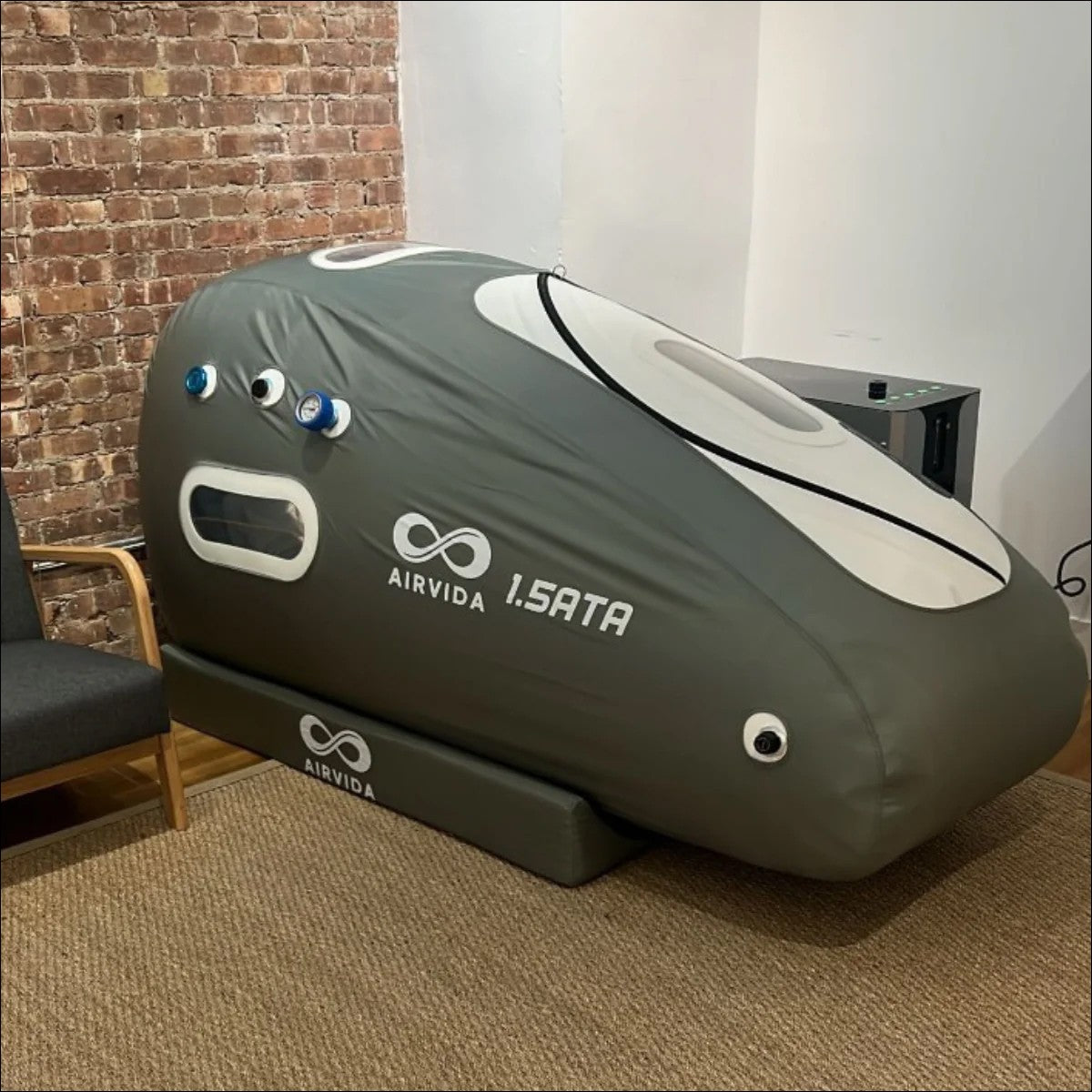
Hyperbaric chambers for athletic use come in two primary configurations: monoplace and multiplace. Monoplace chambers are clear acrylic tubes ranging from 28 to 34 inches in diameter, designed for one person at a time. Multiplace chambers are larger enclosures that accommodate multiple patients or athletes simultaneously, often in a clinical facility setting.
Monoplace chambers are more portable and accessible for individual athlete use or clinic settings, but their enclosed size increases the likelihood of claustrophobia for some users. Multiplace chambers allow for supervised group sessions and are typically found in hospital or dedicated hyperbaric medicine centers. Both chamber types can deliver therapeutic pressure and oxygen levels when operated correctly.
Athletes in different geographic regions can access professional chamber facilities through established providers. Options include hyperbaric chambers in Little Rock, hyperbaric chambers in Des Moines, hyperbaric chambers in Sioux Falls, and hyperbaric chambers in Portland Maine for athletes seeking local access.
The bottom line is that chamber type and access point matter for consistent protocol adherence, which directly affects outcome quality.
What Are the Known Risks and Side Effects of HBOT?

HBOT side effects are generally mild at the pressure levels used in athletic recovery, but athletes should be aware of potential adverse events before beginning a protocol. The most commonly reported side effects include ear and sinus discomfort from pressure equalization, temporary changes in vision, and mild fatigue immediately after sessions. Visual side effects, including temporary changes to near vision, are documented and typically reversible after treatment ends. For a detailed review of how HBOT can affect the eyes, see this overview of hyperbaric chamber eye side effects.
More serious risks exist but are rare at standard athletic recovery pressures. Oxygen toxicity becomes a concern primarily at pressures above 2.0 ATA with 100% oxygen over extended durations. Barotrauma to the ears or sinuses can occur if pressure equalization techniques are not practiced.
Athletes with certain pre-existing conditions should consult a physician before pursuing HBOT. The section below on contraindications covers this in detail. Any existing respiratory or cardiac condition warrants medical clearance before a first session.
The bottom line is that HBOT is well-tolerated at lower athletic recovery pressures, but physician consultation before starting is the appropriate standard of care for any athlete.
Is HBOT Timing Before or After Workouts More Effective?
HBOT session timing relative to training or competition is a practical question that research has not resolved with a single definitive answer. Post-workout sessions have the most research support in the context of muscle recovery, as the therapy's primary studied mechanism involves reducing inflammation and accelerating repair after training stress has already been applied. Most recovery-focused protocols in the published literature place sessions within hours of exercise completion.
Pre-workout or pre-competition HBOT is less studied in human athletic populations. The theoretical basis for pre-session use involves pre-loading tissue oxygen levels to reduce damage during subsequent exertion, but this remains an area of ongoing investigation without strong clinical evidence. Athletes considering pre-competition HBOT should discuss the timing rationale with a supervising clinician.
The practical recommendation from current research is to prioritize post-training sessions, particularly within the 72-hour window that represents the highest physiological demand after intense competition. Full recovery after a high-intensity match can take up to 72 hours, and HBOT used during this window targets the biological processes most active in that timeframe.
The bottom line is that post-workout sessions have the strongest research support, while pre-workout timing remains investigational.
What Should Athletes Expect from a Hyperbaric Chamber Session?
A standard HBOT session for athletes involves entering a pressurized chamber, breathing high-concentration oxygen, and remaining at target pressure for the session duration, typically 60 to 90 minutes. Pressure is gradually increased at the start and gradually reduced at the end of each session to prevent barotrauma. Most athletes can read, listen to audio, or rest during the session.
Here is what a typical athletic recovery session looks like, step by step:
-
Pre-session screening: Review of health history and any contraindications with a supervising clinician.
-
Chamber entry: You enter the monoplace tube or multiplace room and get settled.
-
Pressurization: Pressure is gradually raised to the target ATA over 10 to 15 minutes. You may need to equalize ear pressure, similar to descent in an airplane.
-
Treatment phase: You breathe high-concentration oxygen at the target pressure for the prescribed duration (typically 60 minutes).
-
Depressurization: Pressure is gradually reduced over 10 to 15 minutes. You may notice a temporary mild temperature drop inside the chamber.
-
Post-session: You exit, and mild fatigue is possible. Most athletes resume normal activity the same day.
Athletes report the experience as passive and non-strenuous. The session itself places no physical demand on the body.
The bottom line is that an HBOT session is straightforward, requires no physical effort, and fits into most training schedules without disruption.
What Does This Mean for Your Athletic Performance?

The research on hyperbaric chambers for athletic performance points to a consistent and clinically meaningful benefit in muscle recovery, injury rehabilitation, and potentially longer-term physiological adaptation. A 2025 meta-analysis of 299 subjects across 10 randomized controlled trials established statistically significant recovery acceleration, which is the highest level of evidence currently available for this application. Additional evidence supports tissue remodeling across muscles, ligaments, and bones.
Athletes at the elite, collegiate, and recreational levels can potentially benefit from structured HBOT protocols, particularly when training volumes are high or competition schedules allow limited recovery windows. The evidence base for direct performance enhancement (separate from recovery) is growing but remains less established. As with any recovery modality, individual response varies, and physician oversight ensures the protocol is appropriate for your health status.
The bottom line: a hyperbaric chamber for athletic performance is supported by peer-reviewed evidence as a recovery accelerator, with the strongest data applying to exercise-induced muscle injury and multi-session protocols.
Frequently Asked Questions
Is a hyperbaric chamber good for athletes?
Yes, a hyperbaric chamber is supported by peer-reviewed research as a recovery tool for athletes. A 2025 meta-analysis of 10 randomized controlled trials found statistically significant acceleration in recovery from exercise-induced muscle injury. Research also supports benefits for bone, ligament, and muscle injuries across athletic populations.
Does LeBron James use a hyperbaric chamber?
LeBron James has publicly discussed using a hyperbaric chamber as part of his recovery regimen, and the practice has been widely reported in sports media. However, no peer-reviewed clinical data on his personal use exists. His reported use aligns with the documented recovery benefits that research has confirmed in elite athlete populations.
Is it better to do HBOT before or after a workout?
Post-workout HBOT has the strongest research support, as the therapy's primary studied mechanism reduces inflammation and accelerates repair after training stress. Pre-workout HBOT is less studied and remains an area of ongoing investigation. Athletes should prioritize post-training sessions within the 72-hour recovery window for best-supported results.
Does breathing pure oxygen help athletes?
Breathing high-concentration oxygen under increased atmospheric pressure, as in HBOT, has demonstrated measurable benefits for muscle recovery in peer-reviewed studies. Breathing oxygen at normal atmospheric pressure (normobaric oxygen) produces less tissue saturation and has weaker evidence for athletic benefit. The pressure component of HBOT is what enables deeper tissue oxygen delivery.
Who shouldn't use a hyperbaric chamber?
Athletes with untreated pneumothorax, certain respiratory conditions, uncontrolled ear or sinus disease, or specific cardiac conditions may not be appropriate candidates for HBOT without physician clearance. Anyone with a history of seizures or who is pregnant should also consult a physician before pursuing treatment. A pre-session health screening with a qualified clinician is the appropriate standard for all new patients.