


A hyperbaric chamber delivers pressurized, high-concentration oxygen to surgical tissue, accelerating wound healing, reducing bruising, and lowering complication rates after plastic surgery. Clinical studies show patients receiving hyperbaric oxygen therapy (HBOT) post-operatively experienced wound healing in a mean of 13.3 days compared to 36.9 days in control groups. Plastic surgeons increasingly integrate HBOT as a perioperative tool for both reconstructive and aesthetic procedures.
Key Takeaways
-
HBOT after plastic surgery can reduce wound healing time from roughly 37 days to 13 days, based on a 2023 case-control study of facelift patients.
-
A 2024 study in Plastic and Reconstructive Surgery Global Open found a complication rate of just 10.7% among 296 aesthetic surgery patients treated with post-operative HBOT, with zero reported cases of surgical site infection or necrosis.
-
The standard clinical protocol for post-operative plastic surgery recovery is 45 to 90 minutes per session at 2.0 ATA, typically for 5 to 20 sessions depending on procedure type and healing progress.
-
Perioperative HBOT reduces post-facelift bruising by 35% at day 7 and 30% at day 10, according to a prospective cohort study cited in a 2025 systematic review.
What Does a Hyperbaric Chamber Actually Do for Plastic Surgery Recovery?
Hyperbaric oxygen therapy is a treatment modality in which a patient breathes near-pure oxygen inside a pressurized chamber, typically at 2.0 atmospheres absolute (ATA), delivering oxygen concentrations to tissue far exceeding what is possible under normal atmospheric conditions. In the context of plastic surgery, this mechanism directly addresses the core physiological problem of postoperative healing: local tissue hypoxia. Surgical incisions, flap transfers, and grafts all create zones of oxygen-depleted tissue that are vulnerable to necrosis, infection, and delayed healing.
HBOT works through several intersecting biological pathways. It stimulates fibroblast proliferation, promotes neovascularization (new blood vessel growth), suppresses pro-inflammatory cytokine activity, and modulates hypoxia-inducible factor-1α (HIF-1α) alongside vascular endothelial growth factor (VEGF) dynamics. It also balances matrix metalloproteinase/tissue inhibitor of metalloproteinase (MMP/TIMP) activity, which governs tissue remodeling. Together, these effects accelerate the transition from the inflammatory phase of wound healing to the proliferative and remodeling phases.
For plastic surgeons, these mechanisms translate to measurable clinical outcomes: faster bruise resolution, reduced edema, lower infection risk, and improved graft or flap viability. The key point is that HBOT does not replace surgical technique but augments the biological environment in which healing occurs.
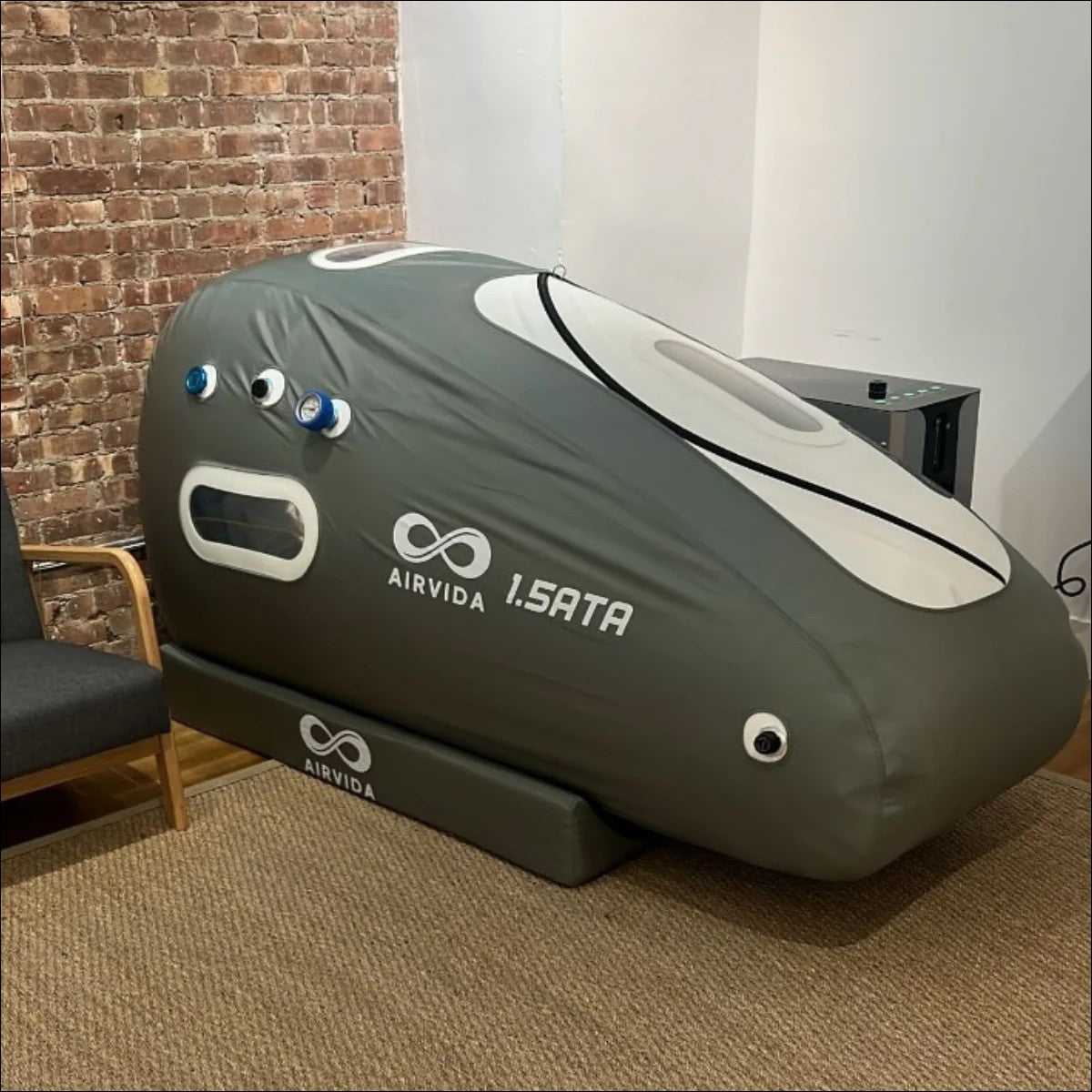
Hyperbaric Collections You May Want to Shop

What Does the Clinical Evidence Show for Aesthetic Plastic Surgery?
The strongest recent evidence comes from a retrospective descriptive study published in Plastic and Reconstructive Surgery Global Open (November 2024), indexed on PubMed. The study followed 296 patients who received HBOT after aesthetic surgical procedures between 2021 and 2023. The overall complication rate was 10.7%, including hematomas (4.72%), anemias (3.04%), and wound dehiscence (2.70%). Critically, there were zero reports of surgical site infections or necrosis, which is a notable finding given that infection and tissue death represent the most costly complications in aesthetic practice.
The patient cohort also demonstrated shortened recovery times compared to benchmarks from major international plastic surgery organizations. The treatment protocol used in this study consisted of daily 45-minute HBOT sessions at 2.0 ATA for five consecutive days beginning post-operatively. This protocol is now referenced as a practical baseline for surgeons evaluating HBOT integration.
For facelift surgery specifically, a prospective cohort study (cited in a 2025 systematic review in Facial Plastic Surgery and Aesthetic Medicine) enrolled 13 rhytidectomy patients. Six patients received five perioperative HBOT sessions at 2.0 ATA for 60 minutes, administered two days before surgery and on post-operative days 3, 4, and 5. The HBOT group showed a statistically significant 35% reduction in bruising at day 7 and a 30% reduction at day 10. A separate 2023 case-control study reinforced these findings, reporting mean wound healing duration of 13.3 days in the HBOT group versus 36.9 days in controls. The key point is that the facelift evidence base, while still limited in sample size, consistently demonstrates meaningful reductions in both bruising duration and overall healing time.
How Do Plastic Surgeons Use HBOT: Pre-Op vs. Post-Op Protocols?

HBOT for plastic surgery is administered either before surgery, after surgery, or in a combined perioperative protocol, and each timing strategy targets a different physiological goal.
Pre-Operative HBOT
Pre-operative sessions are delivered in the days before surgery to "prime" tissue, increasing baseline tissue oxygen saturation and reducing the depth of the hypoxic trough that follows incision. The evidence base for pre-operative use includes a propensity-matched cohort of abdominoplasty patients. This approach is particularly relevant for patients with compromised circulation, prior radiation exposure, or known healing risk factors.
Post-Operative HBOT
Post-operative HBOT typically begins within 24 to 72 hours after surgery. The goal is to counteract the acute hypoxic environment created by surgical trauma, support angiogenesis in the healing wound bed, and reduce edema and bruising. The 2024 Global Open study used this timing exclusively and reported the favorable outcomes described above.
Combined Perioperative Protocol
|
Timing |
Session Goal |
Common Dosage |
|
2 days pre-op |
Tissue oxygen priming |
1 to 2 sessions at 2.0 ATA, 60 min |
|
POD 1 to 3 |
Acute hypoxia reduction |
Daily sessions, 45 to 60 min |
|
POD 3 to 10 |
Bruising and edema resolution |
Daily or every-other-day, 45 to 60 min |
|
POD 10 to 20 |
Scar remodeling support |
As needed based on wound status |
A standard course for post-operative plastic surgery recovery consists of 5 to 20 sessions, depending on procedure complexity and individual healing progress. The optimal timing, total dosage, and session duration remain an area of ongoing investigation, and surgeons are encouraged to tailor protocols to patient-specific factors. The bottom line is that perioperative HBOT is most effective when started promptly and administered consistently, rather than sporadically.
Hyperbaric Chambers You May Want to Shop
Explore More


Which Plastic Surgery Procedures Benefit Most from HBOT?
Not all plastic surgery procedures carry equal HBOT evidence. The procedures with the strongest clinical support include the following:
Reconstructive Procedures:
-
Skin graft survival: HBOT enhances graft viability through improved oxygenation, angiogenesis, reduced inflammation, and anti-infective effects, according to a peer-reviewed MDPI study (2024).
-
Threatened flaps: HBOT supports perfusion in compromised pedicled or free flaps, reducing the risk of partial or total flap loss.
-
Post-mastectomy wound complications: A 10-year institutional review indexed on PubMed (2024) followed 20 patients treated at 2.0 ATA for 90-minute sessions with a median of 30.5 sessions, demonstrating benefit for complex breast reconstruction wound management.
-
Lower extremity trauma reconstruction: A retrospective study in the Journal of Clinical Medicine (2024) analyzed 57 patients with lower extremity trauma, finding improved outcomes in the HBOT group.
Aesthetic Procedures:
-
Facelift (rhytidectomy): Bruising reduction and accelerated wound closure are the most consistently documented benefits.
-
Abdominoplasty: Pre-operative priming has demonstrated utility in propensity-matched cohort data.
-
Liposuction and body contouring: Evidence is emerging but less robust than for facial procedures.
-
Breast augmentation and revision: Primarily supported by the broader reconstructive literature.
The key point is that the reconstructive evidence base is more established and higher-volume than the aesthetic evidence base, but both categories show a consistent directional benefit.
What Are the Regulatory and Clinical Approval Considerations for Surgeons?
Hyperbaric oxygen therapy (HBOT) has recognized clinical approval for 14 medical indications under current medical guidance. These indications include conditions such as compromised skin grafts and flaps, chronic refractory osteomyelitis, diabetic foot ulcers, radiation tissue damage, and several others. Post-operative recovery from elective aesthetic procedures is not among the formally recognized indications, making this application an off-label use.
This distinction carries practical implications for plastic surgeons who recommend or administer HBOT. Off-label use is legal and common in medicine, but it requires informed consent documentation that clearly explains the regulatory status of the treatment. Surgeons should also be aware that low-pressure portable hyperbaric chambers and inflatable hyperbaric bags, which operate below the clinical threshold, are not recognized as appropriate for treating the conditions covered by clinically approved HBOT indications. The optimal treatment pressure for accepted indications and the evidence-supported aesthetic protocols ranges from 2.0 to 2.8 ATA.
Surgeons evaluating chamber acquisition or referral partnerships should verify that equipment meets clinical pressure standards and that operating staff hold appropriate certifications. The bottom line is that off-label HBOT use in plastic surgery is clinically justifiable given the available evidence, but proper patient consent and appropriately calibrated equipment are non-negotiable.
How Offering In-House HBOT Turns Patient Recovery Into Practice Revenue

Every patient a plastic surgeon refers out for hyperbaric therapy is revenue walking out the door — often to a wound care clinic or hospital-based chamber that has no relationship with the practice and no incentive to send the patient (or future referrals) back. Bringing HBOT in-house changes the equation: the same patients who need it for healing become a recurring revenue stream instead of a referral you give away.
The Patients Who Already Need This Therapy
These patient types are already walking through the door — the only question is whether they get treated (and billed) in-house or sent elsewhere:
-
Smokers or recent ex-smokers with compromised microvascular circulation
-
Patients with diabetes or peripheral vascular disease undergoing reconstructive procedures
-
Patients with prior radiation to the surgical site
-
Individuals undergoing complex flap or graft procedures
-
Patients with a history of poor wound healing or keloid formation
-
High-profile or time-sensitive aesthetic patients (such as pre-event facelift patients) seeking accelerated bruising resolution — a segment that tends to pay out-of-pocket without hesitation
The Revenue Math
At a typical rate of $150–$300 per hour of therapy, a modest protocol of 5–10 sessions per patient adds $750–$3,000 in ancillary revenue per case — on top of the surgical fee, and with minimal added chair time from the surgeon. A practice treating even 10 qualifying patients a month could see an additional $7,500–$30,000 in monthly revenue from a service that also improves surgical outcomes and patient satisfaction.
Screening Still Matters — But Now It's a Practice Decision, Not Just a Clinical One
Before enrolling a patient in an in-house protocol, rule out:
-
Untreated pneumothorax (absolute contraindication)
-
Uncontrolled high fever
-
Recent ear surgery or untreated middle ear pressure pathology
-
Claustrophobia severe enough to preclude chamber entry
-
Certain chemotherapy agents (such as bleomycin or doxorubicin, which may have adverse interactions with hyperoxia)
Patients who don't qualify are still worth referring out — but for practices doing even a moderate volume of reconstructive or high-risk aesthetic cases, in-house HBOT turns a clinical necessity into a line of business instead of a courtesy referral.
Surgeons who do not operate their own HBOT facility typically establish referral relationships with certified wound care or hyperbaric centers. If you are considering adding a chamber to your practice or recommending one for patient home use, understanding how often HBOT sessions should be scheduled is an important part of setting realistic patient expectations. For chiropractors or physical therapists who co-manage post-surgical rehabilitation, hyperbaric chambers designed for clinical rehabilitation settings and physical therapy practices are also available for those looking to expand perioperative support services. The key point is that patient selection and proper contraindication screening are as important as the HBOT protocol itself.
What Are the Known Risks and Limitations of HBOT in Plastic Surgery?

HBOT has a well-characterized safety profile when administered at standard clinical pressures, but it is not without risk. Surgeons and patients should understand the following:
Common Side Effects:
-
Middle ear barotrauma (ear pressure and pain): the most frequently reported adverse event
-
Temporary myopia from lens changes with prolonged HBOT exposure
-
Sinus discomfort from pressure equalization difficulties
-
Mild fatigue following sessions
Serious but Rare Risks:
-
Oxygen toxicity seizures: very rare at standard 2.0 to 2.8 ATA protocols with appropriate session duration limits
-
Pneumothorax risk in patients with pre-existing pulmonary blebs
-
Fire risk in oxygen-enriched environments, mitigated by strict facility safety protocols
Evidence Limitations: Many studies examining HBOT in aesthetic plastic surgery have relatively small sample sizes, limiting the generalizability of their findings. The long-term effects of HBOT on cosmetic surgery outcomes are not well-documented, with most studies focusing on short-term healing endpoints. Optimal timing, dosage, and session duration for aesthetic indications remain an area of ongoing investigation.
The bottom line is that HBOT carries an acceptable risk profile for most surgical patients, but the evidence base for aesthetic applications still requires larger randomized controlled trials to establish definitive protocols.
What Is the Cost of HBOT for Plastic Surgery Patients?
HBOT pricing varies significantly by setting, geography, and chamber type. In clinical research settings, per-session costs have been reported at approximately $50 per session, though real-world pricing at U.S. hospital-based or freestanding hyperbaric centers is typically higher. A standard 5 to 20 session post-operative course places the total cost range in a wide band depending on facility type and insurance coverage.
Insurance reimbursement for HBOT covers FDA-cleared indications but generally does not cover off-label use for aesthetic recovery. Patients electing HBOT as part of their plastic surgery recovery should budget for the full out-of-pocket cost unless they have a specific condition (such as a compromised graft or radiation-related wound) that qualifies under an approved indication. For patients who travel for surgery or live in areas without convenient HBOT access, portable hyperbaric chambers for travelers represent one option, though surgeons should verify pressure specifications before recommending any home or portable device. Veterans who have undergone reconstructive procedures may also explore hyperbaric options available specifically for veterans. The key point is that cost and access are real barriers, and surgeons should discuss both with patients during the informed consent and recovery planning process.
What Is the Role of HBOT in the Future of Plastic Surgery Practice?
HBOT occupies an increasingly prominent position in plastic surgery's evidence base, with peer-reviewed publications growing in frequency and quality through 2024 and 2025. The mechanistic rationale is robust, the short-term clinical outcomes data are consistently favorable, and the risk profile is acceptable for most candidates. What the field currently lacks is the large-scale randomized controlled trial data needed to formalize HBOT as a standard-of-care adjunct for aesthetic procedures.
The most promising near-term developments include standardization of perioperative protocols, integration of HBOT into surgical care pathways at academic medical centers, and expansion of outcome data for a broader range of aesthetic procedures. Surgeons who adopt HBOT now are working from an evidence-informed but not yet evidence-standardized framework. The bottom line is that HBOT is a clinically justified adjunct for select plastic surgery patients, and surgeons who understand its mechanisms, protocols, and limitations are better positioned to use it effectively and responsibly.
Frequently Asked Questions
Can hyperbaric chamber help with plastic surgery healing?
Yes, hyperbaric chambers can accelerate plastic surgery healing by delivering high-concentration oxygen to surgical tissue, reducing bruising, controlling inflammation, and lowering complication rates. A 2024 study of 296 aesthetic surgery patients using post-operative HBOT reported zero cases of surgical site infection or necrosis, and a 2023 facelift study found wound healing time dropped from a mean of 36.9 days to 13.3 days with HBOT.
Who should not go into a hyperbaric chamber?
Patients with an untreated pneumothorax should not enter a hyperbaric chamber, as this is the primary absolute contraindication. Additional relative contraindications include uncontrolled high fever, untreated middle ear pressure conditions, severe claustrophobia, active uncontrolled asthma, and concurrent use of certain chemotherapy agents such as bleomycin or doxorubicin that may interact adversely with hyperoxygenation.
Should you do a hyperbaric chamber before surgery?
Pre-operative HBOT sessions can prime tissue by increasing baseline oxygen saturation before surgical incision is made. A perioperative protocol studied in facelift patients included two pre-operative sessions at 2.0 ATA for 60 minutes, which contributed to the significant bruising reduction observed at post-operative days 7 and 10. Pre-operative use is most supported for patients with known healing risk factors such as prior radiation, smoking history, or poor microvascular circulation.
Why do celebrities use hyperbaric chambers?
Celebrities use hyperbaric chambers primarily because HBOT accelerates bruising resolution and reduces visible swelling after cosmetic procedures, enabling faster public appearance after surgery. The 35% reduction in facelift bruising at day 7 documented in clinical trials represents a meaningful aesthetic benefit for high-profile patients with limited recovery windows. Media visibility has also increased general awareness of HBOT as a recovery tool, contributing to its popularity beyond strictly medical indications.
What is the downside of a hyperbaric chamber?
The most common downside of hyperbaric chamber use is middle ear barotrauma, which causes ear pressure and discomfort during pressurization. Other potential adverse effects include temporary myopia with prolonged use, sinus discomfort, and mild post-session fatigue. Serious risks such as oxygen toxicity seizures are rare at standard clinical pressures but remain a consideration, and the cost of a full post-operative course is typically not covered by insurance for elective aesthetic surgery.