


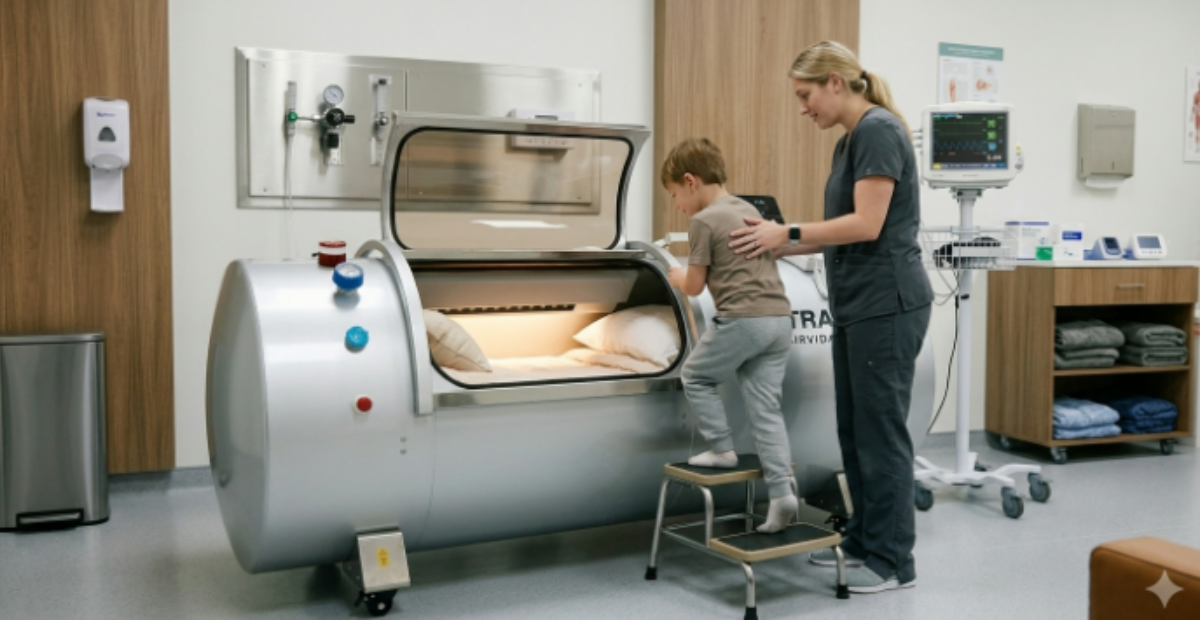
Hyperbaric oxygen therapy (HBOT) for children involves breathing concentrated oxygen inside a pressurized chamber, typically at pressures greater than normal atmospheric levels. It is used in clinical settings to treat specific pediatric conditions such as carbon monoxide poisoning and certain infections, and is under active investigation for conditions including autism spectrum disorder (ASD) and traumatic brain injury (TBI). Evidence of effectiveness varies significantly by condition, and safety depends on appropriate medical supervision.
Key Takeaways
-
Hyperbaric oxygen therapy delivers pressurized, concentrated oxygen to support tissue healing and has established medical uses in children for conditions like carbon monoxide poisoning and serious infections.
-
Middle ear barotrauma is the most common adverse event in children, occurring in up to 50% of pediatric patients across reviewed studies, though most cases are mild.
-
Evidence for HBOT in autism spectrum disorder is mixed, with some randomized trials reporting improvements in social interaction and language while systematic reviews call for more rigorous study designs.
-
High-level evidence from multiple randomized controlled trials indicates that HBOT does not outperform control conditions for improving motor or cognitive function in children with cerebral palsy.
-
Emerging research on pediatric traumatic brain injury shows statistically significant patient responses, but this remains an area of ongoing investigation requiring larger, controlled trials.
-
HBOT should be administered under qualified medical supervision, and parents should consult a pediatric specialist before initiating therapy for any off-label condition.
What Is a Hyperbaric Chamber and How Does It Work for Children?
A hyperbaric chamber is a pressurized enclosure in which a patient breathes oxygen at levels above standard atmospheric pressure, increasing the amount of oxygen dissolved in the blood and delivered to body tissues. In pediatric settings, chambers are sized and adapted to accommodate children, and sessions are typically supervised by trained medical staff. The increased oxygen availability is intended to support healing in hypoxic or damaged tissues.
Children may receive HBOT through monoplace chambers (single-person units) or multiplace chambers (larger units that can accommodate a child with a caregiver present). Multiplace chambers are often preferred for younger children who may become anxious during solo sessions. Session length and pressure settings are adjusted based on the child's age, weight, and medical condition.
Established clinical uses in pediatric patients include carbon monoxide poisoning, gas gangrene, decompression sickness, and certain wound and infection scenarios. A luxury hyperbaric chamber designed for comfort can support extended or repeated sessions in both adult and pediatric clinical contexts. The key point is that the mechanism is physiologically sound, but its effectiveness depends heavily on the condition being treated.
Which Pediatric Conditions Have the Strongest Evidence Supporting HBOT?

The conditions with the strongest clinical support for HBOT in children include carbon monoxide poisoning, necrotizing soft tissue infections, and certain bone infections. For these acute, emergency-adjacent conditions, HBOT is part of established treatment protocols across major medical centers. Research on HBOT for pediatric hyperbaric chamber for bone infection contexts, for example, reflects a growing body of clinical experience supporting its adjunctive role.
A 2024 study published in PMC reviewing 329 pediatric patients concluded that HBOT can be safely performed in children with low complication rates when appropriate precautions are followed. These cases spanned acute and chronic conditions, with the most consistent outcomes seen in emergency indications. The bottom line is that for established indications, HBOT in children has a meaningful safety record and clinical justification.
Does HBOT Help Children With Autism Spectrum Disorder?
Evidence for HBOT in children with autism spectrum disorder is genuinely mixed, and no firm clinical consensus has been reached as of 2026. A 2025 systematic review and meta-analysis published in ScienceDirect found moderately large, significant effects of HBOT in reducing core symptoms of autism among children and adolescents. However, other large-scale reviews, including one updated in 2024, concluded that HBOT does not produce meaningful improvements in autistic characteristics.
One frequently cited multicenter, randomized, double-blind, controlled trial published in BMC Pediatrics found that after 40 sessions, children receiving HBOT showed significantly greater improvements in overall functioning, receptive language, social interaction, and eye contact compared to controls. Specifically, 30% of children in the treatment group were rated as "very much improved" or "much improved," compared to 8% in the control group. However, the study authors and independent reviewers cautioned that design limitations require these results to be interpreted carefully.
A systematic review published in PubMed Central concluded that while some controlled and uncontrolled studies suggest HBOT may benefit children with autism, these effects have not been consistently replicated. The review called for sham-controlled studies with more rigorous methodology before any clinical recommendation can be made. The key point is that HBOT for autism remains an investigational use, and families should weigh this carefully with a qualified clinician before proceeding.
Hyperbaric Collections You May Want to Shop

Is HBOT Effective for Children With Cerebral Palsy?
For children with cerebral palsy (CP), the current high-level evidence does not support HBOT as an effective treatment for improving motor or cognitive function. A 2022 systematic review published in PLOS ONE, examining multiple randomized controlled trials, found that improvements observed in the HBOT group were similar to those seen in control groups. This finding held across four of the five RCTs reviewed, all rated as having a high level of evidence.
The conclusion of that review was direct: HBOT is ineffective in improving motor and cognitive functions in children with CP based on the available RCT data. A parallel PMC review from October 2022 confirmed these findings, noting that control conditions produced comparable gains. The bottom line is that HBOT should not be pursued as a primary therapy for cerebral palsy in children based on current evidence.
What Does Research Show About HBOT for Pediatric Brain Injury?
HBOT for pediatric traumatic brain injury and related acquired brain conditions is one of the more active areas of current research. A 2025 study published in PMC reported statistically and clinically significant patient responses to HBOT in children with brain injuries, including cases of TBI, hypoxic-ischemic encephalopathy (HIE), and ischemic stroke. The treated group had a mean age of approximately 6 years, and outcomes across multiple cognitive and functional measures showed measurable improvement.
For neonatal HIE specifically, a meta-analysis published in Frontiers in Pediatrics found that HBOT significantly improved treatment efficiency and reduced the risk of long-term sequelae compared to conventional treatment alone. At the same time, a 2024 review in Frontiers in Neurology noted that existing studies on HBOT for neonatal HIE are generally low-quality and inconsistent, and therapeutic hypothermia remains the only intervention backed by strong trial data. This remains an area of ongoing investigation, and clinical application should follow specialist guidance.
An active clinical trial (NCT06954376) is currently investigating HBOT as a neuroprotective intervention in pediatric acquired brain injury with cognitive disability. Results from this and similar trials will be important for shaping future clinical recommendations. The key point is that while early data are promising, HBOT for pediatric brain injury has not yet reached the threshold of established evidence-based practice.
What Are the Safety Risks of Using a Hyperbaric Chamber for Children?
The most common adverse event in pediatric HBOT is middle ear barotrauma, occurring in up to 50% of children across reviewed studies, though the majority of cases are mild and self-resolving. Children, particularly younger ones, may have difficulty equalizing ear pressure during pressurization, which makes careful monitoring and gradual pressure changes essential. Some facilities use pressure equalization tubes (ear tubes) in children who are frequent HBOT candidates to reduce this risk.
Other potential risks associated with HBOT include:
-
Oxygen toxicity seizures: Rare but possible at higher pressure levels or with prolonged sessions
-
Claustrophobia or anxiety: More common in younger children who may not understand the environment
-
Sinus squeeze: Pressure-related discomfort in the sinuses, similar to ear barotrauma
-
Temporary vision changes: Usually reversible after therapy concludes
-
Fire risk: Oxygen-enriched environments require strict protocols to prevent ignition
The 2024 PMC review of 329 pediatric patients confirmed that with appropriate precautions, complication rates are low and most adverse events are mild. Proper screening, session titration, and qualified supervision are the key factors in minimizing risk. The key point is that HBOT is not inherently dangerous for children, but it is not risk-free, and the setting and supervision quality matter substantially.
Hyperbaric Chambers You May Want to Shop
Explore More


How Does HBOT Compare to Other Complementary Therapies for Children?
HBOT is one of several non-pharmacological therapies explored for children with chronic or neurological conditions. When comparing HBOT to other complementary modalities, it is important to evaluate the evidence base, accessibility, invasiveness, and cost for each option.
|
Therapy |
Evidence Level for Pediatric Neurological Conditions |
Invasiveness |
Common Pediatric Use |
|
HBOT |
Mixed to moderate (condition-dependent) |
Low-moderate (pressurized environment) |
TBI, ASD, CP (investigational) |
|
Red light therapy (pain relief) |
Emerging |
Non-invasive |
Musculoskeletal, wound healing |
|
Red light therapy (acne/skin) |
Moderate for skin conditions |
Non-invasive |
Dermatological use |
|
Occupational therapy |
Strong |
Non-invasive |
ASD, CP, TBI |
|
Physical therapy |
Strong |
Non-invasive |
CP, TBI, orthopedic |
For skin-related conditions in pediatric patients, alternative therapies such as red light therapy for acne or red light therapy for psoriasis represent non-invasive options with their own developing evidence bases. For pain management applications, red light therapy for pain relief is increasingly explored as an adjunct. The bottom line is that HBOT sits within a broader landscape of complementary therapies, and no single modality should be selected without weighing the full clinical picture.
What Should Parents Know Before Pursuing HBOT for Their Child?

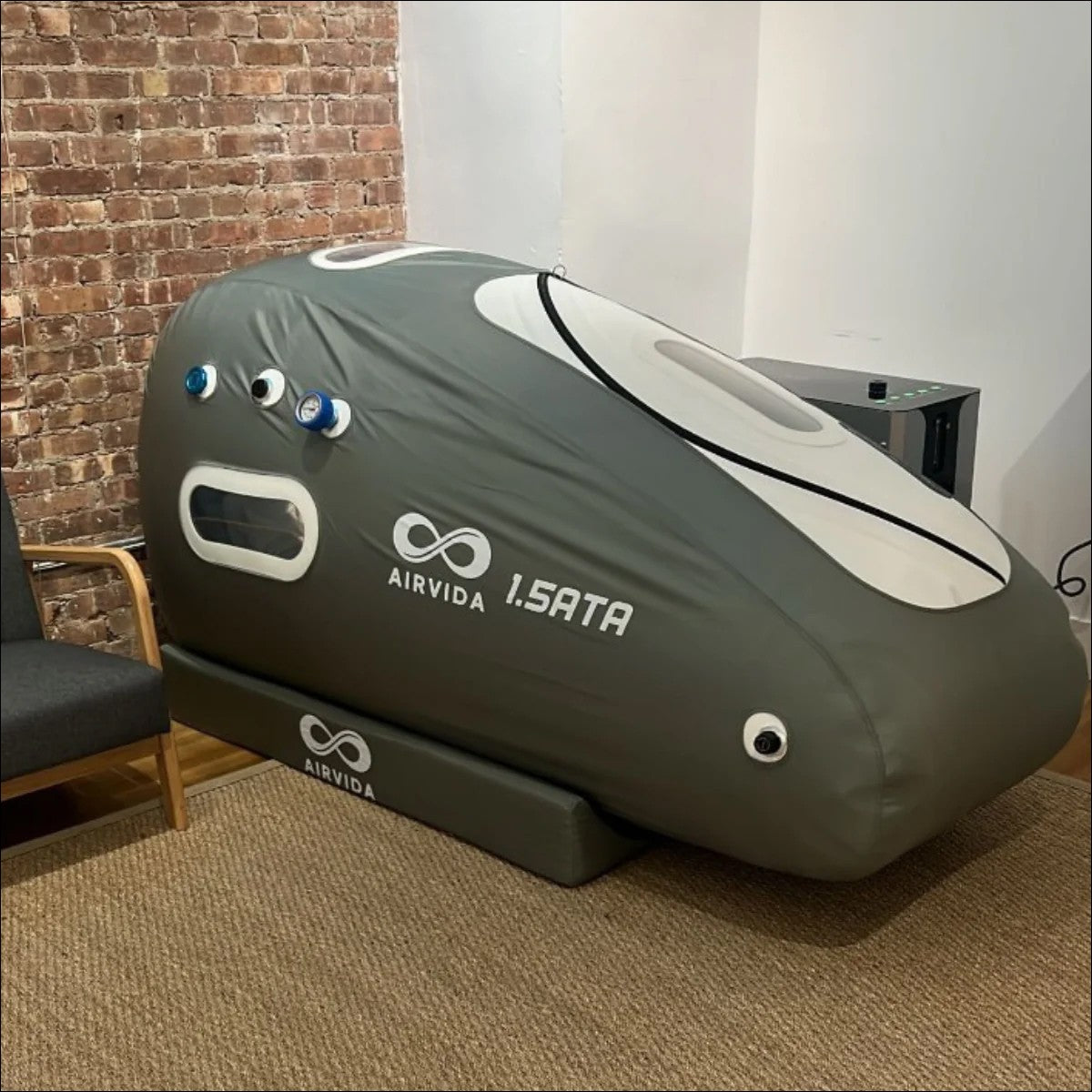
Parents considering HBOT for their child should begin with a consultation with a pediatric specialist who has experience with hyperbaric medicine, not a general practitioner or a wellness provider without clinical HBOT training. The distinction between medically supervised HBOT in accredited facilities and commercial "mild hyperbaric" chambers sold for home use is clinically significant. Pressure levels, oxygen concentrations, and monitoring protocols differ substantially between the two.
Key questions to ask before starting HBOT for a child include:
-
Is your child's specific condition supported by peer-reviewed clinical evidence for HBOT?
-
Is the facility accredited by the Undersea and Hyperbaric Medical Society (UHMS)?
-
What is the proposed pressure level, session length, and total number of sessions?
-
How will your child's ear pressure tolerance be assessed before and during treatment?
-
What is the monitoring protocol if your child becomes distressed during a session?
-
Are there any contraindications specific to your child's medical history?
Contraindications to HBOT in children include untreated pneumothorax, certain medications that may interact with high-pressure oxygen, and some cardiac conditions. Respiratory infections at the time of treatment can also increase the risk of barotrauma. The key point is that informed, specialist-guided decision-making is the foundation of safe HBOT use in pediatric patients.
What Is the Bottom Line on Hyperbaric Chambers for Children?

Hyperbaric oxygen therapy for children is a clinically established treatment for a defined set of acute medical conditions and an investigational therapy for several neurological and developmental conditions where evidence remains mixed or preliminary. For conditions like carbon monoxide poisoning and certain serious infections, the clinical justification is clear. For conditions like autism, cerebral palsy, and acquired brain injury, the research landscape is more complex, and families deserve accurate, condition-specific information before making decisions.
The scientific community continues to investigate HBOT's role in pediatric medicine, with active clinical trials underway as of 2026. The evidence base is growing, but several key areas still lack the large, well-controlled trials needed for definitive recommendations. Families should work directly with pediatric specialists and seek care in accredited, medically supervised settings.
The bottom line: Hyperbaric oxygen therapy for children has a well-established safety profile in supervised clinical settings and demonstrated effectiveness for specific acute conditions, but its role in treating developmental and neurological conditions remains an area of active, unresolved research.
Frequently Asked Questions
Is a hyperbaric chamber safe for children?
Hyperbaric oxygen therapy is generally safe for children when administered in accredited medical facilities under qualified supervision. A 2024 review of 329 pediatric HBOT patients confirmed low complication rates when appropriate precautions are followed. The most common adverse event is mild middle ear barotrauma, occurring in up to 50% of children, though serious adverse events are rare.
Who cannot use a hyperbaric chamber?
Children with untreated pneumothorax should not use a hyperbaric chamber, as pressurization can worsen the condition. Additional contraindications may include certain cardiac conditions, active respiratory infections at the time of treatment, and specific medications that interact negatively with high-pressure oxygen environments. A physician evaluation is required before initiating therapy.
Is HBOT effective for treating eczema?
There is currently no established clinical evidence supporting HBOT as an effective treatment for eczema in children or adults. Eczema is primarily managed through topical therapies, moisturization protocols, and, in some cases, systemic medications. Alternative non-invasive approaches, such as red light therapy for acne and related skin conditions, are being explored separately.
Is hyperbaric oxygen therapy effective for treating autism?
The evidence for HBOT as a treatment for autism in children is mixed and not conclusive. A 2025 meta-analysis found moderately significant symptom reductions, while a 2024 review found no meaningful benefit. A systematic review in PubMed Central concluded that positive findings have not been consistently replicated and that more rigorous, sham-controlled trials are needed before any recommendation can be made.
What are the risks of hyperbaric therapy?
The primary risks of hyperbaric therapy in children include middle ear barotrauma (the most common, affecting up to 50% of pediatric patients), sinus squeeze, oxygen toxicity seizures (rare), temporary vision changes, anxiety or claustrophobia during sessions, and fire hazard in oxygen-enriched environments. Most adverse events reported in pediatric studies are mild in severity and resolve without lasting harm when proper protocols are followed.