


A hyperbaric chamber for burns delivers 100% oxygen at increased atmospheric pressure to help repair damaged tissue by flooding oxygen-starved wound areas with oxygen at concentrations far exceeding normal air. Research published in the Journal of Burn Care & Research in 2026 found that several studies associated hyperbaric oxygen therapy (HBOT) with reduced hospital length of stay, decreased need for surgical intervention, and improved wound healing rates, though findings across studies remain inconsistent and no universal clinical consensus yet exists.
Key Takeaways
-
HBOT increases tissue oxygen delivery by raising plasma oxygen levels to approximately 20 times that of normal room air, supporting angiogenesis, collagen synthesis, and epithelial regeneration in burn wounds.
-
A 2026 systematic review of 13 studies involving 566 burn patients found trends toward improved healing and lower surgery rates, but inconsistent results across studies prevent definitive conclusions.
-
A separate 2026 meta-analysis of 12 studies involving 13,900 patients found that HBOT did not significantly affect burn mortality outcomes.
-
Pressure dosing appears to matter: a 2024 review found that treatment at pressures below 3 atmospheres absolute (ATA) was independently associated with better outcomes than higher pressure protocols.
-
The most common side effect is middle ear barotrauma, occurring in approximately 2% of sessions, and is largely preventable with proper patient instruction.
-
Certain patient groups should not use HBOT, including those with untreated pneumothorax, and caution is required for patients on specific medications or with certain cardiac and pulmonary conditions.
What Is a Hyperbaric Chamber for Burns, and How Does It Work?
A hyperbaric oxygen therapy (HBOT) chamber is a pressurized enclosure in which you breathe 100% pure oxygen at atmospheric pressures greater than 1 ATA (the pressure of normal air at sea level). In burn care, the goal is to overcome the severe oxygen deficit that occurs in damaged tissue. Burn injuries disrupt the local blood supply, creating zones of hypoxic tissue that cannot heal efficiently without adequate oxygen delivery.
When you enter a hyperbaric chamber, the increased pressure forces dissolved oxygen directly into your blood plasma rather than relying solely on hemoglobin. This raises plasma oxygen levels to roughly 20 times normal, according to PMC research from NIH. That oxygen surplus reaches tissue that compromised blood vessels cannot adequately supply.
The process activates several biological pathways critical to healing. Angiogenesis (new blood vessel formation), collagen synthesis, and epithelial regeneration all accelerate under high-oxygen conditions. HBOT also modulates the immune response, reduces inflammatory edema, and exhibits direct antimicrobial effects that help control infection risk at the wound site.
The bottom line is: HBOT works by physically dissolving extra oxygen into your plasma, pushing oxygen into hypoxic tissue that standard blood flow cannot reach after a burn injury.
What Does the 2026 Research Say About HBOT and Burns?

The current body of evidence on hyperbaric chambers for burns is growing but still mixed, with two major 2026 analyses reaching somewhat different conclusions depending on their methodology and patient populations.
A systematic review published in the Journal of Burn Care & Research in May 2026 evaluated 13 studies comprising 566 burn patients across 5 randomized controlled trials, 7 cohort studies, and 1 case-control study. Several of those studies reported that HBOT was associated with a reduced need for surgery and grafting, faster wound epithelialization, shorter hospital stays, and lower infection risk. However, researchers could not pool the data statistically because protocols and outcome measures varied too widely between studies, limiting definitive conclusions.
A separate 2026 meta-analysis published via Zenodo evaluated 12 studies involving 13,900 patients, of whom 445 received HBOT. That analysis found HBOT did not significantly affect mortality (OR 1.54, 95% CI 0.59 to 4.07), and did not produce statistically significant effects on length of stay or infection risk in its pooled analysis. The two reviews together illustrate that while individual studies often show promising trends, the overall picture remains uncertain at the population level.
The key point is: the most current research shows HBOT produces encouraging results in individual studies, particularly for reduced surgery and faster wound closure, but inconsistency across trial designs prevents a firm clinical consensus.
How Does Pressure Dosing Affect HBOT Outcomes for Burns?
Pressure dosing refers to the specific atmospheric pressure level at which HBOT is delivered, and a 2024 review published in Undersea & Hyperbaric Medicine identified it as the single variable that independently predicted outcomes across burn studies. That review analyzed 94 experiments from 47 publications, including 32 animal trials, 4 human volunteer trials, and 11 clinical studies. Of those experiments, 64 (67.4%) showed a positive outcome, 16 (17.9%) an ambiguous outcome, and 14 (14.7%) a negative outcome.
Critically, the pressure dosage study found that treatments delivered at pressures below 3 ATA were independently associated with significantly better outcomes than those at 3 ATA or higher. This suggests that the decision to simply use HBOT is less important than the specific protocol used. Many negative outcomes in earlier research may relate to sub-optimal pressure selection rather than a true lack of efficacy.
The bottom line is: pressure level, not just the presence or absence of HBOT, appears to independently predict treatment success in burn patients, with lower pressures showing better results in current analyses.
Hyperbaric Collections You May Want to Shop

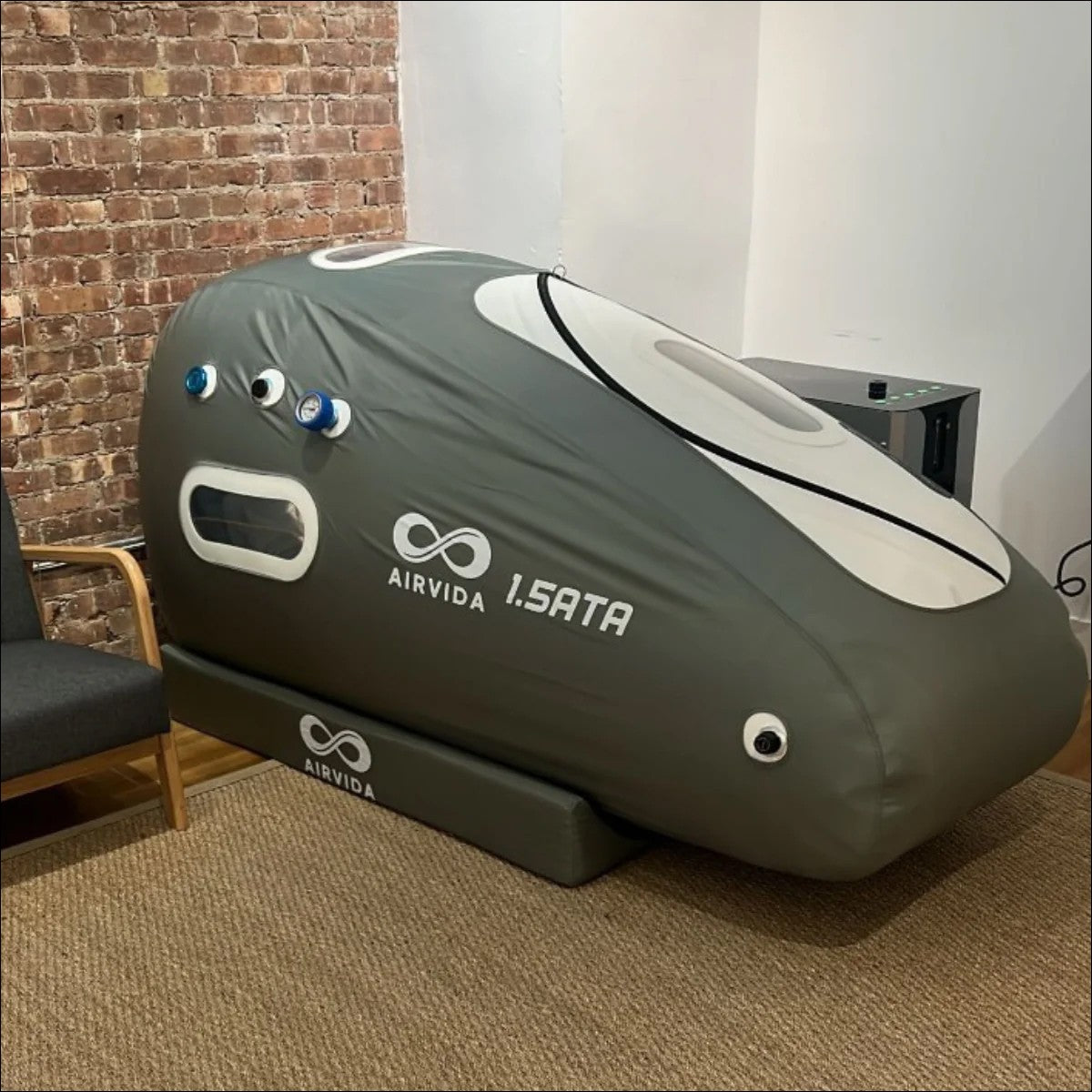
What Are the Specific Mechanisms by Which HBOT Helps Burn Wounds?
HBOT addresses burn injuries through several distinct, well-documented biological mechanisms that go beyond simple oxygen supplementation. Each mechanism targets a different phase of wound pathophysiology.
Key mechanisms of action include:
-
Angiogenesis stimulation: HBOT triggers the formation of new capillaries in hypoxic wound margins, restoring blood supply to borderline tissue.
-
Collagen synthesis: Elevated oxygen levels activate fibroblasts, the cells responsible for producing collagen, which is essential for structural wound repair.
-
Edema reduction: Increased oxygen tension causes vasoconstriction in uninjured surrounding tissue, reducing fluid accumulation without compromising oxygen delivery.
-
Antimicrobial effects: High oxygen environments are directly toxic to many anaerobic bacteria and enhance the killing capacity of neutrophils (immune cells).
-
Reduced burn progression: HBOT may help prevent partial-thickness burns from progressing to full-thickness injuries by preserving the oxygen supply in the "zone of stasis," the intermediate ring of tissue around the central burn.
-
Fluid resuscitation reduction: Some studies note decreased fluid requirements in HBOT-treated burn patients, which may reduce complications from massive fluid loading.
-
Immune modulation: HBOT adjusts the inflammatory response, preventing excessive inflammation that worsens tissue damage in the acute phase.
The key point is: HBOT targets burn pathophysiology at multiple simultaneous levels, which helps explain why clinical results vary depending on which specific outcome is measured.
What Types of Burns Are Most Likely to Benefit From HBOT?
StatPearls via NIH notes that HBOT in thermal burn care has been studied since 1965, when it was first observed to heal second-degree burns faster in a group of coal miners being treated for carbon monoxide poisoning. That historical connection to carbon monoxide poisoning remains relevant today, as HBOT is often administered to burn patients who also have smoke inhalation injuries.
Based on current evidence and clinical protocol literature, the burn presentations where HBOT is most frequently applied include:
-
Partial-thickness (second-degree) thermal burns, where preserving the zone of stasis is a key goal
-
Burns complicated by carbon monoxide or cyanide inhalation, where HBOT is a recognized supportive intervention
-
Burns covering significant total body surface area (TBSA), where surgical interventions like grafting carry high risk
-
Infected burn wounds where antimicrobial properties of HBOT provide additional benefit
-
Burns in patients where minimizing surgery is a priority due to medical comorbidities
One clinical data point from reviewed literature notes that patients with a mean burned TBSA of approximately 9% (range 5% to 20%) who received HBOT showed lower need for surgery and grafting, and their wounds epithelialized in shorter time. The key point is: HBOT appears most clinically useful for partial-thickness burns and those complicated by inhalation injury, rather than as a universal treatment for all burn severity levels.
Hyperbaric Chambers You May Want to Shop
Explore More


What Is the Standard HBOT Protocol for Burn Injuries?
A standard HBOT protocol for burns involves specific pressure settings, session duration, and frequency that differ from protocols used for other conditions. The following table summarizes the key parameters cited in clinical literature.
|
Parameter |
Recommended Value |
Source |
|
Pressure level |
2.0 to 2.4 ATA |
Undersea and Hyperbaric Medical Society, 15th ed. 2023 |
|
Session frequency |
Twice daily (acute phase) |
UHMS guidelines |
|
Maximum sessions |
Up to 30 sessions |
UHMS guidelines |
|
Optimal pressure range |
Below 3.0 ATA |
2024 Undersea & Hyperbaric Medicine review |
|
Session duration |
Typically 90 minutes |
Standard clinical practice |
It is worth noting that the 2024 pressure dosage review specifically found that pressures below 3 ATA were independently associated with better outcomes. The UHMS recommendation of 2.0 to 2.4 ATA falls within this favorable range. Session timing is also important: HBOT initiated early in the acute phase, ideally within the first 24 hours of injury, is generally considered more beneficial than delayed application.
The bottom line is: the current recommended protocol of 2.0 to 2.4 ATA twice daily for up to 30 sessions reflects both clinical guidelines and the emerging evidence that moderate pressure outperforms higher-pressure protocols.
Who Shouldn't Use a Hyperbaric Chamber?
Certain medical conditions make HBOT unsafe or inadvisable, and you should always complete a thorough clinical screening before entering a pressurized chamber for any indication, including burns. Some contraindications are absolute, meaning HBOT must not proceed, while others are relative and require careful case-by-case evaluation.
Absolute contraindication:
-
Untreated pneumothorax (collapsed lung): pressure changes can cause a life-threatening tension pneumothorax
Relative contraindications requiring clinical evaluation:
-
Active or recent ear or sinus surgery or trauma
-
Certain cardiac conditions, including uncontrolled heart failure or a history of spontaneous pneumothorax
-
Claustrophobia (may require sedation or prevent treatment completion)
-
Seizure disorders (high oxygen environments lower seizure threshold)
-
Concurrent use of certain medications, including bleomycin, doxorubicin, cisplatin, disulfiram, and sulfamylon
-
Active upper respiratory infections that impair pressure equalization
-
Pregnancy (data remains limited; use only when clearly necessary)
-
Uncontrolled hypoglycemia (HBOT can cause transient blood glucose drops)
The key point is: HBOT is not appropriate for all burn patients, and a complete medical history and physical examination must precede any treatment course.
What Are the Risks and Side Effects of Hyperbaric Oxygen Therapy?
Hyperbaric oxygen therapy side effects range from minor and manageable to potentially serious, and you should understand them before starting any treatment course. The risk profile is generally considered low when protocols are followed correctly and contraindications are screened properly.
The most common side effect is middle ear barotrauma, which occurs in approximately 2% of treatment sessions and includes middle ear effusions and, in more severe cases, tympanic membrane rupture. Most cases are preventable by teaching you autoinflation techniques (such as the Valsalva maneuver) before and during chamber pressurization. Sinus barotrauma is a related but less common complication.
With prolonged therapy, ocular effects can develop, including transient myopia (nearsightedness), cataracts, and scotomas (blind spots in vision). These effects often resolve after treatment is discontinued. Oxygen toxicity is a more serious concern and can affect the pulmonary, cardiovascular, and neurological systems, particularly at higher pressures or session frequencies. In the neurological form, oxygen toxicity can cause seizures, though this is rare at pressures below 3 ATA.
Complete list of documented side effects:
-
Middle ear barotrauma (most common, approximately 2% incidence)
-
Sinus barotrauma
-
Transient myopia
-
Cataracts (with prolonged use)
-
Scotomas (typically reversible)
-
Transient hypoglycemia
-
Pulmonary oxygen toxicity (rare)
-
Neurological oxygen toxicity and seizures (rare, higher at greater pressures)
-
Claustrophobia-related distress
The bottom line is: the side effect profile of HBOT is manageable in properly screened patients, but awareness and monitoring are necessary throughout the treatment course.
How Does HBOT Compare to Other Adjunct Therapies for Burn Wound Healing?

Burn wound care increasingly uses multiple adjunct therapies alongside standard debridement, dressing, and grafting protocols. HBOT is one of several options, and understanding where it fits relative to others helps you and your care team make informed decisions.
Complementary therapies like red light therapy for wellness centers use photobiomodulation to stimulate cellular energy production and tissue repair through different biological pathways than HBOT, making them potentially complementary rather than competing approaches. Similarly, red light therapy for spas and red light therapy for salons are increasingly used as supportive recovery tools in non-clinical settings for surface-level tissue support. For athletic or performance recovery contexts, red light therapy for gyms serves a different population with different goals.
HBOT's specific advantage in burn care lies in its systemic oxygen delivery capability, reaching deep hypoxic tissue that topical therapies cannot access. The two modality types address different wound layers and physiological targets. The key point is: HBOT and photobiomodulation therapies are mechanistically distinct and may serve complementary roles rather than requiring an either/or choice.
Is Hyperbaric Oxygen Therapy Useful Beyond Burn Care?
HBOT's wound-healing mechanisms extend to other clinical and performance contexts beyond acute burn injury. The same angiogenesis, collagen synthesis, and anti-inflammatory effects that benefit burn wounds also support healing in diabetic foot ulcers, surgical wounds, and tissue recovery after intense physical exertion.
Research on hyperbaric chamber for athletic performance explores how accelerated tissue oxygenation may reduce recovery time between high-intensity training sessions or after musculoskeletal injury. The underlying oxygen-delivery mechanism is the same regardless of the indication. Whether the context is thermal burn recovery or post-exercise muscle repair, the core principle of delivering supraphysiologic oxygen to stressed tissue applies.
The bottom line is: while burn care represents one of the most clinically documented applications of HBOT, the same physiological mechanisms that help burn wounds also support a range of other healing and recovery scenarios.
What Is the Bottom Line on Hyperbaric Chambers for Burns?

HBOT represents a scientifically grounded adjunct therapy for burn injuries that works by delivering supraphysiologic oxygen concentrations to hypoxic wound tissue, activating angiogenesis, collagen synthesis, epithelial regeneration, and antimicrobial defenses simultaneously. The 2026 research landscape shows promising trends for reduced surgical needs and faster wound healing in individual studies, while larger meta-analyses show mixed results on mortality and hospital stay at the population level. Pressure selection at below 3 ATA, early initiation, and careful patient screening appear to be the most critical factors in determining outcomes.
If you are considering HBOT as part of burn recovery, working with a qualified hyperbaric medicine specialist to evaluate contraindications, determine appropriate protocol parameters, and set realistic expectations based on your specific injury profile is essential.
The bottom line: a hyperbaric chamber for burns increases oxygen delivery to damaged tissue through elevated atmospheric pressure, and current 2026 evidence supports its role as a promising adjunct therapy for partial-thickness and complex burn injuries, though individualized clinical assessment remains necessary before starting treatment.
Frequently Asked Questions
Can hyperbaric oxygen therapy help with burns?
Yes, hyperbaric oxygen therapy can help with burns by delivering high-concentration oxygen to hypoxic wound tissue, supporting angiogenesis, collagen synthesis, and epithelial regeneration. A 2026 systematic review of 13 studies found trends toward reduced need for surgery, faster wound closure, and lower infection risk, though results across studies remain inconsistent and individualized clinical evaluation is required.
Does hyperbaric help wound healing?
Hyperbaric oxygen therapy supports wound healing by increasing plasma oxygen levels to approximately 20 times normal, stimulating new blood vessel formation, collagen production, and tissue regeneration. Evidence from both burn-specific and general wound healing research confirms these biological mechanisms are active during HBOT, though the clinical magnitude of benefit varies by wound type and protocol.
Who shouldn't use a hyperbaric chamber?
People with untreated pneumothorax should not use a hyperbaric chamber, as pressure changes can cause a life-threatening tension pneumothorax. Relative contraindications include uncontrolled seizure disorders, certain cardiac conditions, concurrent use of specific medications including bleomycin and disulfiram, active ear or sinus conditions, and claustrophobia, all of which require clinical evaluation before proceeding.
How many HBOT sessions for wound healing?
The Undersea and Hyperbaric Medical Society recommends up to 30 sessions for acute thermal burns, delivered twice daily at 2.0 to 2.4 ATA. The actual number of sessions appropriate for your situation depends on burn severity, wound response to treatment, and the clinical judgment of your treating hyperbaric physician.
What is the downside of hyperbaric oxygen therapy?
The most common downside of hyperbaric oxygen therapy is middle ear barotrauma, occurring in approximately 2% of sessions, which can include ear pain, fluid accumulation, or in severe cases tympanic membrane rupture. Additional risks include transient myopia, sinus barotrauma, oxygen toxicity at higher pressures, transient hypoglycemia, and rare neurological effects including seizures, though most risks are manageable with proper screening and protocol adherence.