


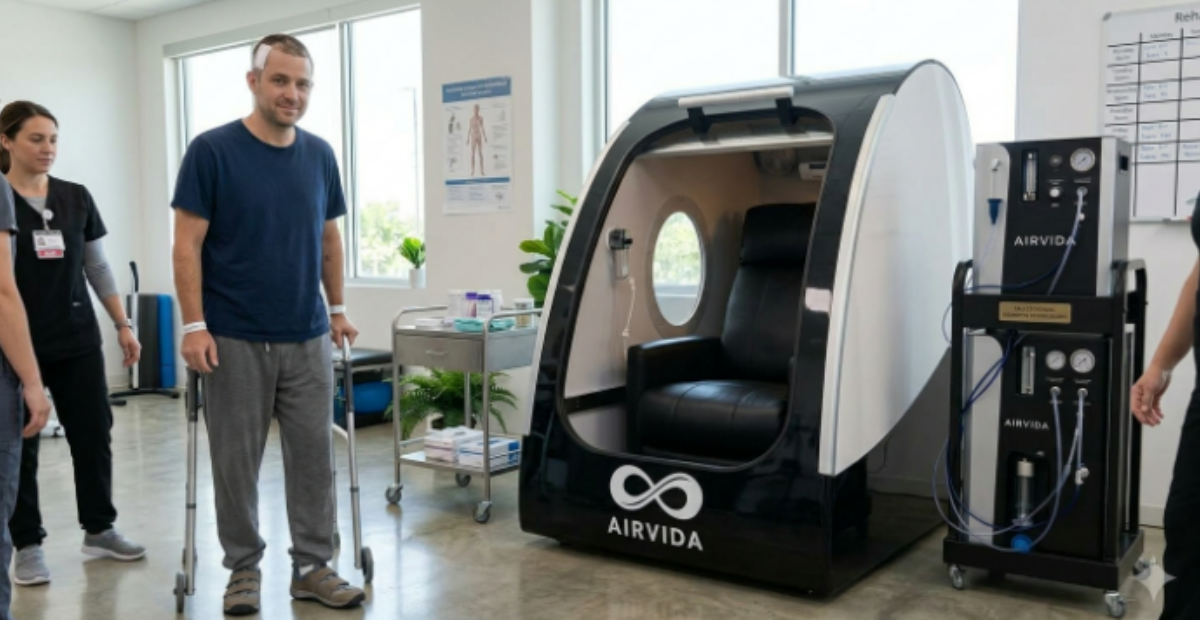
A hyperbaric chamber for brain trauma delivers 100% oxygen at pressures above normal atmospheric levels, creating conditions that may reduce neuroinflammation, support neurogenesis, and improve blood flow to injured brain tissue. Research through 2026 shows domain-specific benefits for cognitive function and sleep quality, particularly in mild-to-moderate traumatic brain injury (TBI), though results vary by injury severity, timing of treatment, and protocol used. Larger, standardized trials are still needed to confirm optimal therapeutic roles.
Key Takeaways
-
Hyperbaric oxygen therapy (HBOT) works by delivering near-100% oxygen at pressures of at least 1.4 ATA, a requirement set by the Undersea and Hyperbaric Medical Society.
-
A 2025 meta-analysis published in Neurology found that HBOT significantly improves neurocognitive deficits in TBI patients compared to baseline, though larger standardized trials are still needed.
-
A 2026 systematic review and meta-analysis including 570 participants found HBOT demonstrates domain-specific benefits for cognitive function and sleep quality, primarily in mild TBI.
-
Mechanistic research confirms HBOT reduces neuroinflammation and oxidative stress while promoting neurogenesis and angiogenesis in injured brain tissue.
-
A 2023 clinical guideline recommends HBOT in acute moderate-to-severe TBI patients as a Type 2a recommendation with Level A evidence.
-
Evidence for HBOT's effect on PTSD, neurobehavioral symptoms, and emotional distress in TBI patients remains uncertain, according to current systematic reviews.
What Is a Hyperbaric Chamber for Brain Trauma?
Hyperbaric oxygen therapy (HBOT) is a medical treatment in which a person breathes near-100% oxygen inside a pressurized chamber at levels exceeding normal atmospheric pressure. In the context of brain trauma, it is used to increase the amount of dissolved oxygen in blood plasma, allowing oxygen to reach damaged or swollen brain tissue that normal circulation may not adequately supply. The core premise is that injured neurons sitting in a state of metabolic dormancy, sometimes called the ischemic penumbra, may be reactivated when adequate oxygen becomes available.
The Undersea and Hyperbaric Medical Society specifies that a qualifying HBOT session must involve near-100% oxygen and a pressure of at least 1.4 ATA (atmospheres absolute). Sessions typically last 60 to 90 minutes, and clinical protocols often involve 40 to 60 sessions over several weeks. Protocols vary between institutions, which is one reason research findings across studies are sometimes difficult to compare directly.
The key point is that HBOT is defined by both oxygen concentration and pressure, not by pressure alone.
How Does HBOT Affect the Injured Brain at a Cellular Level?

HBOT influences the injured brain through several distinct biological mechanisms that target the underlying pathology of traumatic brain injury. A 2025 comprehensive review published on PubMed identified the following primary mechanisms:
-
Reducing neuroinflammation: HBOT suppresses inflammatory cytokine activity in damaged brain regions.
-
Decreasing oxidative stress: Elevated oxygen delivery helps neutralize reactive oxygen species that accumulate after injury.
-
Promoting neurogenesis: Increased oxygen tension stimulates the growth of new neurons.
-
Supporting angiogenesis: New blood vessel formation improves perfusion to previously under-oxygenated tissue.
-
Protecting mitochondrial function: A 2024 rat model study from NCBI/PMC found that HBOT during the critical post-injury period improves cognitive and motor outcomes by regulating glial proliferation, reducing apoptosis, and preserving mitochondrial integrity, thereby preventing cortical neuron loss.
Diffusion tensor imaging (DTI) studies provide structural evidence of these changes. A peer-reviewed study at NCBI/PMC showed significantly increased fractional anisotropy values and decreased mean diffusivity in both white and gray matter structures after HBOT in patients with persistent post-concussion syndrome (PPCS). These imaging changes suggest genuine structural remodeling of neural pathways.
The bottom line is that HBOT acts on multiple biological targets simultaneously, which may explain both its promise and the complexity of measuring its effects in clinical trials.
Hyperbaric Collections You May Want to Shop

What Does Clinical Research Show About HBOT Effectiveness for TBI?
Clinical evidence for HBOT in brain trauma ranges from moderately supportive to inconclusive, depending on injury type and the outcome measured. Here is a structured summary of major findings through 2026:
|
Study Type |
Population |
Key Finding |
Source |
|
Double-blind RCT (2025) |
Adults with persistent post-brain injury symptoms (n=47) |
40 HBOT sessions vs. sham over 12 weeks; outcomes analyzed |
|
|
Meta-analysis (2025, Neurology) |
TBI patients with neurocognitive deficits |
HBOT significantly improves neurocognitive deficits vs. baseline |
|
|
Systematic review + meta-analysis (2026) |
570 participants, 8 studies |
Domain-specific benefits: cognitive function and sleep quality |
|
|
Comprehensive structure review (2025) |
Multiple populations, 2015-2024 studies |
Improved memory, executive function, and neuroprotection in post-concussive symptoms |
|
|
DoD TBI Center of Excellence (March 2025) |
Military personnel |
Some studies found no significant difference between HBOT, sham, and no-chamber groups |
|
|
Long-term follow-up (2025) |
Moderate-to-severe TBI, 5-8 years post-treatment |
Long-term functional prognosis assessed; HBO2 use increasing yearly |
The DoD's Traumatic Brain Injury Center of Excellence noted in March 2025 that certain well-designed studies comparing HBOT to both sham and no-treatment controls found no significant differences in TBI outcomes among the three groups. This finding underscores why sham control design matters, since breathing pressurized air (the typical sham) may itself have some biological effect.
The key point is that evidence is strongest for neurocognitive and sleep outcomes in mild-to-moderate TBI, and weakest for PTSD, emotional distress, and neurobehavioral symptoms.
Who Are the Best Candidates for HBOT After Brain Trauma?
Not all TBI patients respond equally to HBOT, and patient selection appears to significantly influence outcomes. A 2023 literature review and clinical guideline published by the Medical Research Archives identified the following candidate profiles:
Patients most likely to benefit:
-
Adults with acute moderate-to-severe TBI who receive treatment in the early post-injury window.
-
Patients with chronic TBI suffering from prolonged post-concussion syndrome (PPCS) who show clear evidence of metabolically dysfunctional brain regions on neuroimaging.
-
Adults who sustained TBI in childhood and experience persistent neurocognitive symptoms decades later.
-
Children with post-concussion syndrome: a randomized controlled trial published in Scientific Reports found cognitive and behavioral improvements following HBOT.
Considerations that affect candidacy:
-
Severity of injury at the time of insult (mild, moderate, or severe)
-
Time elapsed between injury and initiation of HBOT
-
Presence of identifiable metabolic dysfunction confirmed by neuroimaging
-
Overall medical history and contraindications to pressurized oxygen environments
A September 2025 retrospective cohort study at PMC specifically examined adults who had sustained TBI as children (mean injury age: 7.7 years) and received HBOT as adults (mean age: 31.7 years). Participants completed at least 40 sessions of 90-minute HBOT at 2 ATA with air breaks and showed improvements in chronic post-concussive symptoms.
The bottom line is that neuroimaging evidence of metabolic dysfunction, rather than symptom severity alone, may be the strongest predictor of HBOT response in chronic TBI.
What Does HBOT Research Show for Post-Concussion Syndrome?
Post-concussion syndrome (PCS) is a condition in which symptoms such as headache, cognitive difficulty, fatigue, and mood changes persist for weeks, months, or years after a concussion. HBOT research in PCS populations is among the most studied subgroups within the brain trauma literature.
A randomized prospective trial published in PLOS One examined patients with persistent post-concussion syndrome and found improvements following HBOT. A separate randomized controlled trial found that children with post-concussion syndrome who underwent HBOT showed significant improvements in both cognitive and behavioral function compared to controls. Researchers note that identifying which PCS patients show metabolic dysfunction on imaging before treatment may be a critical step in predicting who will respond.
The 2026 meta-analysis including 570 participants confirmed cognitive function and sleep quality as the domains most consistently improved by HBOT in TBI patients, with the evidence base being strongest in mild TBI and PCS populations. Evidence for emotional distress and neurobehavioral outcomes remains an area of ongoing investigation.
The key point is that PCS represents the TBI subgroup with the most accumulated clinical trial data on HBOT, and cognitive and sleep improvements are the most replicable findings.
Hyperbaric Chambers You May Want to Shop
Explore More


How Does HBOT Compare to or Complement Other TBI Therapies?
HBOT is not a standalone replacement for standard TBI care but may serve as an adjunctive treatment alongside established rehabilitation approaches. Standard TBI management includes physical therapy, cognitive rehabilitation, occupational therapy, pharmacological management of symptoms, and psychological support. HBOT introduces a physiological mechanism that these therapies do not address directly, specifically the restoration of oxygen delivery to metabolically suppressed tissue.
A published case report at NCBI/PMC examined the longitudinal outcomes of combining neurofeedback with HBOT in a single TBI patient, and a 2025 follow-up case report similarly assessed the combination's effects on mild TBI. These case reports suggest potential synergistic effects, though case-level evidence cannot support broad clinical conclusions.
Some facilities combine HBOT with commercial red light therapy as part of multi-modal recovery protocols. Professional red light therapy devices and clinical-grade red light therapy equipment are increasingly used alongside HBOT to address inflammation and cellular energy production through photobiomodulation, a complementary but distinct mechanism. Full body red light therapy platforms are also used in some recovery settings for systemic support.
The bottom line is that HBOT is best viewed as one component of a comprehensive brain trauma recovery plan, not as a substitute for established rehabilitation care.
What Are the Limitations and Ongoing Debates in HBOT Research for Brain Trauma?
HBOT research for TBI has meaningful limitations that affect how confidently clinicians can recommend the treatment. The most important methodological issue is sham control design. Because the sham condition (pressurized air breathing) may itself produce some biological effects, it is difficult to isolate the specific contribution of 100% oxygen at elevated pressure.
The DoD Traumatic Brain Injury Center of Excellence's March 2025 guidance document noted that some studies comparing HBOT, sham, and no-treatment groups found no significant differences in outcomes between groups. A 2024 PMC review specifically addressed "continued confusion" in mild TBI HBOT studies, pointing to inconsistent protocols, heterogeneous patient populations, and outcome measurement variability as key sources of conflicting results.
Additional limitations include:
-
No universally accepted session number, pressure level, or oxygen concentration protocol
-
Variability in outcome measures across studies making cross-study comparison difficult
-
Most high-quality trials focus on mild TBI; moderate and severe TBI evidence is thinner
-
Long-term follow-up data beyond one to two years are limited for most populations
The key point is that while biological plausibility and some clinical data support HBOT use in selected TBI patients, methodological inconsistency across the research base means definitive universal recommendations remain out of reach as of 2026.
What Should You Know Before Pursuing HBOT for Brain Trauma?

Before pursuing hyperbaric oxygen therapy for brain trauma, you should evaluate several practical and clinical factors to make an informed decision. The first step is working with a physician who has experience in both TBI management and hyperbaric medicine to assess whether you are an appropriate candidate.
Key questions to discuss with your provider:
-
Has neuroimaging confirmed metabolic dysfunction in your specific case?
-
How long ago did your injury occur, and are you still in an acute or chronic phase?
-
What are the contraindications in your medical history, including lung conditions or middle ear pathology?
-
What protocol (pressure level, session duration, number of sessions) is proposed, and does it align with published research parameters?
-
What outcomes will be measured to evaluate whether the treatment is working?
You should also be aware that HBOT research for TBI intersects with related conditions. Research on hyperbaric chamber benefits for arthritis reflects similar anti-inflammatory mechanisms, suggesting HBOT has systemic effects beyond neurological injury. Evaluating the full scope of evidence helps you set realistic expectations.
The bottom line is that informed candidate selection, protocol standardization, and clear outcome measurement are the factors most likely to determine whether HBOT provides meaningful benefit in your individual case.
Is Hyperbaric Oxygen Therapy the Right Choice for Brain Trauma Recovery?

Hyperbaric oxygen therapy represents a biologically plausible and increasingly studied intervention for traumatic brain injury, with the strongest evidence supporting cognitive and sleep improvements in mild-to-moderate TBI and post-concussion syndrome. Research through 2026 confirms real mechanistic actions at the cellular level, including reduced neuroinflammation, promoted neurogenesis, and improved white matter integrity. However, the evidence base is not yet uniform enough to support a blanket recommendation for all TBI patients.
Your best path forward is working with a multidisciplinary team that includes a TBI specialist and a hyperbaric medicine physician. They can assess neuroimaging findings, injury history, and overall health status to determine whether HBOT belongs in your recovery plan.
The bottom line: hyperbaric oxygen therapy shows genuine promise for selected brain trauma patients, particularly those with documented metabolic dysfunction and persistent post-concussion symptoms, but it is most effective as part of a comprehensive, individually tailored rehabilitation strategy.
Frequently Asked Questions
How can I recover from brain trauma?
Recovering from brain trauma requires a comprehensive, individualized plan that typically includes medical management, cognitive rehabilitation, physical therapy, occupational therapy, and psychological support. Rest in the acute phase is critical, followed by graded return to activity. Emerging adjunctive options like HBOT may support recovery in selected patients, particularly those with persistent post-concussion symptoms confirmed by neuroimaging.
How to heal a brain injury fast?
There is no clinically validated method to heal a brain injury rapidly, but early and consistent intervention improves outcomes. The most evidence-supported approach combines adequate rest in the acute phase, avoidance of re-injury, structured cognitive and physical rehabilitation, and close medical monitoring. HBOT and other adjunctive therapies may accelerate specific aspects of recovery, such as cognitive function, in appropriate candidates.
How is traumatic brain injury (TBI) managed?
Traumatic brain injury is managed through a staged approach that addresses acute stabilization first, then functional rehabilitation. Acute care focuses on preventing secondary injury through oxygen delivery, blood pressure management, and intracranial pressure control. Rehabilitation phase management includes physical, occupational, speech, and cognitive therapy, with adjunctive options like HBOT considered for patients with persistent or chronic symptoms.
What is the best therapy for traumatic brain injury?
No single therapy is universally best for traumatic brain injury, as treatment effectiveness depends on injury severity, timing, and individual patient factors. A multidisciplinary rehabilitation program combining cognitive, physical, and occupational therapy forms the evidence-based foundation of TBI care. HBOT is a studied adjunctive option showing domain-specific benefits for cognition and sleep, particularly in mild-to-moderate TBI, according to 2025 and 2026 meta-analyses.
Can a traumatized brain heal?
Yes, a traumatized brain can heal through a process called neuroplasticity, in which the brain reorganizes and forms new neural connections to compensate for damaged areas. The extent and speed of healing depend on injury severity, age, overall health, and quality of rehabilitation. Research confirms that even adults who sustained childhood TBI decades earlier can show measurable improvement with targeted interventions including HBOT.