


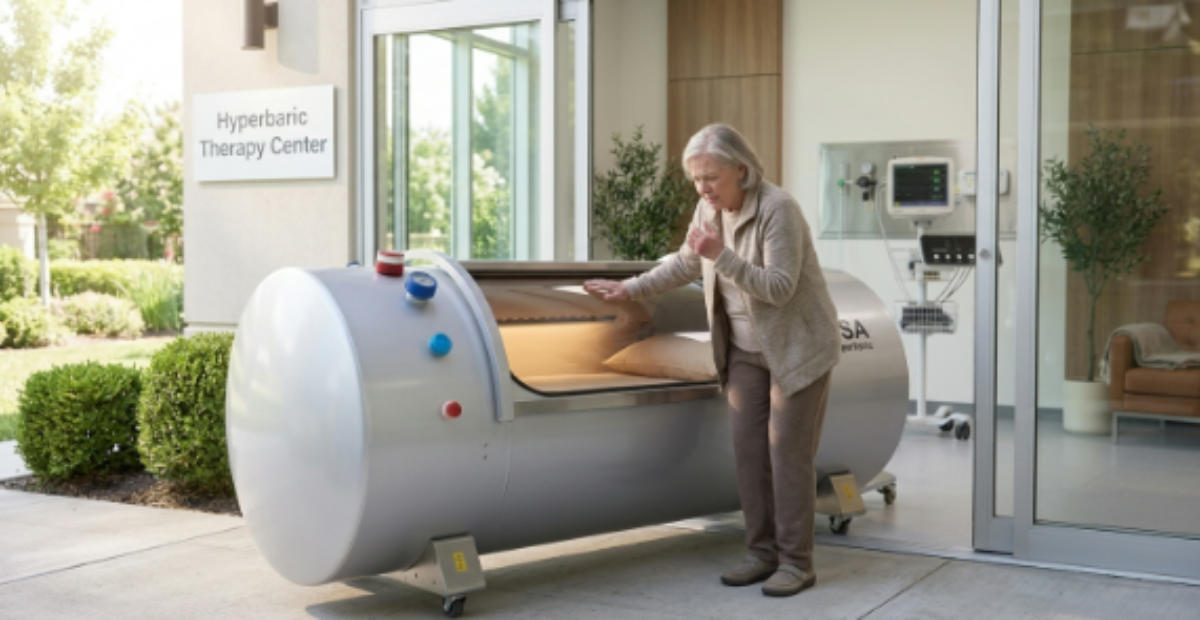
Hyperbaric oxygen therapy (HBOT) may benefit arthritis by delivering concentrated oxygen to inflamed joints, which can support tissue repair, reduce inflammatory markers, and improve mobility. Sessions involve breathing near-pure oxygen inside a pressurized chamber, increasing oxygen availability in blood plasma and joint fluid. Research suggests this mechanism may interrupt inflammation cycles common to both osteoarthritis and rheumatoid arthritis, making HBOT a topic of growing clinical interest for people managing chronic joint conditions.
Key Takeaways
-
Hyperbaric oxygen therapy increases dissolved oxygen in plasma, which may help reduce the inflammatory environment inside arthritic joints.
-
Both osteoarthritis and rheumatoid arthritis involve chronic inflammation, and HBOT targets that shared biological pathway.
-
HBOT is not a standalone cure for arthritis, but evidence suggests it may complement conventional treatments such as physical therapy and medication.
-
Hyperbaric sessions are typically used in a series, with frequency and duration guided by a qualified physician based on your individual condition.
-
Autoimmune-driven arthritis, such as rheumatoid arthritis, remains an area of ongoing investigation for HBOT, with early results suggesting potential immune-modulating effects.
-
Lifestyle factors including diet, exercise, and sleep remain foundational to arthritis management alongside any adjunctive therapy.
What Is Hyperbaric Oxygen Therapy and How Does It Work for Arthritis?
Hyperbaric oxygen therapy (HBOT) is a medical treatment in which a person breathes high-concentration oxygen inside a pressurized chamber, raising oxygen levels in tissues significantly above what normal breathing achieves. Under increased atmospheric pressure, oxygen dissolves directly into blood plasma, synovial fluid, and soft tissue rather than relying solely on hemoglobin transport. This elevated oxygen saturation reaches areas of the body where circulation is restricted, including inflamed or damaged joints.
Arthritis, at its core, is a disease of joint degradation and chronic inflammation. In arthritic joints, reduced blood flow and poor oxygen delivery can perpetuate a cycle of cellular damage and swelling. HBOT interrupts this cycle by flooding joint tissue with oxygen, which supports cellular repair processes, modulates certain inflammatory signaling pathways, and may promote cartilage-supportive cell activity.
The pressurized environment also creates conditions that may reduce edema, or tissue swelling, around joints. This swelling reduction is one of the more immediate effects reported by individuals after HBOT sessions. The key point is that HBOT targets the oxygen-deprivation component of joint inflammation, which is a mechanism distinct from most conventional arthritis medications.
Hyperbaric Collections You May Want to Shop

Can Hyperbaric Oxygen Therapy Reduce Arthritis Inflammation?
Inflammation in arthritis is a chronic immune response that damages cartilage, erodes bone surfaces, and causes persistent pain. HBOT has been studied for its ability to modulate this inflammatory response at the cellular level. Elevated tissue oxygen levels appear to influence the behavior of white blood cells and certain pro-inflammatory cytokines involved in joint destruction.
Specifically, research in oxygen biology suggests that hyperoxic conditions can suppress the activity of certain inflammatory mediators, including those associated with both osteoarthritis progression and rheumatoid flares. This does not eliminate inflammation entirely, but it may reduce the intensity and duration of inflammatory episodes. People with arthritis who undergo regular HBOT sessions often report decreased joint swelling and improved morning stiffness.
Reducing inflammation through HBOT differs from anti-inflammatory drug therapy in a key way: it works through oxygen-mediated cellular signaling rather than chemical suppression of the immune system. This distinction matters for people who experience side effects from long-term medication use. The bottom line is that HBOT's anti-inflammatory potential is biologically plausible and increasingly supported by clinical observation, though large-scale randomized trials specifically for arthritis remain limited.
What Types of Arthritis May Respond to Hyperbaric Treatment?

Arthritis encompasses over 100 distinct joint conditions, with osteoarthritis (OA) and rheumatoid arthritis (RA) being the most prevalent forms in the United States. Each has a different underlying mechanism, and HBOT may interact with each differently.
Osteoarthritis is a degenerative condition driven by mechanical wear and cartilage breakdown. In OA, HBOT may support chondrocyte (cartilage cell) survival and reduce the oxidative stress that accelerates cartilage loss. Improved oxygen delivery to subchondral bone and surrounding connective tissue may slow structural deterioration over time.
Rheumatoid arthritis is an autoimmune condition in which the immune system attacks the synovial lining of joints. HBOT's potential to modulate immune cell activity makes it a candidate adjunct therapy for RA, although this remains an area of ongoing investigation. Other inflammatory arthritis types, including psoriatic arthritis and ankylosing spondylitis, share similar inflammatory mechanisms that HBOT may address. The key point is that HBOT's benefits are not exclusive to one arthritis type, and a physician should evaluate which patients are most likely to benefit.
How Does Hyperbaric Therapy Compare to Other Arthritis Treatments?
The table below compares HBOT with common arthritis treatment approaches across several key dimensions:
|
Treatment |
Primary Mechanism |
Targets Inflammation |
Systemic Side Effects |
Frequency |
|
Hyperbaric Oxygen Therapy |
Elevated tissue oxygenation |
Yes, via oxygen signaling |
Minimal when used correctly |
Series of sessions |
|
NSAIDs (e.g., ibuprofen) |
COX enzyme inhibition |
Yes, chemically |
GI, cardiovascular risk |
Daily or as needed |
|
DMARDs (e.g., methotrexate) |
Immune suppression |
Yes, broadly |
Significant, organ risk |
Weekly or monthly |
|
Physical Therapy |
Mechanical joint support |
Indirect |
None systemic |
Weekly sessions |
|
Corticosteroid Injections |
Local immune suppression |
Yes, locally |
Joint deterioration long-term |
Limited per year |
|
Platelet-Rich Plasma (PRP) |
Growth factor delivery |
Indirect |
Minimal |
Per treatment cycle |
HBOT occupies a unique position in this table because it addresses oxygen-level deficits in joint tissue without introducing synthetic chemicals or suppressing immune function broadly. It is best understood as a complementary modality rather than a replacement for established treatments. The bottom line is that HBOT works through a distinct biological pathway and may offer additive benefit when combined with a physician-supervised arthritis management plan.
Hyperbaric Chambers You May Want to Shop
Explore More


What Are the Practical Benefits Arthritis Patients Report From HBOT?
People with arthritis who undergo hyperbaric therapy frequently report several functional improvements, particularly after completing a structured series of sessions. These reported benefits align with the known physiological effects of increased tissue oxygenation.
Commonly reported practical benefits include:
-
Reduced joint pain intensity during daily activities
-
Decreased morning stiffness and improved range of motion upon waking
-
Lower perceived swelling around affected joints after a session series
-
Improved sleep quality, which is frequently disrupted by chronic pain
-
Greater capacity for physical activity and exercise tolerance
-
Reduced reliance on over-the-counter pain relief during treatment periods
It is important to note that individual responses vary considerably based on arthritis type, severity, overall health status, and the number of sessions completed. Some individuals notice meaningful changes early in a treatment series, while others require a longer course before experiencing benefits. Consulting with a physician before beginning HBOT helps set realistic expectations based on your specific condition.
If you are exploring local access to hyperbaric services, providers like hyperbaric chamber Stamford CT and hyperbaric chamber Sarasota FL offer professionally supervised chamber sessions.
How Often Should You Use a Hyperbaric Chamber for Arthritis?

Session frequency for HBOT depends on your arthritis type, severity, treatment goals, and physician guidance, but most structured protocols involve multiple sessions per week over a defined course. Unlike single-use treatments, HBOT's benefits for chronic inflammatory conditions like arthritis are thought to accumulate with repeated exposure.
A physician-supervised protocol typically considers:
-
Baseline assessment: Evaluating joint inflammation levels, pain scores, and mobility limitations before starting
-
Initial intensive phase: More frequent sessions (often several times per week) during the first weeks of treatment
-
Maintenance phase: Reduced frequency as symptom improvement plateaus or stabilizes
-
Reassessment: Periodic evaluation of progress to adjust session frequency or duration
For a detailed breakdown of optimal usage patterns, the resource on how often to use your hyperbaric chamber provides guidance on structuring your sessions effectively. The key point is that consistency matters more than any single session, and a structured schedule tailored to your condition will produce the most meaningful results.
Is Hyperbaric Oxygen Safe for People With Arthritis?
HBOT has a well-established safety profile when used under qualified supervision, and most people with arthritis tolerate sessions without significant adverse effects. The treatment does not involve surgery, injections, or pharmaceutical agents, which removes several categories of risk common to other arthritis interventions.
Potential side effects are generally mild and may include:
-
Temporary ear or sinus pressure during pressurization (similar to airplane descent)
-
Mild fatigue after sessions, particularly early in treatment
-
Temporary visual changes in rare cases with prolonged high-pressure protocols
-
Claustrophobia in some individuals using monoplace chambers
People with certain conditions, including untreated pneumothorax or specific cardiac issues, may not be appropriate candidates for HBOT. A thorough medical screening before starting any hyperbaric program is essential. The bottom line is that for most arthritis patients in good general health, HBOT presents a low-risk option when supervised by a qualified practitioner.
Those in the West Palm Beach and Round Rock areas can explore physician-supervised access through hyperbaric chamber West Palm Beach FL and hyperbaric chamber Round Rock TX.
What Lifestyle Factors Worsen Arthritis and Should Be Addressed Alongside HBOT?
Chronic inflammation in arthritis is significantly amplified by modifiable lifestyle factors, and addressing these alongside HBOT produces better outcomes than either approach alone. Understanding what aggravates your arthritis helps you protect the gains made during hyperbaric treatment.
Key factors that worsen arthritis inflammation include:
-
Excess body weight: Adds mechanical stress to weight-bearing joints like knees and hips, accelerating cartilage breakdown
-
Sedentary behavior: Reduces joint lubrication and weakens the muscles that support joint stability
-
Pro-inflammatory diet: High intake of processed foods, refined sugars, and trans fats has been associated with increased systemic inflammation
-
Poor sleep quality: Disrupted sleep elevates inflammatory cytokine levels and reduces pain tolerance
-
Chronic psychological stress: Sustained stress activates immune pathways that can trigger or worsen inflammatory arthritis flares
-
Smoking: Strongly associated with rheumatoid arthritis development and severity, and impairs tissue oxygenation
Addressing these factors creates a more favorable biological environment for HBOT to work effectively. Anti-inflammatory dietary patterns, low-impact exercise, and stress reduction strategies are the most impactful lifestyle modifications for long-term arthritis management. The key point is that HBOT is most effective when paired with a lifestyle that does not continually re-ignite the inflammatory processes you are trying to reduce.
Is Hyperbaric Oxygen Therapy Right for Your Arthritis?

Hyperbaric oxygen therapy offers a biologically grounded approach to addressing the oxygen deficits and inflammatory processes at the core of arthritis. Whether you are managing osteoarthritis, rheumatoid arthritis, or another inflammatory joint condition, HBOT's ability to increase tissue oxygen delivery, support cellular repair, and modulate inflammation makes it a meaningful option to discuss with your physician.
The decision to incorporate HBOT into your arthritis management plan should be made with your healthcare provider, accounting for your specific diagnosis, current medications, overall health status, and treatment history. When used as part of a comprehensive plan that also addresses diet, movement, sleep, and stress, hyperbaric therapy gives your body a more complete set of tools for managing chronic joint disease.
The bottom line: hyperbaric oxygen therapy may reduce arthritis inflammation, support joint tissue repair, and improve daily function when used consistently under qualified medical supervision.
Frequently Asked Questions
Which therapy is best for arthritis?
No single therapy is universally best for arthritis, because the optimal treatment depends on your arthritis type, severity, and individual health profile. A combination approach, typically including medication, physical therapy, lifestyle modification, and potentially adjunctive treatments like HBOT, tends to produce the best long-term outcomes under physician supervision.
Do hyperbaric chambers reduce inflammation?
Hyperbaric chambers can reduce inflammation by increasing dissolved oxygen in tissues, which modulates certain inflammatory cell behaviors and signaling pathways. This anti-inflammatory effect is biologically plausible and supported by clinical observations, though evidence specifically in arthritis populations continues to develop.
What conditions can hyperbaric oxygen therapy treat?
Hyperbaric oxygen therapy is used to support treatment for a range of conditions involving tissue oxygen deficits, including non-healing wounds, decompression sickness, carbon monoxide poisoning, radiation tissue injury, and certain infections. It is also explored as a complementary approach for chronic inflammatory conditions, including arthritis, traumatic brain injury recovery, and post-surgical healing.
Is hyperbaric oxygen good for autoimmune?
Hyperbaric oxygen therapy shows early promise for autoimmune conditions, including rheumatoid arthritis, by potentially modulating immune cell activity and reducing inflammatory cytokine levels. This remains an area of ongoing investigation, and individuals with autoimmune arthritis should discuss HBOT with a rheumatologist before beginning treatment.
What's the worst enemy of arthritis?
Chronic, unmanaged inflammation is the single greatest driver of arthritis progression, joint damage, and disability. Factors that sustain or worsen inflammation, including obesity, a pro-inflammatory diet, physical inactivity, poor sleep, chronic stress, and smoking, collectively act as arthritis's primary aggravators and should be prioritized in any management plan.