


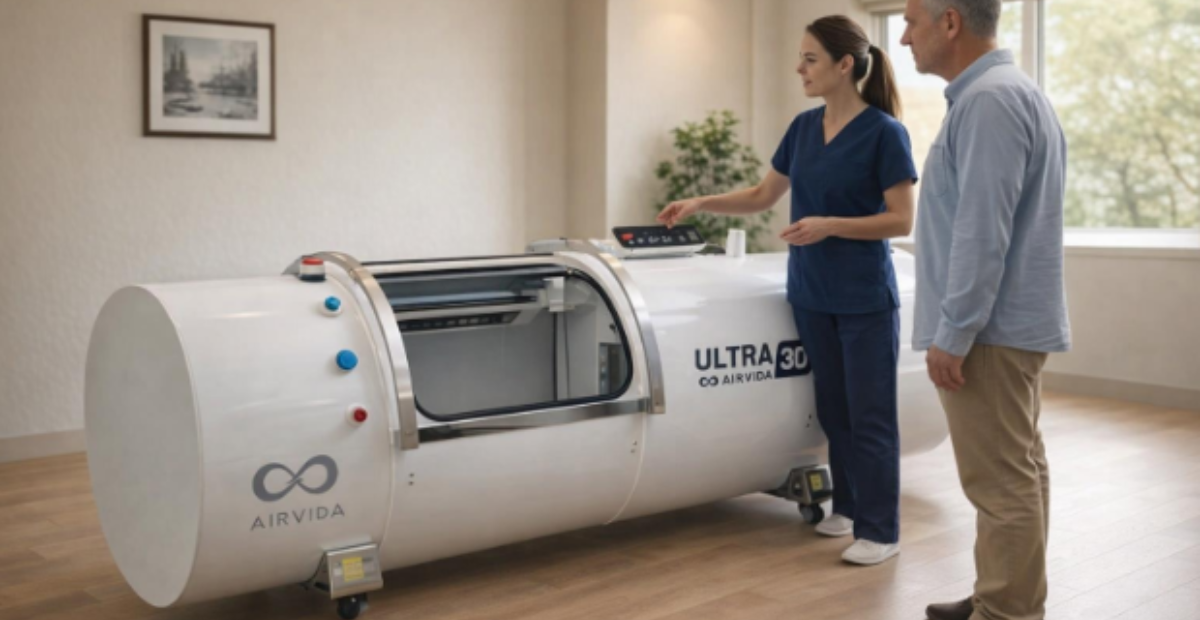
A hyperbaric chamber is the definitive, first-line treatment for air embolism, including both arterial gas embolism (AGE) and venous gas embolism (VGE). The chamber delivers 100% oxygen at pressures above atmospheric, which mechanically compresses trapped gas bubbles, promotes nitrogen resorption, and restores blood flow to obstructed tissues. Current guidelines from the Undersea and Hyperbaric Medical Society (UHMS) recommend initiating treatment as early as possible, ideally within 6 to 8 hours of symptom onset.
Key Takeaways
-
Hyperbaric oxygen therapy (HBOT) is the gold-standard, first-line treatment for arterial gas embolism, rated a Class I recommendation by the American Heart Association.
-
The therapy works by mechanically shrinking gas bubbles and driving nitrogen back into solution through increased ambient pressure and 100% oxygen breathing.
-
Early treatment produces better outcomes: a 2023 systematic review in Critical Care found that initiating HBOT within 6 to 8 hours is associated with a higher probability of favorable neurological outcome.
-
Standard treatment uses U.S. Navy Treatment Table 6, which compresses the patient to 2.82 ATA (equivalent to 60 feet of seawater), typically for one to two sessions, though up to five to ten sessions may be required.
-
Iatrogenic air embolism occurs at an estimated rate of 2.65 per 100,000 hospitalizations, most often from central venous catheter insertion, manipulation, or removal.
-
Delayed treatment is not necessarily futile: case reports confirm clinical benefit from HBOT even when started more than 30 hours after symptom onset.
What Is an Air Embolism and Why Is It Dangerous?
An air embolism is a condition in which gas bubbles enter the arterial or venous bloodstream and obstruct blood flow, potentially causing ischemia, tissue injury, or death. Gas can enter through two primary mechanisms: pulmonary overpressurization, which disrupts the alveolar-capillary barrier, or direct iatrogenic injection of air during medical procedures. Both routes can produce life-threatening blockages in the brain, heart, or lungs.
Arterial gas embolism (AGE) typically produces stroke-like manifestations, including impaired consciousness, confusion, seizures, and focal neurological deficits. Venous gas embolism (VGE) can cause right-heart outflow obstruction, cardiovascular collapse, and paradoxical arterial embolism if a patent foramen ovale or atrial septal defect is present. The clinical distinction between the two types matters for triage and treatment urgency.
According to NIH StatPearls, the estimated incidence of iatrogenic air embolism is 2.65 per 100,000 hospitalizations. Central venous catheter complications account for a reported incidence ranging from 0.03% to 2%. Because the condition is relatively rare, clinicians may not immediately recognize it, making awareness of its signs critical.
The bottom line is that air embolism is a medical emergency requiring rapid identification and immediate transfer to a hyperbaric-capable facility.
How Does a Hyperbaric Chamber Treat Air Embolism?

Hyperbaric oxygen therapy is a treatment modality in which a patient breathes 100% oxygen inside a pressurized chamber, reducing gas bubble size and restoring tissue oxygenation to ischemic areas. The core mechanism operates through two simultaneous effects: Boyle's Law compression physically reduces bubble volume, and the high oxygen partial pressure creates a diffusion gradient that drives nitrogen out of the bubble and back into surrounding tissue fluids. Together, these effects dissolve the obstruction and limit downstream injury.
A 2019 publication in Undersea and Hyperbaric Medicine confirmed that HBOT's pharmacological effects also include inhibition of leukocyte adhesion to damaged endothelium, which reduces secondary inflammatory injury to blood vessel walls. This anti-inflammatory action is distinct from simple bubble reduction and contributes meaningfully to neurological recovery. The combination of mechanical and pharmacological effects makes HBOT uniquely suited to gas embolism compared to any other available intervention.
Breathing 100% normobaric oxygen at ground level is sometimes used as a first-response bridge when a hyperbaric chamber is not immediately available, but it does not substitute for pressurized treatment. Ground-level oxygen can accelerate nitrogen washout slightly, but without increased ambient pressure, it cannot meaningfully compress existing bubbles. Transfer to a hyperbaric facility should proceed without delay even after starting normobaric oxygen.
The key point is that the combination of physical compression and pharmacological hyperoxia makes a hyperbaric chamber the only treatment capable of simultaneously addressing both the mechanical obstruction and the ischemic injury of air embolism.
Hyperbaric Collections You May Want to Shop

What Does the Standard Treatment Protocol Look Like?
The standard hyperbaric treatment protocol for air embolism follows the U.S. Navy Treatment Table 6, which is the most widely used and clinically validated protocol for gas embolism and decompression sickness. The UHMS recommends an initial compression to 2.82 ATA (equivalent to 60 feet of seawater), with the patient breathing 100% oxygen for the duration of the dive. Treatment is continued to clinical plateau, and the typical course involves one to two sessions, though some patients require five to ten.
U.S. Navy Treatment Table 6: Key Steps
-
Pressurize the chamber to 2.82 ATA (60 fsw / 18 msw equivalent depth).
-
Patient breathes 100% oxygen continuously at pressure.
-
Monitor neurological status throughout the session for response.
-
Decompress gradually following the prescribed schedule to prevent rebound bubble formation.
-
Reassess after each session to determine whether additional treatments are needed.
-
Schedule follow-up sessions (up to ten total) if neurological deficits persist.
The 2023 meta-analysis published in Critical Care analyzed individual patient data and found that initiating HBOT within 6 to 8 hours of symptom onset is associated with a significantly higher probability of favorable neurological outcome. Patients treated beyond 8 hours had measurably worse results. However, case report evidence from the same body of literature confirms clinical benefit even in delayed presentations exceeding 30 hours.
The bottom line is that the U.S. Navy Treatment Table 6 at 2.82 ATA is the current standard of care, and the sooner treatment begins, the better the expected outcome.
What Types of Air Embolism Respond Best to Hyperbaric Treatment?

Arterial gas embolism is the form most consistently supported by clinical evidence and guidelines as a primary indication for HBOT. AGE, whether caused by diving injuries, pulmonary overpressurization, or iatrogenic procedures, represents the strongest indication for immediate hyperbaric treatment. The NIH StatPearls review and UHMS guidelines both list AGE as a definitive HBOT indication.
Venous gas embolism responds to HBOT when the embolism is large enough to cause hemodynamic compromise or when paradoxical arterial embolism has occurred through a cardiac defect. A case report published in PMC documented successful treatment of vascular air embolism from iatrogenic intravenous air infusion in a patient with an atrial septal defect. The patient's neurological symptoms resolved following HBOT, illustrating its role even in complex VGE cases.
Air Embolism Subtypes and HBOT Applicability
|
Embolism Type |
Common Cause |
HBOT Indicated? |
Evidence Strength |
|
Arterial Gas Embolism (AGE) |
Diving, barotrauma, iatrogenic |
Yes, first-line |
Class I, AHA |
|
Cerebral Air Embolism (CAE) |
Cardiac/lung procedures, central lines |
Yes, urgent |
Strong case series |
|
Venous Gas Embolism (VGE) with paradox |
Cardiac septal defect, IV air |
Yes, if symptomatic |
Case reports |
|
Small asymptomatic VGE |
Minor procedural complication |
No, often self-resolving |
UHMS guidelines |
The key point is that symptomatic AGE and cerebral air embolism carry the strongest evidence for HBOT, while small, asymptomatic venous emboli may resolve without pressurized intervention.
Hyperbaric Chambers You May Want to Shop
Explore More


What Are the Causes and Risk Factors for Iatrogenic Air Embolism?
Iatrogenic air embolism is a form of air embolism that arises from medical procedures rather than diving or environmental exposure. It is one of the most preventable causes and is most commonly associated with central venous catheter placement, removal, or manipulation. Other procedural sources include endoscopic surgery, cardiopulmonary bypass, lung biopsy, and craniotomy.
A 2023 case report in the Journal of Neurosurgery: Case Lessons documented intraoperative air embolism detected during craniotomy and successfully managed with HBOT. The report reinforces that neurosurgical and thoracic procedures carry non-trivial embolism risk. Clinicians performing these procedures should maintain low thresholds for suspicion and have embolism management protocols in place.
Common risk factors for iatrogenic air embolism include:
-
Central venous catheter insertion, especially with the patient in an upright position
-
Open cardiothoracic or endoscopic surgery
-
Transthoracic lung biopsy
-
Cardiopulmonary bypass circuit air entrainment
-
Rapid intravenous fluid or contrast infusion with improper line purging
-
Presence of intracardiac shunts (atrial or ventricular septal defects) that allow venous gas to cross into the arterial circulation
The key point is that iatrogenic air embolism is a known procedural complication, and medical teams should be familiar with early warning signs so HBOT can be initiated promptly.
What Are the Neurological Outcomes After Hyperbaric Treatment for Air Embolism?

Neurological outcome after air embolism is highly variable and depends primarily on the volume of gas, the affected vascular territory, and the interval between embolism and treatment. A 2024 multi-center analysis published in PMC found that cerebral air embolism was fatal in 46% of cases, caused severe disability in 18%, mild disability in 27%, and left no lasting deficit in 9%. Among survivors, 43% had neurological sequelae at discharge.
Historical outcome data illustrate the substantial impact of treatment choice. Mortality with no therapeutic intervention has been reported at approximately 93%, dropping to 28 to 33% with conventional emergency treatment, and further declining to approximately 7% with HBOT. While these figures reflect heterogeneous historical datasets rather than randomized trials, the magnitude of the difference provides a strong rationale for prioritizing hyperbaric access.
Residual neurological complications after air embolism most frequently include:
-
Visual field deficits
-
Motor deficits or hemiparesis
-
Cognitive impairment or confusion
-
Seizures
-
Speech and language disruption
The key point is that early HBOT is associated with meaningfully better neurological recovery, and even patients with delayed presentations may derive clinical benefit from treatment.
When Should You Use a Hyperbaric Chamber for Air Embolism?
The hyperbaric chamber should be used for any symptomatic arterial gas embolism or cerebral air embolism as soon as the diagnosis is suspected, without waiting for imaging confirmation in most cases. The ACEP Undersea and Hyperbaric Medicine Section stated in its July 2024 publication that air embolism is not a pathology physicians often maintain high suspicion for, which underscores the need for a low clinical threshold. Treatment delay is the most consistently identified modifiable factor in poor outcomes.
Initiation of 100% normobaric oxygen and positioning the patient in the left lateral decubitus (Durant's maneuver) or Trendelenburg position are appropriate first-response steps while arranging hyperbaric transfer. These steps can reduce bubble migration and support venous return. They are bridging measures only and do not replace chamber treatment.
If you are in the San Francisco Bay Area and need access to hyperbaric services, Airvida Chambers operates facilities in Cupertino, Pleasanton, Dublin, and Livermore. For those considering extended access options, their guide on renting vs. buying a hyperbaric chamber outlines practical considerations for ongoing or clinical use.
The bottom line is that any symptomatic air embolism is a medical emergency, and the appropriate response is immediate normobaric oxygen, supportive positioning, and urgent transfer to a hyperbaric facility.
What Are the Contraindications and Limitations of Hyperbaric Therapy?
Hyperbaric oxygen therapy has recognized contraindications that clinicians must evaluate before placing a patient in the chamber, even in emergency situations. The only absolute contraindication is an untreated tension pneumothorax, which can be fatally worsened by pressurization. All other contraindications are relative and must be weighed against the severity of the embolism.
Relative contraindications include:
-
Untreated or poorly controlled seizure disorders
-
Claustrophobia that prevents safe chamber use without sedation
-
Active upper respiratory infection or sinusitis, which increases barotrauma risk to the middle ear or sinuses
-
Concurrent use of certain medications (bleomycin, doxorubicin, disulfiram, cisplatin) that interact adversely with high oxygen concentrations
-
Severe chronic obstructive pulmonary disease with carbon dioxide retention
-
Active malignancy in some clinical contexts (remains an area of ongoing investigation)
In the context of air embolism specifically, the urgency of treatment almost always outweighs relative contraindications. Clinicians should stabilize the patient, manage airway and hemodynamic status, and treat reversible contraindications (such as pneumothorax via tube thoracostomy) before or during hyperbaric preparation. The decision to proceed is a clinical judgment call weighing imminent neurological injury against procedural risk.
The key point is that tension pneumothorax is the only absolute contraindication to HBOT for air embolism, and relative contraindications should be managed in parallel with treatment preparation rather than used as reasons to delay.
What Is the Difference Between Arterial Gas Embolism and Decompression Sickness?
Arterial gas embolism (AGE) and decompression sickness (DCS) are both diving-related pressure injuries involving gas, but they differ in mechanism, timing, and clinical presentation. AGE results from pulmonary overpressurization during ascent, causing alveolar rupture and direct entry of gas into the pulmonary venous circulation, which then delivers bubbles to the arterial system. DCS results from dissolved nitrogen coming out of solution during decompression, forming bubbles in tissues and the venous bloodstream.
AGE typically presents within minutes of surfacing with sudden neurological collapse, loss of consciousness, or cardiac arrest. DCS presents on a more variable timeline, from 30 minutes to 24 hours after surfacing, with joint pain, skin mottling, numbness, and in severe cases, spinal cord or brain symptoms. The two conditions can occur simultaneously and are sometimes grouped under the term "decompression illness" for field management purposes.
Both conditions are treated with HBOT using similar protocols, though AGE is generally considered more immediately life-threatening due to its arterial involvement. The 2025 update from the German Journal of Sports Medicine on decompression illness management confirms that HBOT remains the standard of care for both. Recompression to 2.82 ATA with 100% oxygen is the recommended first approach for both conditions when surface-level oxygen therapy is insufficient.
The key point is that while AGE and DCS share a treatment pathway, AGE is a more acute arterial emergency requiring faster action, whereas DCS allows a slightly longer treatment window in most cases.
What Is the Bottom Line on Hyperbaric Chambers for Air Embolism?
Hyperbaric oxygen therapy is the most effective treatment available for air embolism, supported by physiological rationale, clinical case series, professional society guidelines, and an American Heart Association Class I recommendation. The therapy works by compressing gas bubbles through increased ambient pressure and accelerating bubble resolution through hyperoxic nitrogen washout. Earlier treatment produces better neurological outcomes, though delayed treatment remains beneficial in many documented cases.
For any clinician, patient, or caregiver encountering suspected air embolism, the decision pathway is straightforward: begin 100% oxygen immediately, position the patient appropriately, and arrange urgent transfer to a hyperbaric facility capable of delivering U.S. Navy Treatment Table 6. The evidence consistently shows that access to hyperbaric treatment is the single most important determinant of survival and neurological recovery.
The bottom line: a hyperbaric chamber is the definitive, first-line treatment for air embolism, and initiating therapy within 6 to 8 hours of symptom onset offers the best chance of full neurological recovery.
Frequently Asked Questions
How does hyperbaric oxygen treat air embolism?
Hyperbaric oxygen treats air embolism by increasing ambient pressure to physically compress gas bubbles, reducing their volume, and simultaneously providing 100% oxygen to create a diffusion gradient that drives nitrogen out of the bubble and back into surrounding tissues. The therapy also suppresses inflammatory leukocyte adhesion to damaged vessel walls, limiting secondary injury. These combined mechanical and pharmacological effects dissolve the obstruction and restore blood flow.
When should you not use a hyperbaric chamber?
You should not use a hyperbaric chamber when the patient has an untreated tension pneumothorax, which is the only absolute contraindication to HBOT. Relative contraindications include active seizure disorder, severe COPD with carbon dioxide retention, claustrophobia, sinus or ear conditions that increase barotrauma risk, and use of certain medications such as bleomycin or disulfiram. In life-threatening embolism, most relative contraindications should be managed in parallel rather than used to delay treatment.
Can a hyperbaric chamber help with blood clots?
A hyperbaric chamber is not a first-line treatment for blood clots caused by platelets or fibrin, which are the standard form of thrombosis. HBOT is specifically indicated for gas embolism, where the obstruction consists of air or nitrogen bubbles rather than solid clot material. Some research suggests HBOT may support tissue recovery around areas of ischemia, but it does not dissolve thrombus and should not replace anticoagulation or thrombolytic therapy for conventional blood clots.
Can the body get rid of air embolism?
The body can reabsorb small volumes of venous air embolism on its own, particularly when the patient is breathing supplemental oxygen, which accelerates nitrogen clearance. Large gas emboli, especially arterial ones, are unlikely to resolve spontaneously without intervention and carry a high risk of stroke, cardiac arrest, or death without treatment. Breathing 100% normobaric oxygen is a useful bridge measure, but hyperbaric pressurization is required for meaningful bubble compression in clinically significant embolism.
How long does it take for an air embolism to go away?
The time for an air embolism to resolve depends on its size, location, and treatment received. With hyperbaric oxygen therapy, significant improvement can occur during the first one to two treatment sessions, each lasting approximately two hours. Residual neurological deficits may persist for days to weeks in severe cases, and some patients require five to ten HBOT sessions to reach clinical plateau. Without treatment, large arterial emboli may cause permanent injury or death within minutes to hours.