


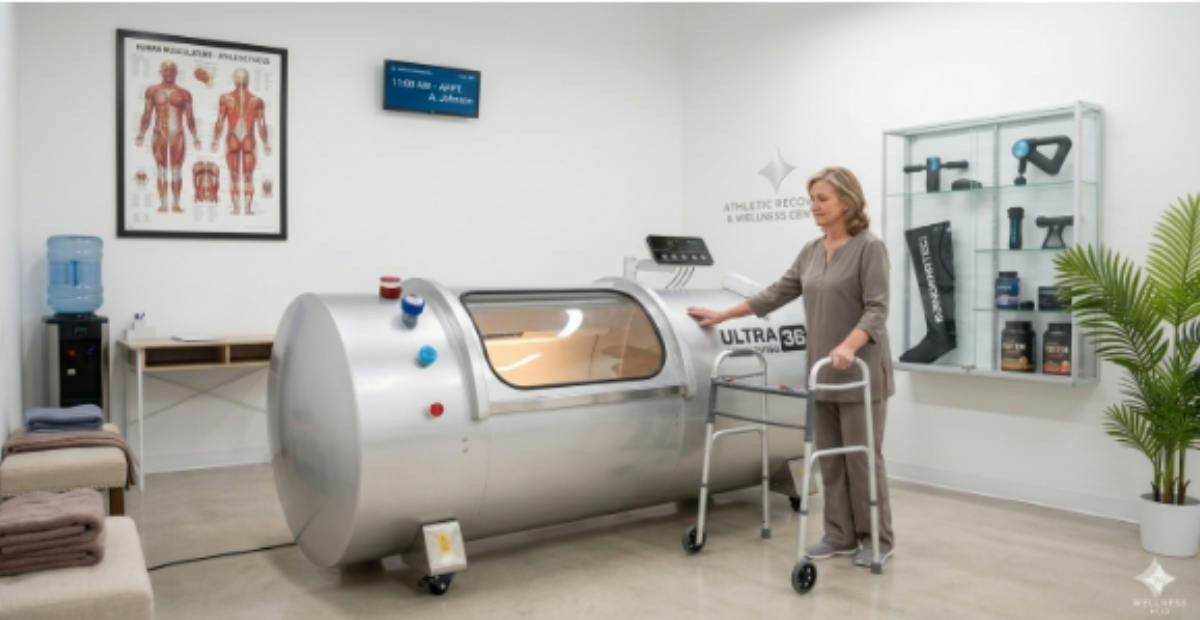
Hyperbaric oxygen therapy (HBOT) for multiple sclerosis (MS) is a topic that has been studied since the early 1980s, with results that remain mixed and widely debated. Systematic reviews, including a Cochrane review analyzing nine controlled trials, found no consistent evidence that HBOT improves disability or modifies MS progression. Some individuals report subjective improvements in symptoms such as fatigue and bladder control, but these reports have not been reliably confirmed in controlled clinical settings.
Key Takeaways
-
Cochrane systematic review evidence shows that HBOT produced no consistent benefit for MS disability outcomes across nine randomized trials totaling 504 participants.
-
The Undersea and Hyperbaric Medical Society (UHMS) does not list MS as an approved indication for hyperbaric oxygen therapy.
-
Multiple sclerosis affects approximately 1 million people in the United States, making access to effective, evidence-based therapies a significant public health priority.
-
Some MS patients report subjective improvements in fatigue, bladder function, and balance after HBOT, though these reports have not been consistently replicated in controlled trials.
-
HBOT remains an area of ongoing investigation for neurological conditions broadly, but MS-specific research has not been a major focus of recent clinical trials.
-
Anyone considering HBOT for MS should consult a neurologist and review the full scope of available evidence before beginning treatment.
What Is Hyperbaric Oxygen Therapy and How Does It Work for MS?
Hyperbaric oxygen therapy is a treatment modality in which a person breathes concentrated oxygen inside a pressurized chamber, typically at pressures higher than normal atmospheric levels. The increased pressure allows oxygen to dissolve more thoroughly into blood plasma, reaching tissues that may have reduced blood flow or oxygenation. Proponents suggest this mechanism could theoretically benefit the demyelinated nerve tissue seen in MS.
Multiple sclerosis is a chronic autoimmune disease in which the immune system attacks the myelin sheath surrounding nerve fibers in the brain and spinal cord. This damage disrupts the transmission of electrical signals between the brain and the rest of the body. Symptoms vary widely and can include fatigue, muscle weakness, vision problems, cognitive difficulties, and impaired coordination.
The theoretical rationale for using HBOT in MS centers on the idea that increasing tissue oxygen levels might reduce inflammation, support myelin repair, or limit ongoing neurological damage. However, the connection between theoretical mechanism and clinical benefit has proven difficult to establish in controlled research settings. The bottom line is that a plausible theoretical mechanism does not, by itself, confirm clinical effectiveness.
What Does the Research Say About HBOT and MS?

The Cochrane systematic review is a high-quality, independent analysis that examined nine randomized controlled trials involving 504 MS participants and found no consistent evidence of benefit from HBOT. The review concluded that routine use of HBOT for MS is not justified based on available data. Two of the nine trials produced generally positive results, while the remaining seven found no meaningful treatment effect.
A 2010 PubMed review by Bennett and Heard analyzed 12 randomized studies conducted between 1983 and 1987 and reached a similar conclusion, stating that a meta-analysis of this evidence suggests no clinically significant benefit from HBOT in MS. A notable early study by Fisher et al., published in the New England Journal of Medicine in 1983, did report significant improvement in the HBOT group compared to controls, with durable results at one year. However, no subsequent study has replicated the rigor or findings of that trial.
A UK-based observational study tracking patients over 10 to 13 years of regular HBOT sessions suggested a possible slowing of symptom progression, but this was not a controlled trial and has not been replicated in peer-reviewed literature. The key point is that the weight of controlled trial evidence does not support HBOT as a reliable treatment for MS progression or disability.
Which Reported Symptom Areas Have Shown the Most Interest?
While no controlled evidence confirms HBOT as an effective MS treatment, certain symptom categories have attracted the most patient-reported interest and preliminary investigation:
-
Fatigue: One of the most common MS symptoms, fatigue is frequently cited by patients as an area where HBOT may offer subjective relief.
-
Bladder dysfunction: Some patients in observational reports describe improved bladder control following HBOT courses.
-
Balance and coordination: Informal reports from HBOT centers suggest some patients notice short-term improvements in stability.
-
Cognitive function: Early theoretical interest exists in HBOT's potential effects on brain oxygenation and cognitive performance in neurological conditions broadly.
-
Spasticity: Muscle stiffness is another symptom where patients have anecdotally reported changes, though controlled evidence is absent.
These symptom-specific claims remain largely based on patient self-report and observational data rather than controlled clinical trials. The NIH PMC review of HBOT for MS reinforces that subjective patient experience does not consistently align with objectively measured clinical outcomes. The bottom line is that subjective improvement reports are worth noting but cannot substitute for controlled trial evidence.
Hyperbaric Collections You May Want to Shop

How Does HBOT Compare to Standard MS Treatments?
|
Treatment Category |
Evidence Level for MS |
Primary Mechanism |
Notes |
|
Disease-modifying therapies (DMTs) |
High (multiple RCTs) |
Immune modulation |
First-line standard of care |
|
Physical and occupational therapy |
Moderate |
Functional rehabilitation |
Widely recommended |
|
Symptom management medications |
Moderate to high |
Targeted symptom relief |
Used alongside DMTs |
|
Hyperbaric oxygen therapy (HBOT) |
Low (no consistent benefit in RCTs) |
Increased tissue oxygenation |
Not a UHMS-approved MS indication |
|
Dietary and lifestyle interventions |
Low to moderate |
Inflammation reduction |
Complementary, not curative |
Disease-modifying therapies remain the standard of care for MS in the United States, with numerous drugs approved for reducing relapse rates and slowing disability progression. Physical therapy, cognitive rehabilitation, and symptom-specific medications form the backbone of MS management alongside DMTs. HBOT, by comparison, sits outside the standard treatment framework and is not recommended as a substitute for established therapies.
The key point is that HBOT should be considered only within the context of a broader, neurologist-supervised MS management plan, never as a replacement for proven disease-modifying treatment.
What Are the Practical Considerations for MS Patients Interested in HBOT?
Accessibility and logistics are important factors for any MS patient considering HBOT, since sessions typically require repeated visits over weeks or months. Some patients explore local hyperbaric facilities based on geographic convenience, such as hyperbaric chambers in Stamford, CT, Sarasota, FL, or West Palm Beach, FL. The frequency and duration of HBOT sessions reported in observational MS studies have ranged widely, making it difficult to define a standardized protocol.
Cost is another significant consideration, as HBOT for MS is not covered by most insurance plans given the lack of established clinical indication. The number of sessions involved in longer-term observational studies, such as the UK study tracking patients over a decade, suggests a substantial financial and time commitment. Families researching home or shared HBOT options may find resources on choosing the best family hyperbaric chamber useful for understanding the landscape of available chamber types.
Patients in Texas exploring local access can also consider resources for hyperbaric chambers in Round Rock, TX. The bottom line is that practical access, cost, and treatment frequency are all real-world factors that must be weighed alongside the current evidence base.
What Are the General Safety Considerations for HBOT?

Hyperbaric oxygen therapy carries a defined set of known risks and contraindications that any MS patient should review with their physician before starting. General safety considerations include:
-
Ear and sinus pressure: Changes in chamber pressure can cause discomfort or barotrauma in the ears and sinuses, particularly for individuals with existing sinus conditions.
-
Oxygen toxicity: Prolonged exposure to high-concentration oxygen at elevated pressure can, in rare cases, cause pulmonary or neurological oxygen toxicity.
-
Claustrophobia: The enclosed environment of a hyperbaric chamber can be distressing for individuals with anxiety or claustrophobia.
-
Contraindications: Certain medications and medical conditions, including some respiratory conditions, may make HBOT inadvisable.
-
Session duration: Sessions typically last 60 to 90 minutes, and the cumulative time commitment for a full course is substantial.
-
Monitoring requirements: Supervised clinical settings offer monitoring that home or spa-style chambers may not provide.
MS patients should disclose their full medication list and symptom profile to both their neurologist and any HBOT provider before starting. The key point is that even therapies with low evidence of benefit carry real physiological considerations that require proper medical screening.
Hyperbaric Chambers You May Want to Shop
Explore More


Is HBOT an Active Area of MS Research Today?
Current MS research priorities have largely moved toward next-generation disease-modifying therapies, neuroprotection strategies, and remyelination research rather than HBOT. A review of recent clinical trial databases and peer-reviewed literature from 2022 to 2026 does not show a significant volume of new MS-specific HBOT trials. Recent HBOT research has instead concentrated on conditions such as long COVID, post-traumatic stress disorder, radiation injury, and Alzheimer's disease.
The NIH PMC editorial on HBOT in neurological disorders reflects growing interest in HBOT's potential across a range of neurological conditions, though MS is not a primary focus of that emerging literature. The absence of new MS-focused HBOT trials in recent years is consistent with the position taken by systematic reviewers that the existing evidence base does not support prioritizing further MS-specific research. This remains an area of ongoing investigation in the broader neurological space, even if MS-specific trials are not currently prominent.
The bottom line is that HBOT for MS is not a current research priority, and patients should calibrate their expectations to what the existing evidence base actually demonstrates.
What Should MS Patients Discuss With Their Neurologist Before Trying HBOT?

A neurologist-guided conversation is the appropriate starting point for any MS patient considering HBOT as a complementary option. Key questions to bring to that conversation include:
-
How does HBOT interact with your current disease-modifying therapy?
-
What specific symptom are you hoping HBOT might address?
-
What is the expected cost and session frequency at the facility you are considering?
-
Are there any contraindications based on your current MS subtype, symptom profile, or medications?
-
What outcome measures would you use to evaluate whether the therapy is providing any benefit?
-
What will you do if you notice no improvement or a worsening of symptoms?
Documenting your symptom baseline before starting any new complementary therapy helps you and your neurologist evaluate whether any changes over time are meaningful. Self-reporting tools used in MS clinical settings, such as the Expanded Disability Status Scale (EDSS), provide a structured framework for tracking change. The key point is that informed, supervised decision-making is the safest approach to evaluating any complementary therapy alongside an established MS treatment plan.
What Does the Evidence on Hyperbaric Chamber Benefits for MS Ultimately Show?
The evidence on hyperbaric chamber benefits for MS points consistently toward one conclusion: controlled clinical trials have not confirmed reliable benefit for disability outcomes or disease progression. Patient-reported improvements in specific symptoms such as fatigue and bladder function are documented in observational settings but have not held up consistently in controlled trial designs. HBOT is not listed as an approved indication for MS by the Undersea and Hyperbaric Medical Society.
For MS patients, the most evidence-supported path remains a neurologist-supervised combination of disease-modifying therapy, rehabilitation, and symptom management. HBOT may hold theoretical interest and some patients choose to pursue it as a complement to standard care, but it should be approached with realistic expectations grounded in the current evidence. Engaging openly with your neurologist about any complementary therapy you are considering ensures your overall MS management remains coordinated and safe.
The bottom line: current systematic review evidence does not support hyperbaric oxygen therapy as a proven treatment for multiple sclerosis, though individual patients may choose to explore it as a complement to established neurologist-supervised care.
Frequently Asked Questions
Which therapy is best for multiple sclerosis?
Disease-modifying therapies (DMTs) are the most evidence-supported treatments for multiple sclerosis, with numerous options shown to reduce relapse rates and slow disability progression in controlled trials. Physical therapy, cognitive rehabilitation, and symptom-specific medications are also recommended as core components of MS management. No complementary therapy, including HBOT, has demonstrated equivalent evidence of benefit.
Is hyperbaric oxygen good for autoimmune?
Hyperbaric oxygen therapy has been studied across several autoimmune-related conditions, but evidence of benefit varies by condition and remains limited overall. For autoimmune conditions specifically, the theoretical interest centers on HBOT's potential anti-inflammatory effects. Controlled trial evidence supporting HBOT as an effective autoimmune treatment is not yet established for most conditions, including MS.
Can a hyperbaric chamber heal nerve damage?
Hyperbaric oxygen therapy has theoretical mechanisms that could support nerve tissue health, including increased oxygen delivery to hypoxic tissues, but controlled evidence of nerve healing in MS or other demyelinating conditions is not confirmed. Some neurological HBOT research in conditions such as traumatic brain injury and post-stroke recovery shows preliminary positive signals. Whether these mechanisms translate to meaningful nerve repair in MS remains an area of ongoing investigation.
Is a hyperbaric chamber good for your brain?
Hyperbaric oxygen therapy increases oxygen delivery to brain tissue, and research in conditions such as Alzheimer's disease and traumatic brain injury has shown preliminary signs of cognitive benefit in some controlled trials. For MS specifically, the evidence for brain-related benefits from HBOT is not established in controlled research. General brain oxygenation effects are theoretically plausible, but clinical confirmation in MS remains absent from the peer-reviewed literature.
How do the Chinese treat MS?
Traditional Chinese medicine approaches to MS have included acupuncture, herbal formulations, and integrative protocols combining Western disease-modifying therapies with complementary practices, though the evidence base for these approaches in MS is limited. Chinese research institutions have also investigated Western neurological treatments and rehabilitation protocols for MS management. Any MS treatment, regardless of origin, should be evaluated against controlled clinical trial evidence and coordinated with a neurologist.