


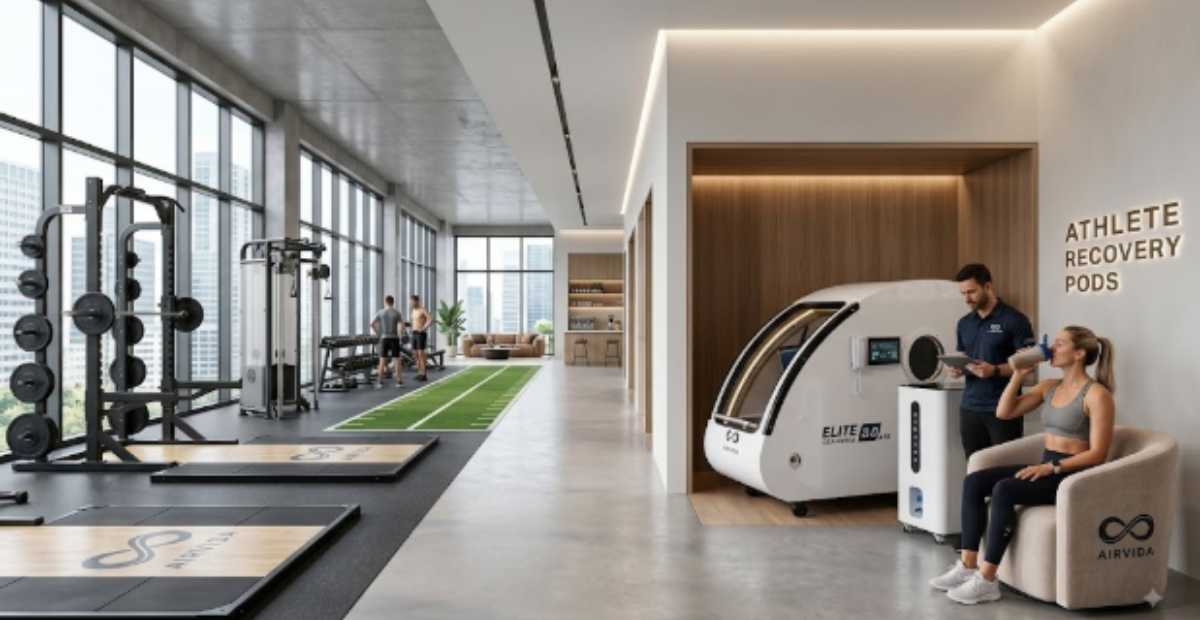
A hyperbaric chamber for gym use is a pressurized enclosure that delivers concentrated oxygen to the body, with the goal of accelerating muscle recovery, reducing exercise-induced soreness, and supporting overall athletic performance. A 2024 systematic review and meta-analysis published on PubMed identified that hyperbaric oxygen therapy (HBOT) significantly accelerated recovery from exercise-induced muscle injury (P<.0001) across 10 studies involving 299 subjects. Athletes and fitness facilities are increasingly integrating these chambers into training protocols for this reason.
Key Takeaways
-
Hyperbaric oxygen therapy significantly accelerates recovery from exercise-induced muscle injury, according to a 2024 meta-analysis of 299 subjects published in PubMed.
-
HBOT works by delivering oxygen under pressure greater than 1 atmosphere absolute (ATA), which saturates tissues with oxygen and reaches areas that typically receive limited blood flow.
-
Measurable markers of muscle damage, including creatine phosphokinase and myoglobin, show significant reductions in athletes receiving consistent HBOT sessions.
-
The clinical pressure standard for meaningful physiological effect is at least 1.4 ATA, with most research conducted at 2.0 to 3.0 ATA using 100% medical-grade oxygen.
-
Athletic and fitness applications of HBOT are considered off-label use, meaning they fall outside conditions specifically recognized for clinical treatment in the United States.
-
Both pre- and post-exercise HBOT sessions have shown benefits in published research, though post-exercise timing is more consistently supported in the current literature.
What Is a Hyperbaric Chamber and How Does It Work for Gym Recovery?
A hyperbaric chamber is a pressurized vessel in which a person breathes concentrated oxygen at a pressure greater than normal atmospheric pressure, measured in atmospheres absolute (ATA). The underlying mechanism involves capillary dilation under elevated pressure, which allows more oxygen-rich blood to flow through tissues, including areas that typically receive limited circulation after intense physical exertion. This increased oxygen availability supports cellular repair, reduces inflammatory signaling, and promotes faster tissue restoration.
For gym and athletic contexts, the primary interest is recovery. After high-intensity training, muscles accumulate metabolic byproducts and experience micro-tears that trigger inflammation and delayed-onset muscle soreness (DOMS). HBOT creates an oxygen-enriched environment that may accelerate the resolution of this inflammatory state.
Hyperbaric oxygen therapy (HBOT) is defined as the administration of 100% oxygen at a pressure greater than 1 ATA. The Undersea and Hyperbaric Medical Society (UHMS) specifies that for a session to qualify as HBOT, the pressure must exceed 2.0 ATA. This distinction matters significantly when evaluating commercial gym-use chambers versus clinical-grade equipment.
The key point is that the physiological effects of HBOT depend heavily on both pressure level and oxygen concentration, and not all chambers marketed for gym use achieve clinically studied parameters.
What Does the Research Say About HBOT and Muscle Recovery?

HBOT and muscle recovery is an area supported by a growing body of peer-reviewed evidence, with several studies and systematic reviews published between 2022 and 2025. A 2024 systematic review and meta-analysis indexed on PubMed analyzed 10 articles covering 299 subjects and found that HBOT significantly accelerated recovery from exercise-induced muscle injury, with a 95% confidence interval of -76.19 to -33.11 (P<.0001). This is among the strongest statistical evidence currently available on this topic.
Specific biomarkers of muscle damage have shown measurable improvement with HBOT. Athletes receiving hyperbaric oxygen therapy demonstrated significant reductions in creatine phosphokinase (CK), glutamic oxaloacetate transaminase (GOT), and myoglobin (MB), all recognized markers of muscle breakdown. These reductions were evident after approximately the tenth treatment session and persisted for at least two weeks following the conclusion of treatment.
A double-blind randomized controlled trial published in Frontiers in Physiology studied 20 elite youth football players (average age 17.3 years) and assessed whether a single 1-hour HBOT session could affect recovery and performance after a competitive match. The study design included randomized assignment to either an HBOT group or a control group. Results indicated meaningful differences in recovery markers between the two groups.
The bottom line is that peer-reviewed evidence consistently points to HBOT as a tool that can reduce muscle damage markers and support recovery timelines, particularly when administered at appropriate pressure levels.
How Do Medical-Grade Chambers Compare to Commercial Gym Chambers?
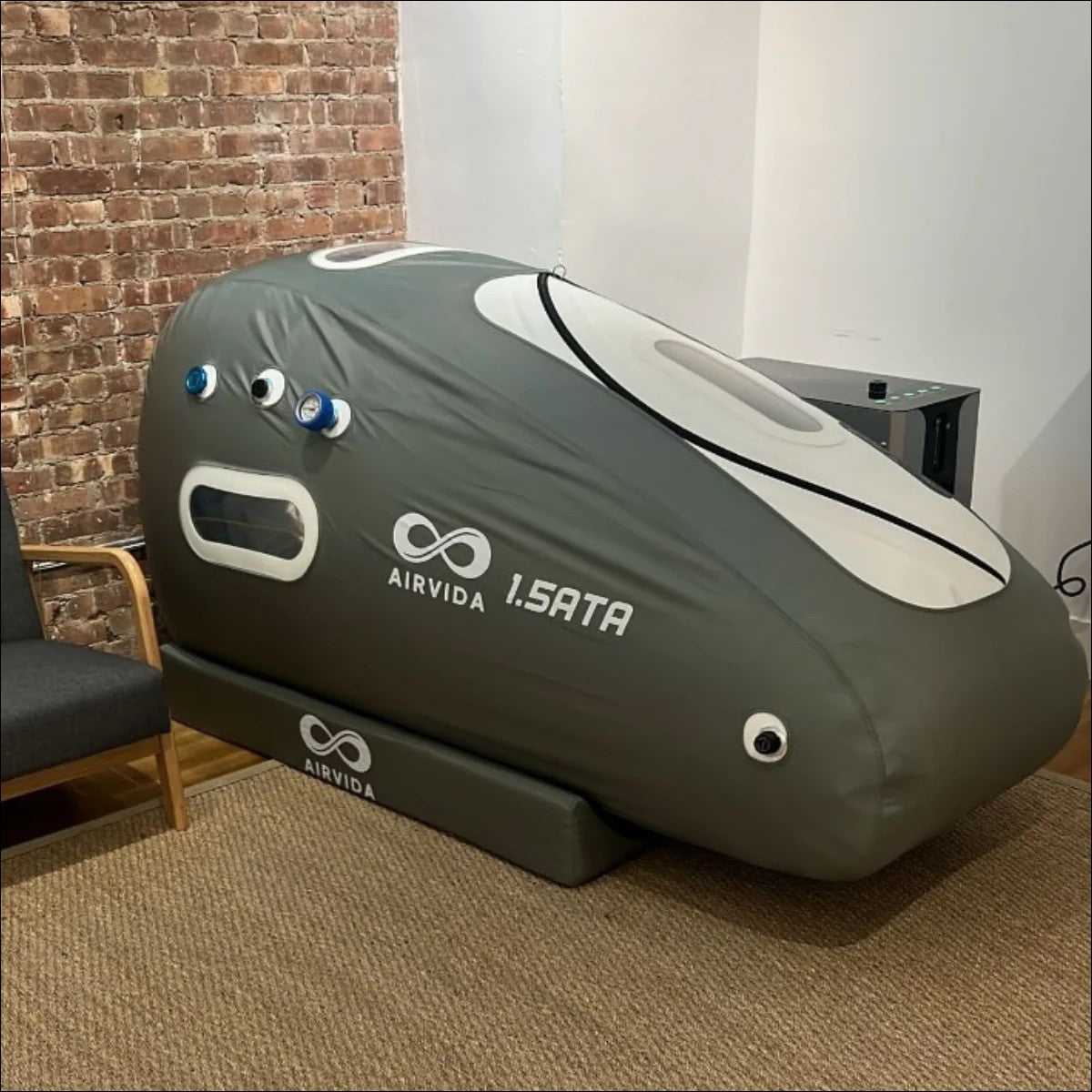
Medical-grade and commercial gym hyperbaric chambers differ substantially in pressure capacity, oxygen concentration, and the physiological outcomes they can produce. Medical-grade, hard-shell chambers typically reach pressures of 2.0 to 3.0 ATA using 100% medical-grade oxygen. Commercial and portable soft-shell chambers marketed for gym or wellness use commonly operate at 1.3 to 1.5 ATA and use ambient air or lower-concentration oxygen.
This distinction directly affects outcomes. The powerful clinical results reported in peer-reviewed studies are almost exclusively from research using hard-shell chambers at 2.0 ATA and above with 100% oxygen. Soft-shell chambers at lower pressures may offer general wellness benefits and mild anti-inflammatory effects, but they do not replicate the physiological conditions tested in most of the sports recovery literature.
For treatment to produce clinically meaningful effects, pressure must reach at least 1.4 ATA, though 2.0 ATA is the UHMS threshold for a session to be classified as true HBOT. Gym owners and athletes evaluating equipment should verify both the maximum pressure rating and the oxygen delivery system before drawing conclusions about expected outcomes.
The key point is that not all chambers labeled as hyperbaric produce equivalent results, and matching chamber specifications to the research protocols being cited is essential for setting accurate expectations.
Hyperbaric Collections You May Want to Shop

What Are the Specific Benefits Athletes and Gyms Cite Most Often?
Athletes and fitness facilities cite several overlapping benefits when integrating hyperbaric chambers into training and recovery programs. Research and practitioner reports most frequently reference the following outcomes:
Recovery-focused benefits:
-
Reduced delayed-onset muscle soreness (DOMS) following high-intensity training
-
Faster clearance of exercise-induced inflammation
-
Lower post-exercise levels of muscle damage biomarkers (CK, GOT, myoglobin)
-
Accelerated tissue repair following soft tissue injuries
Performance-related benefits:
-
Improved endurance performance, observed in young soccer players after three weeks of HBOT sessions
-
Enhanced mitochondrial respiration in middle-aged athletes, studied in a blinded randomized controlled trial published in Sports Med - Open in February 2022
-
Support for return-to-play timelines following sports injuries
Injury rehabilitation benefits:
-
A 2025 study published in Scientific Reports on patients undergoing total knee arthroplasty found that the HBOT group, which received standard treatment supplemented with hyperbaric oxygen, showed reduced postoperative muscle damage and inflammation compared to the control group
-
A registered clinical trial (NCT06493851) is actively investigating HBOT for accelerating recovery after anterior cruciate ligament reconstruction (ACLR)
The bottom line is that the most consistently supported benefits are post-exercise muscle recovery and inflammation reduction, while performance enhancement and injury rehabilitation benefits are supported by emerging but still-growing evidence.
When Should You Use a Hyperbaric Chamber: Before, During, or After Training?

The timing of hyperbaric oxygen therapy relative to exercise affects which physiological mechanisms are targeted. A 2021 systematic review and meta-analysis published in PMC (NCT02941939 referenced protocols) examined pre-, post-, and intra-exercise HBOT applications and found that timing influences both performance and recovery outcomes. Here is a comparison of the three timing approaches:
|
Timing |
Primary Target |
Evidence Strength |
Practical Notes |
|
Pre-exercise |
Oxygen loading, reduced fatigue onset |
Emerging |
Less studied than post-exercise |
|
Post-exercise |
Muscle repair, inflammation reduction, soreness |
Strongest |
Most consistent across studies |
|
Intra-exercise |
Sustained oxygen delivery during exertion |
Limited |
Requires specialized chamber setup |
Post-exercise HBOT has the most robust support in current literature. Sessions administered after training or competition target the inflammatory cascade at its peak and support the repair of micro-damaged tissue during the critical recovery window. Pre-exercise sessions are theorized to preload tissues with oxygen, potentially delaying fatigue, though the evidence base for this application is thinner.
Intra-exercise hyperbaric training, meaning exercise performed inside a pressurized chamber, has been explored in research settings (see ClinicalTrials.gov NCT02941939) but requires specialized equipment not typically available in commercial gym settings. The key point is that if you are integrating a hyperbaric chamber into a gym protocol, post-exercise timing is the most evidence-supported starting point.
How Are Gyms, Physical Therapy Clinics, and Chiropractors Using Hyperbaric Chambers?

Gyms, physical therapy practices, and chiropractic offices are among the fastest-growing adopters of hyperbaric chambers outside traditional hospital settings. For gyms and performance centers, the chamber is typically positioned as a premium recovery amenity, available to members as a scheduled add-on session following training. This model allows facilities to generate additional revenue while offering a science-backed recovery tool.
Physical therapy clinics use hyperbaric chambers as a complementary modality alongside manual therapy, exercise rehabilitation, and modalities like ultrasound or electrical stimulation. If your practice is exploring this integration, the hyperbaric chambers for physical therapy collection from Airvida Chambers includes options scaled for clinical environments. Chiropractic offices have similarly begun incorporating HBOT as a recovery and wellness service; the hyperbaric chambers for chiropractors collection addresses the specific operational needs of these settings.
Veterans' wellness programs and travel-focused recovery protocols represent two additional growing use cases. You can explore hyperbaric chambers for veterans and hyperbaric chambers for travelers depending on your specific context. For those concerned about upfront cost, a lease-to-own hyperbaric chamber option can make professional-grade equipment more accessible for practices and facilities at any stage.
The key point is that hyperbaric chambers are transitioning from exclusively clinical tools into mainstream fitness and rehabilitation infrastructure across multiple professional settings.
What Are the Risks and Limitations of Hyperbaric Chambers for Gym Use?
Hyperbaric chambers carry a defined set of risks and limitations that anyone using them in a gym or athletic context should understand before starting. The most commonly reported side effects include:
-
Ear and sinus barotrauma: Pressure changes during pressurization and depressurization can cause discomfort or injury to the middle ear and sinuses if equalization is not performed correctly.
-
Temporary vision changes: Some users report mild, transient myopia following extended HBOT protocols, which typically resolves after sessions are completed.
-
Oxygen toxicity: At high pressures with prolonged exposure, excess oxygen can affect the central nervous system, though this risk is primarily associated with clinical-grade sessions at 2.4 ATA or above.
-
Claustrophobia: Enclosed chamber environments can trigger anxiety or claustrophobic responses in some individuals.
-
Fire hazard: High-oxygen environments increase flammability risk, which is why no electronic devices, synthetic fabrics, or open flames should enter a pressurized oxygen chamber.
From a limitations standpoint, the gap between clinical research conditions and commercially available gym chambers is the most important factor to account for. Most published studies use pressures of 2.0 ATA or higher with 100% oxygen, conditions that many gym-installed chambers do not replicate. Results observed in high-pressure clinical research cannot automatically be assumed to transfer to lower-pressure consumer chambers.
The bottom line is that hyperbaric chambers are low-risk for most healthy adults when used correctly, but the limitations of non-clinical equipment mean that outcomes may be more modest than published research suggests.
Who Should Avoid Using a Hyperbaric Chamber?
Certain individuals should avoid hyperbaric chambers entirely or consult a physician before use. Contraindications in the published literature and clinical practice include:
Absolute contraindications:
-
Untreated pneumothorax (collapsed lung)
-
Recent thoracic surgery without medical clearance
Relative contraindications requiring physician evaluation:
-
Active upper respiratory infections or sinusitis (increases barotrauma risk)
-
History of seizures or epilepsy (elevated oxygen can lower seizure threshold)
-
Certain medications (particularly bleomycin, cisplatin, and disulfiram, which interact with high-oxygen environments)
-
Claustrophobia or panic disorder
-
Pregnancy (insufficient safety data for non-medical use)
-
Uncontrolled high blood pressure
-
Recent ear surgery or perforated eardrum
If you have any of the above conditions, discussing HBOT with a qualified physician before your first session is essential. The key point is that for healthy, active individuals without underlying contraindications, hyperbaric chamber sessions carry a relatively low risk profile, but self-screening before use is a necessary step.
Hyperbaric Chambers You May Want to Shop
Explore More


Is a Hyperbaric Chamber Worth It for Gym and Athletic Use?
Whether a hyperbaric chamber is worth it for gym or athletic use depends on your goals, the quality of the chamber, and how realistically you interpret the available evidence. The scientific case for post-exercise recovery is the strongest, supported by a 2024 meta-analysis with statistically significant findings across nearly 300 subjects. Performance enhancement and injury acceleration benefits are supported by smaller, promising studies that researchers consider an area of ongoing investigation.
For gym owners and facility managers, the decision involves weighing equipment cost, space requirements, session scheduling logistics, and the revenue model against member demand for premium recovery services. The growing number of elite athletes and performance centers incorporating HBOT reflects genuine interest in the modality, not simply trend adoption. However, realistic expectations tied to the actual chamber specifications you are purchasing matter enormously.
The bottom line: a hyperbaric chamber for gym use is a scientifically supported recovery tool, most effective for reducing post-exercise muscle damage and soreness, and most beneficial when the chamber meets the pressure and oxygen standards found in peer-reviewed research.
Frequently Asked Questions
Why do athletes use a hyperbaric chamber?
Athletes use hyperbaric chambers primarily to accelerate muscle recovery and reduce inflammation after intense training or competition. A 2024 PubMed meta-analysis found that HBOT significantly reduced exercise-induced muscle injury markers across 299 subjects. Additional reasons include faster return-to-play after soft tissue injuries and potential improvements in endurance performance.
Is it okay to workout after a hyperbaric chamber?
Working out after a hyperbaric chamber session is generally considered safe for healthy individuals, though post-exercise is actually the timing most supported by research for recovery purposes. If you use HBOT before training as an oxygen-loading strategy, light to moderate activity afterward is typically well-tolerated. Listen to your body, and avoid strenuous training immediately after your first few sessions while you assess your individual response.
Who should avoid hyperbaric chambers?
People with an untreated pneumothorax, active sinus or ear infections, a history of seizures, certain medication regimens, or uncontrolled blood pressure should avoid hyperbaric chambers or consult a physician first. Pregnant individuals and those with a perforated eardrum are also advised to seek medical guidance before use. Healthy individuals without these conditions are generally considered suitable candidates.
Does LeBron James use a hyperbaric chamber?
LeBron James has publicly referenced using a hyperbaric chamber as part of his recovery and longevity regimen, and it is among the wellness tools he has discussed in interviews and media coverage. While his specific protocol and chamber specifications are not published in peer-reviewed sources, his use reflects a broader trend of elite professional athletes incorporating HBOT into performance maintenance routines. His endorsement has contributed significantly to mainstream awareness of hyperbaric chambers in sports contexts.
What is the downside of a hyperbaric chamber?
The main downsides of hyperbaric chambers are the risk of ear and sinus barotrauma from pressure changes, potential for claustrophobia, and the significant cost of clinical-grade equipment. For gym-use or commercial chambers, the largest limitation is that they often operate below the pressure levels studied in clinical research, meaning real-world results may be less pronounced than published studies suggest. Oxygen toxicity is a risk at high pressures but is uncommon in typical athletic-use sessions.