


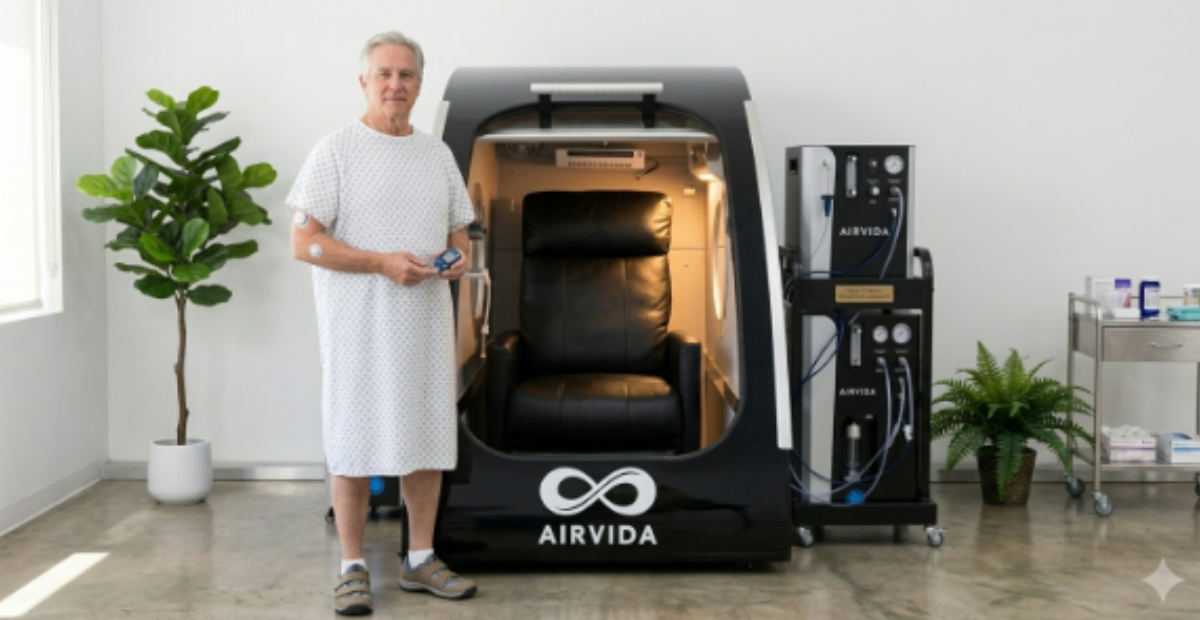
Hyperbaric oxygen therapy (HBOT) delivers measurable benefits for people with diabetes, most notably accelerating the healing of chronic foot ulcers, reducing the risk of amputation, and supporting improved circulation to oxygen-deprived tissues. Research consistently shows that combining HBOT with standard wound care significantly increases complete healing rates compared to standard care alone. These benefits are most pronounced in patients with moderate-to-severe diabetic foot ulcers that have not responded to conventional treatment within 30 days.
Key Takeaways
-
HBOT significantly increases complete healing rates for diabetic foot ulcers compared to standard wound care alone, based on multiple published meta-analyses.
-
Diabetic foot ulcers affect an estimated 15 to 25 percent of people with diabetes at some point during their lifetime, making effective adjunct therapies clinically important.
-
Hyperbaric oxygen therapy reduces amputation risk in patients with moderate-to-severe diabetic foot ulcers when added to standard wound care protocols.
-
HBOT works by delivering 100 percent oxygen at 2 to 3 atmospheres of pressure, which drives oxygen deep into hypoxic (oxygen-deprived) wound tissue and stimulates healing growth factors.
-
Clinical guidelines recommend HBOT for Wagner Grade 3 or higher diabetic foot ulcers that have undergone surgical debridement or have not improved after 30 days of standard treatment.
-
Blood glucose levels may decrease during HBOT sessions, which means people taking insulin or glucose-lowering medications should be monitored carefully before and after treatment.
What Is Hyperbaric Oxygen Therapy and How Does It Work for Diabetes?
Hyperbaric oxygen therapy is a medical treatment in which you breathe 100 percent oxygen inside a pressurized chamber at 2 to 3 atmospheres absolute (ATA), well above normal atmospheric pressure. This elevated pressure forces significantly more oxygen into your bloodstream than is possible under normal breathing conditions. That oxygen-saturated blood then reaches tissues that are normally too hypoxic, or oxygen-deprived, to support proper healing.
In people with diabetes, chronic high blood sugar damages small blood vessels and nerves over time. This vascular damage reduces oxygen delivery to peripheral tissues, particularly in the feet and lower legs. HBOT directly counteracts this deficit by flooding those tissues with dissolved oxygen, even when red blood cell delivery is impaired.
The mechanism extends beyond simple oxygen delivery. Research published by the National Institutes of Health confirms that HBOT stimulates the production of growth factors, including hypoxia-inducible factor 1 (HIF-1), vascular endothelial growth factor (VEGF), and platelet-derived growth factor (PDGF). These factors trigger angiogenesis (new blood vessel formation), fibroblast replication, and tissue regeneration.
The bottom line is that HBOT addresses the root physiological deficit in diabetic wound healing: insufficient oxygen delivery to damaged peripheral tissue.
How Does HBOT Help Heal Diabetic Foot Ulcers?

Diabetic foot ulcers (DFUs) are chronic wounds that develop due to peripheral neuropathy, poor circulation, and immune dysfunction caused by long-term diabetes. According to NIH StatPearls, DFUs occur in approximately 15 percent of patients with diabetes mellitus, and between 15 and 25 percent of people with diabetes will develop one during their lifetime. Approximately 6 percent of those who develop a DFU require hospitalization, and 1 percent will require amputation.
HBOT has been evaluated extensively as an adjunct treatment for DFUs. A 2021 systematic review published in PMC found that HBOT was significantly effective in achieving complete healing of diabetic foot ulcers (OR = 0.29; 95% CI 0.14-0.61) and in reducing major amputation rates (RR = 0.60; 95% CI 0.39-0.92). A 2024 prospective study published in Cureus found that adjuvant HBOT combined with standard wound care significantly reduced pain scores, wound size, and the incidence of minor amputation compared to standard care alone.
A 2023 NIH-indexed mechanism study confirmed that HBOT reduces oxidative stress and inflammation while increasing the expression of multiple growth factors that directly support wound repair. These include HIF-1, VEGF, and PDGF, each of which plays a distinct role in restoring tissue integrity. The combination of anti-inflammatory and pro-regenerative effects makes HBOT a physiologically logical adjunct for wounds that fail to respond to standard care.
The bottom line is that HBOT accelerates diabetic foot ulcer healing by simultaneously addressing oxygen deficit, inflammation, and growth factor insufficiency.
Hyperbaric Chambers You May Want to Shop
Explore More


Which Patients Are Most Likely to Benefit From Hyperbaric Treatment?
Patient selection for HBOT in diabetes is guided by standardized clinical criteria based on wound severity. The most widely used classification system is the Wagner Grading Scale, which grades diabetic foot ulcers from 0 to 5 based on depth and the presence of infection or gangrene.
HBOT Recommendations by Wagner Grade
|
Wagner Grade |
Wound Description |
HBOT Recommendation |
|
Grade 0 |
Intact skin, pre-ulcerative lesion |
Not recommended |
|
Grade 1 |
Superficial ulcer, no infection |
Not recommended |
|
Grade 2 |
Deep ulcer, no bone involvement |
Not recommended |
|
Grade 3 |
Deep ulcer with abscess or osteomyelitis |
Recommended post-debridement |
|
Grade 4 |
Partial foot gangrene |
Strongly recommended |
|
Grade 5 |
Whole foot gangrene |
Case-by-case assessment |
According to NIH StatPearls, clinical guidelines recommend adding HBOT to standard care for patients with Wagner Grade 3 or higher DFUs who have recently undergone surgical debridement of an infected foot. Guidelines also recommend HBOT for Wagner Grade 3 or higher wounds that have not shown significant improvement after 30 days of standard treatment. HBOT is not recommended for Wagner Grade 2 or lower ulcers.
A December 2024 systematic review in the International Journal of Vascular Medicine concluded that using a hyperbaric chamber alongside standard care is favorable for patients with chronic DFUs compared to standard care alone. This reinforces the role of HBOT as an adjunct rather than a standalone treatment.
The bottom line is that HBOT is most appropriate for moderate-to-severe diabetic foot ulcers, particularly those that are infected, surgically debrided, or have failed standard wound care after one month.
Can Hyperbaric Oxygen Therapy Reduce the Risk of Amputation in Diabetes?
HBOT has demonstrated statistically significant reductions in amputation risk across multiple large-scale meta-analyses. A 2024 meta-analysis cited by the International Wound Journal found that HBOT significantly increased complete DFU healing rates (46.76% with HBOT vs. 24.46% with conventional treatment). Another 2024 meta-analysis found HBOT significantly improved complete healing rates with a risk ratio of 3.59 (95% CI: 1.56-8.29, p < 0.001). These figures consistently point in the same direction across independent research groups.
The 2024 prospective study from Grant Government Medical College published in Cureus found that adjuvant HBOT led to a significantly reduced incidence of minor amputation compared to standard wound care alone (p = 0.001), with comparable complication rates between the two groups. That result is meaningful because it shows the benefit of HBOT was not offset by increased risk. The 2021 PMC-indexed systematic review also reported a significant reduction in major amputation rates (RR = 0.60; 95% CI 0.39-0.92).
It is worth noting that results are not uniform across all studies. The clinical outcomes depend on patient selection, wound severity, comorbidities, and the number of HBOT sessions completed. Ongoing research continues to refine the protocols that produce the most consistent outcomes.
The bottom line is that the weight of published evidence supports HBOT as an adjunct that meaningfully reduces both major and minor amputation rates in appropriately selected diabetic patients.
Does Hyperbaric Oxygen Therapy Affect Blood Sugar Levels?
HBOT appears to influence blood glucose regulation, though the mechanisms and magnitude of effect remain an area of ongoing investigation. A PMC-published systematic review assessed the impact of HBOT on glycemia in people with diabetes and found that blood sugar levels can drop during and after hyperbaric sessions. This effect has practical implications for anyone using insulin or other glucose-lowering medications.
A study indexed at PubMed proposed that HBOT may improve glucose homeostasis in type 2 diabetes patients, with a possible role for the carotid bodies in mediating this response. Additionally, a 2025 PMC study examining HBOT in a type 2 diabetes mouse model found metabolic advantages including involvement of the leptin signaling pathway. While animal studies provide mechanistic insight, they do not directly confirm the same effects in humans.
If you take insulin or hypoglycemic medications, you should have your blood glucose checked before and after each session. Your care team should adjust medication timing if needed to prevent hypoglycemic episodes during treatment. This is a standard precaution in clinical hyperbaric programs, not a reason to avoid HBOT.
The bottom line is that HBOT may lower blood sugar levels in people with diabetes, which is clinically manageable but requires monitoring, especially for those on insulin or glucose-lowering drugs.
Hyperbaric Collections You May Want to Shop

What Other Diabetes Complications May Respond to HBOT?
Beyond diabetic foot ulcers, researchers have investigated HBOT for several other diabetes-related complications. A 2024 PMC systematic review evaluated HBOT specifically for diabetic peripheral neuropathy (DPN) and found that adjuvant HBOT achieved positive effects in some studies across the 14 trials reviewed, though the review called for larger controlled trials to confirm efficacy.
A 2023 pilot study published in PMC examined HBOT for periodontitis in type 2 diabetes patients and found significantly better outcomes in probing depth reduction and clinical attachment level gain in the HBOT group compared to controls. A registered clinical trial (ClinicalTrials.gov NCT02235935) has also investigated HBOT's effects on diabetic retinopathy, another microvascular complication. These are early-stage findings and should be interpreted with appropriate caution.
Other areas under research investigation include HBOT's potential role in:
-
Reducing oxidative stress markers in diabetic patients
-
Improving HbA1c levels in short-duration treatment protocols
-
Supporting cognitive outcomes in elderly diabetic patients at dementia risk
The bottom line is that HBOT is being actively researched for multiple diabetes complications beyond wound care, though diabetic foot ulcers currently have the strongest evidentiary base.
What Should You Expect During Hyperbaric Treatment for Diabetes?

A standard hyperbaric oxygen therapy session for diabetic wound care typically takes place in either a monoplace chamber (single-person) or a multiplace chamber (multiple patients treated simultaneously). Sessions are generally conducted at pressures between 2.0 and 2.4 ATA for approximately 90 to 120 minutes. Treatment courses usually consist of multiple sessions over several weeks, with the exact number determined by wound severity and clinical response.
If you are considering HBOT for a diabetic complication, you should know what a typical session involves:
-
Pre-session screening: Blood glucose is measured. Medications are reviewed for interactions.
-
Pressurization: The chamber gradually pressurizes over 10 to 15 minutes. You may feel mild pressure in your ears, similar to descending in an airplane.
-
Treatment phase: You breathe 100 percent oxygen for the prescribed duration, typically 60 to 90 minutes at pressure.
-
Depressurization: The chamber gradually returns to normal pressure over 10 to 15 minutes.
-
Post-session monitoring: Blood glucose is rechecked, particularly for patients on insulin.
If you are exploring access to a hyperbaric chamber in Connecticut, options are available in Bristol, CT, Manchester, CT, Middletown, CT, and Westport, CT. If you are evaluating equipment options, you can also review whether you need a concentrator for HBOT before selecting a system.
The bottom line is that HBOT sessions follow a structured protocol that is well-tolerated by most patients, with glucose monitoring added as a standard precaution for those with diabetes.
Are There Risks or Contraindications for Diabetic Patients Using Hyperbaric Chambers?
HBOT carries a defined set of contraindications and risks that your care team will evaluate before recommending treatment. According to NIH StatPearls on Hyperbaric Patient Selection, careful patient screening is required before beginning any hyperbaric course of treatment.
Known contraindications and precautions relevant to diabetic patients include:
-
Untreated pneumothorax: An absolute contraindication to HBOT
-
Uncontrolled seizure disorders: Require evaluation before treatment
-
Severe claustrophobia: May limit tolerance of monoplace chambers
-
Active hypoglycemia: Must be corrected before each session
-
Certain medications: Some drugs interact with high oxygen environments and require review
Hypoglycemia risk is the most diabetes-specific concern. Because HBOT may lower blood glucose, patients on insulin or secretagogues (medications that stimulate insulin release) require glucose monitoring before, during, and after each session. Your care team will establish a safe glucose threshold for treatment and may adjust medication timing accordingly.
The bottom line is that HBOT is generally safe for appropriately screened diabetic patients, but hypoglycemia monitoring is a mandatory precaution that should be built into every treatment session.
Is Hyperbaric Chamber Therapy Right for Your Diabetes Management?

Hyperbaric oxygen therapy is a well-researched adjunct treatment for diabetic complications, particularly chronic foot ulcers that have not responded to conventional wound care. The evidence base is strongest for moderate-to-severe DFUs, where multiple meta-analyses show improved healing rates and reduced amputation risk when HBOT is added to standard care. Evidence for other complications, including peripheral neuropathy and periodontitis, is promising but earlier-stage.
If you have a diabetic foot ulcer classified as Wagner Grade 3 or higher, or if your wound has not improved after 30 days of standard treatment, a conversation with your care team about HBOT is clinically warranted. You should also discuss blood glucose monitoring protocols, medication adjustments, and the expected number of sessions before beginning treatment.
The bottom line: hyperbaric oxygen therapy provides meaningful, evidence-backed benefits for people with diabetes, most powerfully for chronic wound healing and amputation prevention, when used as part of a comprehensive, medically supervised care plan.
Frequently Asked Questions
What do Japanese take for diabetes?
Japanese traditional and integrative approaches to diabetes management commonly include dietary strategies centered on low-glycemic foods, green tea consumption, and plant-based compounds. Modern Japanese clinical practice also incorporates standard pharmaceutical management including SGLT2 inhibitors, DPP-4 inhibitors, and GLP-1 receptor agonists, which are among the most prescribed drug classes for type 2 diabetes in Japan. These approaches are used alongside lifestyle modification.
Is hyperbaric oxygen therapy good for the kidneys?
Hyperbaric oxygen therapy is being studied for its potential renal benefits in diabetic patients, particularly related to reducing oxidative stress and inflammation that contribute to diabetic nephropathy. Some clinical investigations have explored HBOT's effects on serum creatinine levels, a key marker of kidney function, with early results suggesting possible benefit. However, the evidence base for HBOT as a kidney treatment remains limited, and it is not a standard-of-care therapy for diabetic kidney disease at this time.
Why does blood sugar drop in a hyperbaric chamber?
Blood sugar may drop during hyperbaric oxygen therapy because high-pressure oxygen appears to enhance glucose uptake and improve insulin sensitivity in peripheral tissues. A systematic review published in PMC found that HBOT consistently influences glycemic levels in people with diabetes, though the exact mechanism is still being investigated. This effect is clinically manageable with pre- and post-session glucose monitoring, particularly for patients using insulin or glucose-lowering medications.
What illness does hyperbaric oxygen therapy treat?
Hyperbaric oxygen therapy is used to treat a range of conditions involving hypoxic or compromised tissue, including diabetic foot ulcers, carbon monoxide poisoning, decompression sickness, radiation tissue injury, and refractory osteomyelitis. HBOT works by delivering 100 percent oxygen at elevated pressure, forcing dissolved oxygen into tissues where normal circulation is insufficient. Diabetic wound healing is one of the most extensively researched and clinically supported applications of HBOT.
What do Chinese use to treat diabetes?
Traditional Chinese medicine approaches to diabetes, known historically as "Xiao Ke," include herbal formulas such as berberine (derived from Coptis chinensis), bitter melon preparations, and acupuncture, each of which has been evaluated in modern research to varying degrees. Berberine in particular has been studied in peer-reviewed trials for its effects on blood glucose and insulin resistance, with some results showing activity comparable to metformin. Contemporary Chinese clinical practice also incorporates standard diabetes pharmaceuticals alongside traditional approaches.