


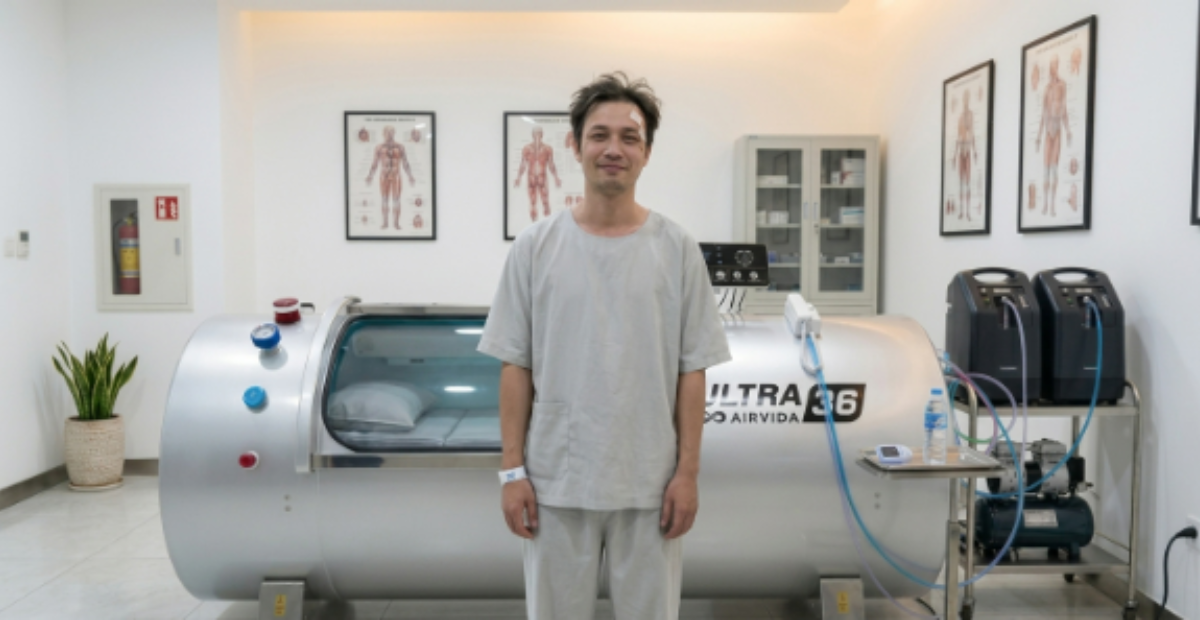
Hyperbaric oxygen therapy (HBOT) delivers pressurized, high-concentration oxygen to the brain, and clinical studies suggest it can improve cognitive function, reduce persistent post-concussion symptoms, and support neurological recovery in both children and adults. While current evidence is promising, medical guidelines from the VA and Department of Defense do not yet endorse HBOT as a standard treatment for concussion or mild traumatic brain injury, and research is ongoing. If you are managing post-concussion syndrome, understanding what HBOT can and cannot currently offer is essential before pursuing treatment.
Key Takeaways
-
Hyperbaric oxygen therapy (HBOT) delivers 100% oxygen at elevated atmospheric pressure, which increases oxygen delivery to injured brain tissue and may support neurological repair.
-
Clinical trials show HBOT significantly improved cognitive function, memory, and executive function in both children and adults with persistent post-concussion syndrome.
-
The VA/DoD 2021 Clinical Practice Guideline recommends against HBOT for mild traumatic brain injury symptoms, citing insufficient evidence to support routine clinical use.
-
Post-concussion syndrome affects an estimated 15 to 30% of concussion patients, and up to 25% of mild TBI cases result in chronic neurocognitive impairment without recovery.
-
Standard HBOT protocols in clinical studies typically involve 40 to 60 sessions of 90 minutes each at 2 atmospheres absolute (ATA) of 100% oxygen.
-
Research in this area remains active, with multiple registered clinical trials continuing to evaluate HBOT's role in post-concussion care.
What Is Hyperbaric Oxygen Therapy and How Does It Work for Concussions?
Hyperbaric oxygen therapy (HBOT) is a medical treatment that involves breathing 100% oxygen inside a pressurized chamber, typically at 1.5 to 3 atmospheres absolute (ATA), to increase the amount of dissolved oxygen in the bloodstream and tissues. Under normal conditions, oxygen binds primarily to red blood cells. Under hyperbaric pressure, oxygen dissolves directly into plasma, cerebrospinal fluid, and brain tissue, reaching areas where circulation may be compromised after a concussion.
After a concussion, the brain experiences a neurometabolic crisis: neuronal energy demands spike while blood flow and oxygen delivery are disrupted. This mismatch is believed to contribute to persistent post-concussion symptoms including headache, cognitive fog, sleep disturbance, and mood changes. HBOT is hypothesized to address this gap by delivering supplemental oxygen directly to hypoxic brain regions.
Proposed biological mechanisms include reducing neuroinflammation, promoting angiogenesis (new blood vessel formation), and supporting mitochondrial function in damaged neurons. These mechanisms are supported by neuroimaging findings in several published trials. Research in this area remains an area of ongoing investigation.
The key point is that HBOT works by using pressure to force oxygen into tissues that standard breathing cannot reach, which is the theoretical basis for its application after brain injury.
What Does the Clinical Research Say About HBOT and Post-Concussion Syndrome?

Research on HBOT for post-concussion syndrome has grown substantially since 2020, with several peer-reviewed trials reporting measurable improvements in cognition and symptom burden. A 2022 randomized controlled trial published in Scientific Reports evaluated HBOT in children with persistent post-concussion syndrome. Fifteen children received 60 daily HBOT sessions, while ten received sham treatments.
The trial reported statistically significant improvements in general cognitive score, memory, executive function, and behavioral regulation following HBOT. Emotional symptom scores and hyperactivity indices also improved in the HBOT group compared to sham controls. This represents one of the strongest pediatric RCT datasets currently available in this area.
A 2025 retrospective cohort study published in Frontiers in Neurology examined 26 adults with a mean age of 31.7 years who had sustained a TBI in childhood. Following at least 40 HBOT sessions at 2 ATA with 100% oxygen, the study reported statistically significant improvements across global cognition, memory, executive function, attention, and information processing speed, with the exception of motor skills. The authors note the study's selective sample limits generalizability and encourage larger trials.
A separate 2025 double-blind randomized trial published in Nature Scientific Reports enrolled adults with persistent symptoms following non-stroke brain injury. Participants received either 40 hyperbaric oxygen sessions or 40 sham sessions over 12 weeks, with a crossover design allowing all participants eventual access to real treatment. Results and full findings from this trial support the ongoing investigation of HBOT in this population.
The key point is that the available clinical literature shows consistent cognitive improvement signals following HBOT in post-concussion populations, though study size limitations mean results must be interpreted with appropriate caution.
Hyperbaric Collections You May Want to Shop

What Is the Current Medical Consensus on HBOT for Concussions?
The current medical consensus from major U.S. government bodies does not support HBOT as a standard treatment for concussion or mild TBI. The 2021 VA/DoD Clinical Practice Guideline explicitly recommends against the use of hyperbaric oxygen therapy for patients with symptoms attributed to mild traumatic brain injury. This recommendation is based on a comprehensive evidence review conducted at the time of publication.
A July 2025 information paper from the U.S. Department of Defense Traumatic Brain Injury Center of Excellence stated that collectively available evidence does not support the use of HBOT as an off-label or evidence-based therapy for TBI or post-concussion symptoms in military service members or civilian populations. The DoD also noted that HBOT is not covered through VA eligibility or TRICARE given the current evidence limitations and the high cost and lengthy treatment duration involved.
It is important to understand that these positions reflect a threshold for routine clinical endorsement, not a finding that HBOT is harmful or without potential. Multiple clinical trials continue to investigate HBOT specifically for post-concussion syndrome, including several registered at ClinicalTrials.gov. The divergence between emerging positive study findings and current guideline recommendations reflects the time lag inherent in evidence-based policy updates.
The key point is that government guidelines currently recommend against HBOT for concussion, while active research continues to build the evidence base that may inform future guideline revisions.
Hyperbaric Chambers You May Want to Shop
Explore More


What Cognitive and Neurological Benefits Has HBOT Shown in Concussion Studies?
HBOT has demonstrated improvements across several cognitive and neurological domains in concussion-related research, with the most consistent findings in memory, executive function, attention, and processing speed. These are precisely the domains most commonly disrupted by post-concussion syndrome, making the alignment clinically relevant.
Specific improvements documented across multiple peer-reviewed trials include:
-
General cognitive composite scores: statistically significant improvements in RCT and cohort designs
-
Memory: both immediate and delayed recall measures improved post-HBOT
-
Executive function: planning, organization, and cognitive flexibility scores increased
-
Attention and processing speed: measured improvements in information processing tasks
-
Behavioral regulation: hyperactivity and impulsivity indices improved in pediatric populations
-
Emotional symptoms: reduced emotional symptom burden reported in children receiving HBOT
A 2014 randomized prospective trial published in PLOS ONE found that HBOT could improve post-concussion syndrome in patients with chronic mild TBI who had failed to recover with standard care, supporting the potential role of HBOT even years after the initial injury. Neuroimaging data in some studies has correlated symptom improvement with measurable changes in brain perfusion and metabolic activity.
The key point is that HBOT's documented cognitive benefits align directly with the symptom profile of post-concussion syndrome, though these findings need replication in larger, standardized trials before they can drive clinical practice changes.
Who Might Be a Candidate for HBOT After a Concussion?
Candidates most commonly studied in HBOT research for concussion are individuals with persistent post-concussion syndrome (PPCS), defined as concussion-related symptoms lasting beyond the typical recovery window of 7 to 14 days. Post-concussion syndrome affects an estimated 15 to 30% of concussion patients, and as a 2014 PLOS ONE study noted, up to 25% of mild TBI cases result in chronic neurocognitive impairment.
Research populations studied include:
-
Adults with chronic mild to moderate TBI who have not recovered with standard care
-
Children and adolescents with PPCS lasting more than three months
-
Adults who sustained TBI in childhood and carry residual neurocognitive deficits into adulthood
-
Athletes with prolonged post-concussion recovery timelines
Individuals currently in the acute phase of a concussion (within the first 7 to 14 days) have not been the primary focus of HBOT trials, and standard guidance from the CDC recommends physical and cognitive rest combined with gradual return-to-activity protocols as the initial approach. HBOT is most represented in the research as a consideration for those who have not responded to standard management.
If you are considering HBOT, consultation with a neurologist or concussion specialist familiar with the current literature is the appropriate starting point. If you are located in areas with established hyperbaric facilities, such as a hyperbaric chamber in Stamford, CT or a hyperbaric chamber in Sarasota, FL, local access to clinical-grade chambers may inform your options.
The key point is that HBOT research for concussion has focused primarily on individuals with persistent, unresolved symptoms rather than acute concussion management.
What Is the Standard HBOT Protocol Used in Concussion Research?
The most consistently used HBOT protocol across peer-reviewed concussion studies involves a structured course of sessions at a standardized pressure and oxygen concentration. Understanding the protocol matters because outcomes observed in research settings depend on these specific parameters.
Typical HBOT protocol parameters studied in concussion research:
|
Parameter |
Standard Range in Studies |
|
Chamber pressure |
1.5 to 2.0 ATA |
|
Oxygen concentration |
100% pure oxygen |
|
Session duration |
60 to 90 minutes per session |
|
Total sessions |
40 to 60 sessions |
|
Session frequency |
Daily (5 to 7 days per week) |
|
Total treatment duration |
8 to 12 weeks |
The 2025 Frontiers in Neurology cohort study used 90 minutes of 100% oxygen at 2 ATA with air breaks, representing the higher end of studied protocols. The 2022 pediatric RCT used 60 daily sessions, which is the longest duration studied in a controlled design for this population.
Protocols vary across facilities and clinical settings. If you are exploring options in specific regions, facilities offering hyperbaric therapy in West Palm Beach, FL or a hyperbaric chamber in Round Rock, TX can provide information on what protocols they administer.
The key point is that research-validated HBOT protocols for concussion typically involve 40 to 60 sessions at 2 ATA of 100% oxygen, and outcomes reported in studies reflect these specific parameters, not shorter or lower-pressure approaches.
What Are the Limitations and Risks of HBOT for Concussions?

HBOT carries known safety considerations and study design limitations that are important to understand before pursuing treatment. On the safety side, adverse effects reported in clinical settings include ear and sinus barotrauma (pressure-related pain), temporary vision changes, oxygen toxicity at high doses, and claustrophobia in enclosed chamber designs.
Methodological limitations in the current research base include:
-
Small sample sizes: Most published trials involve fewer than 50 participants per group
-
Sham control variability: Some "sham" conditions in trials used slightly pressurized air, which may itself have mild therapeutic effects, potentially underestimating HBOT's true effect size
-
Selection bias: Retrospective studies and some trials used highly selective enrollment criteria, limiting generalizability
-
Heterogeneous outcome measures: Different trials use different cognitive assessment tools, making direct comparisons difficult
-
Limited long-term follow-up: Most studies measure outcomes immediately post-treatment without extended follow-up periods
A 2024 review published in NIH/PMC noted continued methodological inconsistencies across mild TBI HBOT studies, highlighting the need for standardized protocols and larger sample sizes before definitive conclusions can be drawn. For individuals considering home-based hyperbaric options, understanding the difference between clinical and consumer-grade chambers is also relevant, and resources on hyperbaric chambers for small apartments can clarify what consumer devices offer versus what is used in clinical research.
The key point is that while the safety profile of HBOT at studied doses is generally acceptable, the current evidence base has real methodological limitations that must be weighed honestly when making treatment decisions.
How Does HBOT Compare to Standard Concussion Treatment?
Standard concussion treatment, as outlined by the CDC's HEADS UP guidelines, centers on cognitive and physical rest followed by a graduated return-to-activity protocol, symptom management for headache and sleep disturbance, and neuropsychological support where indicated. These approaches represent the established, guideline-backed foundation of concussion care.
HBOT is not a replacement for standard care and has not been studied as a first-line intervention. The populations showing the most consistent benefit in research are those who have already completed standard recovery protocols without full resolution of symptoms. HBOT, in this context, is being investigated as a potential adjunct or secondary intervention for treatment-resistant post-concussion syndrome.
Key differences between standard care and HBOT in the concussion context include:
-
Standard care is guideline-endorsed, widely available, and covered by most insurance plans
-
HBOT requires a specialized facility, involves significant time commitment (40 to 60 sessions), and is typically not covered by insurance for this indication
-
Standard care targets symptom management and safe functional return
-
HBOT targets the underlying neurological environment through oxygenation and hypothesized neuroprotective mechanisms
The bottom line is that HBOT and standard concussion care address different aspects of recovery and are best understood as potentially complementary rather than competing approaches for patients with persistent symptoms.
Is Hyperbaric Oxygen Therapy Worth Considering for Post-Concussion Recovery?

HBOT represents a biologically plausible and clinically investigated approach for individuals living with persistent post-concussion syndrome who have not achieved full recovery through standard treatment. Multiple peer-reviewed studies, including randomized controlled trials, report meaningful cognitive improvements following structured HBOT courses in both children and adults. At the same time, current clinical guidelines from major U.S. government bodies do not endorse HBOT as a standard treatment, and research continues to refine the evidence base.
If you are considering HBOT, the most informed path is a consultation with a neurologist or concussion specialist who can evaluate your specific symptom profile, review your recovery history, and assess whether you match the populations that have shown benefit in published research. Access to a qualified hyperbaric facility and a transparent discussion about cost, time commitment, and realistic expectations are equally important parts of that conversation.
The bottom line: Hyperbaric chamber benefits for concussions are supported by a growing body of clinical research showing cognitive and neurological improvements, particularly for persistent post-concussion syndrome, but current medical guidelines do not yet endorse HBOT as a standard treatment and ongoing research will continue to shape its clinical role.
Frequently Asked Questions
Can a hyperbaric chamber help the brain?
Yes, hyperbaric chambers can support brain function by delivering high-concentration oxygen under pressure, which increases oxygen availability in brain tissue, including areas with compromised circulation. Clinical studies have documented improvements in memory, executive function, attention, and cognitive processing in patients with post-concussion syndrome following structured HBOT courses.
What is the best therapy for a concussion?
The best-established therapy for concussion is a structured return-to-activity protocol combined with cognitive and physical rest, symptom management, and neuropsychological support as outlined by CDC HEADS UP guidelines. For patients with persistent post-concussion syndrome who do not recover with standard care, emerging evidence suggests HBOT may offer additional cognitive benefits, though guidelines have not yet incorporated it as a standard recommendation.
What helps your brain heal after a concussion?
Adequate sleep, gradual physical and cognitive activity resumption, proper hydration, and management of headache and mood symptoms are the foundational supports for post-concussion brain healing. Emerging research also points to HBOT as a potential tool for improving neurological recovery in cases where symptoms persist beyond typical timelines, likely through increased oxygen delivery and reduced neuroinflammation.
Does HBOT work for TBI?
HBOT has shown measurable cognitive and neurological improvements in multiple peer-reviewed studies involving mild to moderate TBI populations, including randomized controlled trials. However, the VA/DoD Clinical Practice Guideline and a 2025 DoD information paper state that collectively available evidence does not support HBOT as an endorsed standard therapy for TBI, reflecting a higher evidence threshold required for guideline adoption.
Is hyperbaric oxygen therapy good for concussions?
Hyperbaric oxygen therapy shows genuine promise for persistent post-concussion syndrome, with multiple clinical trials documenting improvements in cognitive function, memory, and symptom burden after 40 to 60 sessions. Whether it is appropriate for a specific individual depends on symptom duration, prior treatment history, and clinical evaluation, and a concussion specialist should be consulted before beginning treatment.