


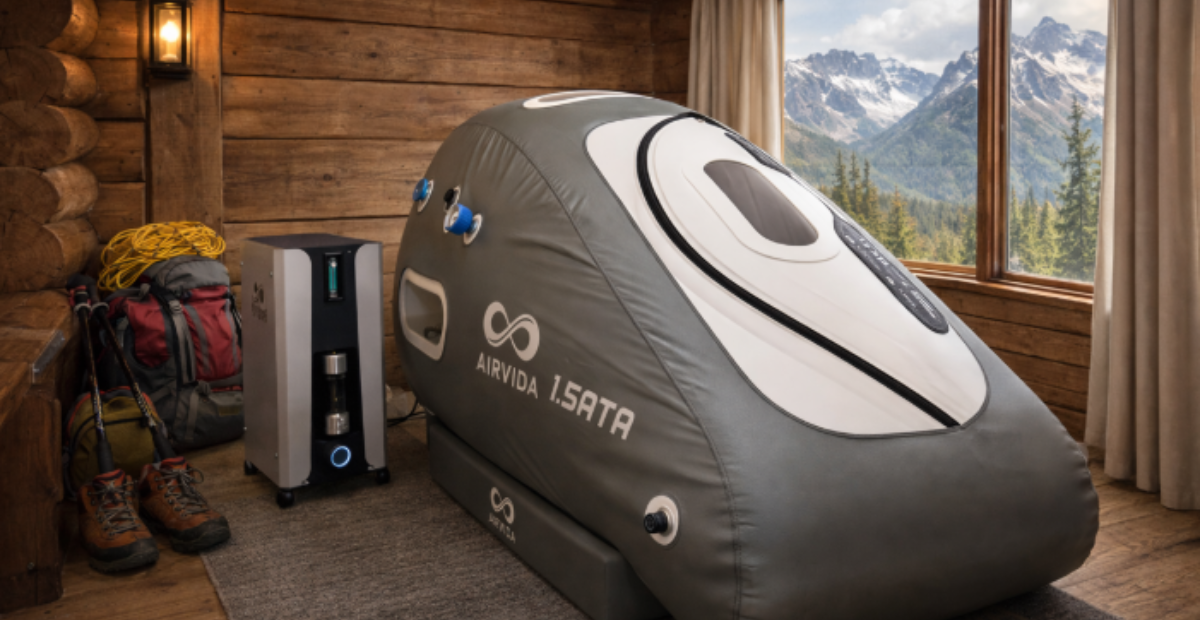
A portable hyperbaric chamber for altitude sickness delivers pressurized oxygen therapy that helps your body adjust to high elevations by increasing oxygen levels in your blood and tissues. This treatment can reduce symptoms like headaches, nausea, and fatigue while supporting faster acclimatization at altitude.
Altitude sickness affects millions of travelers, hikers, and athletes each year when they ascend to high elevations too quickly. Whether you're planning a mountain expedition or living at high altitude, understanding how hyperbaric oxygen therapy works can make a significant difference in your comfort and safety.
In this guide, we'll explain what a portable hyperbaric chamber for altitude sickness does, how it helps your body cope with low oxygen levels, and what to consider when choosing the right chamber for your needs.
Experience the benefits of oxygen therapy at home. Explore our Airvida Pro90 portable sitting hyperbaric chamber for convenient daily use.
What Is Altitude Sickness and Why Does It Happen
Altitude sickness, also called acute mountain sickness (AMS), happens when your body struggles to adjust to lower oxygen levels at high elevations. It commonly affects people who travel quickly to places above 8,000 feet (2,500 meters), such as mountain resorts, high-altitude cities, or hiking destinations.
Why altitude sickness happens

At higher altitudes, the air pressure drops. Even though oxygen is still present, each breath delivers less oxygen to your blood. Your body needs time to adapt, and when it does not get that time, symptoms appear.
Your body tries to compensate by:
-
Breathing faster
-
Increasing heart rate
-
Producing more red blood cells
If this adjustment happens too quickly, altitude sickness can develop.
Common symptoms
Symptoms usually begin within 6 to 24 hours after ascent and may include:
-
Headache
-
Nausea or vomiting
-
Dizziness or lightheadedness
-
Fatigue or weakness
-
Shortness of breath
-
Trouble sleeping
Who is most at risk
You are more likely to experience altitude sickness if you:
-
Ascend too quickly
-
Skip acclimatization days
-
Overexert yourself early
-
Are dehydrated
-
Have had altitude sickness before
Fitness level does not protect you. Even healthy athletes can get it.
Why it matters
Mild altitude sickness can be uncomfortable but manageable. If ignored, it can progress into serious conditions affecting the lungs or brain, which require immediate descent and medical care.
Learn how oxygen therapy supports recovery. Read our guide on hyperbaric oxygen therapy for ulcerative colitis to understand HBOT benefits.
How Portable Hyperbaric Chambers Help With Altitude Sickness

Portable hyperbaric chambers help relieve altitude sickness by creating a pressurized environment that simulates a lower elevation. This is especially useful when immediate descent is not possible.
At high altitudes, lower air pressure means less oxygen reaches your bloodstream. Portable hyperbaric chambers increase internal pressure to about 1.3–1.5 ATA, allowing your body to absorb more oxygen, similar to descending thousands of feet. When combined with concentrated oxygen, this pressure forces oxygen to dissolve directly into blood plasma, not just red blood cells.
This boost supports vital organs. The brain receives more oxygen to reduce headaches, dizziness, and confusion. Lung tissue benefits from reduced fluid buildup, while muscles regain energy to fight fatigue. Higher oxygen levels also calm the body’s stress response, improving comfort and recovery.
Unlike standard oxygen tanks, portable hyperbaric chambers address both oxygen and pressure, making them one of the most effective non-descent tools for managing altitude sickness.
Here's how different treatments compare:

|
Treatment Method |
Oxygen Delivery |
Pressure Increase |
Portability |
Setup Time |
|
Descent to Lower Altitude |
Natural |
Natural |
Requires travel |
Varies by location |
|
Oxygen Tanks/Masks |
Supplemental only |
None |
Portable |
Under 5 minutes |
|
Portable Hyperbaric Chamber |
Concentrated |
1.3-1.5 ATA |
Portable |
10-15 minutes |
|
Hospital Hyperbaric Chamber |
High concentration |
2.0-3.0 ATA |
Fixed location |
20-30 minutes |
The portability factor matters significantly in mountain environments. You can transport a portable hyperbaric chamber for altitude sickness to base camps, remote locations, or emergency situations where hospital access isn't available.
Setup time is manageable even in challenging conditions. Most portable chambers inflate in 10-15 minutes, faster than organizing an emergency descent in bad weather or darkness.
Discover advanced home therapy options. Check out our Airvida Pro portable lying hyperbaric chamber (1.5 ATA) for full-body treatment.
Hyperbaric Collections You May Want to Shop

Choosing the Right Portable Hyperbaric Chamber
Selecting a portable hyperbaric chamber for altitude sickness requires understanding different models, pressure ratings, and features that match your specific needs.
Pressure Ratings and What They Mean
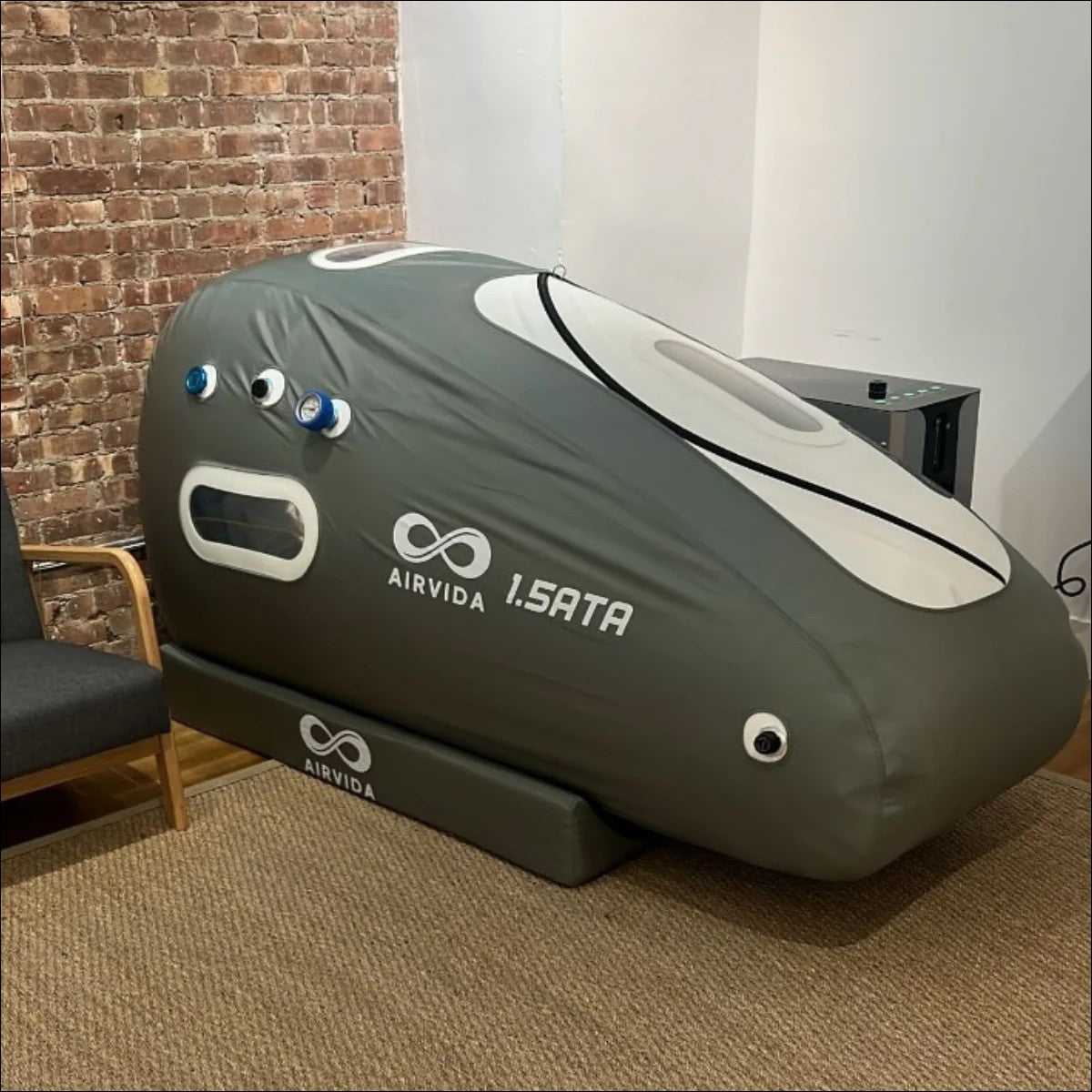
Portable hyperbaric chambers operate at different pressure levels, measured in atmospheres absolute (ATA). This rating tells you how much pressure the chamber creates compared to sea level.
Chambers rated at 1.3 ATA provide mild pressure increase, simulating descent of approximately 3,000-4,000 feet. These work well for mild altitude sickness symptoms and prevention during acclimatization.
Models at 1.4 ATA offer moderate pressure, equivalent to descending 4,000-5,000 feet. This level suits people experiencing moderate symptoms or those who need more substantial relief.
Chambers reaching 1.5 ATA deliver stronger pressure effects, simulating descent of 5,000-6,000 feet. Medical professionals often recommend this level for more severe altitude sickness cases that don't yet require evacuation.
Higher pressure doesn't always mean better results. The right pressure depends on your symptoms, current altitude, and treatment goals. Mild symptoms often respond well to lower pressures, while moderate to severe cases benefit from 1.4-1.5 ATA chambers.
Sitting vs Lying Chamber Designs
Chamber design affects comfort, treatment duration, and practical use. Two main styles dominate the portable market: sitting and lying configurations.
Sitting chambers like the compact sitting hyperbaric chamber by Airvida Chambers take up less space and allow you to read, use devices, or work during treatment. They're ideal for:
-
Regular preventive sessions during acclimatization
-
Mild to moderate symptom relief
-
Limited space situations like small tents or cabins
-
People who feel claustrophobic lying down
Lying chambers require more floor space but distribute pressure more evenly across your body. The entry-level lying hyperbaric oxygen chamber suits people who need:
-
Extended treatment sessions for severe symptoms
-
Full-body relaxation during therapy
-
Maximum comfort for sleep-like recovery
-
Treatment while very fatigued or dizzy
Weight and packed size matter for mountain expeditions. Sitting chambers typically weigh 15-25 pounds and pack smaller than lying models, which range from 25-40 pounds. Consider your transportation method and available carrying capacity.
Key Features to Consider
Modern portable chambers include features that improve safety, comfort, and effectiveness. Look for these important elements when choosing your chamber.
Pressure gauges let you monitor exact pressure levels during treatment. Analog gauges are simple and reliable, while digital displays provide precise readings and may track treatment time.
Cooling systems prevent overheating during extended sessions. Built-in fans or ventilation systems circulate fresh air and maintain comfortable temperatures, especially important in warm climates or during physical exertion.
Viewing windows reduce feelings of confinement. Clear panels let you see outside, read, or watch entertainment during treatment. Some models include multiple windows for better visibility.
Pressure relief valves ensure safety by preventing over-pressurization. Automatic systems adjust pressure if it exceeds safe limits, providing peace of mind during unsupervised use.
Quick-entry designs matter when symptoms are severe. Zippers, hatches, or combination systems should operate smoothly and allow fast access in emergencies.
Noise levels affect comfort during extended sessions. Quieter compressors and motors make treatment more pleasant, particularly during rest or sleep attempts.
|
Feature |
Why It Matters |
Best For |
|
Multiple pressure settings |
Adjusts to symptom severity |
Treating various altitude sickness stages |
|
Lightweight materials |
Easier transport |
Mountain expeditions, remote locations |
|
Dual-purpose design |
Treatment and prevention |
Long-term altitude stays |
|
Easy maintenance |
Reliable operation |
Frequent users, emergency situations |
|
Battery backup options |
Works without power |
Remote camps, power outages |
For serious altitude challenges, consider our higher-pressure portable lying hyperbaric chamber delivering 1.5 ATA for maximum therapeutic benefit.
Hyperbaric Chambers You May Want to Shop
Explore More


Using a Portable Hyperbaric Chamber Safely
Using a portable hyperbaric chamber correctly helps relieve altitude sickness while reducing risk. Session length depends on symptoms. Mild cases often improve with 60–90 minutes, moderate symptoms may need 2–3 hours, and more severe cases can require longer sessions. Preventive use typically involves short daily sessions during early altitude exposure. If symptoms appear, treatments can be increased, but sessions should be spaced at least 4–6 hours apart to allow your body to adjust.
Track how you feel. Reduced headaches, nausea, and fatigue signal improvement. Continue sessions for full recovery, but never delay emergency descent if symptoms worsen or become severe.
Safety matters. Do not use a chamber if you have a collapsed lung, active sinus or respiratory infection, or certain ear conditions without medical approval. Equalize ear pressure slowly, stay hydrated, avoid overheating, and stop immediately if pain or discomfort occurs.
Explore how oxygen therapy addresses different conditions. Read about using a hyperbaric chamber for brain fog and its cognitive benefits.
Portable Hyperbaric Chambers vs Other Altitude Sickness Remedies
Altitude sickness can be managed with medications, oxygen, acclimatization, or portable hyperbaric chambers. Medications like acetazolamide help the body adjust faster but take 24–48 hours to work and may cause side effects. Dexamethasone reduces severe symptoms but does not improve acclimatization. Supplemental oxygen offers quick relief, yet symptoms often return once oxygen is removed because air pressure remains low.
Portable hyperbaric chambers combine oxygen delivery with increased pressure, simulating descent. Just 1–2 hours of treatment can mimic descending 2,000–3,000 feet, providing fast relief without medication side effects. Natural acclimatization remains the safest long-term approach, but it takes days.
Hyperbaric chambers are most useful when descent is delayed or impossible, such as during storms, remote expeditions, high-altitude worksites, or athletic training. They also help speed early acclimatization and reduce symptom severity in the first days at altitude.
Similar pressure-related conditions respond to HBOT. Learn about hyperbaric oxygen therapy for decompression sickness and treatment protocols.
Practical Tips for Altitude Sickness Management
Managing altitude sickness works best when smart prevention strategies are combined with supportive treatments like chamber therapy. One proven method is “climb high, sleep low,” where you expose your body to higher elevations during the day but return to lower altitudes for sleep. Ascend gradually, limiting elevation gain to 1,000–1,500 feet per day above 8,000 feet and adding rest days every 3,000 feet.
Stay well hydrated. Aim for 3–4 liters of water daily and keep urine pale yellow. Avoid alcohol and sleeping pills early on, as they reduce breathing efficiency during sleep. Light movement such as walking helps acclimatization, but avoid hard workouts during the first 24–48 hours. A high-carbohydrate diet also helps, since carbs require less oxygen to process.
For best results, combine approaches. If prone to altitude sickness, start acetazolamide before ascent and use short hyperbaric chamber sessions as needed. Keep supplemental oxygen available, track symptoms regularly, and set clear rules for when to rest, treat, or descend.
Key Insights on Portable Hyperbaric Chambers for Altitude Sickness
A portable hyperbaric chamber for altitude sickness provides fast, practical relief when immediate descent is not possible. By increasing pressure and oxygen concentration, the chamber simulates lower-altitude conditions, helping your body restore oxygen levels, ease symptoms, and continue adapting safely.
Choosing the right system depends on how often and how high you travel. Occasional trips may only require a simple setup, while frequent high-altitude work or serious mountaineering calls for a more advanced solution. Airvida Chambers offer reliable, easy-to-use portable options designed for both short-term exposure and demanding high-elevation environments, making them a smart investment for safety and performance.
For best results, chamber use should support a complete altitude plan. Pair treatments with gradual acclimatization, proper hydration, rest, and medication when appropriate. Descent should always remain the priority if symptoms worsen.
Whether you are planning an expedition, working at elevation, or managing altitude-related risk, Airvida Chambers help make altitude sickness management safer, easier, and more accessible.
Want to learn more about optimizing your oxygen therapy routine? Check out our guide on best treatments for decompression sickness explained for insights on pressure-based therapies.
Frequently Asked Questions
Does portable oxygen help with altitude sickness?
Portable oxygen provides supplemental oxygen that can relieve mild altitude sickness symptoms temporarily. However, it only addresses the oxygen deficit without changing atmospheric pressure. You're still breathing oxygen at reduced pressure, which limits absorption.
A portable hyperbaric chamber for altitude sickness combines both oxygen delivery and pressure increase, making it more effective than oxygen alone. The chamber forces oxygen into your bloodstream and tissues more efficiently, providing relief comparable to descending to lower altitude.
What is the most effective treatment for altitude sickness?
Descending to lower altitude remains the most effective and reliable treatment for altitude sickness, especially severe cases. When immediate descent isn't possible, a portable hyperbaric chamber for altitude sickness offers the next best option by simulating descent through increased pressure.
For mild cases, medications like acetazolamide combined with rest and hydration work well. Moderate to severe symptoms require either actual descent or chamber treatment. No medication or oxygen therapy alone matches the effectiveness of reducing altitude exposure.
Can a hyperbaric chamber help with sickness?
Yes, hyperbaric chambers effectively treat altitude sickness by increasing atmospheric pressure around your body, which simulates lower altitude conditions. The chamber forces more oxygen into your blood and tissues, relieving symptoms like headaches, nausea, and fatigue.
Treatment duration of 1-3 hours can provide relief equivalent to descending several thousand feet. Portable chambers work best for mild to moderate cases or as emergency treatment when descent is temporarily impossible. Severe cases still require actual descent and medical care.
Who cannot go in a hyperbaric chamber?
People with untreated pneumothorax (collapsed lung) cannot safely use hyperbaric chambers as pressure changes can worsen the condition. Those with active upper respiratory infections, severe chronic obstructive pulmonary disease (COPD), or certain ear conditions should avoid chamber use without medical clearance.
Recent ear surgery, severe claustrophobia, and some heart conditions also present contraindications. Pregnant women should consult doctors before using chambers. Always disclose medical history to chamber operators and seek professional guidance if you have any chronic conditions.
What is the fastest way to adjust to high altitude?
The fastest safe adjustment combines gradual ascent with supportive treatments. Limit elevation gain to 1,000 feet per day above 8,000 feet and include rest days every 3,000 feet. Start acetazolamide 24-48 hours before ascending to speed acclimatization.
Use a portable hyperbaric chamber for altitude sickness for daily 30-60 minute sessions during the first few days. Stay well-hydrated with 3-4 liters of water daily, maintain light activity, and eat high-carbohydrate meals. This combination typically reduces adjustment time from 3-5 days to 1-2 days.
How long should you stay in a hyperbaric chamber for altitude sickness?
Treatment duration depends on symptom severity and chamber pressure. Mild symptoms typically improve with 60-90 minute sessions at 1.3-1.4 ATA. Moderate symptoms may require 2-3 hours, while severe cases benefit from 4-6 hour sessions at 1.4-1.5 ATA. You can repeat sessions 2-3 times daily if needed, spacing them 4-6 hours apart.
Start with shorter sessions and increase duration based on symptom response. Continue daily sessions during acclimatization even after symptoms improve to prevent recurrence. Always monitor symptoms during treatment and adjust duration accordingly.
Disclaimer
Airvida and partners advice does not constitute medical advice and is intended for informative and educational purposes only with no medical or non medical claims being made. While research & studies show the potential Hyperbaric Oxygen Therapy (HBOT) and Hyperbaric Air Therapy (HBAT) may have implied benefits, individual results may vary. It is required by Airvida & Partners to consult with doctors before being approved for Hyperbaric Therapy (HBOT & HBAT). Read More HERE