


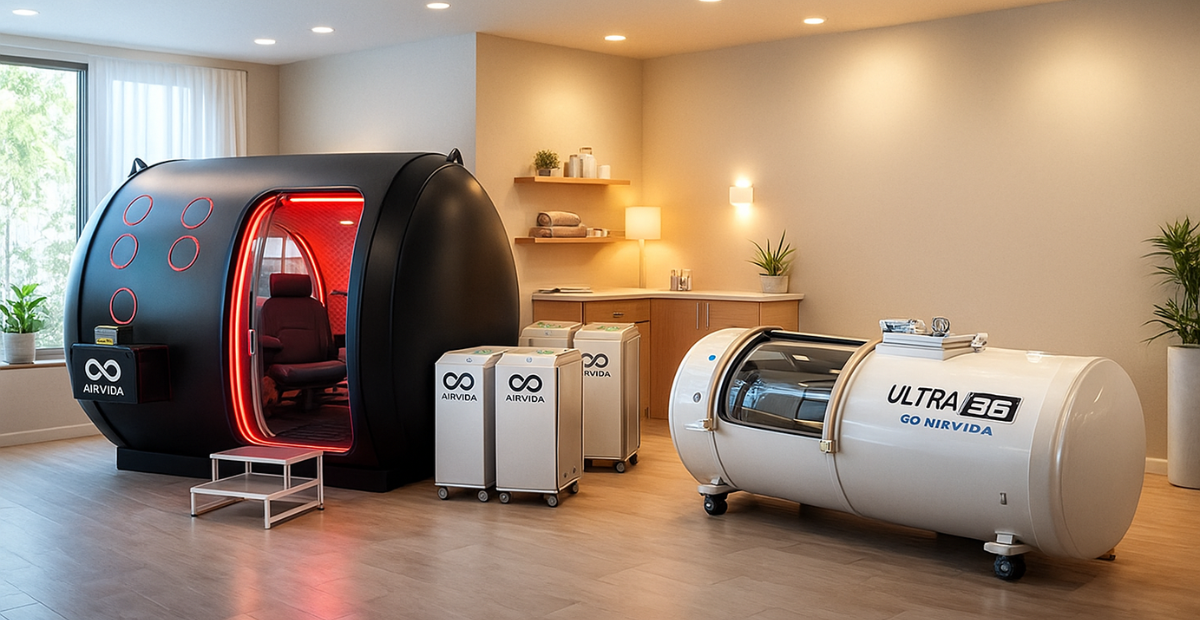
Multiplace vs monoplace hyperbaric chambers differ primarily in patient capacity and operational design. Monoplace chambers treat one person at a time in a sealed tube, while multiplace chambers accommodate multiple patients simultaneously in a walk-in room with medical staff present.
Choosing between these two types can significantly impact your wellness center's workflow, treatment capabilities, and budget. Whether you're setting up a new facility, expanding an existing practice, or researching options for therapeutic use, understanding the core differences helps you make an informed decision.
In this guide, we'll break down everything you need to know about multiplace vs monoplace hyperbaric chambers, from design and functionality to cost and patient experience.
Experience professional treatment capacity for your wellness facility. Explore our multiplace hyperbaric chambers designed for therapy centers.
Hyperbaric Chamber Types
Hyperbaric oxygen therapy (HBOT) delivers pure oxygen in a pressurized environment, promoting healing and recovery. The type of chamber you choose affects treatment efficiency, patient comfort, and operational requirements for your wellness or therapy facility.
Multiplace Hyperbaric Chamber You May Want to Shop

What Is a Monoplace Hyperbaric Chamber?
A monoplace hyperbaric chamber is a single-person unit designed like a clear acrylic tube. The patient lies inside while the entire chamber fills with oxygen under pressure.
These chambers are compact and straightforward to operate. They fit easily into smaller wellness center spaces and don't require complex installation procedures. The patient breathes directly from the chamber atmosphere without wearing a mask or hood.
Monoplace units typically reach pressures of 1.3 to 2.0 ATA (atmospheres absolute), which is suitable for wellness and recovery protocols. The clear design allows patients to see outside, reducing feelings of claustrophobia, and lets staff monitor them visually throughout the session.
Because only one person uses the chamber at a time, scheduling is simpler. Treatments usually last 60 to 90 minutes, and the chamber can be cleaned and prepared quickly between clients.
What Is a Multiplace Hyperbaric Chamber?
A multiplace hyperbaric chamber functions as a pressurized room where multiple patients receive treatment simultaneously. Attendants can enter the chamber with patients, providing support and supervision during sessions.
These chambers are built like walk-in rooms with seating or benches for patients. The room fills with compressed air, and patients breathe pure oxygen through masks or specialized breathing systems connected to individual oxygen delivery lines.
Multiplace chambers reach therapeutic pressures while offering greater flexibility. Staff can monitor multiple patients at once, adjust treatment parameters, or provide assistance without depressurizing the chamber.
The AirVida Multiplace Hyperbaric Oxygen Chamber with BIBS System exemplifies this design, accommodating multiple patients while maintaining precise oxygen control and safety standards for wellness and recovery applications.
Differences between Monoplace and Multiplace Hyperbaric

The fundamental difference between multiplace vs monoplace hyperbaric chambers lies in their physical structure and operational approach.
Monoplace chambers are horizontal tubes, typically 7 to 8 feet long and about 3 feet in diameter. They're made from clear acrylic, which is lightweight yet strong enough to withstand pressure. The entire unit pressurizes with oxygen, creating a simple, enclosed treatment environment.
Multiplace chambers resemble small rooms, ranging from 8 to 20 feet in length. They're constructed from steel with viewing ports and have a door or hatch for entry. The chamber pressurizes with air, not oxygen, which reduces fire risk and allows staff to be present inside.
Patient positioning also differs. Monoplace patients lie horizontally throughout treatment. Multiplace patients can sit upright in chairs or recline on benches, depending on their comfort and mobility.
Looking for space-saving solutions for your facility? Check our monoplace hyperbaric chamber collection for efficient treatment options.
Multiplace vs Monoplace Hyperbaric Chambers
Choosing between these chamber types involves evaluating multiple factors. Understanding how they compare across key areas helps you match the right system to your wellness center's specific needs and space requirements.
|
Feature |
Monoplace Chambers |
Multiplace Chambers |
|
Patient Capacity |
One patient per session |
2-12+ patients simultaneously |
|
Oxygen Delivery |
Chamber fills with oxygen |
Patients breathe oxygen through masks/hoods while chamber contains air |
|
Staff Access |
External monitoring |
Staff can enter and provide direct support |
|
Space Requirements |
Compact, fits in 10x10 foot room |
Requires dedicated room, 200-500+ square feet |
|
Pressure Range |
1.3-2.0 ATA typical |
1.5-3.0 ATA capable |
|
Installation |
Simpler, minimal construction |
More complex, requires proper ventilation systems |
Treatment Capacity and Throughput
Monoplace chambers treat one patient at a time, making them ideal for wellness facilities with moderate client volumes. If you schedule 8 to 12 treatments daily, a monoplace unit handles this efficiently with proper appointment management.
For higher volumes, multiplace chambers offer significant advantages. A 4-person chamber can complete the same number of treatments in roughly one-fourth the time. This matters for busy wellness centers, recovery facilities, or therapy centers serving many clients throughout the day.
The trade-off involves initial investment versus long-term efficiency. Multiple monoplace chambers can provide similar throughput to one multiplace unit, but they require more space and staff to operate simultaneously.
Staff Supervision and Client Support
With monoplace chambers, staff members monitor clients from outside through the clear acrylic walls. Communication happens via intercom systems. If a client needs assistance, the chamber must depressurize before staff can reach them, which takes 5 to 15 minutes depending on treatment pressure.
Multiplace chambers allow immediate support. Staff inside can respond to anxiety, discomfort, or questions without interrupting treatment for other clients. This makes multiplace units valuable for treating clients who may feel anxious or those new to hyperbaric therapy.
The presence of staff also provides psychological comfort. Clients with claustrophobia, anxiety, or nervousness often tolerate treatment better when someone is physically present with them in the chamber.
Patient Experience and Comfort
Patient comfort affects compliance and treatment outcomes. Both chamber types have distinct experiences that appeal to different client preferences.
Monoplace chambers require patients to lie still for the entire session. The clear tube provides visibility but some clients feel confined. The chamber can accommodate entertainment systems like music or guided meditation, but physical movement is limited. Clients cannot bring personal items inside due to oxygen-rich environment and fire safety concerns.
Multiplace chambers offer more freedom. Patients sit in chairs or recline on benches. They can bring approved books or relaxation materials. The social environment where multiple people undergo treatment together can be reassuring and even enjoyable. The presence of support staff provides immediate assistance if needed.
Temperature control is easier in multiplace chambers. Monoplace units can become warm during treatment as compressed oxygen generates heat. Multiplace chambers have better air circulation and climate management.
Safety Considerations
Both chamber types are safe when operated properly, but they have different characteristics that wellness facility owners should understand.
Monoplace chambers present higher fire risk because the entire environment is oxygen-enriched. Any ignition source creates concern. Strict protocols prohibit electronics, petroleum-based products, and other flammable materials. Modern monoplace chambers include safety features and emergency venting systems.
Multiplace chambers pressurize with air, significantly reducing fire risk. Support staff can use certain equipment inside. However, the complexity of multiplace systems requires proper training. Oxygen delivery systems must be well-maintained to prevent leaks or issues between patients.
Emergency decompression procedures also differ. Monoplace chambers can be vented in 3 to 5 minutes. Multiplace chambers require 10 to 20 minutes for safe decompression to ensure comfort for all occupants.
Understanding 5 key features of AirVida's ASME PVHO-1 approved hyperbaric oxygen chambers helps you evaluate safety standards across both chamber types for your facility.
Hyperbaric Chambers You May Want to Shop


Choosing the Right Chamber for Your Needs
Selecting between multiplace vs monoplace hyperbaric chambers depends on your facility type, client population, budget, and growth plans. Each setting has different priorities that favor one design over the other.
For Wellness Centers and Recovery Facilities
Wellness centers and recovery facilities typically favor chambers that balance effectiveness with ease of operation. These settings prioritize client comfort, efficient scheduling, and manageable operational complexity.
Monoplace chambers work beautifully for wellness centers starting their HBOT programs. They require less space, lower upfront investment, and simpler day-to-day operation while delivering excellent therapeutic outcomes for recovery and wellness goals.
The private treatment environment appeals to clients seeking personal relaxation and recovery time. The clear design feels less intimidating and more spa-like, fitting the wellness center aesthetic perfectly. Installation is straightforward, often requiring only electrical connection and oxygen supply setup.
For high-volume wellness facilities serving many clients throughout the day, multiplace chambers provide better throughput. Treating 4 to 6 clients simultaneously during peak hours becomes practical and time-efficient, helping you serve more people without extending business hours.
For Sports and Athletic Recovery Centers
Athletic recovery facilities benefit greatly from hyperbaric therapy chambers. Athletes appreciate the proven recovery benefits and the ability to relax during treatment sessions.
Monoplace chambers align naturally with sports recovery programs. The one-person design works well for individual athlete sessions, pre-competition preparation, or post-training recovery. The clear chamber allows athletes to maintain visual connection with their surroundings while recovering.
These chambers also work well for membership-based models where athletes book individual sessions around their training schedules. The compact footprint means you can fit multiple units in a reasonable space, allowing flexibility during busy periods.
However, sports medicine centers serving entire teams might prefer multiplace chambers. Treating multiple team members simultaneously before games or events becomes efficient and builds team camaraderie during recovery sessions.
For Therapy Centers and Alternative Medicine Practices
Therapy centers incorporating hyperbaric chamber treatment into comprehensive wellness programs have specific needs that influence chamber selection.
Monoplace chambers integrate smoothly into existing therapy center layouts. They don't require massive facility renovations or complex installation procedures. You can start offering hyperbaric therapy without completely restructuring your space or workflow.
The simplicity of monoplace operation means your existing staff can learn to manage treatments with proper training. This reduces the need for specialized technicians and keeps staffing costs manageable as you add this service.
Multiplace chambers make sense for larger therapy centers planning to make hyperbaric therapy a central service offering. The ability to treat multiple clients at once creates community among your clientele and maximizes the return on your chamber investment.
Budget and Return on Investment
Your financial situation heavily influences chamber selection for your wellness facility. Monoplace chambers require $50,000 to $100,000 initial investment plus installation costs of $3,000 to $10,000. Operating costs run $40 to $80 per treatment session when factoring in oxygen, electricity, and maintenance. With typical session pricing of $100 to $250, profitability comes relatively quickly with consistent client volume.
Investing in a multiplace chamber, such as the Airvida 2.0 ATA Hardshell Multiplace Chamber priced at $150,000, is a significant commitment. Installation involves facility modifications, which typically cost between $30,000 to $100,000, depending on the site requirements. However, this investment leads to substantial long-term efficiency: the per-client operating cost drops to approximately $20 to $40 when multiple people are treated simultaneously, ensuring strong profit margins as client volume increases.
Calculate your break-even point based on treatment volume and your pricing structure. Understanding session economics and payment options helps project revenue accurately. Many wellness facilities offer package deals or memberships that improve client retention and revenue predictability.
For facilities planning long-term growth, multiplace chambers offer better scalability. You can increase client volume without purchasing additional units. For practices testing the HBOT market or serving specific populations, monoplace chambers minimize financial risk while you build your client base.
AirVida Chambers provides flexible solutions for wellness facilities at different growth stages. Whether you're adding your first chamber or expanding an established program, the right equipment supports your business goals.
Getting Started With AirVida Chambers
Making the decision between multiplace vs monoplace hyperbaric chambers is just the first step. AirVida Chambers helps wellness facility owners through every phase of adding hyperbaric therapy to their service offerings.
Why Choose AirVida Chambers
AirVida Chambers specializes in providing quality hyperbaric solutions for wellness centers, recovery facilities, and therapy practices. The company understands the unique needs of non-medical wellness applications and designs chambers accordingly.
Safety certifications matter. AirVida's chambers meet ASME PVHO-1 standards, ensuring your facility operates equipment that follows recognized safety protocols. This protects your clients, your staff, and your business.
Beyond the equipment itself, AirVida provides ongoing support to help your facility succeed. From installation guidance to operational training, you're not just buying a chamber but gaining a partner in growing your hyperbaric therapy program.
Installation and Training Support
Installing a hyperbaric chamber doesn't need to be overwhelming. AirVida works with wellness facility owners to ensure smooth implementation.
For monoplace chambers, installation typically takes 1 to 2 days. You'll need adequate electrical service and oxygen supply arrangements. AirVida helps you understand these requirements before purchase, so there are no surprises.
Multiplace chamber installation is more involved, taking 1 to 2 weeks depending on facility preparations. AirVida's team guides you through space requirements, ventilation needs, and safety considerations to ensure your facility is properly equipped.
Training is crucial for safe, effective operation. AirVida provides comprehensive training for your staff on chamber operation, safety protocols, client preparation, and emergency procedures. This ensures your team feels confident managing treatments from day one.
Building Your Hyperbaric Therapy Program
Adding hyperbaric therapy creates new revenue streams and differentiates your wellness facility. Here's how to build a successful program:
Start by identifying your target market. Athletes seeking recovery? Wellness clients pursuing anti-aging benefits? People managing chronic conditions? Understanding your audience shapes your marketing and service packages.
Pricing strategy matters. Research what other facilities in your area charge. Consider offering introductory packages to build your initial client base. Many successful facilities use membership models that guarantee recurring revenue.
Marketing your hyperbaric services requires education. Many potential clients don't fully understand hyperbaric therapy benefits. Create educational content, offer facility tours, and provide free consultation sessions to build awareness and trust.
Understanding relevant information about therapy applications, including considerations around hyperbaric oxygen therapy CPT code information, helps you position your services appropriately within the wellness and recovery market.
Maximizing Your Chamber Investment
Whether you choose monoplace or multiplace, maximize your investment with these strategies:
Optimize scheduling: Keep your chambers operating during all available hours. Morning, afternoon, and evening sessions capture different client segments. Weekend availability often attracts working professionals.
Create package deals: Bundle sessions into 10, 20, or 30-treatment packages at discounted rates. This increases upfront revenue and improves client commitment to completing their therapy protocol.
Partner with complementary services: Connect with physical therapists, chiropractors, sports trainers, and other wellness professionals. Referral partnerships build your client base while you refer your clients to trusted providers.
Document results: Encourage clients to track their progress and share testimonials. Success stories are your most powerful marketing tool for attracting new clients.
Expand services: As your hyperbaric program grows, consider adding complementary wellness services. Many facilities combine HBOT with IV therapy, massage, or other recovery modalities.
Final Thoughts on Multiplace vs Monoplace Hyperbaric Chambers
Choosing between multiplace vs monoplace hyperbaric chambers depends on matching technology to your specific needs. Both deliver effective HBOT but serve different operational requirements.
Monoplace chambers offer simplicity, space efficiency, and lower initial costs, ideal for wellness centers starting HBOT programs. Their straightforward operation makes them accessible for most applications.
Multiplace chambers excel in high-volume settings where treating multiple clients simultaneously creates operational advantages. The higher investment pays off for established centers with strong demand.
Consider current needs and future growth. Evaluate your facility space, projected client volume, staff capabilities, and budget to ensure optimal planning. Quality equipment from manufacturers like AirVida ensures safety and reliability, supporting your vision for delivering excellent hyperbaric therapy.
You May Also Want to Read
Hyperbaric Chamber for Bends: A Comprehensive Guide
How Quickly Does Hyperbaric Therapy Work?
Beginner's Guide to Hyperbaric Oxygen Therapy
Frequently Asked Questions
What is a monoplace hyperbaric chamber?
A monoplace hyperbaric chamber is a single-person pressurized unit designed for individual treatments. The patient lies inside a clear acrylic tube that fills entirely with oxygen while pressurizing to therapeutic levels. These chambers are compact and work well for wellness centers with limited space.
They don't require staff to enter during treatment since monitoring happens externally through the clear walls. Monoplace chambers typically reach pressures between 1.3 and 2.0 ATA, which is effective for wellness and recovery protocols in non-medical settings.
What are the two types of hyperbaric chambers?
The two main types of hyperbaric chambers are monoplace and multiplace systems. Monoplace chambers treat one person at a time in a sealed tube filled with oxygen. Multiplace chambers accommodate multiple patients simultaneously in a pressurized room where they breathe oxygen through masks while support staff can be present inside.
Both types deliver therapeutic oxygen under pressure but differ significantly in capacity, design, operational requirements, and cost structure. Wellness facilities choose between them based on space, budget, and expected client volume.
Does Tom Brady have a hyperbaric chamber?
Tom Brady has publicly discussed using hyperbaric oxygen therapy as part of his recovery and wellness routine. Many professional athletes incorporate HBOT for faster healing from training stress and enhanced performance recovery.
While specific details about his personal equipment aren't publicly confirmed, elite athletes typically use hyperbaric chambers for private treatment sessions. The therapy has gained significant popularity among professional athletes seeking competitive advantages through accelerated recovery, reduced inflammation, and optimized physical conditioning for peak performance.
Is it illegal to have a hyperbaric chamber in America?
No, it is not illegal to own or operate a hyperbaric chamber in America for wellness purposes. Both wellness facilities and private individuals can legally purchase and use hyperbaric chambers. Chambers designed for wellness and recovery applications operate within regulatory frameworks appropriate for non-medical use.
Facilities should ensure their chambers meet recognized safety standards like ASME PVHO-1 certification. Operating chambers for wellness services generally doesn't require medical licensing, though specific regulations may vary by state. Always verify local requirements before opening a hyperbaric therapy facility.
What does pure oxygen feel like?
Pure oxygen at normal pressure feels similar to regular air when breathing. Most people don't notice a dramatic difference in sensation during initial breaths. However, under pressure in a hyperbaric chamber, some clients report breathing feels slightly easier or the air seems "richer." Many people experience increased mental clarity and alertness during treatment, though this develops gradually.
Pure oxygen itself doesn't have a taste or smell. Some people feel slight pressure changes in their ears during pressurization, similar to flying in an airplane, but this adjusts quickly with simple techniques.
Do rich people use hyperbaric chambers?
Many successful individuals invest in hyperbaric therapy as part of comprehensive wellness programs. Celebrities, business executives, and professional athletes have popularized HBOT for recovery, performance optimization, and wellness enhancement.
The growing accessibility of hyperbaric therapy through wellness centers has made it available to people at various income levels. While personal chamber ownership represents a significant investment, most people access hyperbaric therapy through wellness facilities offering per-session rates or membership packages.
DISCLAIMER
Airvida and partners advice does not constitute medical advise and is intended for informative and educational purposes only with no medical or non medical claims being made. While research & studies show the potential Hyperbaric Oxygen Therapy (HBOT) and Hyperbaric Air Therapy (HBAT) may have implied benefits, individual results may vary. It is required by Airvida & Partners to console with doctors before being approved for Hyperbaric Therapy (HBOT & HBAT). Read More HERE