




The best setting for vibration plate workouts depends on your goal. For fat burning and toning, use medium frequency with moderate amplitude for 10 to 15 minutes. If your focus is recovery or circulation, lower settings with longer duration work best. Choosing the right vibration level ensures safer workouts and better results.
Vibration plates are popular for boosting circulation, muscle activation, lymphatic drainage, and recovery. However, using the wrong setting can reduce effectiveness or cause discomfort. This guide explains how to choose the right level, why it matters, and which setting works best for your specific goal.
Understanding How Vibration Plates Work

Vibration plates use rapid oscillations to stimulate muscle contractions. These involuntary contractions engage muscle fibers more frequently than traditional static exercises. When you stand, squat, or perform movements on the plate, your muscles react to stabilize your body. This increases circulation, enhances muscle activation, and supports lymphatic drainage.
There are three main variables that determine intensity:
|
Setting Type |
What It Controls |
Effect on Body |
|
Frequency (Hz) |
Speed of vibration |
Muscle activation level |
|
Amplitude |
Depth of vibration |
Intensity of muscle engagement |
|
Time |
Duration of session |
Overall training load |
Higher frequency increases muscle stimulation by triggering faster neuromuscular contractions, while higher amplitude increases force by creating larger movement ranges and deeper muscle engagement. Duration influences endurance and metabolic response, as longer sessions may enhance circulation, calorie burn, and muscular fatigue, depending on intensity and proper recovery between workouts.
For individuals combining vibration therapy with recovery strategies, improved circulation can be especially beneficial. Enhanced oxygen delivery may support tissue repair after demanding training sessions or cosmetic procedures. If you're exploring recovery options after a transplant procedure, this detailed guide on Hyperbaric Chamber Hair Transplant: Recovery Guide & Benefits explains how optimized oxygen support may potentially assist healing and scalp recovery.
Why Choosing the Right Setting Matters
Selecting the correct vibration level is important for safety and performance. Too low, and you may not stimulate enough muscle activity. Too high, and you may feel dizzy, fatigued, or strain your joints.
The ideal setting depends on:
-
Fitness level
-
Age
-
Health conditions
-
Training goal
For example, beginners should start at lower frequencies around 10 to 20 Hz. Advanced users may benefit from 25 to 40 Hz, depending on exercise type.
If you are using vibration therapy for recovery or longevity, pairing it with treatments like hyperbaric oxygen therapy can enhance circulation and cellular repair. Explore our hyperbaric chamber Whitefish Bay collection to support full-body recovery and wellness optimization.
Vibration Therapy Machines You May Want to Shop
Explore More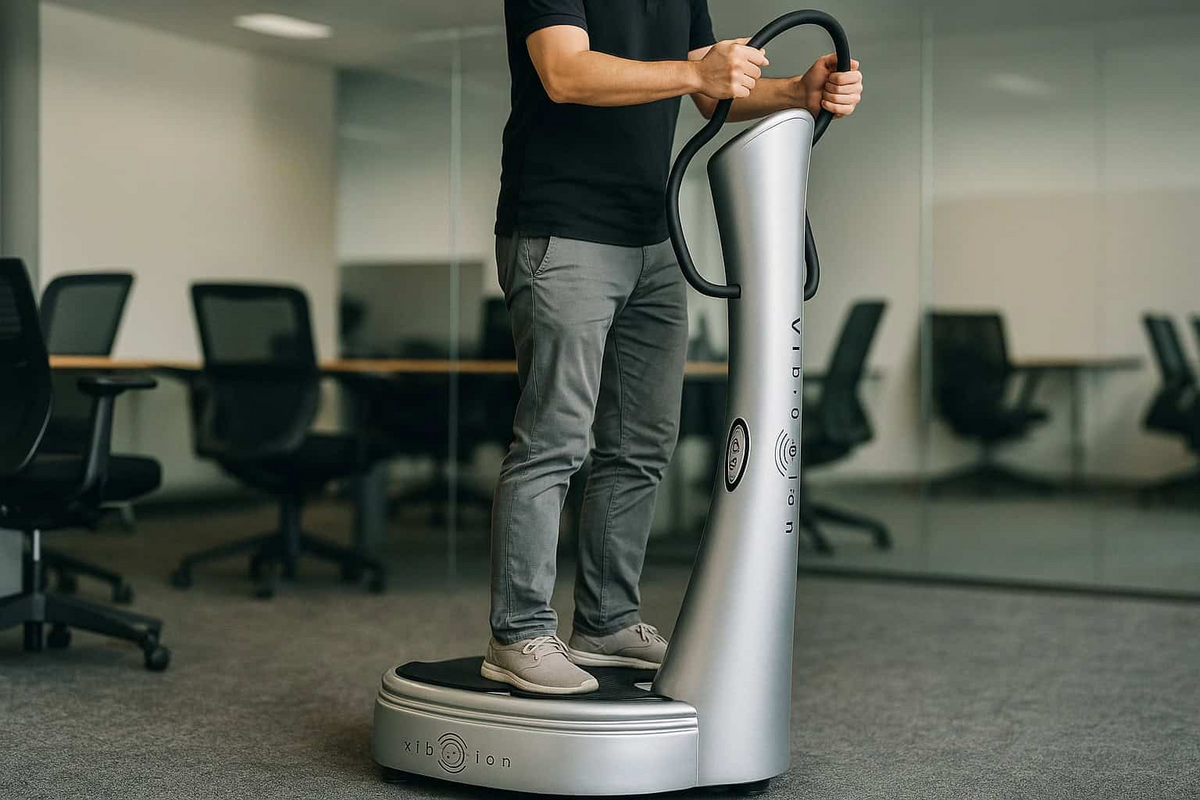


Best Setting Based on Your Goal
The best setting varies depending on what you want to achieve. For muscle toning, moderate frequency with controlled amplitude may be ideal. For fat loss, slightly higher intensity combined with active movements can help. Beginners often benefit from lower settings, gradually increasing intensity as strength, balance, and endurance improve over time.
-
For Fat Loss and Toning
For metabolic stimulation and calorie burn:
-
Frequency: 25 to 35 Hz
-
Amplitude: Medium
-
Time: 10 to 15 minutes
-
Position: Squats, lunges, light resistance exercises
Medium frequency with movement maximizes muscle activation. Static standing is less effective for fat loss compared to active positions.
-
For Muscle Strength and Conditioning
For strength development:
-
Frequency: 30 to 40 Hz
-
Amplitude: Medium to high
-
Time: 5 to 12 minutes
-
Position: Squats, planks, push-up holds
Higher frequencies recruit more fast-twitch fibers. Keep sessions shorter to prevent overfatigue.
-
For Recovery and Circulation
For post-workout recovery or lymphatic drainage:
-
Frequency: 10 to 20 Hz
-
Amplitude: Low
-
Time: 15 to 20 minutes
-
Position: Standing relaxed or seated
Low frequency encourages circulation without overstressing muscles, making it ideal for beginners, recovery days, or individuals focusing on lymphatic support. It promotes gentle muscle contractions that enhance blood flow and oxygen delivery while minimizing fatigue. This setting may also help reduce stiffness, improve flexibility, and support overall muscle relaxation after workouts.
What to Set a Vibration Plate On: Beginner to Advanced Guide

Choosing the correct intensity depends on experience.
|
Experience Level |
Frequency Range |
Duration |
Recommended Use |
|
Beginner |
10–20 Hz |
5–10 min |
Circulation and adaptation |
|
Intermediate |
20–30 Hz |
10–15 min |
Fat loss and toning |
|
Advanced |
30–40 Hz |
5–12 min |
Strength and power |
Start low and gradually increase weekly. Jumping to high settings immediately can lead to muscle soreness or discomfort.
How to Get the Best Results from a Vibration Plate
To maximize results:
-
Bend your knees slightly to absorb vibration
-
Engage your core
-
Avoid locking joints
-
Stay hydrated
-
Combine with resistance training
Movement increases effectiveness significantly. Static standing should only be used for recovery sessions.
For individuals focused on anti-aging and longevity, combining vibration therapy with oxygen-based therapies can amplify cellular regeneration. Read more in our guide on hyperbaric chamber for anti-aging to understand how circulation and oxygen work together.
Is 10 Minutes on a Vibration Plate Equivalent to Exercise?
Many marketing claims suggest 10 minutes equals a full workout. While vibration enhances muscle activation, it does not fully replace strength training or cardio. However, 10 minutes at 30 Hz with active movements may stimulate muscles similarly to light resistance work. It can complement traditional workouts but should not fully replace them.
Best Time to Use a Vibrating Plate
Morning sessions can stimulate circulation and energy. Evening sessions can improve lymphatic flow and relaxation. If used for recovery, post-workout is ideal. If used for fat loss, using it before strength training can activate muscles and improve performance.
Safety Tips Before Increasing Settings

Vibration plates are generally safe but should be used responsibly. Avoid high settings if you have joint instability, recent injuries, cardiovascular conditions, pregnancy, or implanted medical devices without medical clearance. Starting with lower intensity and shorter sessions reduces risk. Consulting a healthcare professional ensures safe use based on individual health history.
-
Joint instability
-
Severe osteoporosis
-
Recent surgery
-
Pregnancy
-
Cardiovascular conditions without medical clearance
Always consult a healthcare professional if unsure.
If your focus is advanced wellness optimization, compare therapies in our detailed breakdown of cryotherapy vs hyperbaric chamber to understand how recovery modalities differ.
Integrating Vibration Therapy with Longevity Treatments
Vibration plates improve circulation and lymphatic movement by stimulating rhythmic muscle contractions that help push blood and fluids throughout the body. Hyperbaric oxygen therapy enhances oxygen delivery and supports cellular repair by increasing oxygen saturation in tissues. Together, they may complement recovery, performance, and overall wellness when used appropriately.
Together, they support:
-
Improved tissue oxygenation
-
Reduced inflammation
-
Faster recovery
-
Anti-aging support
Explore advanced recovery options through our hyperbaric chamber Telomeres collection, designed for cellular health and longevity optimization.
Final Thoughts on Choosing the Best Setting for Vibration Plate

The best setting for vibration plate training depends entirely on your goal, experience, and recovery needs. Lower frequencies work best for circulation and recovery. Medium to high frequencies are better for fat loss and strength. Start gradually, monitor your response, and adjust accordingly.
By selecting the right intensity and combining it with proper posture and consistency, you can safely maximize the benefits of vibration therapy. Gradual progression helps prevent strain, while maintaining correct alignment ensures targeted muscle activation. Over time, structured sessions may improve strength, balance, circulation, and overall performance without unnecessary stress.
Frequently Asked Questions
How do you get the best results from a vibration plate?
The best results come from combining correct frequency, posture, and active movement. Simply standing passively is less effective than performing squats, lunges, or planks. Start with moderate frequency, engage your core, bend your knees slightly, and stay consistent with 3 to 4 sessions per week. Pairing vibration therapy with strength training or recovery treatments enhances overall performance and circulation benefits.
What to set a vibration plate on?
The ideal setting depends on your goal and experience level. Beginners should start at 10 to 20 Hz for 5 to 10 minutes. For toning and fat loss, 25 to 35 Hz works well. Advanced users aiming for strength may use up to 40 Hz in shorter sessions. Always increase gradually to avoid excessive soreness or fatigue.
What is 10 minutes on a vibration plate equivalent to?
Ten minutes on a vibration plate can enhance muscle activation similar to light resistance training. However, it is not a complete replacement for traditional workouts. When used actively at moderate frequency, it can stimulate muscles effectively and support circulation. It works best as a supplement to regular exercise rather than a substitute.
What is the best time to use a vibrating plate?
The best time depends on your fitness goal. Morning sessions boost circulation and energy levels. Post-workout sessions help with recovery and lymphatic drainage. Evening use at low frequency may promote relaxation. Choose a time when you can remain consistent, as regular sessions produce the best results.