


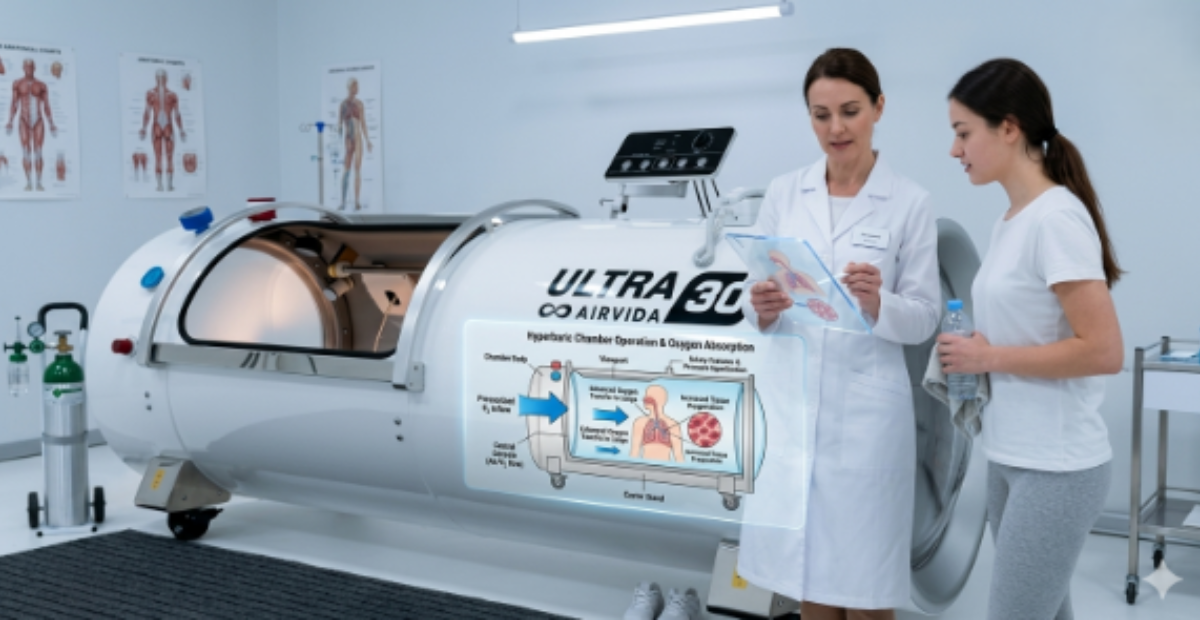
A hyperbaric oxygen therapy diagram visually explains how oxygen is delivered under pressure to speed up healing and improve body function. It shows the process inside a chamber where oxygen levels increase, helping tissues repair faster.
Understanding this diagram helps you see exactly why this therapy is effective for recovery, brain health, and overall wellness. It visually explains how oxygen is delivered throughout the body, supporting cellular repair, reducing inflammation, and enhancing natural healing processes that may contribute to improved physical and cognitive function over time.
What Is a Hyperbaric Oxygen Therapy Diagram?
A hyperbaric oxygen therapy diagram is a visual representation of how oxygen therapy works inside a pressurized chamber. Instead of just reading about it, the diagram breaks down each step in a simple and clear way.
Basic Definition and Purpose

The diagram typically shows:
-
A sealed chamber where the patient sits or lies
-
Increased air pressure inside the chamber
-
Pure oxygen being delivered into the body
-
Oxygen absorption into blood and tissues
This visual format helps users quickly understand how pressure and oxygen combine to create healing effects. Unlike standard oxygen therapy, HBOT uses pressure to push more oxygen into the bloodstream. The diagram highlights this key difference clearly, especially when exploring options like hyperbaric chamber Lake Havasu City for practical, real-world applications.
How Hyperbaric Oxygen Therapy Works (Step-by-Step)
To fully understand a hyperbaric oxygen therapy diagram, it helps to break it down into simple steps. Start by identifying key components like the chamber, oxygen flow, and pressure levels, then follow how oxygen moves through the body, allowing you to clearly see how each stage contributes to potential healing and recovery.
Step-by-Step Process

-
Entering the Chamber
The patient enters a sealed hyperbaric chamber designed to safely control pressure levels. -
Increasing Pressure
The chamber gradually increases pressure to 1.5 to 3 times normal atmospheric levels. -
Breathing Pure Oxygen
The patient breathes in oxygen at much higher concentrations than normal air. -
Oxygen Dissolves into Bloodstream
Due to pressure, oxygen dissolves directly into plasma, not just red blood cells. -
Healing and Repair Begins
Oxygen reaches damaged tissues, reduces inflammation, and promotes faster recovery.
Key Components Inside the Diagram
Understanding each part of the diagram helps you interpret it correctly and apply the knowledge. This deeper clarity allows you to connect visual elements with real therapy processes, making it easier to evaluate potential benefits, set realistic expectations, and make informed decisions about incorporating hyperbaric oxygen therapy into your wellness or recovery routine.
Main Elements Explained
|
Component |
Function |
Why It Matters |
|
Chamber |
Sealed environment |
Controls pressure safely |
|
Oxygen Supply |
Delivers pure oxygen |
Increases oxygen intake |
|
Pressure System |
Raises atmospheric pressure |
Enhances oxygen absorption |
|
Patient Area |
Where user sits or lies |
Ensures comfort and safety |
Each component plays a role in maximizing oxygen delivery, which is the core benefit of HBOT. From increased pressure levels to concentrated oxygen intake, every element works together to enhance circulation, support cellular repair, and potentially improve recovery, energy, and overall wellness when the therapy is used properly and consistently over time.
Hyperbaric Chambers You May Want to Shop
Explore More


Why Hyperbaric Oxygen Therapy Diagrams Are Important
A hyperbaric oxygen therapy diagram is not just for education. It helps users make informed decisions by clearly showing how oxygen and pressure interact to support healing. By understanding these visual cues, individuals can better evaluate therapy options, anticipate potential benefits, and choose the right hyperbaric approach for their health and wellness goals.
Why It Matters
First, it simplifies complex science. Instead of reading technical explanations, you see how everything works in one glance. Second, it builds trust. When you understand how oxygen flows and affects your body, the therapy feels more transparent and reliable. Third, it helps you choose the right solution. If you are considering a chamber, knowing how it works ensures you invest in the right setup.
Benefits Explained Through the Diagram

A well-designed hyperbaric oxygen therapy diagram also highlights the benefits visually.
Key Benefits
-
Improved oxygen delivery to tissues
-
Faster wound healing
-
Reduced inflammation
-
Enhanced brain function
-
Better circulation
These benefits are easier to understand when you see oxygen traveling through the body in the diagram.
Which Hyperbaric Chamber Option Is Best?
Choosing the right chamber depends on your needs, and the diagram helps guide that decision. By illustrating how different chamber types function, pressure levels, and oxygen delivery methods, it allows users to compare options, understand practical benefits, and select a hyperbaric chamber that aligns with their recovery goals, space, and lifestyle requirements.
Hyperbaric Collections You May Want to Shop


Soft vs Hard Chambers
|
Type |
Best For |
Why Choose It |
|
Soft Chamber |
Home use |
Affordable and portable |
|
Hard Chamber |
Clinical settings |
Higher pressure and faster results |
Recommended Locations
If you are exploring options, check this collection: Hyperbaric Chamber Portland, Oregon
How to Read a Hyperbaric Oxygen Therapy Diagram
Reading a hyperbaric oxygen therapy diagram becomes simple once you know what to look for. By focusing on key elements like oxygen flow, pressure settings, and treatment stages, you can quickly grasp how the therapy works, understand its potential benefits, and make informed choices about incorporating HBOT into your wellness or recovery routine.
Key Tips
-
Follow the oxygen flow path
-
Identify pressure changes
-
Look for tissue absorption areas
-
Understand timing and duration
This helps you connect the visual elements with real-world therapy outcomes. By exploring resources like best hyperbaric oxygen therapy for cognitive impairment, you can better understand how these visual concepts translate into potential benefits for brain function, recovery, and overall cognitive support in everyday applications.
Practical Use Cases of Hyperbaric Oxygen Therapy
A hyperbaric oxygen therapy diagram also reflects real-life applications.
Common Uses

-
Wound healing
-
Brain health support
-
Sports recovery
-
Anti-aging treatments
-
Chronic condition management
For deeper insights, explore: Best Hyperbaric Oxygen Therapy for Epilepsy: What You Need to Know. This guide explains how HBOT applies to specific health concerns.
Why, How, and Which Option Is Best
Why Use Hyperbaric Oxygen Therapy?
Because it increases oxygen delivery beyond normal limits, helping the body heal faster and more efficiently.
How Does It Work?
By combining pressure and pure oxygen, the body absorbs significantly more oxygen at a cellular level.
Which Option Is Best?
For most individuals:
-
Home users → Soft chambers
-
Medical needs → Hard chambers
The right choice depends on your goals, frequency of use, and budget.
Wrapping It Up: Hyperbaric Oxygen Therapy Diagram
A hyperbaric oxygen therapy diagram makes a complex medical process easy to understand. It shows how oxygen, pressure, and the body work together to improve healing and performance. By learning how to read and interpret the diagram, you can make smarter decisions about therapy options and maximize its benefits.
It also helps simplify important concepts for beginners who may feel overwhelmed by medical explanations. By visualizing each step, users can better understand what happens during a session, what to expect, and how the therapy may support recovery, energy levels, and overall wellness when used consistently and correctly over time.
Frequently Asked Questions
What exactly is hyperbaric oxygen therapy?
Hyperbaric oxygen therapy is a treatment where you breathe pure oxygen in a pressurized chamber to increase oxygen levels in your body. This process allows oxygen to dissolve directly into your bloodstream, reaching tissues that may not get enough oxygen under normal conditions. It is commonly used for healing wounds, improving circulation, and supporting recovery from various conditions. The controlled pressure environment enhances how oxygen is delivered, making the therapy more effective than standard oxygen treatments.
What are the 4 indications for oxygen therapy?
The four main indications for oxygen therapy include low oxygen levels, respiratory conditions, trauma or injury, and certain chronic illnesses. These situations require additional oxygen to support vital functions and healing. For example, patients with lung disease or infections may struggle to get enough oxygen naturally. Oxygen therapy helps stabilize breathing, improve energy levels, and support tissue repair. In hyperbaric therapy, these benefits are amplified due to the pressurized environment.
How long does HBOT last?
A typical hyperbaric oxygen therapy session lasts between 60 to 120 minutes depending on the treatment plan. During this time, the patient remains inside the chamber while oxygen levels and pressure are carefully controlled. Some conditions may require multiple sessions over several weeks to achieve optimal results. The duration is designed to ensure enough oxygen reaches the tissues without causing discomfort. Treatment plans vary based on individual health needs and goals.
Is hyperbaric oxygen therapy good for anti-aging?
Hyperbaric oxygen therapy may support anti-aging by improving cell repair, boosting collagen production, and reducing inflammation. Increased oxygen levels help rejuvenate tissues and may improve skin appearance over time. Some studies suggest it can support brain health and slow certain aging processes. While it is not a cure for aging, it is often used as part of wellness routines aimed at maintaining vitality and overall health.