


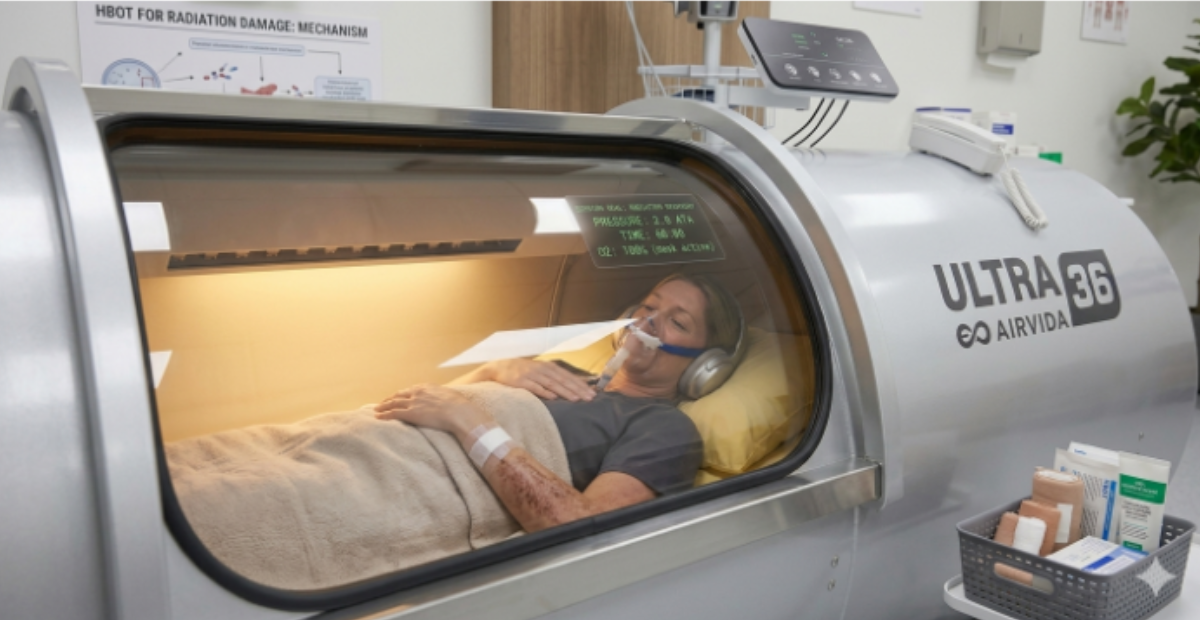
Hyperbaric oxygen therapy for radiation damage helps repair injured tissues by increasing oxygen supply to affected areas. It supports faster healing, reduces inflammation, and improves long-term recovery outcomes.
Radiation therapy is powerful for treating cancer, but it can leave lasting damage to healthy tissues. Many patients struggle with slow healing, pain, and complications months or even years after treatment. This is where hyperbaric oxygen therapy comes in. It offers a supportive approach that focuses on restoring oxygen levels in damaged tissues, helping the body heal more effectively.
What Is Hyperbaric Oxygen Therapy for Radiation Damage?
Hyperbaric oxygen therapy for radiation damage is a treatment where patients breathe pure oxygen in a pressurized chamber. This process allows oxygen to dissolve more deeply into the bloodstream and reach areas with limited circulation. Radiation can damage blood vessels and reduce oxygen flow to tissues. Over time, this leads to poor healing and tissue breakdown. Hyperbaric therapy works by reversing these effects, with options such as a hyperbaric chamber in Fargo available for patients seeking treatment.
Basic Definition and Purpose
Hyperbaric oxygen therapy increases oxygen levels in the body far beyond what normal breathing can achieve. Under pressure, oxygen reaches damaged tissues that are otherwise difficult to heal.
This treatment is often used for:
-
Radiation burns
-
Tissue necrosis
-
Bone damage
-
Chronic wounds after cancer therapy
It supports the body’s natural repair system rather than replacing it.
Why Radiation Damage Happens in the First Place
Radiation therapy targets cancer cells, but it can also affect nearby healthy tissue. The damage may not appear immediately, and symptoms can take weeks, months, or even years to develop. In many cases, these effects progress gradually, leading to long-term complications that may require careful monitoring and supportive ongoing care.
How Radiation Affects the Body
Radiation can:
-
Damage small blood vessels
-
Reduce oxygen supply to tissues
-
Causes inflammation and fibrosis
-
Slow down cell regeneration
This creates a long-term environment where healing becomes difficult. Reduced blood flow, inflammation, and tissue damage can limit the body’s natural repair processes over time. As a result, affected areas may struggle to recover fully, increasing the risk of chronic pain, delayed healing, and other complications that require ongoing medical attention.
Common Areas Affected
Radiation damage can occur in different parts of the body depending on treatment, including the skin, brain, lungs, and digestive system. Each area may experience unique symptoms, such as inflammation, fibrosis, or reduced function. The severity and type of damage often depend on dosage, treatment duration, and individual patient factors.
|
Area Affected |
Common Symptoms |
|
Skin |
Burns, irritation, delayed healing |
|
Jaw (Osteoradionecrosis) |
Pain, exposed bone |
|
Bladder |
Bleeding, irritation |
|
Rectum |
Chronic inflammation |
|
Soft tissues |
Fibrosis, stiffness |

How Hyperbaric Oxygen Therapy Helps Repair Radiation Damage
Hyperbaric therapy works by delivering high concentrations of oxygen to damaged tissues, which triggers several healing processes. Increased oxygen levels may support cell repair, reduce inflammation, and promote the formation of new blood vessels. This enhanced environment can help the body recover more efficiently from radiation-related injuries over time, and similar benefits are also explored in specialized applications such as hyperbaric oxygen therapy for children.
Increased Oxygen Delivery
The pressurized environment allows oxygen to dissolve into plasma and reach areas with poor blood flow. This is critical for tissues affected by radiation.
Stimulates New Blood Vessel Growth
One of the most important benefits is angiogenesis. This is the formation of new blood vessels, which improves long-term oxygen supply.
Reduces Inflammation and Swelling
Hyperbaric therapy helps decrease inflammation, making it easier for tissues to recover and function normally.
Enhances Tissue Regeneration
The therapy promotes:
-
Collagen production
-
Stem cell activation
-
Faster wound healing
Benefits of Hyperbaric Oxygen Therapy for Radiation Damage
Patients often turn to this therapy when traditional treatments are not enough, or symptoms persist despite standard care. The benefits can be both short-term and long-term, potentially including reduced pain, improved tissue healing, and better overall function, although results may vary depending on individual conditions and treatment consistency.
Key Advantages
|
Benefit |
How It Helps |
|
Improved healing |
Speeds up tissue repair |
|
Pain reduction |
Decreases inflammation |
|
Better circulation |
Restores oxygen flow |
|
Reduced complications |
Lowers risk of chronic damage |
Many patients notice gradual improvement over several sessions rather than immediate results. Consistency plays an important role, as repeated treatments may help build cumulative effects over time. Some individuals report reduced discomfort, improved function, and better tissue response, although outcomes can vary depending on the severity of the condition and overall health.

Who Should Consider This Treatment
Hyperbaric oxygen therapy is commonly recommended for patients experiencing delayed radiation injuries, particularly when symptoms persist or worsen over time. It may help improve oxygen supply to affected tissues, supporting repair and reducing complications. Treatment plans are typically personalized, depending on the location, severity, and overall health condition of each patient.
Ideal Candidates
You may benefit if you have:
-
Chronic wounds after radiation
-
Tissue necrosis
-
Jaw or bone damage
-
Persistent pain or inflammation
Doctors usually evaluate your condition before recommending therapy.
When It Works Best
This therapy is most effective when:
-
Used early after symptoms appear
-
Combined with other treatments
-
Completed in a full session cycle
How the Treatment Process Works
Understanding the process helps patients feel more comfortable and prepared.
Step-by-Step Overview
-
You enter a hyperbaric chamber
-
Pressure gradually increases
-
You breathe pure oxygen
-
Sessions last 60–90 minutes
-
Treatments are repeated over weeks
Consistency is key for results.
Practical Tips for Better Results
Small adjustments can improve your experience and outcomes during therapy sessions. Staying consistent with appointments, following medical guidance, and maintaining proper hydration may support better results. Comfort measures, such as relaxation techniques, can also help. Over time, these simple changes may enhance overall effectiveness and make the treatment process smoother and more manageable, especially in specialized wellness approaches like anti-aging HBOT in Tribeca.
Before Treatment
-
Stay hydrated
-
Avoid alcohol and smoking
-
Wear comfortable clothing
During Treatment
-
Relax and breathe normally
-
Avoid sudden movements
-
Follow the technician's instructions
After Treatment
-
Rest if needed
-
Track improvements
-
Attend all scheduled sessions

Comparing Hyperbaric Therapy vs Traditional Treatments
Many patients wonder how this therapy compares to standard care for radiation-related injuries. While standard treatments focus on managing symptoms, hyperbaric oxygen therapy aims to enhance tissue oxygenation and support healing at a deeper level. In some cases, both approaches may be used together depending on medical evaluation and patient needs.
|
Treatment Type |
Focus |
Limitation |
|
Medication |
Symptom relief |
Does not repair tissue |
|
Surgery |
Removes damaged areas |
Invasive |
|
Hyperbaric Therapy |
Promotes healing |
Requires multiple sessions |
Hyperbaric therapy stands out because it targets the root cause, not just symptoms.
Available Hyperbaric Chamber Options
Choosing the right facility or equipment is important for consistent treatment. If you are looking for reliable options, you can explore the hyperbaric chamber in El Paso. These options provide access to advanced hyperbaric technology designed for safe and effective therapy.
Key Considerations Before Starting Therapy
While effective, hyperbaric therapy is not for everyone.
Things to Discuss With Your Doctor
-
Medical history
-
Current medications
-
Type of radiation damage
-
Treatment goals
Possible Limitations
-
Requires multiple sessions
-
Availability may vary
-
Results can differ per patient
Final Thoughts: Hyperbaric Oxygen Therapy for Radiation Damage
Hyperbaric oxygen therapy for radiation damage offers a powerful way to support healing by addressing oxygen deficiency in damaged tissues. By improving circulation, reducing inflammation, and stimulating tissue repair, it provides a practical solution for patients dealing with long-term radiation effects.
If you are exploring recovery options, this therapy could play a key role in improving your quality of life and long-term health outcomes.
Frequently Asked Questions
How do you treat radiation damage?
The most effective way to treat radiation damage is by improving oxygen supply and supporting tissue repair. Treatments may include medications, wound care, and therapies like hyperbaric oxygen therapy. This approach helps restore blood flow, reduce inflammation, and promote healing in damaged areas. Early intervention improves recovery outcomes significantly.
Can cancer patients use a hyperbaric chamber?
Yes, cancer patients can use a hyperbaric chamber, especially for managing radiation-related side effects. However, it is important to consult a doctor before starting treatment. The therapy is typically used after cancer treatment rather than during active tumor growth. It helps repair tissues without interfering with standard cancer therapies.
How do you repair your body after radiation?
Repairing the body after radiation involves restoring oxygen levels and supporting natural healing processes. This includes proper nutrition, hydration, and therapies like hyperbaric oxygen therapy. The goal is to rebuild damaged tissues, improve circulation, and reduce long-term complications caused by radiation exposure.
When should you not use hyperbaric oxygen therapy?
Hyperbaric oxygen therapy should be avoided in certain conditions, such as untreated pneumothorax or specific lung issues. Patients with certain medical conditions or those taking particular medications should consult a healthcare provider. A proper evaluation ensures the treatment is safe and suitable for individual needs.