


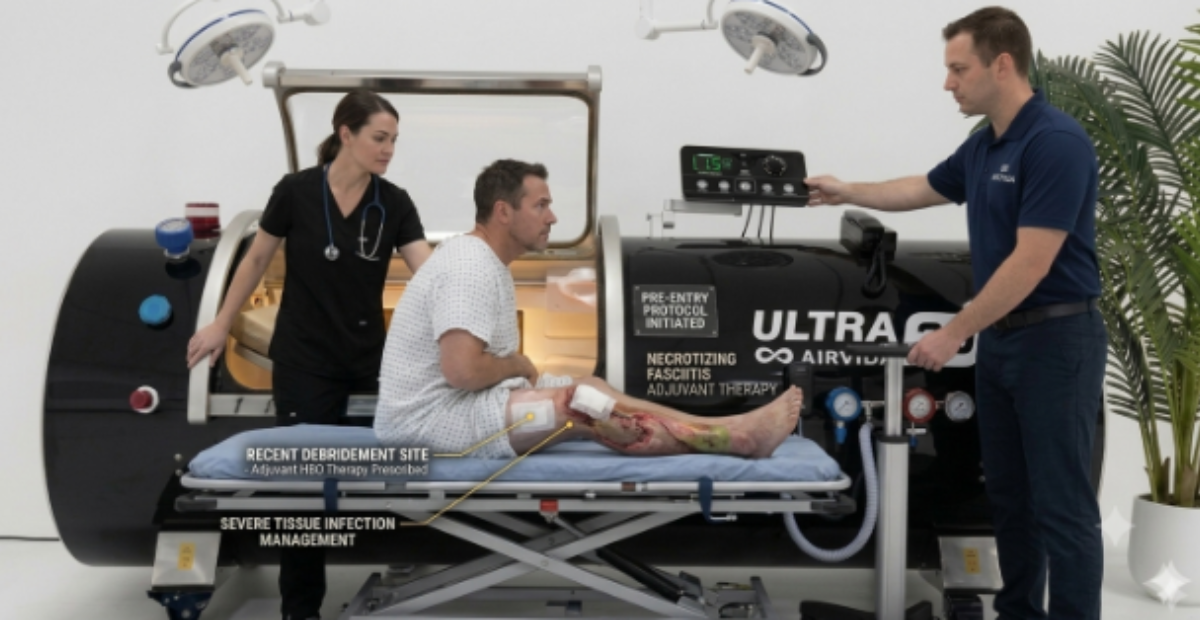
A hyperbaric chamber for necrotizing fasciitis may help support treatment by delivering high concentrations of oxygen to damaged tissues. While surgery and antibiotics remain the primary treatments, hyperbaric oxygen therapy (HBOT) is often used as an adjunct therapy to improve oxygen delivery, support wound healing, and assist in infection management.
Necrotizing fasciitis is a serious medical emergency that requires immediate treatment. Understanding how HBOT fits into a comprehensive treatment plan can help patients and caregivers make informed decisions during recovery.
Understanding Necrotizing Fasciitis

Necrotizing fasciitis is a rare but aggressive bacterial infection that destroys soft tissue beneath the skin. The condition can spread rapidly, affecting fascia, fat, and surrounding tissues.
Without prompt medical intervention, necrotizing fasciitis can rapidly progress, leading to devastating complications such as extensive tissue loss, organ failure, and life-threatening infections. In some cases, advanced supportive treatments like hyperbaric oxygen therapy, Hoover, AL, may be considered to enhance oxygen delivery, support healing, and reduce the risk of further systemic damage.
Common Causes of Necrotizing Fasciitis
Several types of bacteria can cause this condition, including:
✅ Group A Streptococcus
✅ Staphylococcus aureus
✅ Clostridium species
✅ Mixed bacterial infections
Risk factors may include:
-
Diabetes
-
Weakened immune systems
-
Recent surgery
-
Open wounds or injuries
-
Chronic vascular disease
Symptoms That Require Immediate Medical Attention
Early diagnosis is critical because the infection progresses quickly.
Common symptoms include:
✅ Severe pain that seems disproportionate to the visible wound
✅ Rapid swelling
✅ Skin discoloration
✅ Fever and chills
✅ Blisters or skin breakdown
✅ Fatigue and weakness
As the infection advances, tissue death may occur, requiring extensive surgical intervention.
Hyperbaric Collections You May Want to Shop


Why Oxygen Matters in Tissue Recovery
Healthy tissue depends on oxygen to support immune function, cell repair, and circulation. Unfortunately, necrotizing fasciitis often damages blood vessels and restricts oxygen delivery to affected areas.
When tissues become deprived of oxygen:
-
Healing slows down
-
Immune cells become less effective
-
Infection may spread more easily
-
Tissue death can accelerate
This is one reason why physicians sometimes consider hyperbaric oxygen therapy as part of a broader treatment strategy, especially when conventional approaches alone may not provide sufficient support. By enhancing oxygen delivery to compromised tissues, HBOT can complement surgical or pharmacological interventions, offering patients an additional avenue to promote healing and recovery.
What Is Hyperbaric Oxygen Therapy?
Hyperbaric oxygen therapy involves breathing pure oxygen inside a pressurized chamber.
The increased pressure allows oxygen to dissolve into the bloodstream at much higher levels than normal. This oxygen can then reach tissues that may be receiving inadequate blood flow.
How HBOT Works
During treatment:
-
The patient enters a hyperbaric chamber.
-
Air pressure is gradually increased.
-
The patient breathes concentrated oxygen.
-
Oxygen levels in blood plasma rise significantly.
-
Oxygen reaches tissues that may otherwise struggle to receive adequate circulation.
The process is painless and closely monitored by trained healthcare professionals.
Patients seeking hyperbaric oxygen therapy options may explore locations such as: Hyperbaric oxygen therapy in Paramus.
How a Hyperbaric Chamber for Necrotizing Fasciitis May Help
The use of a hyperbaric chamber for necrotizing fasciitis is intended to complement standard medical treatment rather than replace it.
The primary goals include improving oxygen delivery and supporting the body's natural healing response.
Potential Benefits of HBOT
|
Potential Benefit |
Why It Matters |
|
Increased oxygen delivery |
Helps support damaged tissues |
|
Enhanced immune response |
Oxygen supports white blood cell activity |
|
Improved wound healing |
Supports tissue regeneration |
|
Reduced swelling |
May improve circulation in affected areas |
|
Support after surgery |
Helps optimize post-surgical recovery |
Although HBOT is not a cure by itself, many physicians consider it a valuable adjunctive therapy for severe wound and soft tissue infections.
Standard Treatment for Necrotizing Fasciitis

Successful treatment usually requires multiple approaches working together.
Surgical Debridement
Surgery is often the most critical component of treatment.
During debridement, surgeons remove infected and dead tissue to stop the spread of bacteria.
Multiple surgeries may be necessary depending on the severity of the infection.
Intravenous Antibiotics
Broad-spectrum antibiotics are typically administered immediately.
Once laboratory testing identifies the bacteria involved, antibiotic therapy may be adjusted to target the specific infection.
Intensive Supportive Care
Patients may require:
✅ Fluid management
✅ Nutritional support
✅ Pain control
✅ Critical care monitoring
Adjunctive Hyperbaric Oxygen Therapy
HBOT may be introduced after stabilization and surgery to help support recovery and wound healing.
Hyperbaric Chambers You May Want to Shop
Explore More


Which Patients May Benefit From HBOT?
Not every patient with necrotizing fasciitis will require hyperbaric oxygen therapy.
Doctors evaluate factors such as:
-
Severity of infection
-
Extent of tissue damage
-
Surgical outcomes
-
Overall medical condition
-
Availability of HBOT facilities
Patient Assessment Table
|
Clinical Factor |
Possible Consideration for HBOT |
|
Extensive tissue damage |
May benefit from additional oxygen support |
|
Slow wound healing |
HBOT may support recovery |
|
Compromised circulation |
Increased oxygen delivery may help |
|
Multiple surgeries required |
May assist healing between procedures |
|
Severe infection burden |
Often considered alongside standard treatment |
Treatment decisions should always be made by the patient’s healthcare team, who can evaluate the individual’s unique medical history, current condition, and potential risks. In some cases, patients may seek additional resources such as does HBOT affect diabetes or blood sugar? to better understand how specialized therapies might interact with broader treatment strategies.
Why HBOT Is Often Considered for Severe Infections
The body relies heavily on oxygen to fight infection and rebuild tissue.
When infections damage circulation, oxygen cannot easily reach the affected area.
HBOT may help by:
✅ Increasing tissue oxygen levels
✅ Supporting immune cell performance
✅ Encouraging blood vessel growth
✅ Supporting collagen production
These effects can be particularly valuable in complex wounds where healing is difficult, as they provide enhanced oxygenation to tissues that are otherwise deprived. By supporting cellular repair and reducing infection risk, hyperbaric oxygen therapy can complement traditional medical approaches, offering patients a stronger chance of recovery in challenging clinical scenarios.
How Long Does Hyperbaric Oxygen Therapy Take?

Treatment schedules vary based on the severity of the condition.
Many patients receive multiple sessions over several days or weeks.
A typical session may last:
-
60 to 120 minutes
-
Once or twice daily in some severe cases
-
Several treatments per week during recovery
The healthcare team determines the appropriate protocol based on individual needs.
Other Conditions Commonly Treated With HBOT
Hyperbaric oxygen therapy is used for several conditions beyond necrotizing fasciitis.
Examples include:
✅ Chronic non-healing wounds
✅ Diabetic foot ulcers
✅ Radiation injuries
✅ Carbon monoxide poisoning
✅ Certain severe infections
You may also find these related resources helpful: HBOT for Anti Aging Dallas,
Risks and Considerations
HBOT is generally considered safe when administered by trained professionals.
However, treatment may not be suitable for everyone.
Potential considerations include:
-
Certain lung conditions
-
Untreated pneumothorax
-
Some ear or sinus issues
-
Claustrophobia concerns
-
Specific medication interactions
Patients should always undergo a full medical evaluation before beginning treatment.
Final Thoughts on Hyperbaric Chamber for Necrotizing Fasciitis

A hyperbaric chamber for necrotizing fasciitis may provide valuable support alongside surgery, antibiotics, and comprehensive medical care. By increasing oxygen availability to damaged tissue, HBOT can help support wound healing and recovery in certain patients facing severe soft tissue infections.
Because necrotizing fasciitis is a life-threatening condition, treatment should always be guided by qualified healthcare professionals. When used appropriately, HBOT may become an important part of a multidisciplinary approach to healing.
Frequently Asked Questions
What is the most effective treatment for necrotizing fasciitis?
The most effective treatment for necrotizing fasciitis is immediate surgical debridement combined with intravenous antibiotics. Surgery removes infected and dead tissue before the infection can spread further. Antibiotics help control the bacterial infection, while supportive care stabilizes the patient. In some cases, hyperbaric oxygen therapy may be added as a complementary treatment to support healing and tissue recovery, but it is not considered a replacement for surgery or antibiotics.
Can HBOT help with necrosis?
HBOT may help support tissue affected by necrosis by increasing oxygen delivery to areas with compromised circulation. Higher oxygen levels can promote wound healing, support immune cell function, and encourage new blood vessel formation. While HBOT cannot always reverse extensive tissue death, it may improve conditions around damaged tissue and assist the healing process when combined with appropriate medical care.
When should you not use a hyperbaric chamber?
A hyperbaric chamber should not be used in certain medical situations where treatment could pose additional risks. Untreated pneumothorax is generally considered a major contraindication. Some lung diseases, ear problems, recent surgeries, or specific medications may also require caution. Every patient should undergo a thorough evaluation by a qualified healthcare provider before starting HBOT to ensure it is safe and appropriate.
Can a hyperbaric chamber heal gangrene?
A hyperbaric chamber may help support the treatment of certain types of gangrene when used alongside standard medical care. HBOT increases oxygen levels in affected tissues, which may help limit infection and support healing. However, gangrene often requires surgery, antibiotics, and vascular treatment depending on the underlying cause. HBOT is typically used as an adjunct therapy rather than a standalone solution.