


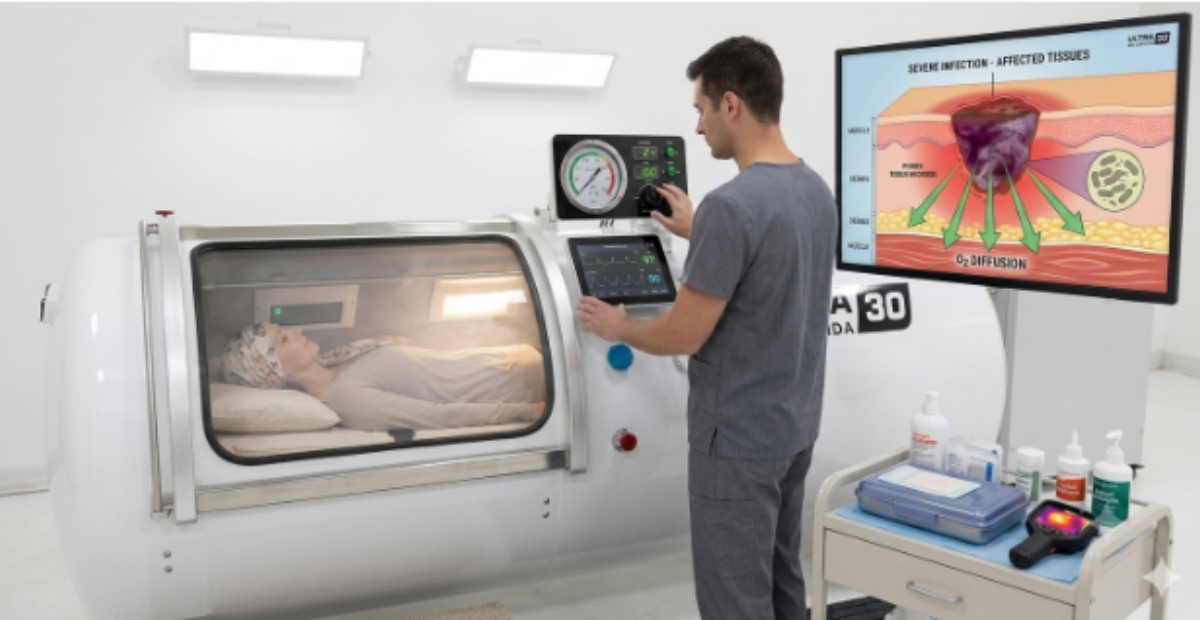
HBOT for gas gangrene can help slow the spread of infection by increasing oxygen levels in affected tissues and supporting the body's healing response. When combined with surgery and antibiotics, it may improve outcomes and reduce complications.
Gas gangrene is a serious bacterial infection that can destroy tissue rapidly and become life-threatening without immediate treatment. Hyperbaric oxygen therapy (HBOT) has become an important supportive treatment because it delivers high concentrations of oxygen to damaged areas where harmful bacteria struggle to survive.
In this guide, you'll learn how HBOT works for gas gangrene, why doctors may recommend it, and what patients can expect during treatment.
Understanding Gas Gangrene

Gas gangrene is a rare but aggressive infection usually caused by Clostridium bacteria. These bacteria thrive in low-oxygen environments and can spread quickly through muscles and soft tissues. Without prompt intervention, the infection can lead to severe tissue destruction, systemic illness, and even death, which is why some patients explore supportive options like hyperbaric oxygen therapy in Colleyville, TX, as part of broader treatment and recovery approaches.
Common Causes of Gas Gangrene
✅ Deep traumatic wounds
✅ Surgical complications
✅ Crush injuries
✅ Poor blood circulation
✅ Diabetes-related wounds
The bacteria release toxins that damage tissue and produce gas within the infected area, which is how the condition gets its name. As the infection advances, pressure from the gas worsens tissue destruction, while toxins impair circulation and immune response, creating a rapidly escalating medical emergency requiring immediate intervention.
Common Symptoms
Symptoms often develop quickly and may include:
✅ Severe pain at the wound site
✅ Swelling and discoloration
✅ Blisters filled with fluid
✅ Crackling sensation under the skin
✅ Fever and rapid heart rate
Because gas gangrene progresses rapidly, emergency medical treatment is essential. Immediate surgical evaluation, aggressive antibiotic therapy, and supportive care are often required to control the infection. Delay can result in catastrophic tissue loss, systemic toxicity, and life‑threatening complications, underscoring the urgency of swift recognition and prompt intervention by clinicians.
Hyperbaric Collections You May Want to Shop

Why HBOT Is Used for Gas Gangrene
Hyperbaric oxygen therapy involves breathing 100% oxygen inside a pressurized chamber. This process dramatically increases the amount of oxygen carried through the bloodstream.
For gas gangrene patients, this additional oxygen can provide several important benefits.
How Oxygen Affects Clostridial Bacteria
The bacteria responsible for gas gangrene thrive in oxygen-poor environments.
By flooding tissues with oxygen, HBOT can:
✅ Create conditions that are unfavorable for bacterial growth
✅ Reduce toxin production
✅ Improve the effectiveness of certain antibiotics
✅ Support the body's natural immune defenses
This makes HBOT a valuable complement to standard medical treatment, enhancing oxygen delivery to compromised tissues and supporting cellular repair. By improving circulation and reducing infection risk, it can strengthen conventional therapies. While not a standalone cure, its adjunctive role highlights the growing interest in integrative approaches to complex conditions.
Supporting Tissue Survival
One of the biggest dangers of gas gangrene is tissue death.
HBOT helps by:
|
HBOT Benefit |
Why It Matters |
|
Increased oxygen delivery |
Supports damaged tissues |
|
Reduced swelling |
Improves circulation |
|
Enhanced immune function |
Helps fight infection |
|
Improved wound healing |
Promotes tissue recovery |
The increased oxygen supply may help preserve tissues that would otherwise be at risk, supporting healing and resilience in vulnerable areas. This potential has drawn interest from athletes and wellness advocates alike, with some exploring HBOT for sports performance, Westchester as part of their recovery and training routines.
How HBOT for Gas Gangrene Works

During treatment, patients enter a hyperbaric chamber where air pressure is increased above normal atmospheric levels.
This allows oxygen to dissolve directly into plasma and reach areas where blood flow may be compromised.
What Happens During a Session
A typical session includes:
-
Entering the chamber and getting comfortable.
-
Gradual pressurization.
-
Breathing pure oxygen.
-
Monitoring by trained professionals.
-
Slow decompression before leaving the chamber.
Many patients undergo multiple sessions depending on the severity of the infection.
Why Timing Matters
The earlier HBOT is introduced alongside surgery and antibiotics, the better the opportunity to limit tissue damage. HBOT is not intended to replace emergency medical care. Instead, it works as part of a comprehensive treatment strategy.
Standard Treatment vs. HBOT Support
The primary treatment for gas gangrene remains surgical intervention and antibiotics.
HBOT is considered an adjunctive therapy.
|
Treatment |
Primary Purpose |
|
Surgery |
Remove infected tissue |
|
Antibiotics |
Eliminate bacterial infection |
|
HBOT |
Improve oxygen delivery and healing |
|
Wound Care |
Support recovery process |
Using these approaches together often provides the best chance for recovery, as combining surgical intervention, antibiotics, and adjunctive therapies like HBOT can address multiple aspects of the infection simultaneously. This integrated strategy helps limit bacterial spread, preserve viable tissue, and improve patient outcomes, reinforcing the importance of comprehensive treatment planning.
Hyperbaric Chambers You May Want to Shop
Explore More


Benefits of HBOT for Gas Gangrene Patients
When integrated into a treatment plan, HBOT may offer several advantages.
Improved Oxygen Delivery
Damaged tissues often receive insufficient oxygen because infection disrupts circulation.
HBOT significantly increases available oxygen, helping support vulnerable tissues.
Enhanced Immune Response
White blood cells rely on oxygen to effectively combat infection.
Higher oxygen concentrations can help improve their ability to fight bacteria.
Reduced Tissue Loss
One of the major goals of treatment is preserving as much healthy tissue as possible.
Improved oxygen availability may help reduce the extent of tissue destruction.
Better Healing Environment
After surgical removal of infected tissue, wound healing becomes a priority.
HBOT may help create conditions that support tissue repair and recovery.
Looking for professional hyperbaric oxygen therapy services? Explore our hyperbaric oxygen therapy in Irving collection.
Who May Be a Candidate for HBOT?

Not every infection requires hyperbaric treatment.
Doctors may consider HBOT when:
✅ Gas gangrene is confirmed or strongly suspected
✅ There is extensive tissue involvement
✅ Healing is compromised by poor circulation
✅ Additional support is needed alongside surgery and antibiotics
The decision depends on the patient's condition, medical history, and treatment goals.
Risks and Considerations
HBOT is generally well tolerated when administered by trained professionals. However, like any medical procedure, there are considerations. Potential side effects may include:
✅ Ear pressure discomfort
✅ Temporary vision changes
✅ Sinus pressure
✅ Fatigue after treatment
Medical teams carefully evaluate each patient to determine whether HBOT is appropriate, considering factors such as overall health, underlying conditions, and treatment goals. This individualized approach ensures that therapy is used safely and effectively, balancing potential benefits with risks while aligning with established medical standards and patient‑specific recovery needs.
How HBOT Compares to Other Recovery Applications
While gas gangrene treatment is one recognized medical use, hyperbaric oxygen therapy is also being explored for various recovery and wellness applications.
For additional reading, you may find this resource helpful: HBOT for Nervous System Support.
Key Takeaways About HBOT for Gas Gangrene

HBOT for gas gangrene serves as a valuable supportive therapy that can help increase oxygen delivery, support immune function, and create conditions that are less favorable for harmful bacteria. When combined with surgery, antibiotics, and proper wound care, it may contribute to better recovery outcomes and reduced tissue damage.
Because gas gangrene progresses rapidly, early diagnosis and immediate medical intervention remain critical. Patients considering hyperbaric oxygen therapy should work closely with qualified healthcare professionals to determine the most appropriate treatment plan.
Frequently Asked Questions About HBOT for Gas Gangrene
Is hyperbaric oxygen useful in gas gangrene?
Yes, hyperbaric oxygen therapy can be useful as an adjunctive treatment for gas gangrene. The increased oxygen concentration delivered during treatment helps create an environment that is less favorable for the anaerobic bacteria responsible for the infection. HBOT may also support immune function, reduce toxin production, and improve tissue oxygenation. However, it is typically used alongside surgery and antibiotics rather than as a standalone treatment.
What is the treatment for gas gangrene?
The primary treatment for gas gangrene includes emergency surgery and intravenous antibiotics. Surgery removes infected and dead tissue to prevent the infection from spreading further. Antibiotics target the bacteria responsible for the condition. In many cases, HBOT may be added to support oxygen delivery, improve tissue viability, and enhance the effectiveness of other treatments.
When should you not use hyperbaric oxygen therapy?
HBOT may not be suitable for every patient or medical condition. Certain lung conditions, untreated pneumothorax, or specific medical concerns may require caution before beginning therapy. Healthcare providers perform thorough evaluations before recommending treatment. The decision is based on the individual's overall health, medical history, and potential risks versus benefits.
Does HBOT help with gangrene foot ulcers?
HBOT may help support healing in some gangrene-related foot ulcers, particularly when circulation problems are involved. By increasing oxygen delivery to compromised tissues, HBOT can assist wound healing and support recovery efforts. It is often considered as part of a broader treatment strategy that may include wound care, infection management, vascular treatment, and lifestyle modifications.